For BMX racing, the answer is clear: wear a full-face helmet. Sanctioned BMX racing generally requires or strongly expects full-face helmets, and for good reason — racing crashes happen at speed, on hard-packed tracks with jumps, and riders very often go down face-first. An open-face helmet is a fine choice for cruising, park riding, and street sessions at lower speeds, but it leaves your chin, jaw, and teeth completely exposed in exactly the kind of crash racing produces. Here is the full comparison so you can see why.
Why Do BMX Racers Wear Full-Face Helmets?
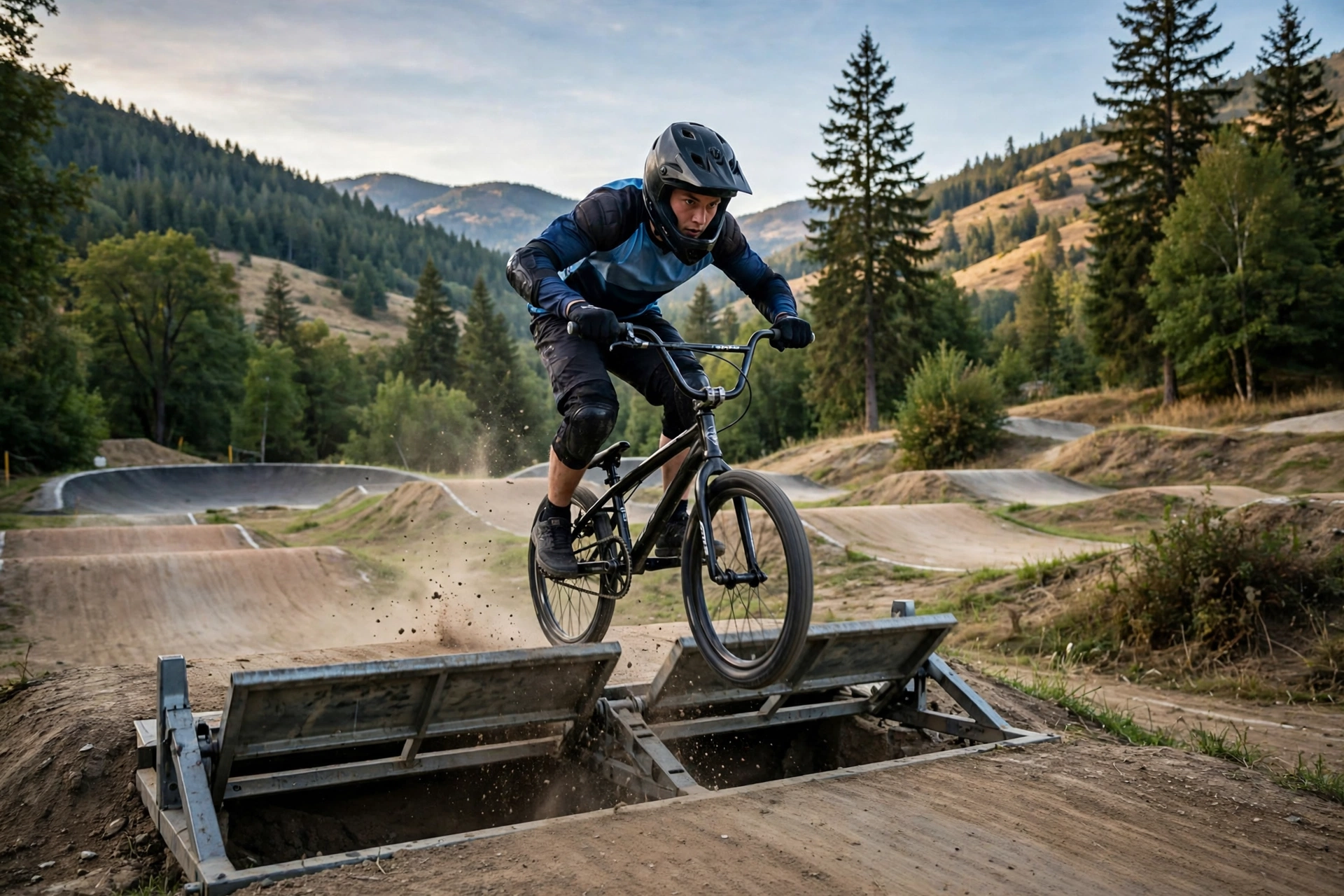
BMX racing packs eight riders into a tight gate start, sends them over jumps at sprint speed, and crowds them into berms where contact is normal. When a rider cases a jump, loops out, or gets tangled with another bike, the fall is fast and the landing surface is unforgiving. A large share of those falls pitch the rider forward, which means the face and chin are the first things heading for the ground.
A full-face helmet answers that risk with a chin bar: a rigid extension of the shell that wraps around the jaw and mouth. It works together with goggles to protect your eyes from roost and dust, and it keeps its coverage in place with a proper retention system. That is why full-face helmets are the standard at the track, from young beginners to elite racers — it is not fashion, it is the shape of the crash.
What Is an Open-Face Helmet Best For?
An open-face helmet — the classic skate-style or standard bicycle helmet shape — protects the skull but stops above the ears and leaves the whole face open. For park riding, street spots, dirt jumps at a casual pace, and general cruising, that trade-off can make sense. You get better airflow on hot days, you can hear your surroundings and your friends clearly, and the helmet is light enough to forget you are wearing it.
The key is being honest about the riding. Open-face helmets were designed around slower speeds and falls where the head — not the chin — takes the hit. The moment you add a start gate, a pack of competitors, and doubles you are committed to clearing, you have left the conditions an open-face helmet was built for. Many riders who do both keep two helmets: open-face for the park, full-face for race day.
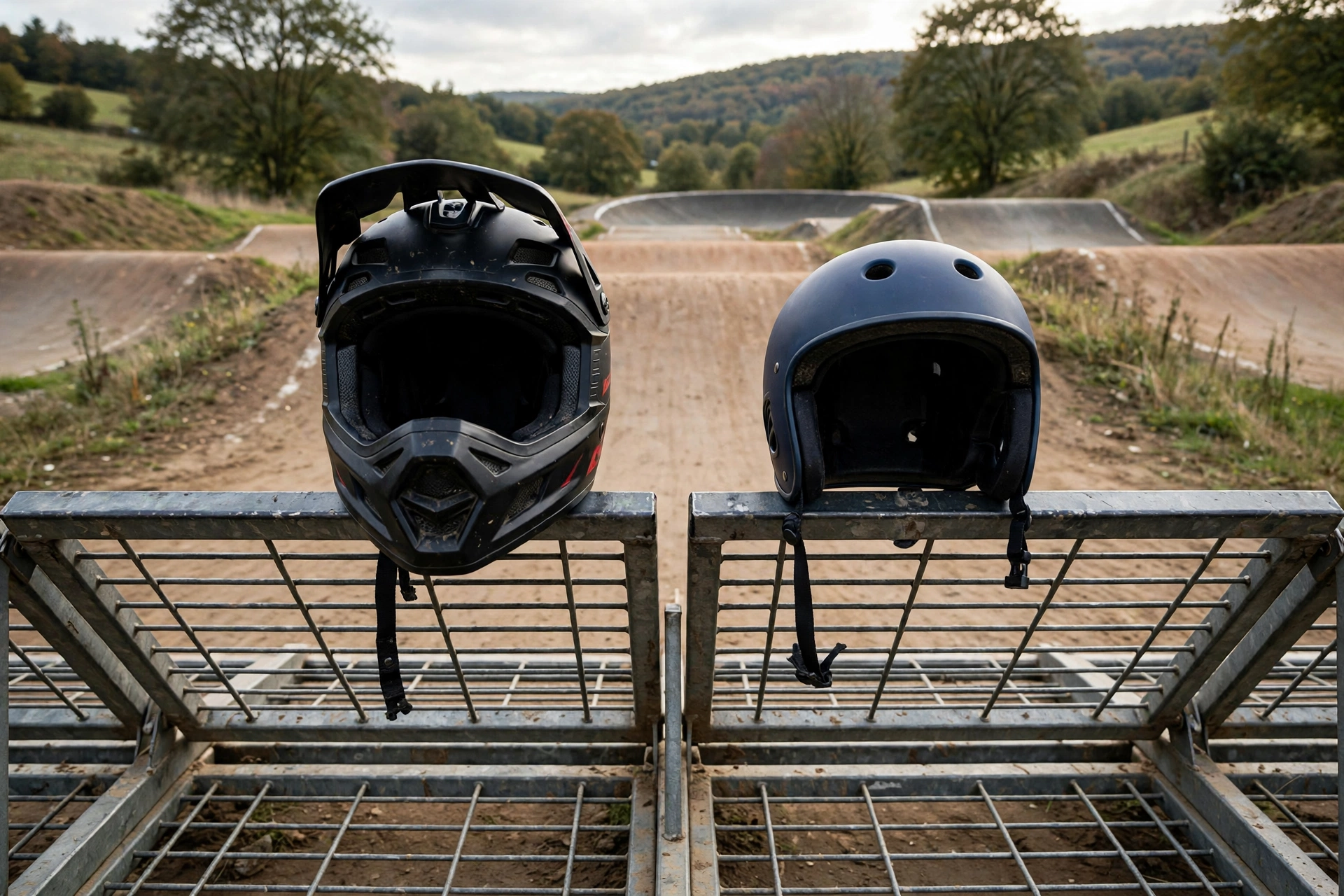
How Do They Compare for Weight, Heat, Vision, and Goggles?
Protection is the headline difference, but day-to-day comfort matters too, so here is the honest rundown. A full-face helmet weighs more because of the chin bar and larger shell, and it runs hotter — motos are short, though, and modern race helmets use generous venting to move air at speed. An open-face helmet is lighter and cooler, and it wins on hearing and peripheral awareness.
Vision surprises people: a good full-face helmet has a wide eye port designed for goggles, and at racing speed goggles are a genuine advantage, sealing out dust and roost that sting your eyes in an open-face setup with sunglasses. Fit features carry over between the two styles as well — some helmets of both types include low-friction liners intended to reduce rotational forces, the idea explained in our article on what MIPS is and why it matters. None of the comfort points, however, change the core fact that only one of these helmets has a chin bar.
One more practical difference is communication. In an open-face helmet you can hear the gate cadence, other riders, and shouted advice clearly, which some riders genuinely prefer. Full-face riders give up a little of that awareness, although a wide eye port still lets you track the riders beside you, and your ears adjust within a few sessions. It is a real trade-off — just one that protects nothing, while the chin bar protects the part of you most likely to meet the ground first.
What Certification Should a BMX Racing Helmet Have?
Look for a helmet certified for bicycle use and, ideally, tested to the ASTM F2032 standard, which was written specifically for BMX helmets and includes more demanding impact requirements than the baseline bicycle standard. In general terms, all bicycle helmets sold in the US must meet the CPSC standard, but the BMX-specific certification is the one matched to the bigger hits and face-first falls of racing, and it is the marking serious race helmets carry.
Buy from a reputable brand, check for the certification labels inside the helmet, and be suspicious of no-name helmets with no labels at all. Also check your track’s or sanctioning body’s current rulebook, since helmet requirements are stated there and officials can keep you off the gate if your gear does not comply. And remember that certification only counts if the helmet fits — a certified helmet in the wrong size protects far less than its label promises.
So Which Helmet Should You Buy for BMX Racing?
Full face, without hesitation. If you race — or your child races — the chin bar is not optional equipment, it is the entire point. Dental work, a broken jaw, or a facial fracture costs more in every way than the price difference between the two helmet styles, and most tracks will expect the full-face helmet anyway.
Choose a certified model that fits snugly, pair it with goggles, and replace it after any crash that dents the shell or crushes the liner. Keep an open-face helmet in the bag if you also ride park or street, where its lightness and airflow genuinely shine. The right helmet is the one matched to the riding you are actually doing that day, and on race day, that is always the full face.
Frequently Asked Questions
Q: Is a full-face helmet required for BMX racing?
A: In sanctioned racing, generally yes — full-face helmets are required or strongly expected by rulebooks and tracks because race crashes so often involve face-first falls. Always confirm your track’s current rules before race day.
Q: Can I use a motocross helmet for BMX racing?
A: Riders sometimes do, but motocross helmets are heavier and built to a different standard. A BMX-specific full-face helmet certified to ASTM F2032 is lighter and matched to BMX impacts, so it is the better choice for racing.
Q: Is an open-face helmet ever okay for jumping?
A: For casual, lower-speed dirt jumps many riders accept the risk, but any fall can be face-first. If the jumps are big, the speed is high, or other riders are involved, step up to a full-face helmet.

Olivia
Writer at Helmet Today, covering helmet reviews, fit and riding safety.