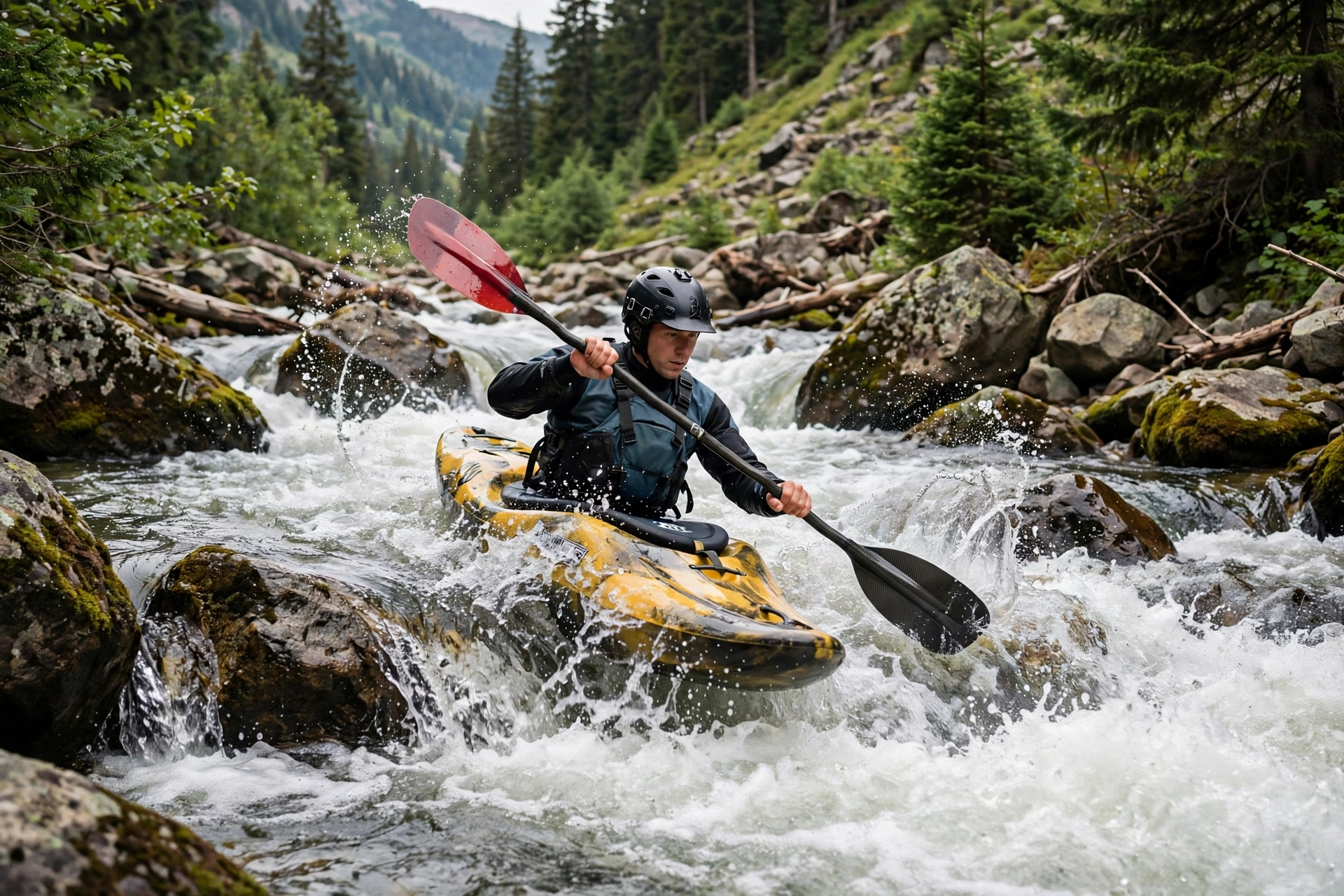
Yes. For whitewater kayaking — any river with current, rapids, and rocks — a helmet is essential safety gear, not an optional extra. Outfitters, kayak schools, clubs, and organized trips almost universally require one, and experienced whitewater paddlers treat it the same way they treat a PFD: it goes on before you launch. The real danger is not hitting your head while sitting upright in the boat. It is striking a rock after a capsize, while you are upside down, swimming, or being swept through shallow, rocky current.
Flatwater is a different story, and this guide separates the two clearly — where a helmet genuinely matters, where it is optional, and what kind of helmet whitewater actually demands.
Why Is a Helmet So Important on Whitewater?
Whitewater rivers are rock gardens with current flowing through them. When a paddler capsizes, their head is suddenly underwater, close to the riverbed, and moving at the speed of the current. A swim through a rapid can bounce a paddler over submerged boulders, and even a simple flip in a shallow, rocky section can bring a head into contact with stone before the paddler has any chance to react.
That is the scenario a whitewater helmet is built for: repeated, relatively low-speed impacts with rocks, from any angle, in an environment where a knocked-out paddler is in immediate danger of drowning. A head injury that would be survivable on land can be fatal in moving water simply because the victim cannot keep their face out of the river.
This is also why helmets matter for more than kayakers. Rafters, packrafters, whitewater canoeists, and river boarders all face the same rocks-and-current combination, and outfitters equip all of them with helmets on technical water.
When Is a Kayak Helmet Required?
Requirements come from the people running the water, not from a single national law. In practice you will need a helmet whenever you:
- Book a guided rafting or kayaking trip on a river with rapids
- Take a whitewater lesson or skills course
- Join a club trip, race, or organized river event
- Rent whitewater gear from most outfitters
- Paddle dam-released or managed rivers where access rules specify safety gear
Even where nothing is formally required, the community standard is unambiguous: on water with rapids and exposed rock, everyone wears a helmet. If you show up to a whitewater put-in without one, other paddlers will read it the same way they’d read a cyclist with no brakes — as a sign of inexperience rather than confidence.
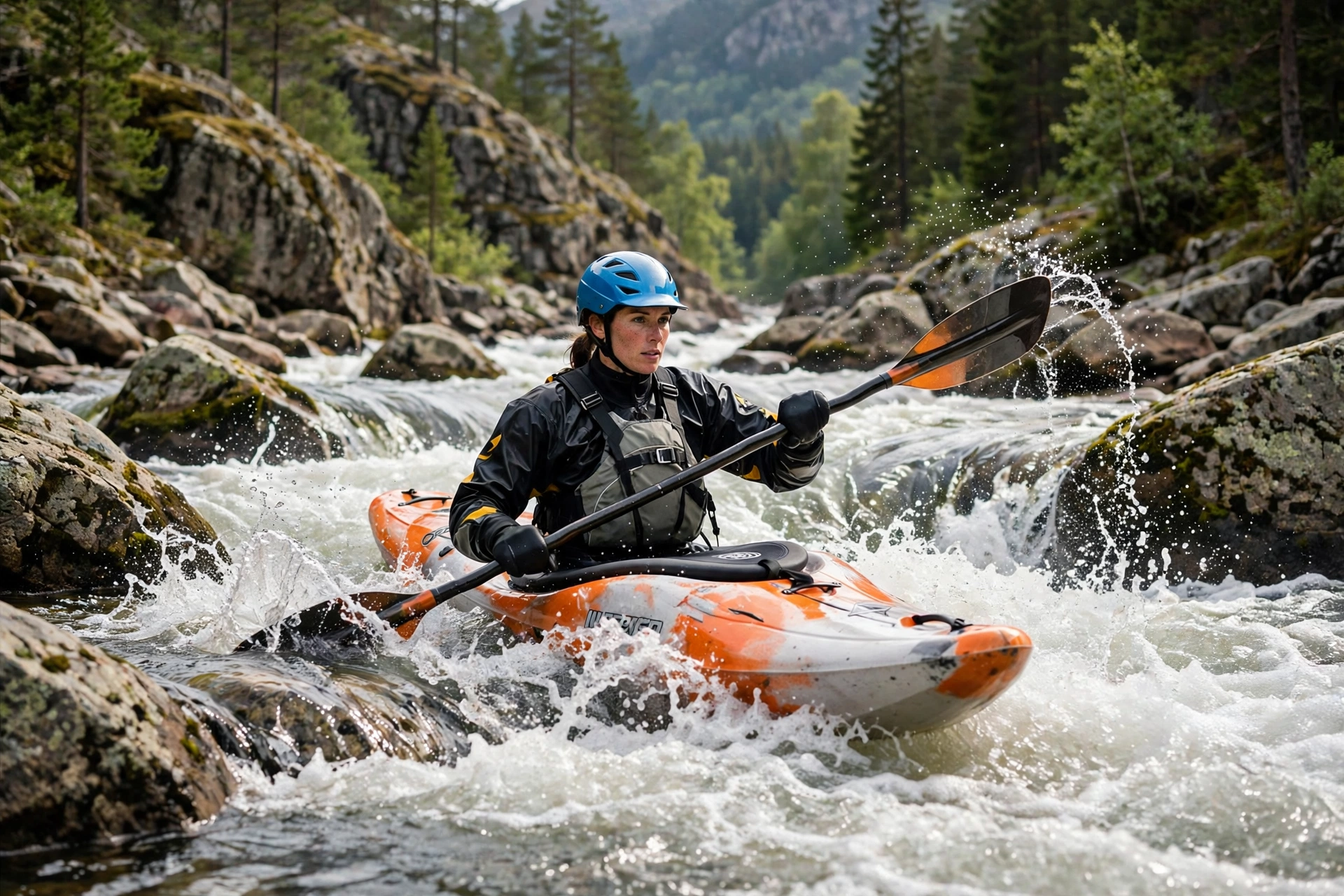
Do You Need a Helmet for Flatwater and Lake Kayaking?
On calm lakes, slow-moving flat rivers, and protected bays, a helmet is generally optional — and the piece of gear that truly matters there is your PFD (life jacket). The dominant risks in flatwater are drowning after a capsize far from shore, cold water, and boat traffic, none of which a helmet addresses. Your safety priorities on flatwater are wearing the PFD properly, dressing for the water temperature, and staying within your skill and weather limits.
There are flatwater exceptions where a helmet makes sense: paddling close under low bridges or overhanging rock, surfing or playing at a river mouth, exploring rocky shorelines in swell, or any situation where a capsize could put your head against something hard. Use judgment — the question is always “if I flip here, what does my head hit?”
Many recreational paddlers who split time between lakes and rivers simply buy one whitewater-rated helmet and wear it whenever conditions are uncertain. It costs little, weighs little, and removes the decision entirely.
What Kind of Helmet Do You Need for Whitewater?
Buy a helmet designed and certified for whitewater. Helmets made for paddling sports are tested to the CE EN 1385 standard, which covers helmets for canoeing and whitewater sports, and that certification is your baseline check when shopping. A proper whitewater helmet differs from other helmets in ways that matter on a river:
- Coverage: It protects the forehead, temples, and the back of the head low down, and many designs protect the ears — the zones that meet rocks in a swim.
- Liner: The impact foam does not absorb water and keeps working after repeated knocks, unlike some bicycle foams designed around a single hard crash.
- Retention: A secure chin strap and rear adjustment system keep it in place against current, which is constantly trying to push it off.
- Drainage and fit systems built for a wet environment, with materials that will not degrade in constant water exposure.
Never substitute a bicycle helmet for whitewater. A bike helmet is shaped for a different kind of fall, its coverage is wrong for rock strikes from below and behind, its straps and foams are not designed for continuous immersion, and the current can strip it off a swimmer’s head. The same goes for skate helmets and climbing helmets — purpose-built gear exists for a reason. If you are curious how impact technology differs between helmet sports, our guide to what MIPS means in helmets explains one of the systems used in bike and snow helmets — a useful reminder that each sport engineers protection for its own crash patterns.
How Do You Choose and Fit a Whitewater Helmet?
Fit is covered in depth in our fitting guide, but the essentials are: snug all the way around without painful pressure points, low coverage across the forehead, no rocking or rotating when you shake your head, and a chin strap adjusted so the helmet stays put when pushed from any direction. Many whitewater helmets include fit foam and shims so you can fine-tune the fit, and some offer ear coverage options.
Try helmets on in person if you can. Head shapes vary enough that the “best” helmet on paper may simply be the wrong shape for you, and an uncomfortable helmet is one you will be tempted to leave in the car. Consider cold-water use too: if you paddle in a neoprene cap or hood, fit the helmet over it.
Frequently Asked Questions
Q: Is a helmet legally required for kayaking?
A: There is no general national helmet law for kayakers. Requirements come from outfitters, schools, clubs, events, and some managed river access rules — and on whitewater, they almost always require one. On flatwater, the legal requirement in most places is about carrying or wearing a PFD instead.
Q: Can I use my bike helmet for whitewater kayaking?
A: No. A bike helmet has the wrong coverage, foam, and retention system for rock impacts in current, and it is not built for continuous immersion. Use a helmet certified for whitewater sports such as CE EN 1385.
Q: Do experienced kayakers really wear helmets on easy rivers?
A: Yes. Easy whitewater is still shallow, rocky, and moving, and most head strikes happen on familiar, moderate runs — during swims, not during dramatic rapids. Experienced paddlers wear helmets on any river with rocks and current.

Olivia
Writer at Helmet Today, covering helmet reviews, fit and riding safety.