Sizing a BMX racing helmet comes down to three steps: measure your head circumference, match that number to the specific brand’s size chart, and confirm the fit with hands-on checks before you ride. A correct full-face fit feels snug and even — firm cheek pad contact, no forehead hot spots, no rotation or lifting when you move your head — while a helmet that is even one size off will shift in a crash and protect far less than its certification promises. Here is exactly how to get it right.
How Do You Measure Your Head for a BMX Helmet?
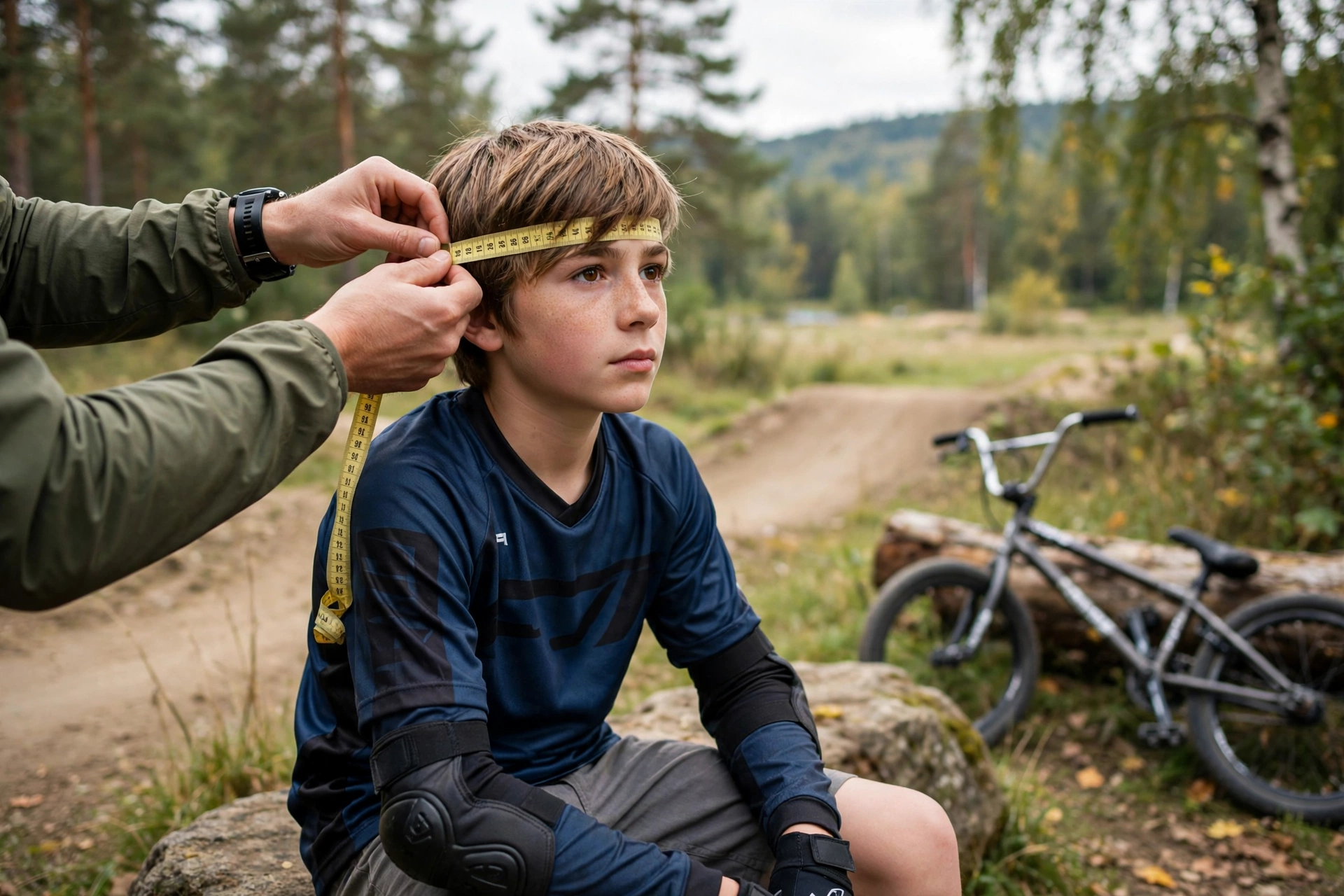
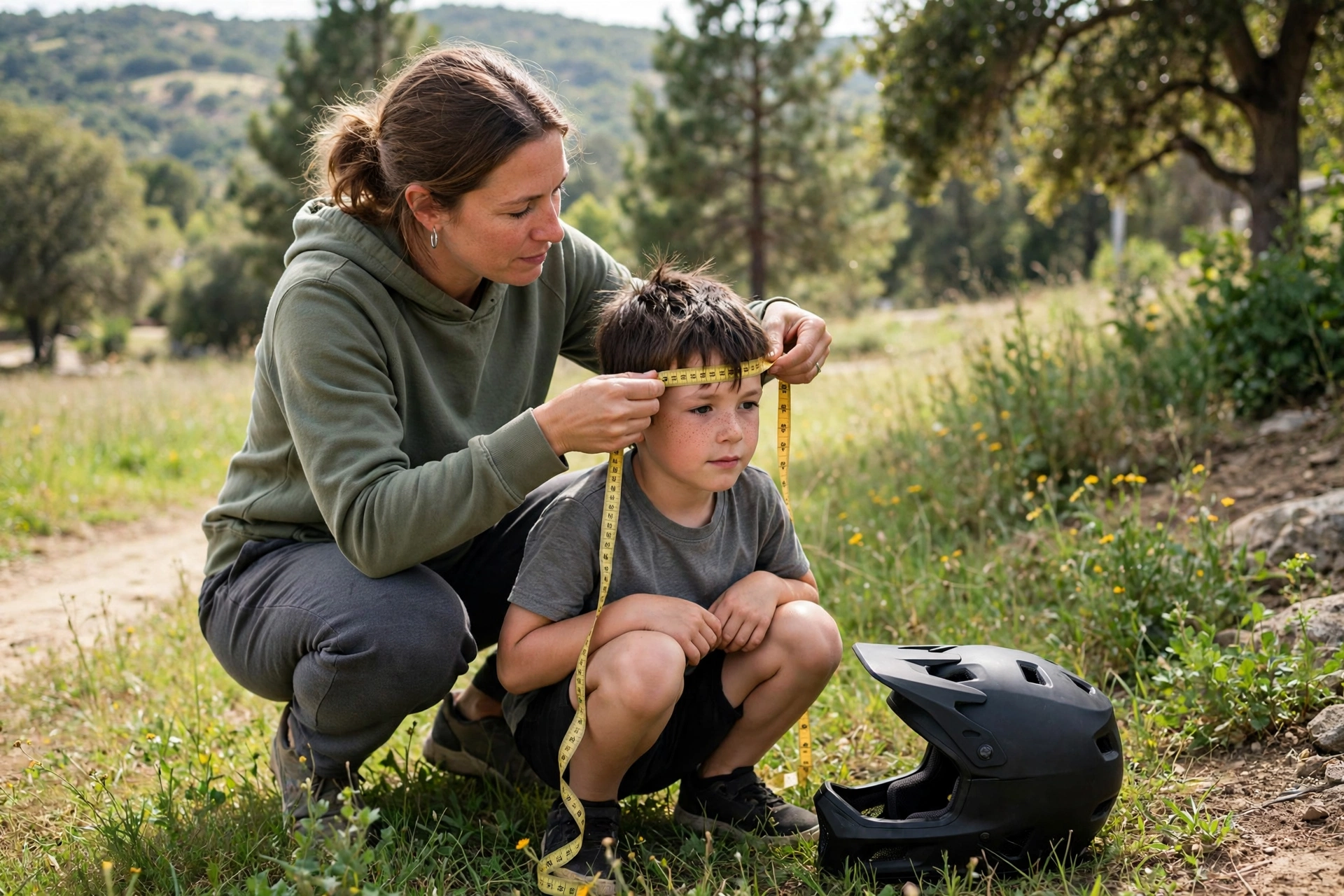
Use a soft fabric measuring tape. Wrap it around your head at the widest point: roughly an inch above your eyebrows in front, just above your ears on the sides, and around the prominent bump at the back of your skull. Keep the tape level and snug against your head without squeezing, and note the measurement in centimeters as well as inches, since many helmet brands chart sizes in centimeters.
No soft tape? Wrap a string or a phone charging cable around your head the same way, mark where it meets, and measure it flat against a ruler. Whatever you use, measure twice and use the larger consistent reading. Measure with your hair the way you actually wear it at the track — a thick ponytail or a cap underneath changes the number and ruins the fit.
How Do You Use a Brand’s Size Chart?
BMX helmet sizes usually run from XS through XL for adults and S through L for youth, but the head sizes behind those letters are not standardized. One brand’s medium might span a centimeter or two more than another’s, and full-face models often fit differently from the same brand’s open-face models because of the cheek pads. Always size from the chart of the exact model you are buying, never from the size of your last helmet.
If your measurement lands between two sizes, start with the smaller one. Helmet padding — especially cheek pads — compresses and breaks in slightly during the first few rides, so a helmet that feels almost too snug in the shop usually settles into a perfect fit, while a helmet that feels “comfortable and roomy” on day one will be loose within a month. Many full-face helmets also offer interchangeable cheek pads in different thicknesses, which lets you fine-tune a between-sizes fit without changing shells.
What Should a Full-Face BMX Helmet Feel Like When You Try It On?
Pull the helmet on with the straps apart, letting the cheek pads slide past your face. Once it is seated, the fit should feel snug and even all around. The cheek pads should press firmly against your cheeks — on a new full-face helmet, your cheeks will feel slightly squished, and speaking should feel a little funny. That is normal and correct. The crown should sit level, low on your forehead, with no sharp pressure point across your brow.
Now run the movement tests. Shake your head side to side and nod up and down: the helmet should move with your skin, not rotate or lag behind. Grip the chin bar and try to lift or twist the helmet — it should resist and stay seated rather than rocking up off your forehead. Fasten the retention strap and snug it so you can fit about two fingers between the strap and your chin; a loose strap lets even a perfectly sized helmet come off in a tumble. Finally, keep the helmet on for ten to fifteen minutes in the store or at home. Real pressure points announce themselves over minutes, not seconds, and this is your chance to catch a headache before it becomes a race-day problem.
How Do You Size a BMX Helmet for a Child?
The single most important rule: do not size up so your child can grow into the helmet. A loose helmet rotates, lifts, and can come off in exactly the crash it was bought for. Buy the size that fits correctly today, using the same measure-and-chart process as for an adult, and choose a youth model — youth shells are smaller and lighter, shaped for smaller heads rather than just padded down.
Children’s heads grow, so build in a habit: re-measure and re-check the fit at the start of every season, and sooner if the helmet starts riding high, the cheek pads stop making contact, or your child complains of new pressure. Some youth helmets include thicker pad sets to extend the usable life of a shell slightly, which is a safe way to fine-tune fit — very different from starting with an oversized helmet and hoping padding saves you. When comparing youth models, you will also see optional low-friction liners marketed for rotational protection, explained in our guide to what MIPS is in a helmet; treat that as a bonus feature after size and certification are right.
What Are the Signs You Picked the Wrong Size?
A helmet that is too small tells on itself quickly: a throbbing forehead hot spot, red marks that linger after you take it off, temples that ache, or a chin bar that crowds your mouth. A helmet that is too big fails differently — it rotates when you twist it, lifts at the back when you push up on the chin bar, drops over your eyes when you look down, or needs the strap cranked uncomfortably tight to feel stable.
Either direction is a reason to exchange, not to tough it out. Racing puts you over jumps at speed in a pack of riders; the helmet has to stay exactly where you put it through vibration, sweat, and impact. Take the extra few days to swap sizes or change cheek pad thickness, check the fit again with the shake and lift tests, and only then head for the gate.
Frequently Asked Questions
Q: How tight should a BMX racing helmet be?
A: Snug and even, with firm cheek pad contact and no movement when you shake your head. It should not cause sharp pain or a headache — if it still hurts after ten to fifteen minutes of wear, try the next size or different cheek pads.
Q: My measurement is between sizes. Which should I choose?
A: Start with the smaller size. Padding compresses slightly as it breaks in, so a snug new helmet settles into a secure fit, while a roomy one only gets looser. Interchangeable cheek pads can fine-tune the result.
Q: Can I buy a bigger helmet for my child to grow into?
A: No. An oversized helmet can rotate or come off in a crash. Buy the size that fits now, recheck it every season, and use pad swaps — not a bigger shell — to adjust the fit as your child grows.

Olivia
Writer at Helmet Today, covering helmet reviews, fit and riding safety.