It depends on your level — but the direction of the sport is unmistakable. At the top professional level, protective vests are required for every bull rider, while helmets are required for the younger generation of riders and remain a personal choice for veteran riders who choose to compete in a cowboy hat. In the PRCA and in amateur and youth bull riding, the rules lean harder toward protection: helmets are commonly required for minors, and many organizations require or strongly push both a helmet and a vest at every level. Whatever your circuit, check your specific organization’s rulebook before you nod your head — because “optional” at one event can mean “mandatory” at the next.
This guide explains how the requirements break down, what a bull riding helmet and vest actually are, and how to make a smart gear decision at any level.
What Are the Helmet and Vest Rules at the Professional Level?
Professional bull riding modernized its safety rules in stages. The protective vest became standard equipment first: at the top level of the PBR, every rider competes in a vest, no exceptions. The vest is treated the same way a seatbelt is treated in racing — simply part of the uniform.
Helmets followed a generational path. Rather than forcing every veteran to change the equipment he had used his whole career, the top level of the sport required helmets for riders who came up after the rule change — the younger generation — while allowing established veterans to continue riding in a cowboy hat if they chose. The practical result today: most riders you see at a televised pro event are in helmets, because most of the field turned professional after helmets became mandatory for new riders.
The PRCA, which sanctions rodeo including bull riding, has its own rulebook, and requirements can differ between organizations and events. The takeaway for any rider moving up: never assume last weekend’s rules apply this weekend. Confirm the current rulebook for the organization sanctioning your event.
What Are the Requirements for Youth and Amateur Bull Riders?
Step down from the pro tour and the rules get stricter, not looser — especially for kids. Youth rodeo associations, junior bull riding organizations, high school rodeo, and most amateur promoters commonly require:
- A helmet with a face mask for all minor riders, and often for every rider in the event regardless of age
- A protective vest for all riders, fitted and fastened before the gate opens
- A mouthguard in many youth organizations
- Gloves, chaps, and spurs that meet the organization’s equipment rules
Individual arenas and promoters can also impose requirements beyond the sanctioning body’s minimums, and state law can enter the picture for minors. When in doubt, bring both helmet and vest — no rider has ever been turned away for wearing too much protection.
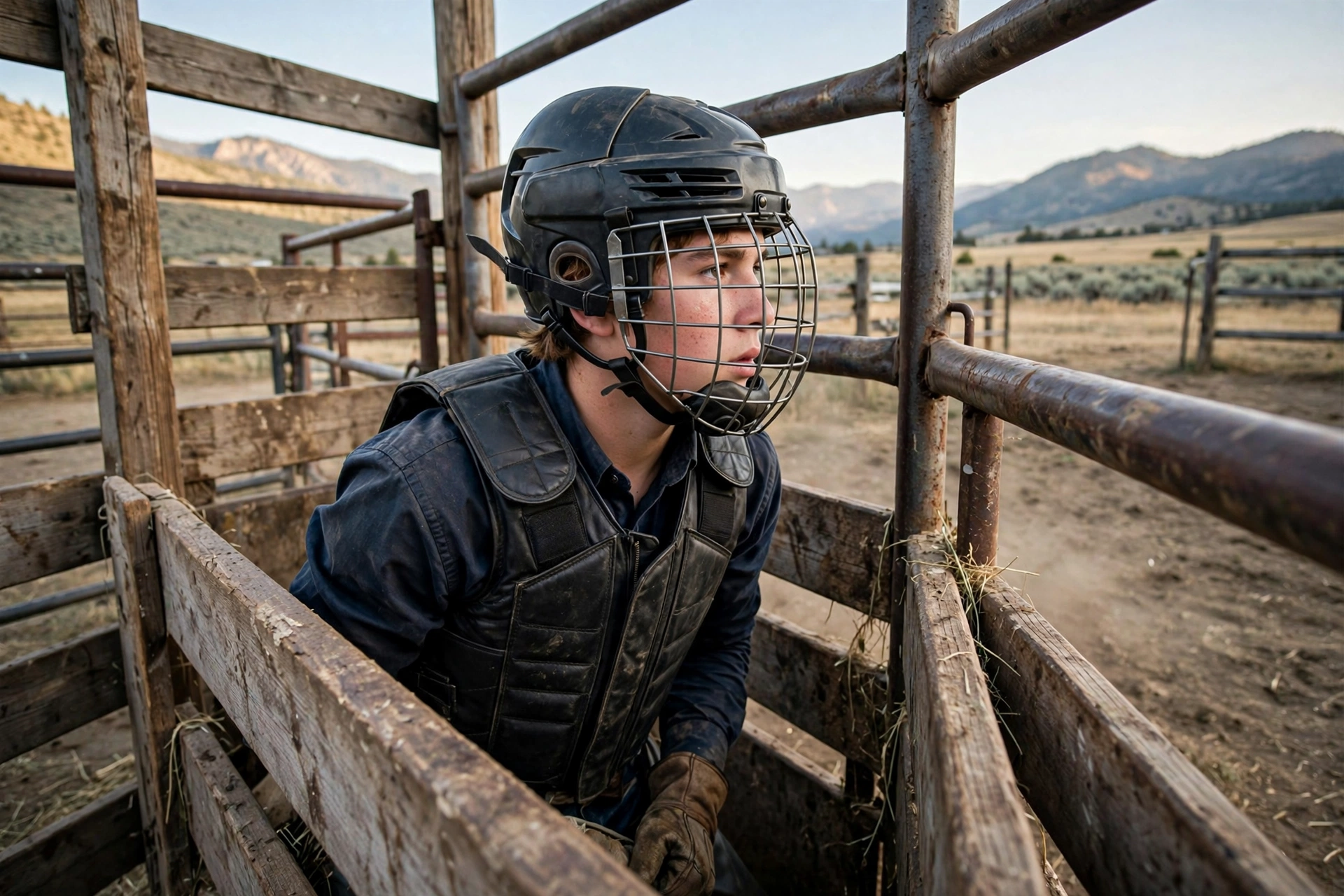
What Exactly Is a Bull Riding Helmet?
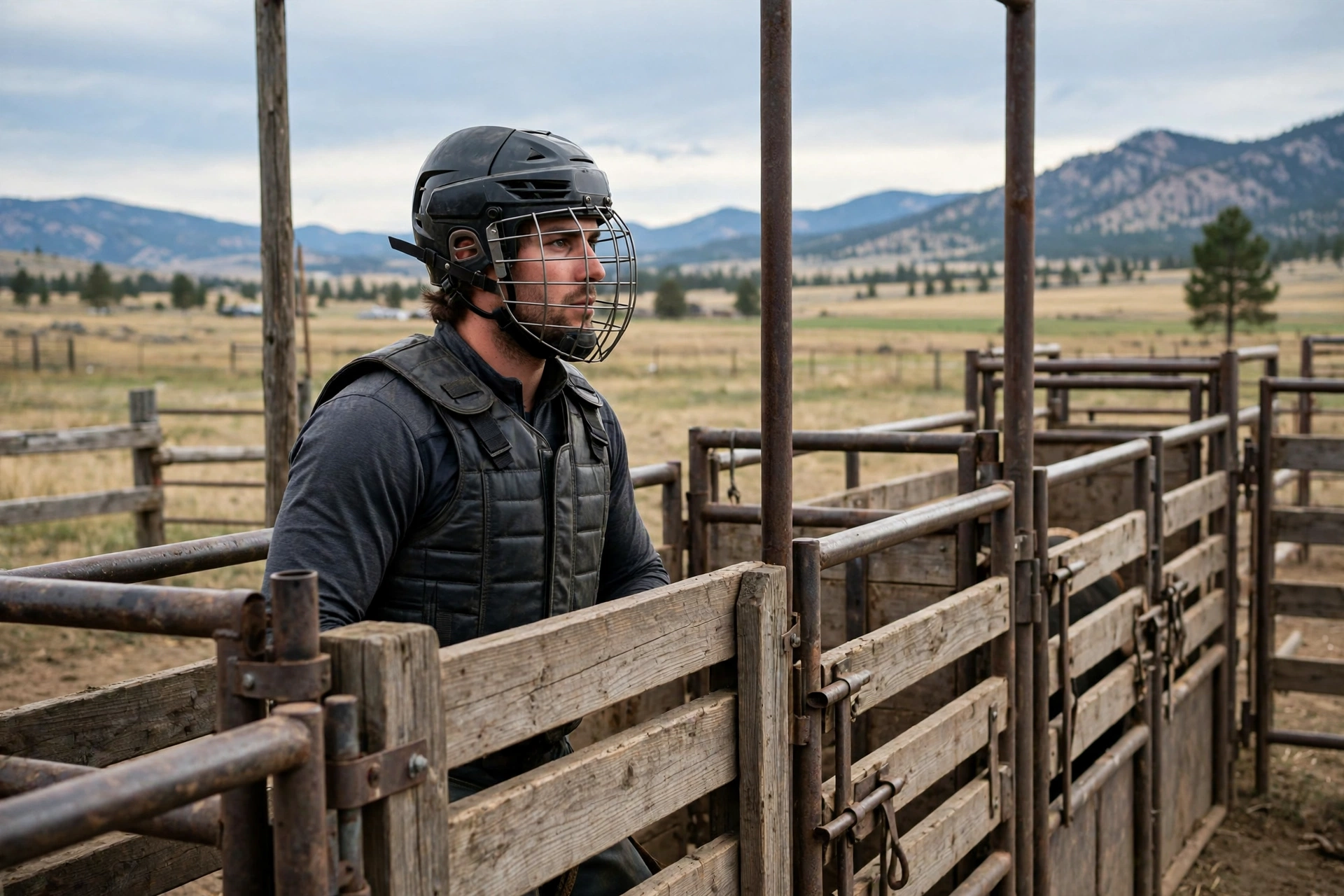
A bull riding helmet is not a cowboy hat with a shell hidden inside, and it is not a standard hockey helmet pulled off a sporting-goods shelf — though its design borrows from hockey. Purpose-built bull riding helmets use a hard protective shell shaped to cover the skull, fitted with an attached metal face mask (cage) that protects the face and jaw from hooves, horns, arena rails, and the bull’s head.
Key features to understand:
- Shell and liner: Built to absorb and spread impact energy from falls onto packed dirt and strikes from the animal.
- Face mask: The cage is integral to the design, guarding the face while preserving vision. Some riders choose models with different mask configurations.
- Chin strap: Must be fastened snugly — a helmet that comes off in the first jump protects nothing.
- Fit: Sized to the rider’s head and adjusted so it does not shift when the bull spins.
Riders crossing over from other helmet sports sometimes ask whether technologies like the rotational-impact system described in our guide to what MIPS is in a helmet apply here. Bull riding helmets are engineered around this sport’s specific impacts — dirt, steel, and a very large animal — so buy a helmet built and sold for bull riding rather than adapting gear from another sport.
What Does a Bull Riding Vest Actually Do?
The vest protects the torso — ribs, chest, back, and internal organs — against the two most dangerous forces in bull riding: the impact of hitting the ground, and a hoof strike or horn from a bull that weighs around a ton. Modern vests use layered, energy-absorbing materials that spread a concentrated blow over a wider area, turning what could be a rib-shattering, organ-damaging strike into a survivable one.
Vests are also built for the torque problem. A rider who gets hung up or thrown awkwardly twists violently; vest construction helps protect the spine and kidneys through that wrenching motion and the landing that follows. The vest must fit snugly and be fully fastened to work — a loose, unzipped vest rides up and leaves the ribs exposed.
Fit check: the vest should cover from the collarbone to below the bottom rib, hug the torso without restricting breathing, and stay in place when you raise your arms as you would in the chute.
Why Do Some Riders Still Choose a Cowboy Hat?
Tradition, feel, and vision. Veteran riders grew up riding in a hat and believe they read the bull better with nothing around their head; the hat is also part of rodeo’s identity, and the pro rules grandfathered their choice. But notice the trend: as each new class of riders turns pro under helmet-mandatory rules, the share of the field wearing helmets grows, and several famous converts switched after serious head injuries. The sport’s culture is changing one generation at a time.
For a new rider, the calculation should be simple. The helmet does not change how the bull bucks. It changes what happens in the two seconds after you leave his back — which is when riders get hurt.
How Do You Make Sure You Meet the Requirements?
Use this checklist before any event:
- Read the sanctioning body’s current rulebook — PBR, PRCA, your state high school rodeo association, or the youth organization running the event.
- Check with the promoter or arena for event-specific equipment rules, which can be stricter than the rulebook minimum.
- For minors, confirm age-specific rules — helmet and vest requirements for under-18 riders are the least negotiable in the sport.
- Inspect your gear: helmet shell and mask undamaged, strap sound, vest fully closing with no crushed panels. Replace a helmet after a significant impact.
Rules in this sport vary by organization, level, age, and sometimes by state — general guidance like this page is a starting point, never a substitute for the rulebook of the event you are entering.
Frequently Asked Questions
Q: Are helmets mandatory in professional bull riding?
A: At the top level, helmets are required for the younger generation of riders who turned pro under the modern rules, while veterans may still choose a cowboy hat. Protective vests, by contrast, are required for every rider at that level.
Q: Do youth bull riders have to wear a helmet and vest?
A: In most youth, junior, and high school organizations, yes — a helmet with a face mask and a protective vest are standard requirements for minors, and many amateur events require both for adults too. Always confirm with your organization’s rulebook.
Q: Can I use a hockey helmet for bull riding?
A: No. Buy a helmet designed and sold for bull riding, with the shell coverage and attached face mask the sport demands. Other sports’ helmets are engineered for different impacts and may not meet event equipment rules.

Olivia
Writer at Helmet Today, covering helmet reviews, fit and riding safety.