The short answer: both setups are legitimate when they are properly certified and fitted, but the hockey-style catcher’s helmet gives you more complete protection. It covers the ears, the sides of the head, and the back of the skull — exactly the spots a foul tip, a wild backswing, or a collision can reach. The traditional mask and skull cap combo is lighter, cooler, and easier to flip off on a pop-up, which is why many experienced catchers still prefer it. The right choice depends on your level of play and what you value most.
What Is a Hockey-Style Catcher’s Helmet?
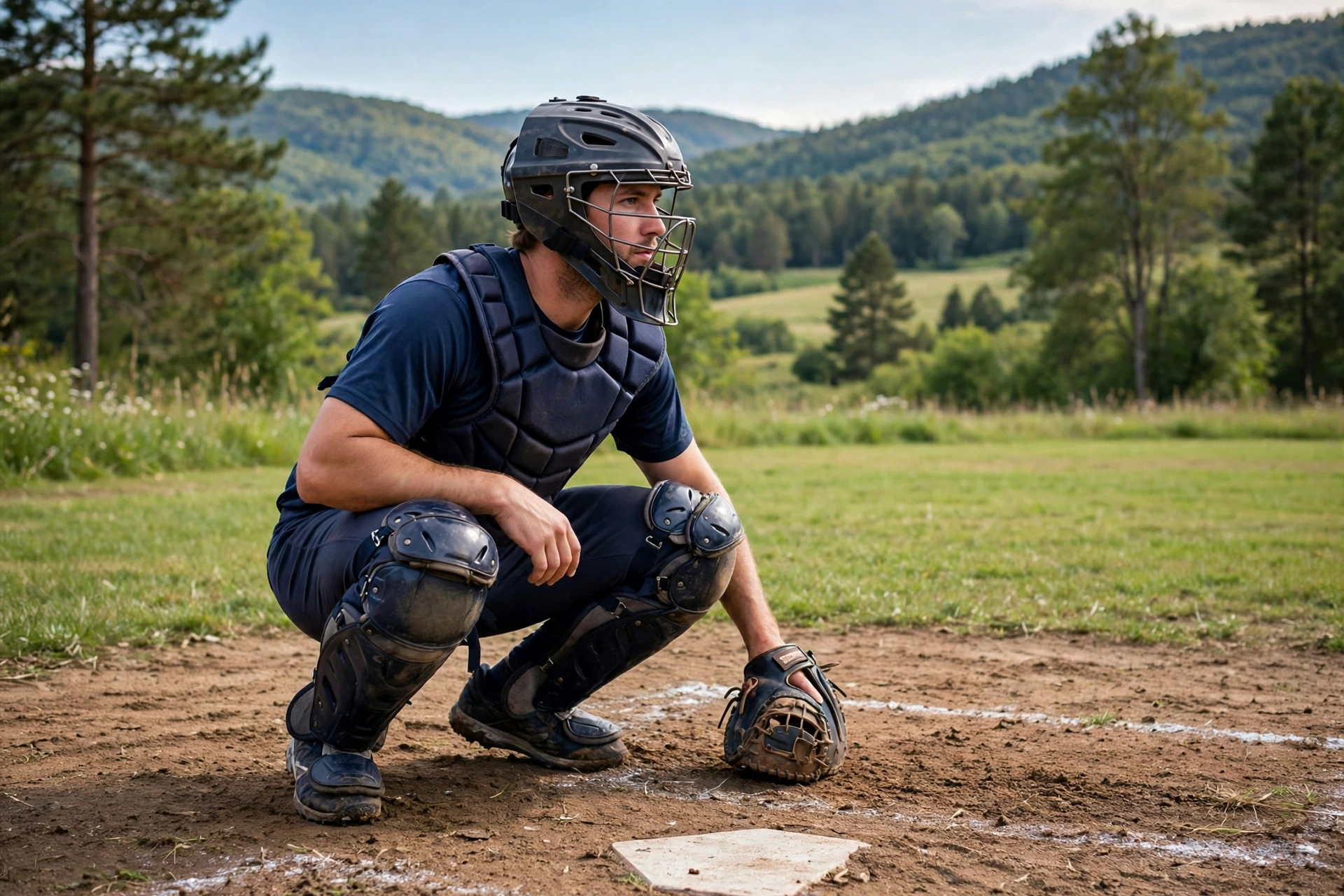
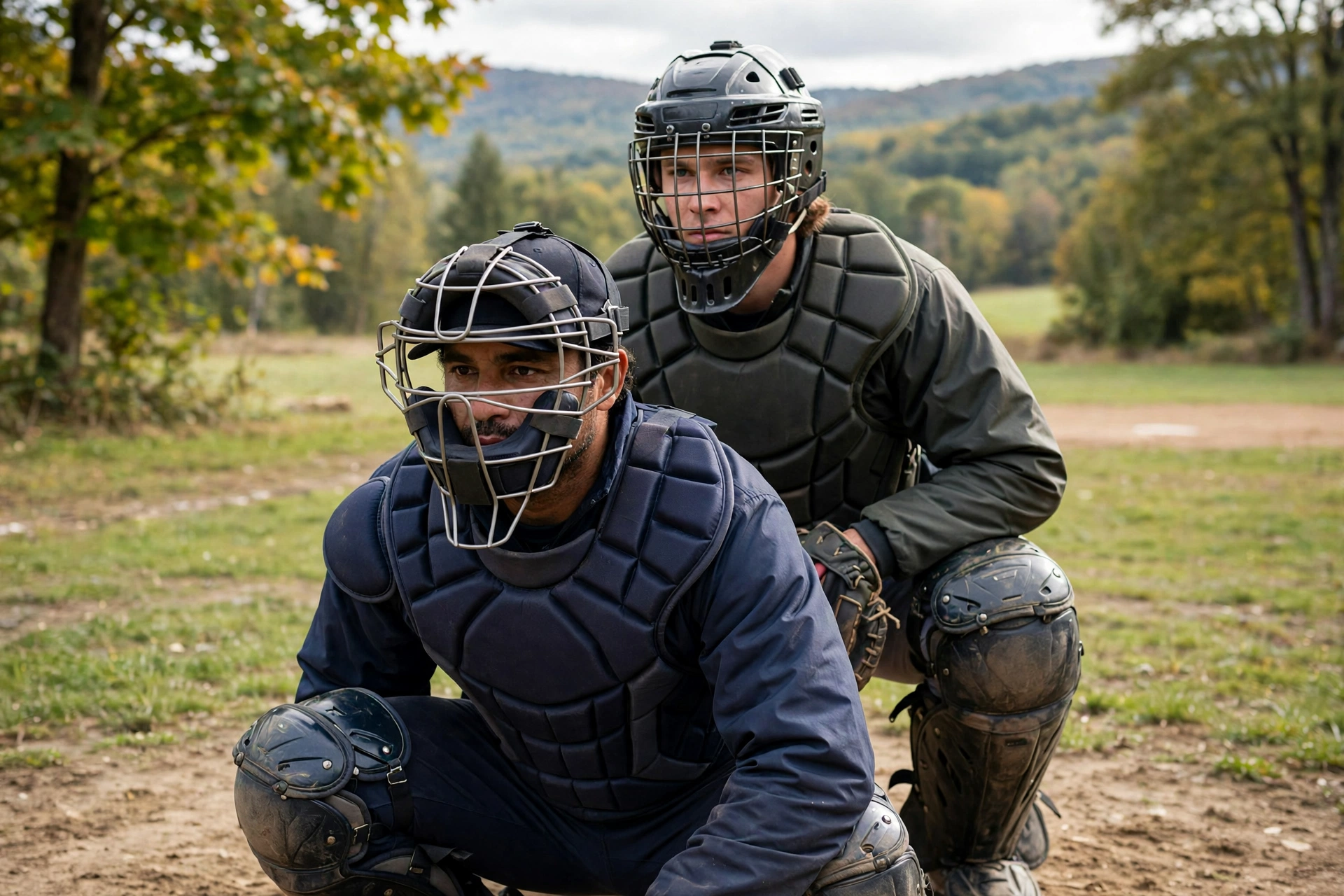
A hockey-style catcher’s helmet is a one-piece unit: a hard protective shell covers the entire head, much like a hockey goalie mask, with a steel mask frame attached at the front. It protects the top, sides, back, and ears of the head, not just the face. The shell spreads impact forces over a wider area, and the padding inside absorbs energy from foul tips that come straight back.
This style has become the default in youth baseball and softball and is common at the high school and college levels too. It is simple to put on, stays put during blocks and throws, and works well for developing catchers who may turn their head on a pitch or get caught by a batter’s follow-through. The trade-offs are weight and heat: a full helmet traps more warmth, and some catchers feel it limits their peripheral vision slightly compared with a traditional mask.
What Is a Traditional Mask and Skull Cap Setup?
The traditional setup is two pieces: a steel face mask with shock-absorbing pads, held on by straps, worn over a hard skull cap that covers the top of the head. Catchers have worn some version of this for generations, and it remains popular with advanced and professional catchers.
Its advantages are real. It is lighter and much cooler in summer heat, the open design gives excellent visibility and hearing, and an experienced catcher can remove the mask quickly and cleanly on pop-ups and plays at the plate. The limitation is coverage. The skull cap protects the crown, but the ears, the sides of the head, and especially the back of the head are far less protected than they are in a full helmet. A backswing that gets past the shoulder, or a foul ball that deflects sideways, has less gear in its way.
Which Setup Protects Better Against Foul Tips and Backswings?
Straight-on, the two are closer than most people expect. A quality mask frame and pads handle a direct foul tip well, and a quality full helmet does too. The meaningful difference is everywhere else. Backswings are the classic example: a batter’s follow-through or an uncontrolled swing can strike the side or back of a catcher’s head, and a full helmet simply has protective shell in places where the traditional setup has a strap, a cap edge, or nothing at all. The same is true for collisions at the plate and thrown bats.
One honest caution applies to both: no catcher’s headgear eliminates concussion risk. Any hard impact to the mask transfers some energy to the head, which is why modern designs keep borrowing ideas — better energy-absorbing foams and low-friction layers that address rotational forces, similar in spirit to the technology described in our explainer on what MIPS is in a helmet. Fit matters enormously too: a loose helmet or a loose mask moves on impact and protects less than a snug one, whichever style you choose.
Also consider what happens over a full game. A catcher takes repeated small knocks — balls in the dirt bouncing up, glancing fouls, and tags at the plate. A full helmet tends to hold its position well through nine innings of crouching, blocking, and throwing, while a traditional mask can gradually work loose if the straps stretch or the pads compress with sweat and use. That is why both styles deserve a quick fit and strap check before every game, not just on the day you buy them.
What Do the Standards and League Rules Require?
Catcher’s headgear in organized baseball and softball is governed by safety standards, most notably the NOCSAE standard for catcher’s headgear, which covers things like mask strength and overall construction. In general terms, leagues that follow national rulebooks require the catcher’s head protection to meet the applicable standard, and many youth organizations go further and require the full hockey-style helmet for their catchers, sometimes along with a throat guard attached to the mask.
Rules vary by league, age group, and whether you play baseball or fastpitch softball, so always check your own rulebook before the season starts rather than assuming last year’s gear is legal. Two practical points hold everywhere: buy gear that is certified and clearly labeled as meeting the standard, and never use a cracked shell, a bent mask frame, or a setup with worn-out padding, because damaged gear may no longer perform the way it was tested.
So Which One Should You Choose?
If you are buying for a youth catcher, a beginner, or anyone still building the habit of keeping their head still behind the plate, choose the hockey-style helmet. The extra coverage protects against the unpredictable impacts — backswings, deflections, collisions — that younger catchers are least prepared to avoid, and it removes several fit variables because it is one integrated unit.
If you are an experienced catcher at a high level who plays long summer schedules, the traditional mask and skull cap remains a reasonable choice provided it is certified, correctly fitted, and paired with a throat guard where your league requires one. You gain comfort, ventilation, and visibility, and you accept less side and back coverage in exchange. Either way, prioritize certification and fit over looks or brand, replace gear after a serious impact, and let comfort guide you only between options that protect you properly.
Frequently Asked Questions
Q: Is a catcher’s helmet safer than a traditional mask?
A: For overall coverage, yes. Both handle direct foul tips well when certified, but the full helmet also protects the ears, sides, and back of the head from backswings and collisions, where the traditional setup offers much less coverage.
Q: Why do so many pro catchers wear the traditional mask?
A: Comfort and visibility. It is lighter, cooler in hot weather, easier to hear through, and quick to remove on pop-ups. Experienced catchers also have refined technique that reduces their exposure to the impacts a full helmet guards against.
Q: Does my league require one specific style?
A: It might. Many youth organizations require the hockey-style helmet, and most rulebooks require headgear meeting the NOCSAE catcher’s standard. Check your league’s current rulebook, since requirements differ by organization and age group.

Olivia
Writer at Helmet Today, covering helmet reviews, fit and riding safety.