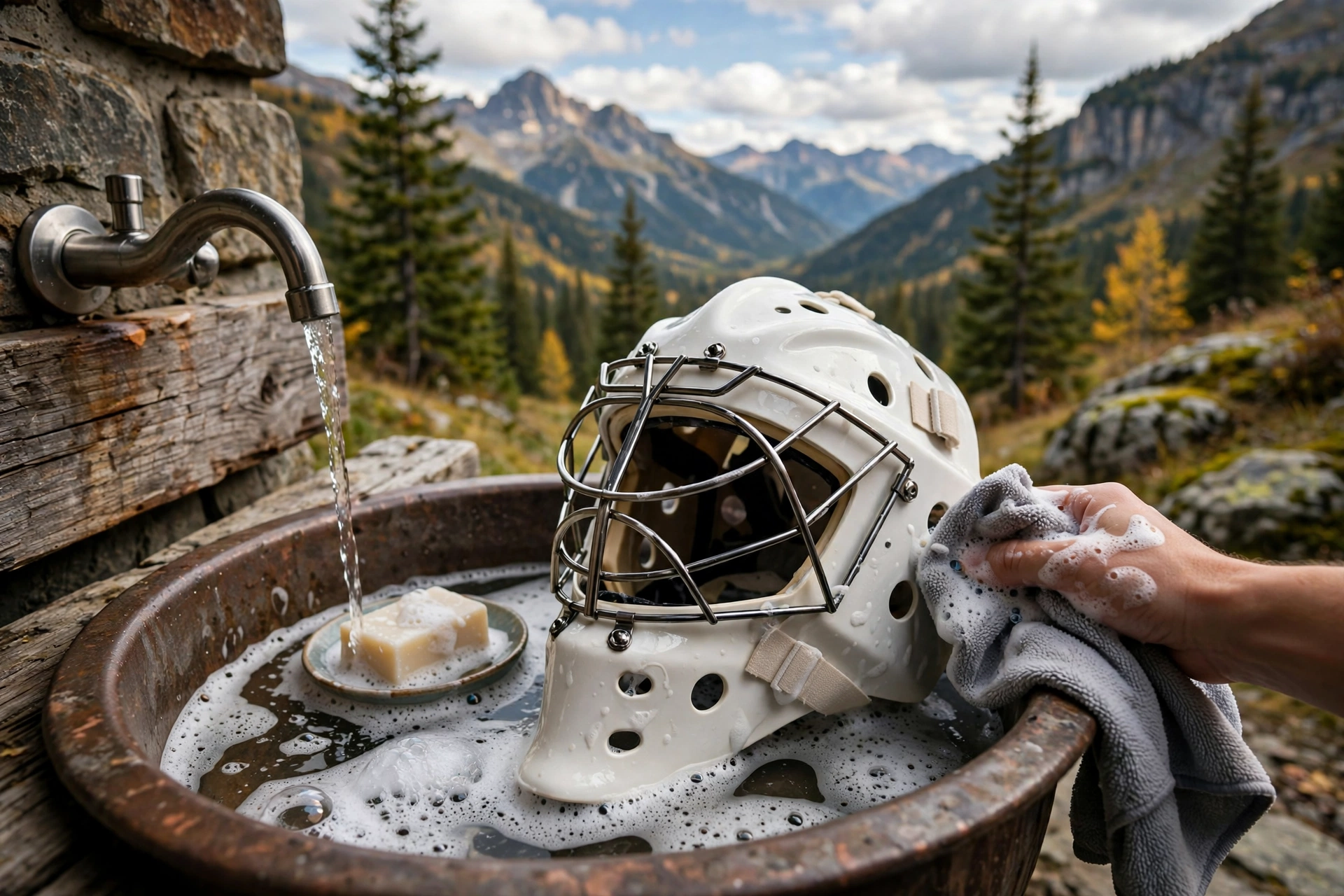
The right way to clean a goalie mask is simple: take it out of your bag and air it after every use, wash the shell, cage, foam, and chin cup regularly with mild soap and warm water, and let everything dry completely at room temperature. Never use harsh solvents, bleach, or high heat — they can weaken the shell, foam, and adhesives that your protection depends on.
A goalie mask spends its life pressed against a sweating face, then gets zipped into a dark equipment bag — a perfect recipe for bacteria, odor, and skin irritation. Regular cleaning keeps the mask comfortable, extends the life of the foam and straps, and gives you a chance to spot damage early. Here is the routine that works, from the quick after-game air-out to a full deep clean.
What Should You Do After Every Game or Practice?
The single most important habit happens before any soap: get the mask out of the bag. As soon as you get home, remove the mask and let it air out in an open, ventilated space. Trapped moisture is what feeds the bacteria that cause odor and break foam down over time.
While it airs, wipe the shell and cage with a soft cloth to remove sweat, tape residue, and rink grime. If you wear a dangler (throat guard), wipe it too. Loosen the backplate straps slightly so the foam is not compressed while it dries — foam that stays crushed in a bag loses its spring faster. This two-minute routine prevents most of the smell and wear that goalies blame on “old gear.”
How Do You Wash the Shell, Cage, and Foam?
Every few weeks — or whenever the smell builds up — do a proper wash:
- Disassemble carefully. If you remove the cage, keep track of every screw, clip, and spacer, and note which hardware goes where. Take a photo before you start if it helps. Protect the dangler straps and hardware the same way.
- Make a mild solution. Warm water with a small amount of gentle soap — a drop of mild dish soap or a gear-safe cleaner — is all you need.
- Wash the shell and cage. Use a soft cloth or sponge, inside and out. A soft brush helps around cage bars and screw heads. Rinse with clean water so no soap film remains.
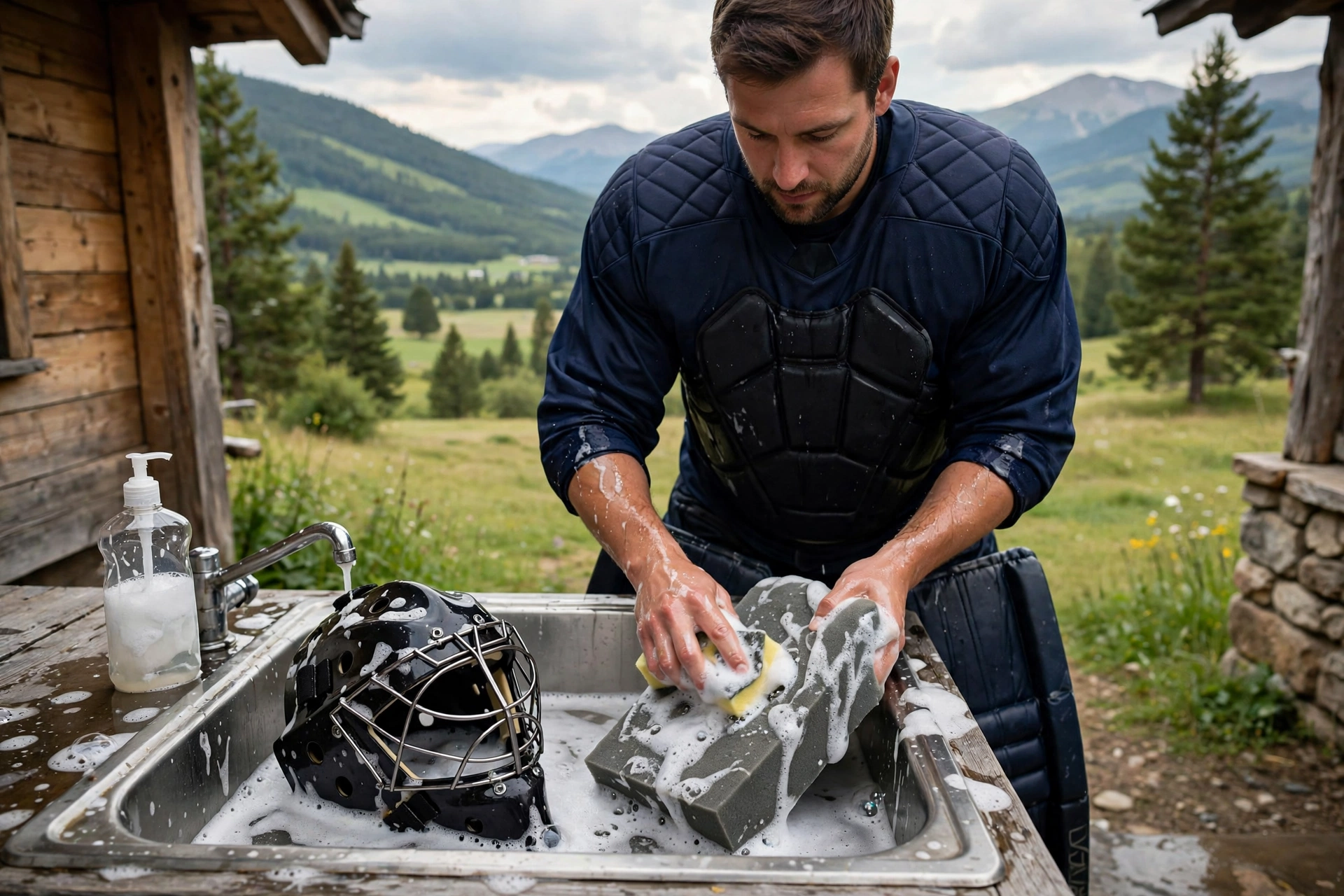
- Clean the foam and chin cup. These absorb the most sweat. Press the soapy solution through the foam gently, squeeze (don’t twist or wring hard), and rinse until the water runs clear. Give the chin cup — and its strap — extra attention.
- Dry at room temperature. Pat everything with a towel, then air-dry completely before reassembling. That can take a day. Never rush it with a hair dryer or heater.
 >
How Do You Get the Sweat Smell Out of a Goalie Mask?
Odor comes from bacteria living in the foam, so washing is the real fix — sprays only mask it. If the smell survives a wash, repeat the foam cleaning and make sure the mask dried fully; odor often lingers because the foam went back into the bag still damp. An enzyme-based gear deodorizer made for sports equipment can help between washes, sprayed lightly and allowed to dry.
Prevention beats cure. Air the mask after every use, never leave it zipped in the bag overnight, and rotate to a dry chin cup strap or sweatband setup if your setup allows. The same sweat-management logic applies across protective gear — it is the principle behind modern moisture-wicking liners in all kinds of helmets, as explained in our guide to how modern helmet safety and liner systems work.
What Should You Never Use on a Goalie Mask?
Some shortcuts damage the very materials that protect you. Avoid:
- Harsh solvents and chemicals: Acetone, gasoline, paint thinner, and strong degreasers can attack the shell’s resin and finish.
- Bleach and abrasive cleaners: These break down foam, fade and weaken straps, and scratch the shell.
- Heat: Hair dryers, heaters, ovens, and hot car trunks can warp the shell and degrade foam and glue. Always air-dry at room temperature.
- Dishwashers and washing machines: The heat, water pressure, and detergents are all wrong for a mask.
- Pressure washers: Far too aggressive for foam, straps, and hardware.
When in doubt, stick with mild soap, warm water, a soft cloth, and patience. If a product is not made for sports gear or the mask manufacturer’s care instructions warn against it, leave it on the shelf.
How Should You Store a Goalie Mask — and What Should You Check While Cleaning?
Store the mask dry, unstrapped or loosely strapped, in a ventilated area — ideally in a breathable mask bag rather than sealed inside your equipment bag. Keep it out of direct sunlight and away from heat sources, and don’t stack heavy gear on top of it. Before long off-season storage, give it a full wash and confirm it is completely dry first.
Cleaning time is also inspection time. While the mask is apart and in your hands, check for:
- Cracks, chips, or stress whitening in the shell
- A bent or cracked cage, and screws or clips that are loose, rusty, or stripped — tighten or replace them
- Foam that is compressed, cracking, or peeling away from the shell
- Frayed straps or a worn chin cup
- A dangler with cracks or damaged attachment points
Replace worn parts as you find them rather than playing through them. Cleaning keeps the mask fresh; inspection keeps it protective — and the two habits together are how a good mask lasts.
Frequently Asked Questions
Q: How often should you wash a goalie mask?
A: Air it out after every use, and do a full mild-soap wash every few weeks, or sooner if odor builds up. Sweat-heavy foam and the chin cup benefit from the most frequent attention.
Q: Can you put a goalie mask in the dishwasher or washing machine?
A: No. The heat, pressure, and detergents can warp the shell, degrade foam and adhesives, and damage straps and hardware. Hand-wash with mild soap and warm water, then air-dry at room temperature.
Q: Why does my goalie mask still smell after washing?
A: Usually because the foam went back into the bag while still damp, or the foam needs a second wash with the solution pressed through it. Dry the mask completely — a full day if needed — and air it out after every use to stop odor from returning.

Olivia
Writer at Helmet Today, covering helmet reviews, fit and riding safety.