In general terms, there is no single European law on children’s cycling helmets: each country sets its own rules, and those rules vary widely in the ages they cover and where they apply. Some countries require helmets for children up to a certain age, others only require them in specific situations, and several leave the decision to parents. If your family cycles across borders, the rule that applied at home may not be the rule where you are riding.
This overview explains, in general terms, how children’s cycling helmet laws work across Europe, why they differ so much, and what parents should check before a ride. It is general information only, not legal advice, and local rules can change — always check the current rules for the place you are riding before you set off.
Do European Countries Require Children to Wear Cycling Helmets?
In general terms, the answer depends on where you are. A number of European countries have age-based helmet requirements for children cycling on public roads, while others have no legal requirement at all and rely on guidance and encouragement instead. Even among countries with a requirement, the age cut-off differs: in some places it covers only younger children, while in others it extends further into the teenage years.
It also matters who the rule applies to. Some rules cover a child riding their own bicycle, while others also cover a child carried as a passenger, for example in a child seat or trailer. A family can therefore be fully compliant in one situation and not in another, even on the same trip. That is why it is worth checking both the riding rule and the passenger rule for your destination.
The pattern across Europe is best understood as a patchwork rather than a single system. Neighbouring countries can take very different approaches, and a short cross-border ride can move you from a place with a strict requirement to a place with none. Planning ahead matters more than assuming the rules travel with you.
Why Do Children’s Helmet Laws Differ So Much Across Europe?
The differences reflect different national approaches to road safety. Some governments prefer laws that require helmets for children, seeing them as a straightforward way to protect young riders. Others prefer education, safe infrastructure, and voluntary helmet use, arguing that separated cycle paths and slower traffic do more for safety than a legal requirement alone. Neither approach is universal, and both have supporters among road safety experts.
History plays a part too. Countries that built extensive cycling infrastructure early often developed their safety culture around separated paths and driver awareness, while countries where cycling shares the road more closely with motor traffic have tended to lean harder on protective equipment rules. Local cycling rates, urban design, and political attitudes all feed into the final law.
Enforcement differs as well. In some places a helmet rule is actively enforced, while in others it exists on paper but is rarely policed. Enforcement style should never be your guide, though: the point of the rule is your child’s safety, and a helmet that fits well protects a child whether or not anyone is checking.
What Should Parents Check Before Cycling Abroad With Children?
Start with the destination’s current rules: the age range covered, whether the rule applies to passengers as well as riders, and whether it applies on all roads or only some. Official tourist or transport authority pages for the country are usually the most reliable source, and they are worth checking close to your trip in case the rules have changed.
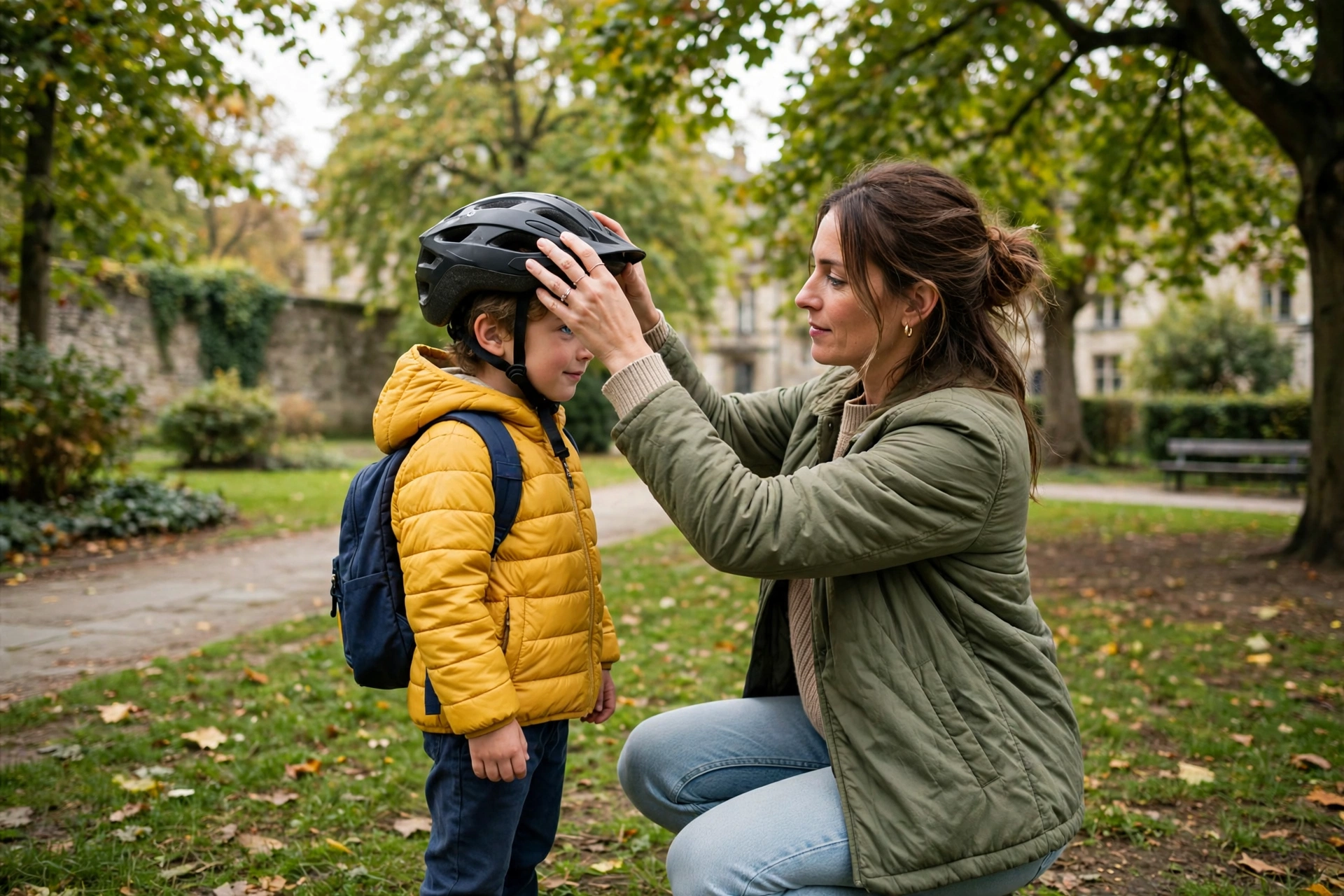
Next, check the helmet itself. A helmet bought at home should still fit properly after a flight or a long car journey, and straps and buckles should be undamaged. The helmet should sit level on the head, cover the forehead, and stay snug when the child shakes their head gently. A helmet that has been crashed or dropped hard should be replaced, whatever the law says.
Finally, think about the riding environment. A quiet park path and a busy city road are different propositions, and many parents choose to have children wear helmets on every ride regardless of the local law. That removes any doubt at borders and builds a habit that carries into adult cycling.
Does a Helmet Law Apply to Tourists and Visiting Families?
In general terms, yes: road rules normally apply to everyone using the road in that country, including visitors. A family on holiday is not usually exempt from a local helmet requirement just because their home country has no such rule. Rental bikes and tour operators sometimes supply helmets, but you should not assume this — ask in advance, or bring your child’s own helmet if you can.
This is a practical point as well as a legal one. A child who is used to their own helmet will wear it happily, while an unfamiliar rental helmet may fit poorly and get pushed aside. If you are flying, pack the helmet in hand luggage or in protective wrapping so it arrives in good condition.
If you are unsure about the rules for a particular place, the safest course is simple: have every child wear a well-fitting helmet on every ride. You will then be covered whether or not the local law requires it.
How Do You Choose a Helmet a Child Will Actually Wear?
Fit comes first. Measure around the child’s head just above the eyebrows and ears, and choose a size that matches the maker’s guide. The helmet should sit level, not tilted back, and the straps should form a snug V under each ear with the buckle fastened. Let the child try it on and adjust it together so it feels comfortable from the start.
Comfort matters as much as size. Good ventilation keeps a child cool on warm days, light weight reduces complaints on longer rides, and a simple dial or pad adjustment system lets you fine-tune the fit as the child grows. A helmet that pinches, wobbles, or overheats will end up hanging from the handlebars.
It also helps to understand how modern helmets protect the head. Many now use liner systems designed to reduce twisting forces in an angled fall, and learning how these work can help you judge what you are buying. For a plain-language explanation, see what MIPS means for helmets and how rotational-impact protection differs from a standard foam liner.
Frequently Asked Questions
Q: Is there one helmet law for children across all of Europe?
A: No. Each country sets its own rules, and they differ in the ages covered and the situations they apply to. Always check the current rules for the specific country where you will be riding.
Q: Does a child need a helmet if they are carried as a passenger?
A: In general terms, some countries extend helmet rules to child passengers in seats or trailers, while others do not. Check the passenger rule for your destination as well as the riding rule.
Q: Should my child wear a helmet even where the law does not require it?
A: Many safety experts and parents say yes. A well-fitting helmet protects a child on any ride, and wearing one everywhere removes all doubt when you cross into a country with different rules.

Olivia
Writer at Helmet Today, covering helmet reviews, fit and riding safety.