

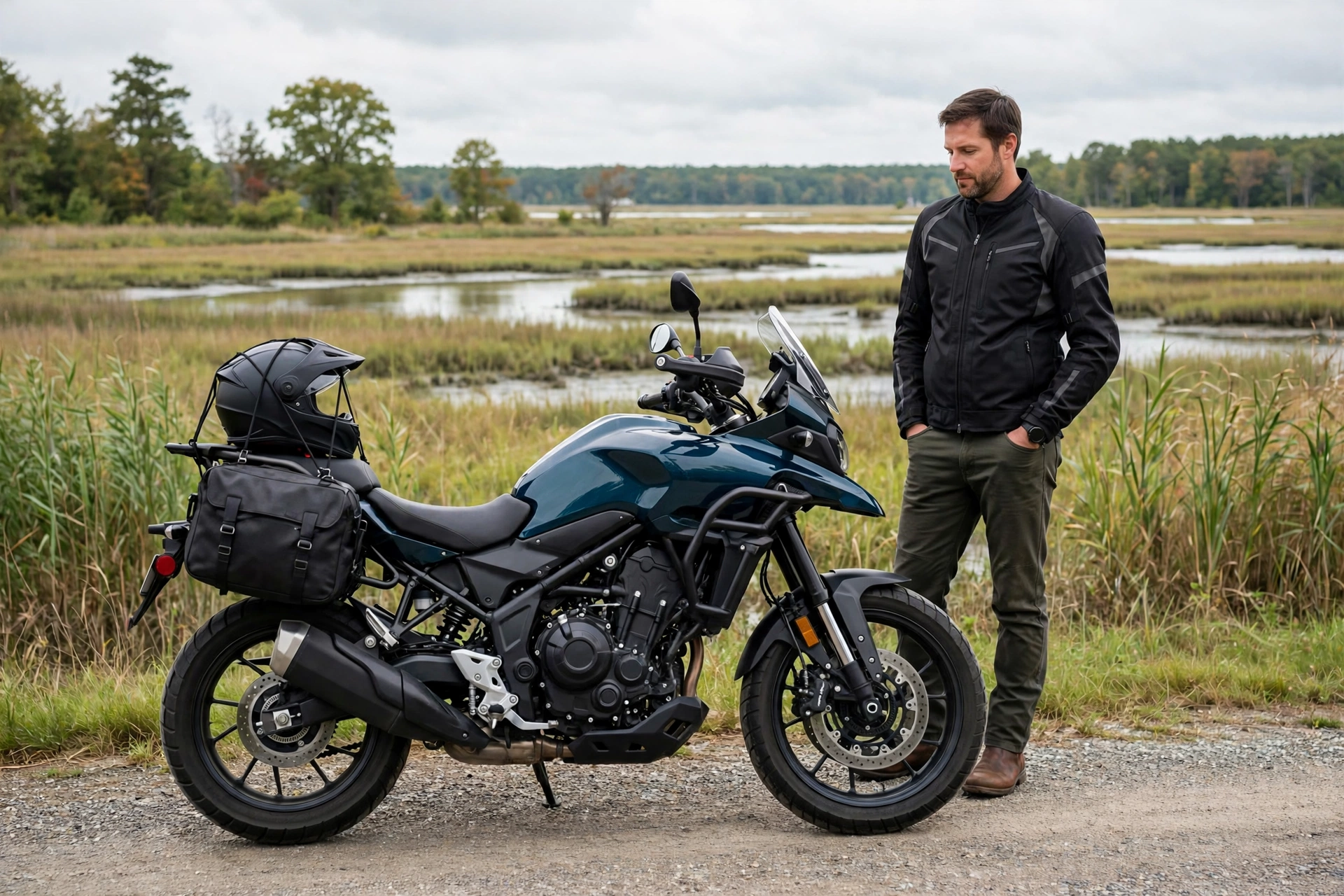
Delaware has one of the most unusual helmet laws in America. Riders and passengers under 19 must wear an approved helmet, and every rider aged 19 or over must have an approved helmet in their possession, carried on the motorcycle, while riding — even though actually wearing it is optional for adults.
That “wear it if you’re young, carry it if you’re older” structure confuses a lot of riders, especially visitors passing through the First State. Add in a separate eye protection requirement, and Delaware is a state where you really do need to know the rule before you ride. Here is how the age limit and the carry rule actually work.
What Is the Helmet Age Limit in Delaware?
The age line in Delaware is 19, not 18 or 21 as in most partial-law states. Anyone under 19 years old — operator or passenger — must wear an approved helmet while the motorcycle is on a public road. An 18-year-old who is fully licensed still has to wear one in Delaware, which surprises riders coming from states where the requirement ends at 18.
For passengers, the duty effectively falls on both people. The young passenger must be wearing the helmet, and the adult operator who carries an unhelmeted under-19 passenger can be held responsible for allowing it. If you regularly ride with a teenage passenger in Delaware, their helmet is not optional equipment; it is part of the legal basics of the ride.
As with other states, the helmet must be a genuine approved motorcycle helmet meeting federal standards, properly fastened — not a novelty shell or a bicycle helmet.
What Is Delaware’s Helmet Carry Rule for Adults?
Once a rider turns 19, Delaware flips the rule in a way no other state quite matches. Wearing the helmet becomes optional, but having one does not. Every operator and passenger aged 19 or over must keep an approved helmet in their possession on the motorcycle while riding. Leave the helmet at home and you are breaking the law, even on a short trip.
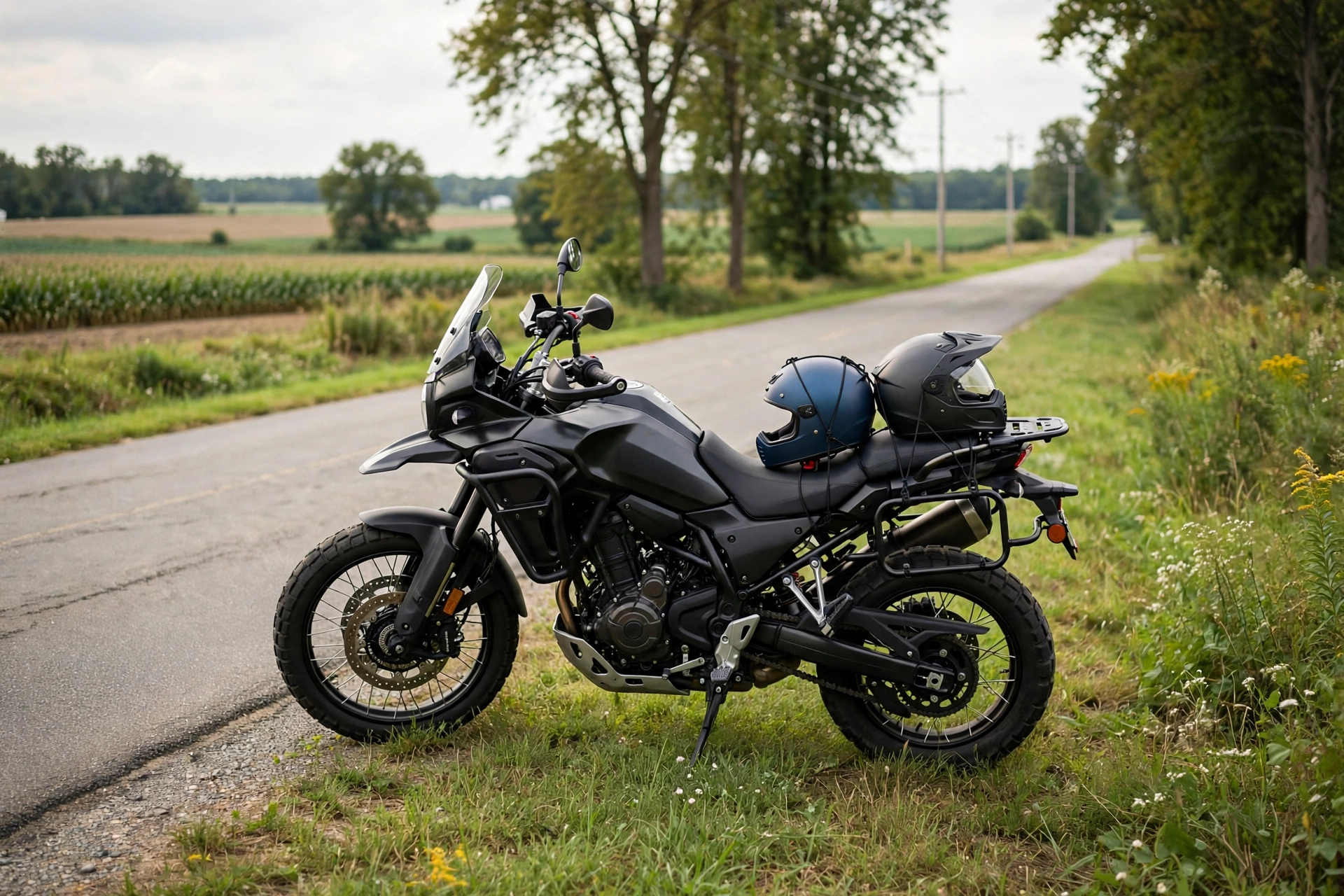
In practice, riders satisfy the carry rule by keeping a helmet strapped to the bike, in a saddlebag or top case, or on a helmet lock. The safest interpretation is simple: the helmet travels with the motorcycle, for every person on it. Two-up riding means two helmets must be present — one worn or carried for the operator, and one for the passenger, who must wear theirs if they are under 19.
Does Delaware Require Eye Protection on a Motorcycle?
Yes. Delaware also requires riders to wear eye protection. If you are riding without a helmet — which adults may do, as long as the helmet is carried on the bike — you still need proper protective eyewear such as goggles or riding glasses.
This is the rule that most often trips up out-of-state riders. Someone crossing in from Pennsylvania, where adult helmets are also optional, may ride legally without a helmet in both states but still fall foul of the details in Delaware: no helmet on board, or no eye protection, is enough to make the ride unlawful. Maryland, right next door, is stricter still and requires helmets for all riders, as our state-by-state guide to helmet laws by state explains.
What Is the Penalty for Breaking Delaware’s Helmet Law?
Riding under 19 without wearing a helmet, or riding at any adult age without a helmet in your possession on the motorcycle, is a violation of Delaware law. Penalties for this type of traffic offence vary by court, so the exact fine depends on where the citation is heard and whether there are other violations on the same stop.
Enforcement is the practical point. A trooper does not need a crash or a complaint to act: an unhelmeted young rider, or an adult rider with no helmet visible anywhere on the bike, can be spotted and stopped in normal traffic. Because Delaware is a small state, many rides also cross quickly into Maryland, New Jersey by ferry, or Pennsylvania, each with different rules, so a Delaware-compliant setup — helmet worn or carried, eyewear on — is the baseline for the whole region.
Why Does Delaware Have a Carry Rule at All?
The carry rule is a compromise that has survived in Delaware law for decades. Lawmakers stopped short of forcing adults to wear helmets, but kept a requirement that a helmet be immediately available on the bike. Whatever the original reasoning, the practical effect is that adult riders in Delaware are never far from a helmet — and many end up wearing the one they are carrying, especially in cold weather, rain, or heavy traffic.
If you ride in Delaware regularly, the simplest routine is to treat the helmet as part of the motorcycle: stored on the bike, checked before rides, and worn whenever conditions argue for it. Choose a DOT-approved helmet that fits properly, replace it after any crash, and keep proper eyewear with it so both parts of Delaware’s rule — helmet possession and eye protection — are covered on every trip.
How Do Visitors Riding Through Delaware Stay Legal?
Delaware is small, and many riders cross it in under an hour on the way between Maryland, New Jersey, and Pennsylvania — but the carry rule applies for every one of those miles. A visiting adult rider who normally rides helmet-free at home must still have an approved helmet on board the motorcycle while in Delaware. A helmet locked to the bike, stowed in luggage, or held by your passenger does not help if it is not actually with the motorcycle on the road; it needs to travel with you.
The easiest visitor strategy is to plan for the strictest state on your route. Maryland requires helmets for everyone, so a Mid-Atlantic tour that includes Maryland already has you wearing a helmet for much of the trip. Wear it through Delaware as well and both parts of Delaware’s law — the under-19 wear rule and the adult carry rule — are satisfied automatically, with your eye protection built in if the helmet has a shield.
Frequently Asked Questions
What is the motorcycle helmet age limit in Delaware?
Riders and passengers under 19 must wear an approved helmet in Delaware. The requirement is based on age 19, which is higher than most other partial-law states.
Do adults have to carry a helmet in Delaware?
Yes. Riders and passengers aged 19 and over do not have to wear a helmet, but an approved helmet must be in their possession, carried on the motorcycle, while riding.
Is eye protection required for motorcyclists in Delaware?
Yes. Delaware requires eye protection while riding, so helmet-free adult riders still need goggles or proper riding glasses.

Olivia
Writer at Helmet Today, covering helmet reviews, fit and riding safety.


