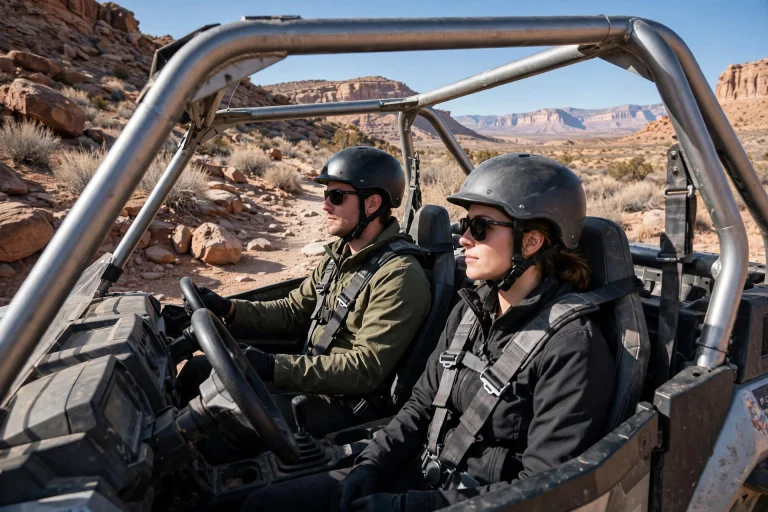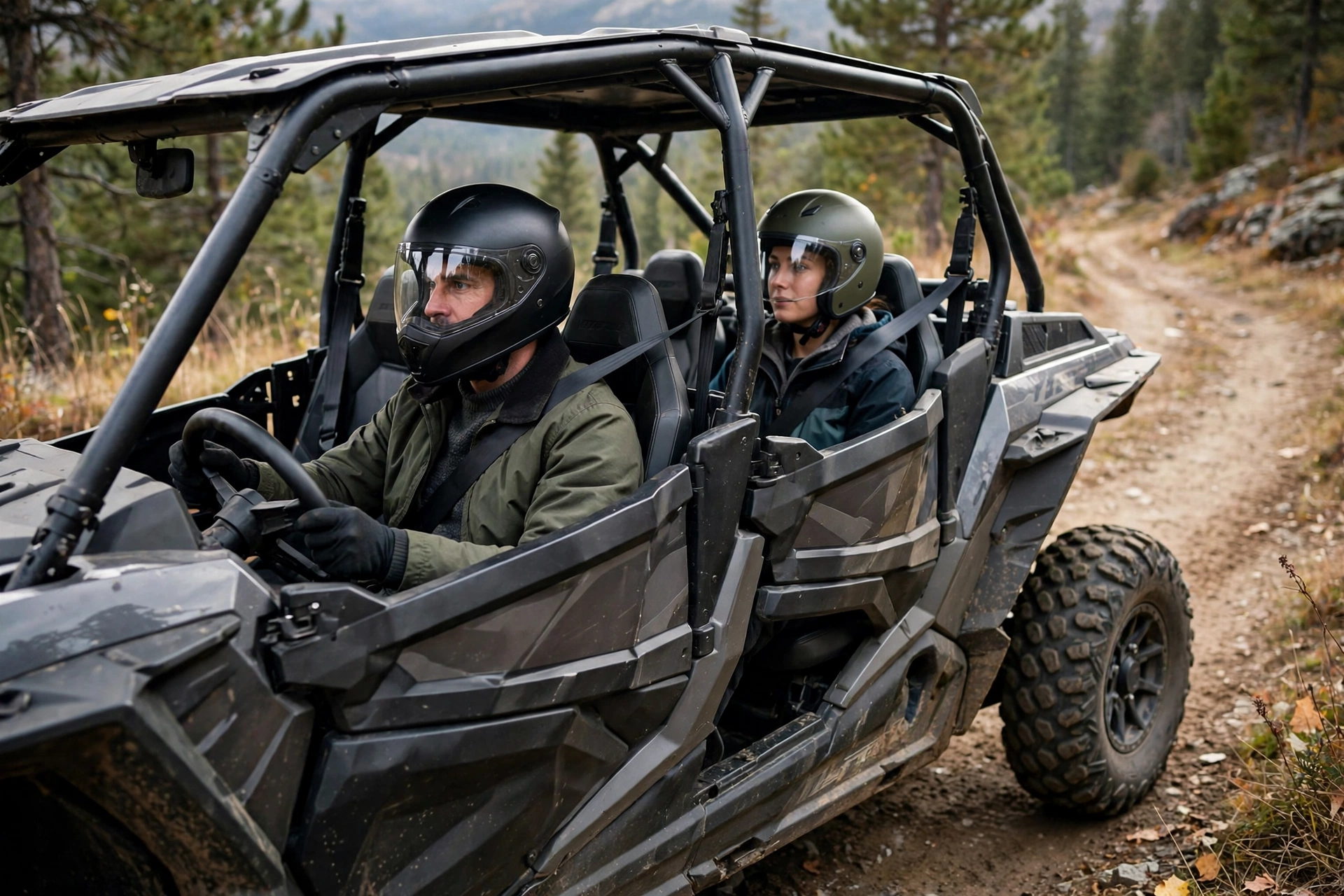
Yes — UTV passengers should wear a helmet, just as the driver should. A passenger faces the same rollover, impact, and ejection risks as the driver, and in general terms many riding areas, parks, and organized events require helmets for everyone in the vehicle, not just the person at the wheel. The roll cage and seat belts in a UTV are designed to work together with a helmet, not instead of one.
Because a UTV feels car-like — seats, belts, a cage, a steering wheel — passengers often assume it is car-safe and skip the helmet. This guide explains why that assumption is wrong and what a passenger should actually wear.
Why Do UTV Passengers Face the Same Risks as Drivers?
The most serious UTV incidents are rollovers, and a rollover does not care which seat you are in. When a side-by-side tips or rolls on a slope, a corner, or an obstacle, every occupant is thrown against the cage, the doors, the ground, or each other with the same force.
Head injuries in these events come from exactly those contacts: a head striking a cage tube, a rock coming through the open side, or the ground itself if an occupant is partly or fully ejected. Seat belts reduce ejection risk hugely, but a belted passenger’s head can still reach cage structure and incoming terrain — which is what the helmet is there for.
Passengers also have a disadvantage drivers do not: they cannot see every obstacle coming, they have no steering wheel to brace against, and they are often less experienced, younger, or simply relaxed and unprepared for a sudden tip. The helmet compensates for all of that.
Are UTV Passengers Legally Required to Wear a Helmet?
It depends on where you ride, and the honest answer is in general terms rather than a single rule. Requirements come from a mix of state and local rules, land-manager and park regulations, and event or rental-operator policies, and they change — so the safe approach is to check the rules for the specific place you are riding before you go.
What can be said generally is that helmet requirements, where they exist, usually apply to all occupants rather than drivers only, and requirements are commonly stricter for younger riders and passengers. Riding areas and organized events frequently make helmets a condition of entry for everyone in the vehicle regardless of the wider law.
None of that should really decide it, though. The practical case — rollovers, cage contact, ejection — does not depend on jurisdiction. Helmets for every occupant is the default worth adopting whether or not anyone checks at the gate.
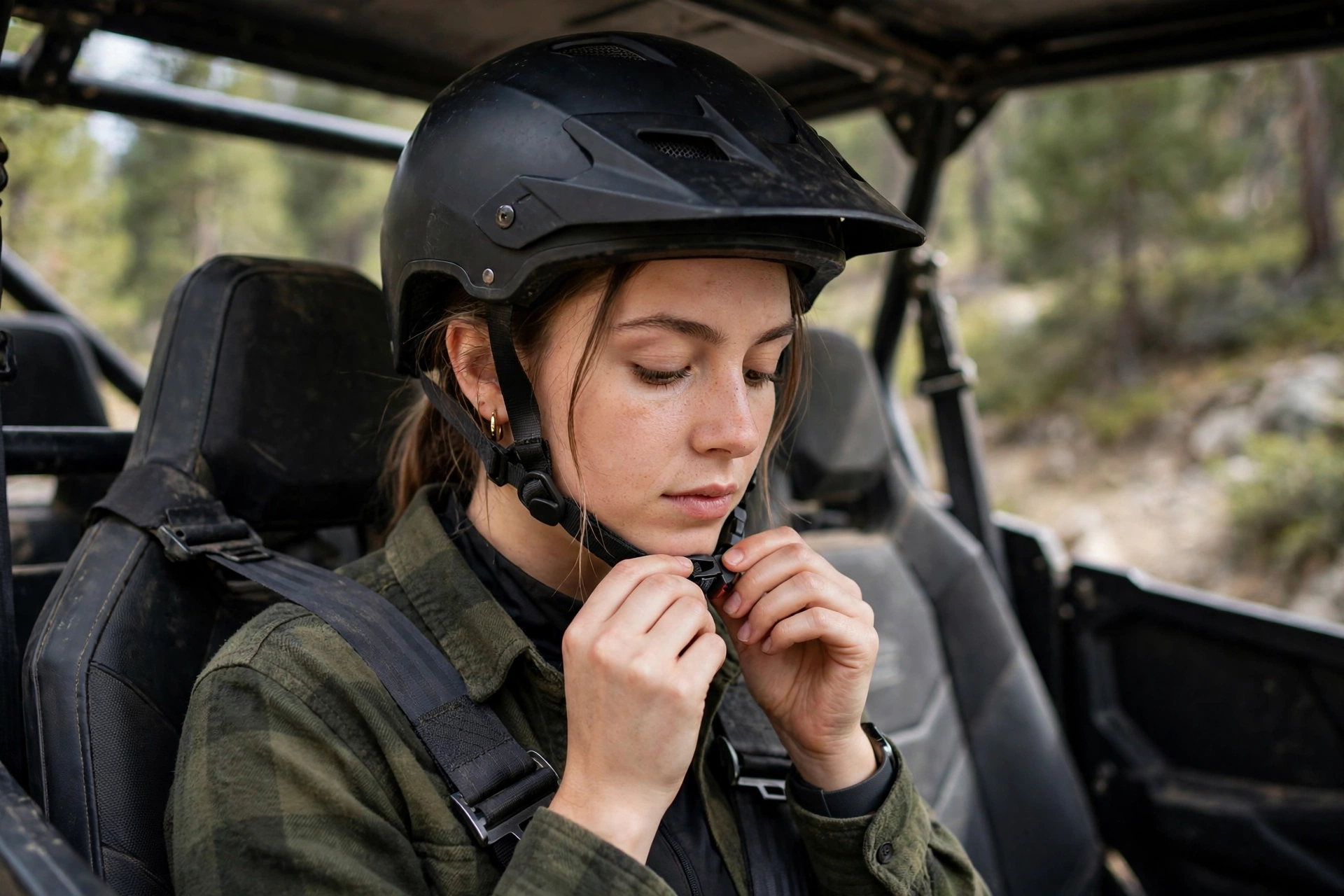
What Helmet Should a UTV Passenger Wear?
A proper certified off-road or motorsport helmet that fits the passenger’s own head — not the driver’s spare in the wrong size. Fit is not a detail: a helmet that is too large can shift or come off in a roll, and one that is too small will be taken off by a miserable passenger halfway through the ride.
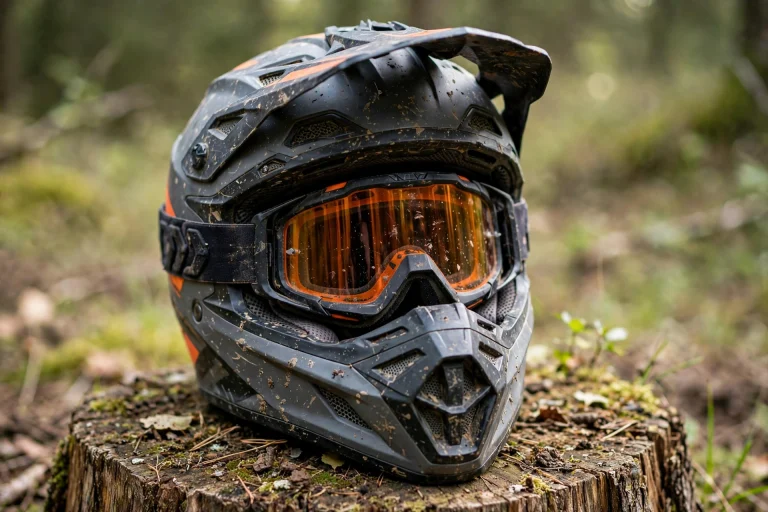
Full-face off-road helmets with goggles are the common choice and protect against dust, brush, and debris as well as impacts. Some UTV riders prefer helmets designed with smooth, rounded shells without a peak for in-cage use, and some add communication headsets fitted inside the helmet — all reasonable, provided the helmet is certified and fitted.
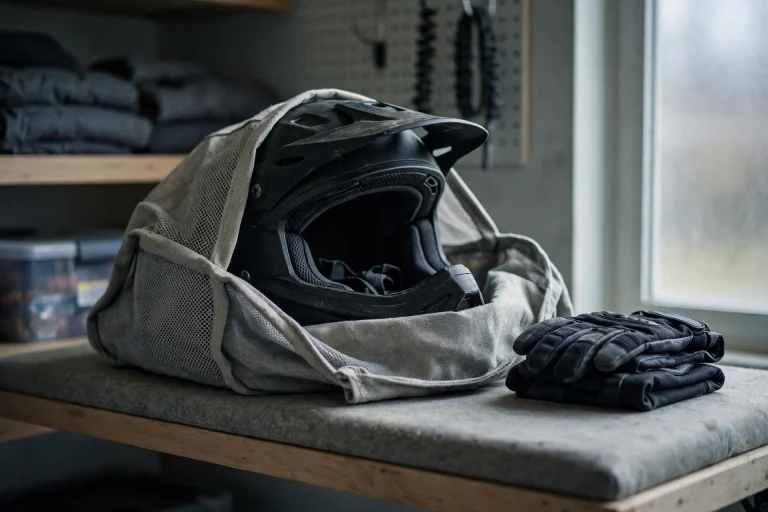
Occasional passengers are the weak spot in most groups, because they get whatever is in the garage. If you regularly carry passengers, keeping a couple of correctly sized spare helmets with the vehicle is a small investment that closes that gap.
Fit a passenger’s helmet the same way you would fit your own: it should sit level, feel snug all around without pressure points, and stay in place when they shake their head, with the strap fastened and adjusted before the vehicle moves. Show a first-time passenger how the strap and any goggles work before setting off, not at the first obstacle. A passenger whose helmet is slowly sliding over their eyes will spend the ride holding it with one hand — which means they are not holding on with that hand, and they are distracted exactly when the trail demands their attention. Two minutes of fitting at the trailer prevents all of it.
What About Children as UTV Passengers?
Children need the same protection sized for them: a properly fitting, certified youth helmet, never an adult helmet padded out or balanced on. A child’s head is proportionally heavier and their neck weaker, so correct fit matters even more, and a helmet that slips over the eyes will be pushed off within minutes.
Check that the child can sit properly in the seat with their back against it, feet supported, belt or harness fitted correctly, and can hold on — a passenger who cannot sit in position is not ready to ride, helmet or not. In general terms, vehicle and helmet makers’ size and age guidance, plus the rules of the place you ride, are the references to follow for young passengers.
And set the example: children wear helmets without argument in vehicles where every adult is wearing one too. The driver’s helmet is part of the passenger’s safety equipment in that sense.
Finally, make the passenger’s helmet part of the pre-ride routine rather than an afterthought: helmets checked, straps fastened, and goggles in place before the vehicle rolls, for every seat, on every ride, however short the trip looks.
Serious head protection for every occupant is also where modern helmet design is heading for drivers and passengers alike: snug fit, certified construction, and features such as rotational-impact liners like MIPS that address the twisting motion of a roll. A rollover puts every head in the vehicle through the same physics, so every head deserves the same answer.
Frequently Asked Questions
Q: The UTV has a roll cage and belts. Isn’t that enough?
A: They work together, not interchangeably. Belts keep you in the seat and the cage holds space around you, but your head can still strike cage tubes or the ground in a roll. The helmet protects the head itself — the job the cage cannot do.
Q: Can a passenger just wear a bike helmet?
A: A bicycle helmet is designed and certified for bicycle-level impacts, not for a motorized vehicle rollover. Passengers should wear a proper certified off-road or motorsport helmet that fits them correctly.
Q: My passenger finds helmets hot and uncomfortable. What helps?
A: Usually the fit or the model is wrong. A correctly sized, well-vented off-road helmet with goggles rather than a sealed shield is comfortable for most people — and short stops to remove helmets beat riding without them.

Olivia
Writer at Helmet Today, covering helmet reviews, fit and riding safety.