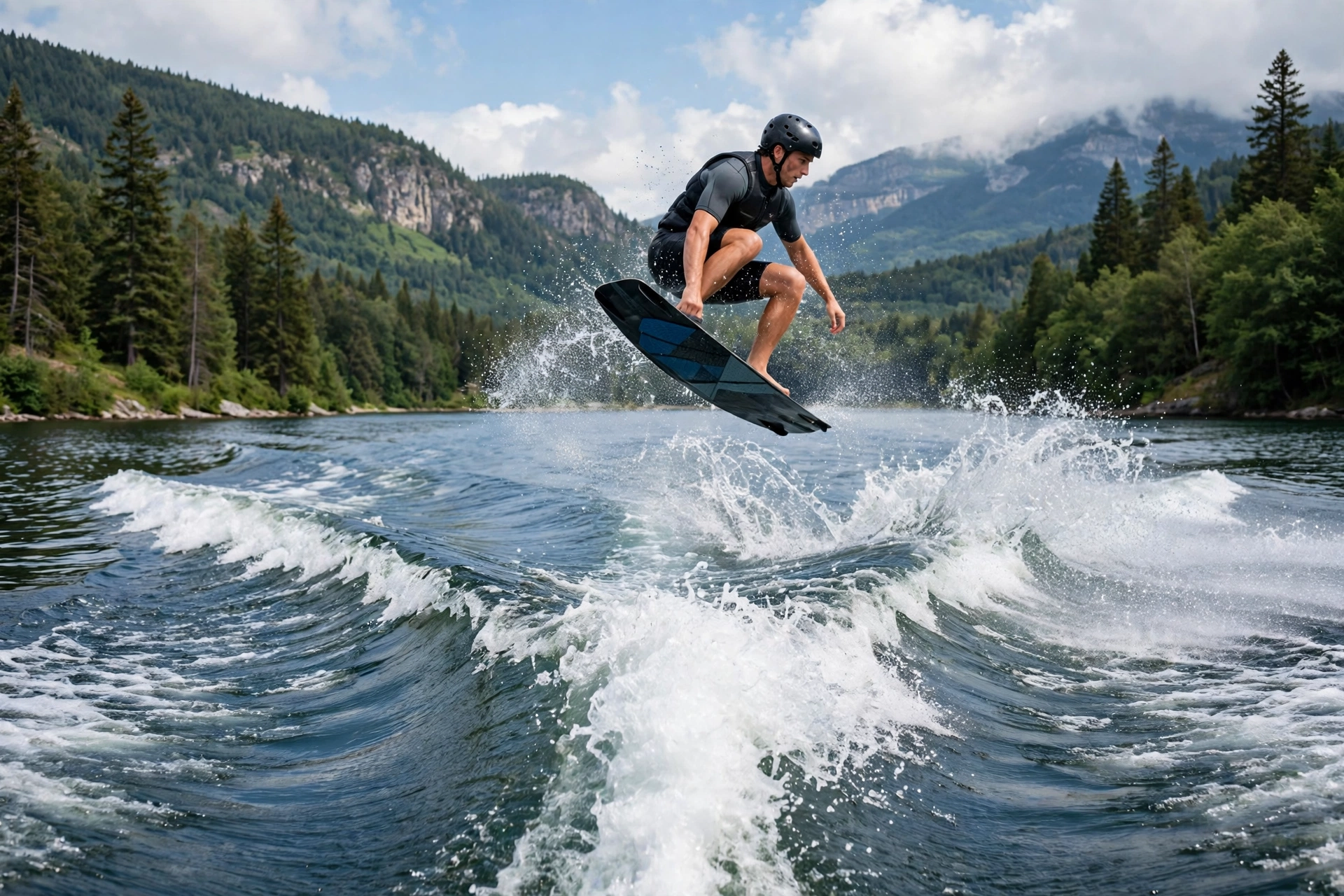
You do not legally need a helmet for wakeboarding in most places, in general terms, but wearing a watersports helmet is a smart choice for many riders — especially beginners, cable park riders, and anyone learning tricks — because falls happen at speed and the board, the water surface, and park features can all strike your head. Whether you need one depends less on a rule and more on how and where you ride.
This guide explains the real risks, where helmets are expected, and how to choose one made for wakeboarding.
What Are the Head Risks in Wakeboarding?
The first risk surprises new riders: water itself. A fall at speed can feel like hitting something solid, particularly a catching-edge fall that whips you face-first into the surface. Most such falls are harmless, but in general terms a hard slap can leave a rider dazed in the water, needing quick attention from the boat crew or park staff.
The second risk is your own board. In a fall the board can flip, swing on the rope’s recoil, or be landed on, and board edges and fins are at exactly head height when you are in the water. The third risk depends on setting: cable parks add rails, sliders, and kickers that you can fall onto or slide into, while behind a boat the risks are mainly water, board, and occasionally the handle.
- High-speed water impact: catching an edge and slapping the surface
- Board strikes: the board flipping or recoiling into your head
- Park features: rails and sliders at cable parks
- Repeated falls: learning tricks means many falls in one session
None of this makes wakeboarding unusually dangerous, but it does mean head knocks are a foreseeable part of learning it, which is exactly what helmets are for.
When Is a Helmet Required or Strongly Expected?
Rules vary by place and operator, and you should always follow the specific rules where you ride. In general terms, cable parks are the setting most likely to expect or require helmets, particularly on features, because riders share the course and obstacles are solid. Park rules, rental agreements, and lesson requirements override general advice, so check before you ride.
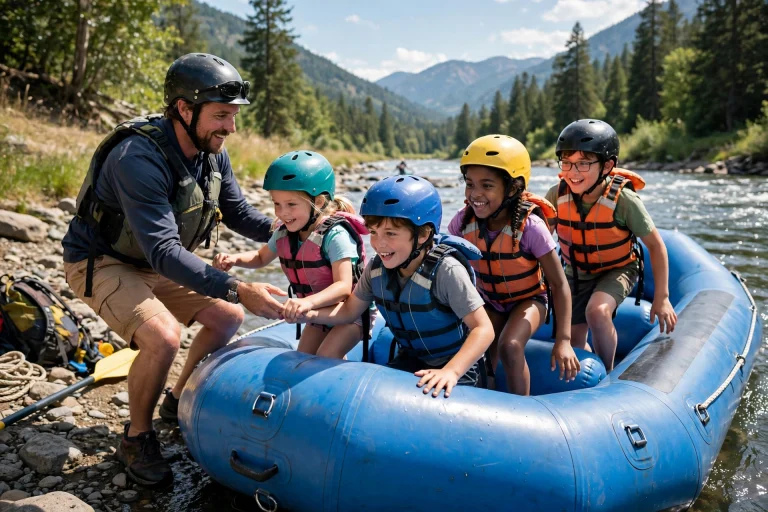
Lessons and kids’ sessions are another setting where helmets are commonly provided or expected. New riders fall often and unpredictably, and have not yet learned to protect their head or let go cleanly. Many parents apply the same logic to any young rider, behind a boat as well as at a park.
Behind a private boat on open water, the choice is usually yours. Experienced riders on gentle cruising sets often ride without one, while the same riders may put a helmet on for a session of new tricks, rough water, or riding close to other boats and obstacles. Matching the helmet to the session, rather than making one permanent rule, is how most riders actually decide.
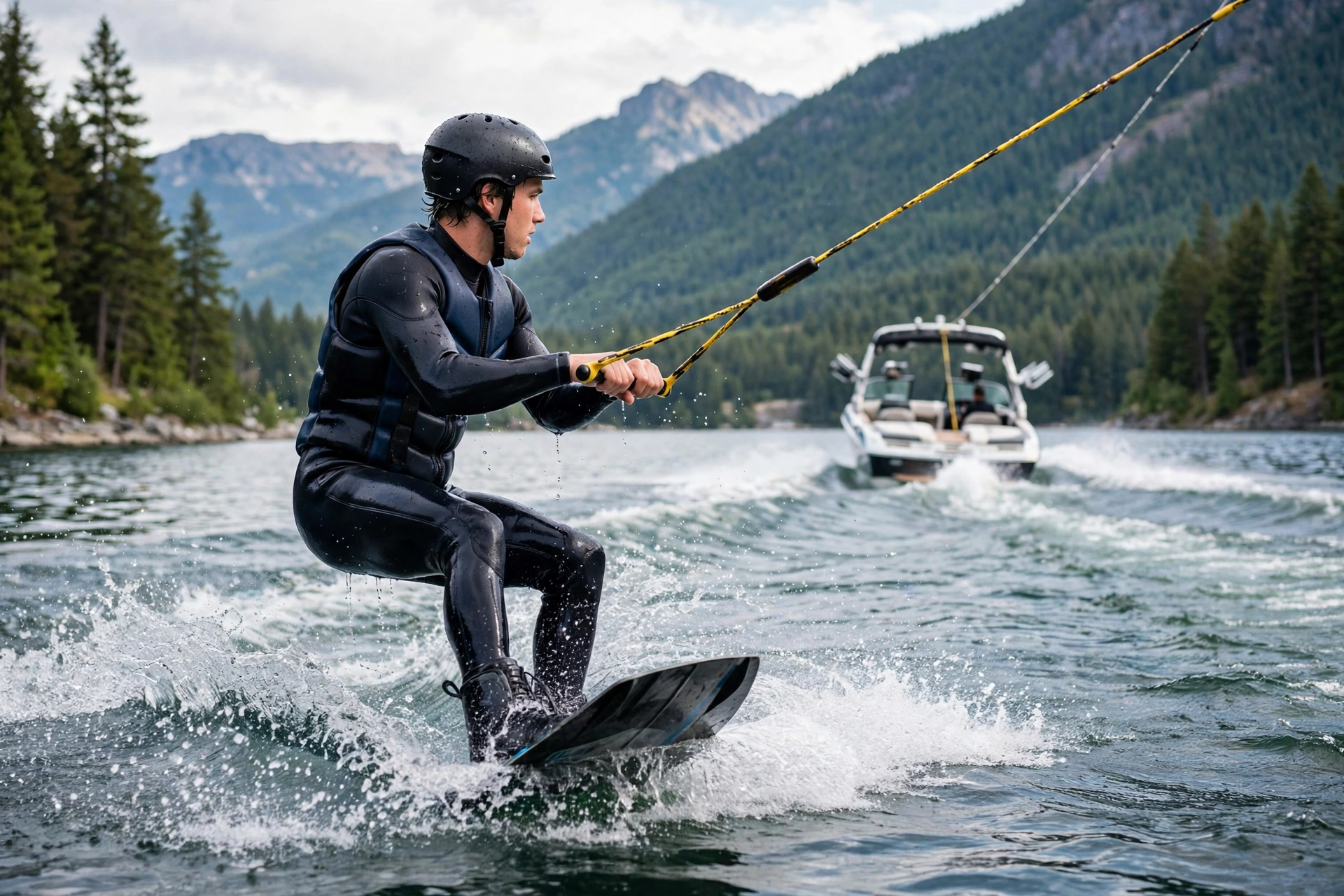
What Kind of Helmet Should You Wear for Wakeboarding?
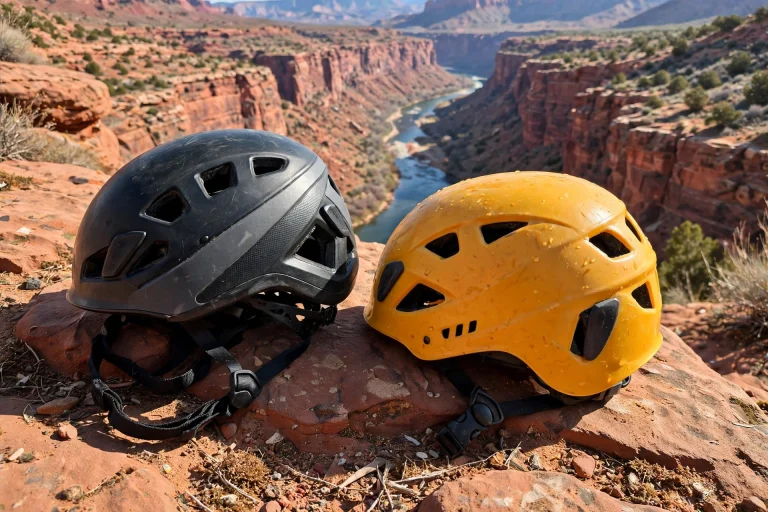
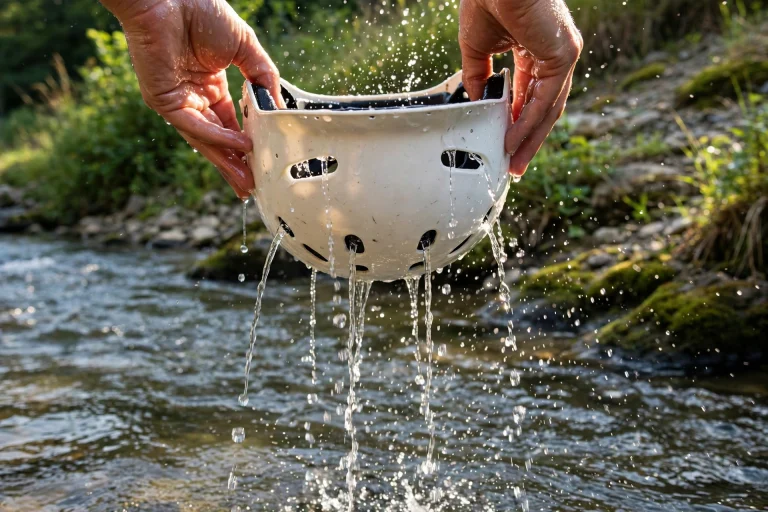
Wear a helmet made for watersports. Wakeboarding and wakesurf helmets are built to shed water rather than soak it up, use foams and liners chosen for repeated wetting, drain quickly, and stay securely on in a fall into water. Many have soft or covered ear areas, which help with hard water slaps and cold wind, and low profiles that do not catch the water.
Do not substitute helmets from other sports. A bike helmet is designed for a single hard impact on land, and its foam and straps are not made for constant immersion. A snow helmet is far too warm and bulky, and a skate helmet is not designed around drainage either. Each sport’s helmet solves its own problems.
Fit matters as much as type. The helmet should sit level and snug, not rock when you shake your head, and stay in place when you simulate a fall by jerking your head forward. A loose helmet can shift or even be pulled by the water in a hard fall, at exactly the moment you need it where it started.
Does a Helmet Change How Impacts Affect Your Head?
A wakeboarding helmet spreads the force of a strike from a board, a rail, or the water surface across a wider area and absorbs part of the energy in its liner, instead of your head taking the full blow at one point. That is most valuable in the sharp, localised impacts — board edge, fin, feature corner — that cause cuts, bruising, and worse.
Not every impact is straight-on. Falls that whip or twist the head create rotational forces as well, and helmet design increasingly looks at that side of protection, as explained in this overview of what MIPS is for helmets. For a wakeboarder, the practical lesson is simple: a well-fitting, sport-specific helmet in good condition does more than a loose or borrowed one, whatever extra systems it carries.
Be honest about limits, though. In general terms, a watersports helmet is made for the impacts typical of its sport; it does not make high-speed falls harmless, does not replace a properly worn life vest or impact vest, and does not protect your neck. Ride within your level, learn new tricks progressively, and keep clear water behind you when you fall.
How Do You Decide Whether to Wear One?
Ask four questions about the session in front of you. Are you learning, or trying tricks you have not landed yet? Are you riding at a cable park or near any solid feature? Are conditions rough, crowded, or unfamiliar? And are you a younger rider, or riding with one? If you answer yes to any of these, a helmet is an easy decision.
If you are an experienced rider taking a relaxed set behind your own boat on open, familiar water, the risk is lower and many riders reasonably choose not to wear one. Even then, having a helmet in the boat costs nothing, and plenty of riders put it on when a session turns to practice or chop.
Whatever you decide, own a helmet that fits you rather than relying on a random rental shape. Adjust the straps properly, and replace it after any hard strike from a board or feature, because a liner that has done its job once may not do it as well again.
Frequently Asked Questions
Q: Can I use my bike or skate helmet for wakeboarding?
A: It is not recommended. Those helmets are designed for land impacts and are not made to be soaked repeatedly, drain quickly, or stay secure in water falls; their foams and straps can degrade or behave unpredictably when wet. A watersports helmet made for wakeboarding is inexpensive in general terms and is the right tool for the job.
Q: Do professional wakeboarders wear helmets?
A: It varies by rider and setting. Helmets are commonly seen at cable parks and in feature riding, where the rules or the obstacles make them a normal part of the kit, and less consistently in boat riding on open water. What the professionals share is not one rule but the habit of matching protection to the features and tricks in front of them.
Q: Should a child wear a helmet for wakeboarding?
A: In general terms, yes, it is a sensible precaution. Children fall often while learning, have less ability to protect their head or react in a fall, and are usually riding under lesson or park rules that may expect one anyway. Choose a properly fitting watersports helmet in the child’s size, worn level and fastened, and pair it with a suitable vest.

Olivia
Writer at Helmet Today, covering helmet reviews, fit and riding safety.