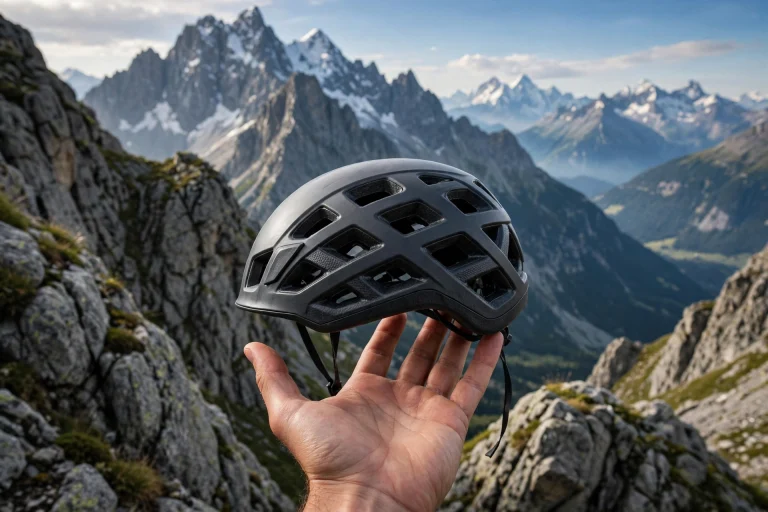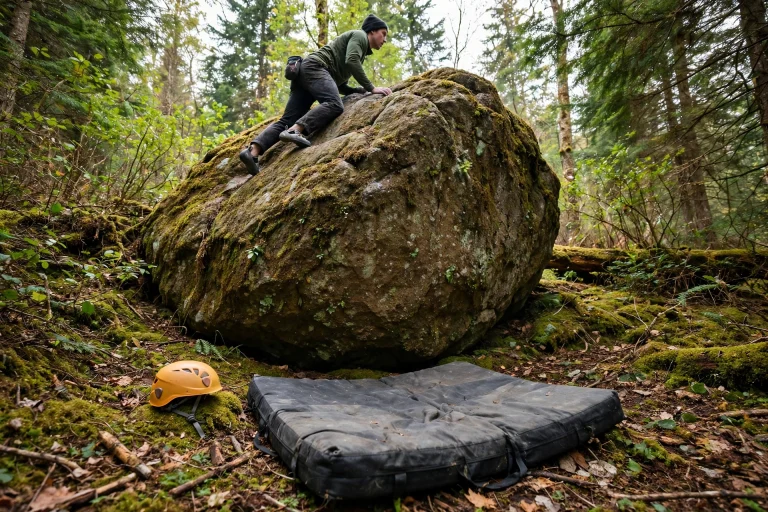
EN 12492 is the European standard that sets the safety requirements and test methods for helmets for mountaineers, and UIAA 106 is the safety label of the UIAA — the international climbing and mountaineering federation — which builds on EN 12492 with additional requirements. In plain terms: a climbing helmet marked EN 12492 has passed laboratory tests for absorbing impacts on the crown and around the sides, resisting penetration from sharp falling objects, and staying on your head in a tumble. A helmet that also carries the UIAA label has met extra criteria on top of that baseline.
Two marks, two organizations, and a lot of confused buyers. This guide explains what each one is, what the tests actually check, and how to verify a helmet before you trust it.
What Is EN 12492?
EN 12492 is the European standard written specifically for mountaineering helmets. Unlike standards written for a single kind of fall, it assumes two accident patterns at once: objects falling onto the climber, and the climber falling against rock. Its requirements cover impact absorption at the crown and at points around the sides, front, and back of the shell, because a tumbling fall rarely lands neatly on top of the head.
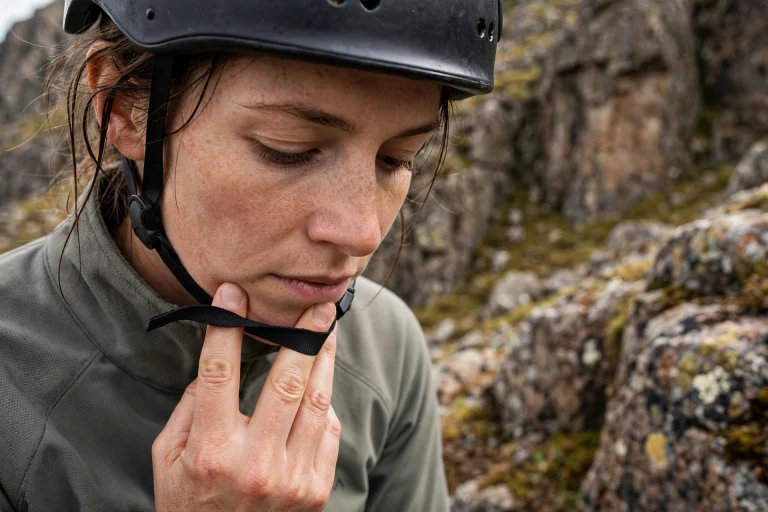
It also covers penetration resistance: a pointed striker is dropped onto the crown in testing, because the classic climbing accident is a sharp rock arriving from above. And it covers the retention system — the chin strap and its fittings must keep the helmet in place through the kind of multi-direction knocks a fall delivers.
The chin strap rules reflect a real design tension, described in general terms: the strap must be strong enough that the helmet cannot be knocked or rolled off, yet the system is designed with a release behavior under extreme loading, so a snagged helmet does not become a strangulation hazard. Ventilation, coverage area, and labeling requirements round out the standard.
What Does the UIAA 106 Safety Label Add?
The UIAA is the international federation for climbing and mountaineering, and its safety label program exists to give climbers one recognizable mark across brands and countries. UIAA 106 is its helmet standard, and in general terms it starts from EN 12492 and adds requirements of its own — historically including impact performance demands beyond the European baseline — before a model may carry the label.
The label is voluntary: a manufacturer chooses to submit a model for UIAA certification, and the helmet must be produced consistently with the tested samples. That is why you will see some excellent helmets carrying both marks and others carrying EN 12492 alone — the European mark may be all a maker needs to sell in its home market, while the UIAA label is aimed at climbers worldwide.
For the buyer, the practical meaning is simple: EN 12492 is the established baseline that says this is a tested climbing helmet, and the UIAA label is an additional confirmation layered on top of it, not a different kind of helmet.
What Do the Tests Actually Measure?
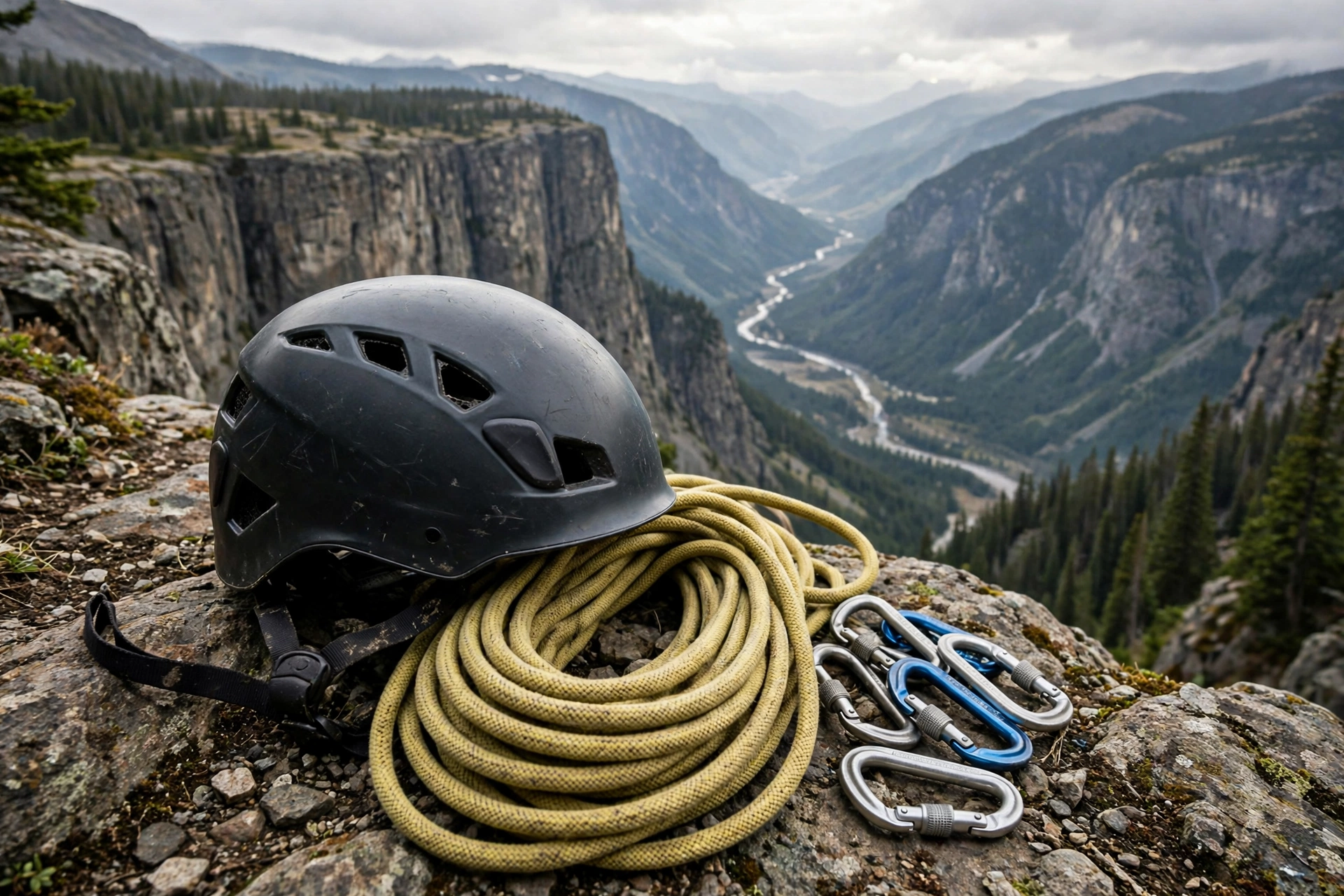
The core test is energy absorption. An instrumented headform wearing the helmet is struck at defined points, and the force transmitted to the headform must stay below the standard’s limits. Testing at several points around the shell — crown, front, sides, and back — is what separates a climbing standard from a simple top-impact test, and it reflects how climbers actually hit rock.
The penetration test targets the crown, the zone exposed to falling stones, using a pointed mass: the striker must not reach the headform. Retention testing then loads and rolls the helmet on the headform to confirm the strap system keeps it positioned, because a helmet that comes off in the first bounce protects against nothing that follows.
Helmets are also conditioned before testing — exposed to heat, cold, and wet conditions in general terms — so the result represents a helmet on a mountain rather than one in a showroom. What the core tests focus on is direct impact; makers address twisting, rotational forces with extra liner designs of their own, including models with rotational-impact systems like MIPS, which sit on top of certification rather than replacing it.
How Is a Climbing Helmet Standard Different From Bike or Ski Standards?
Each standard is written around its sport’s signature accident. Bike standards are built around a single, relatively high-energy fall from a moving rider onto flat or kerb-like surfaces, with coverage concentrated low on the sides and back of the head. Ski standards address falls on snow and ice at speed.
A climbing standard has to solve a different problem set: repeated exposure to falling rocks from directly above, falls in any orientation against an unyielding surface, and a retention system that survives tumbling — all in a helmet light enough to wear for twelve hours and open enough to ventilate on a summer crag. That is why certified climbing helmets carry their coverage higher and prioritize crown penetration resistance in a way bike helmets do not.
The conclusion matters when shopping: a helmet certified for one sport is not thereby certified for another. The standards are not rankings of toughness; they are different answers to different questions.
What Should You Check on the Label Before You Buy?
Look inside the shell. A certified climbing helmet carries its standard on a label or marking: EN 12492 named explicitly, usually alongside the CE mark, plus the manufacturer, model, size, and year of manufacture. If it claims the UIAA label, the UIAA mark should be there too.
Be wary of helmets that name no standard at all, or advertise vague phrases like “impact tested” without saying to what. Unmarked lookalike helmets exist, particularly in bargain online listings, and they have passed nothing. The certification also applies to the exact model and size range tested, so a famous brand name on a different, uncertified model line means nothing.
Finally, treat certification as the entry ticket, not the whole decision: fit, coverage for your kind of climbing, and condition still decide whether the helmet protects you. And any certified helmet that has taken a significant impact should be retired — certification describes a new helmet, not one that has already spent its protection.
Frequently Asked Questions
Q: Is the UIAA label better than EN 12492 alone?
A: The UIAA label builds on EN 12492 with additional requirements, so a labeled helmet meets the European baseline plus extra criteria, in general terms. An EN 12492 helmet from a reputable maker is still certified protection — the label is an added confirmation, not a different category.
Q: Does EN 12492 apply to helmets sold outside Europe?
A: In general terms, yes in practice: climbing helmets sold worldwide are commonly certified to EN 12492 and UIAA 106 because those are the established climbing-specific standards, whatever the local market’s own rules.
Q: My helmet just says “CE” on it. Is that enough?
A: Not by itself. The CE mark indicates the product meets an applicable European requirement; check that the label names EN 12492 specifically — and UIAA if you want that label. If no standard is named, ask the manufacturer before trusting it.

Olivia
Writer at Helmet Today, covering helmet reviews, fit and riding safety.