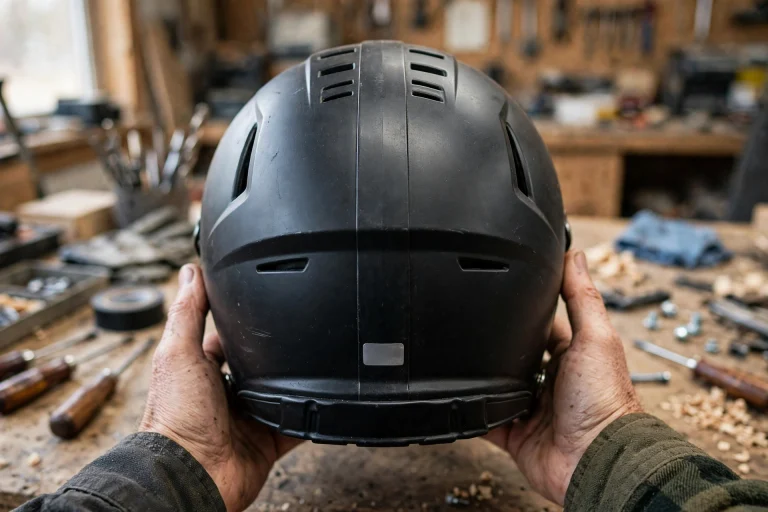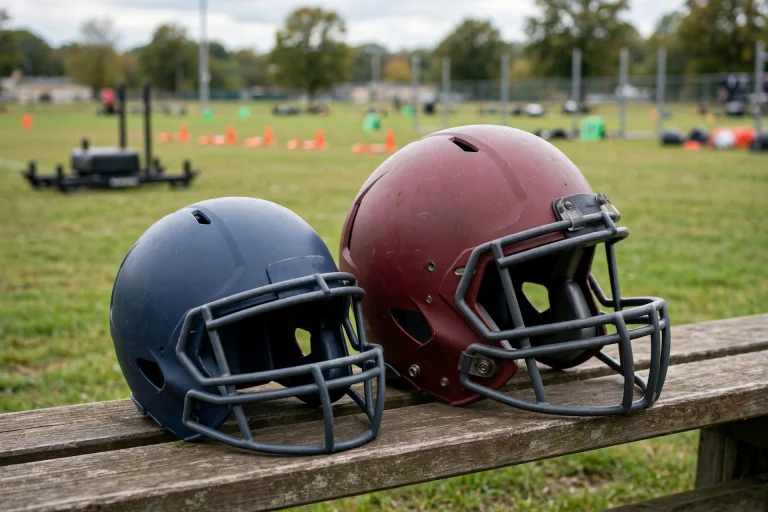
Football helmet air bladders are inflatable pads inside the helmet’s liner that you pump up with a needle and a hand pump to fine-tune the fit — adding air makes the helmet sit snugger and higher or lower on the head, and the system works only when the bladders are inflated evenly, checked regularly, and never pumped rock-hard. They are fit adjusters, not extra protection on their own.
This guide explains where the bladders are, how to inflate them correctly, how they change the fit, and the leak and pressure mistakes that cause problems.
What Are Air Bladders in a Football Helmet?
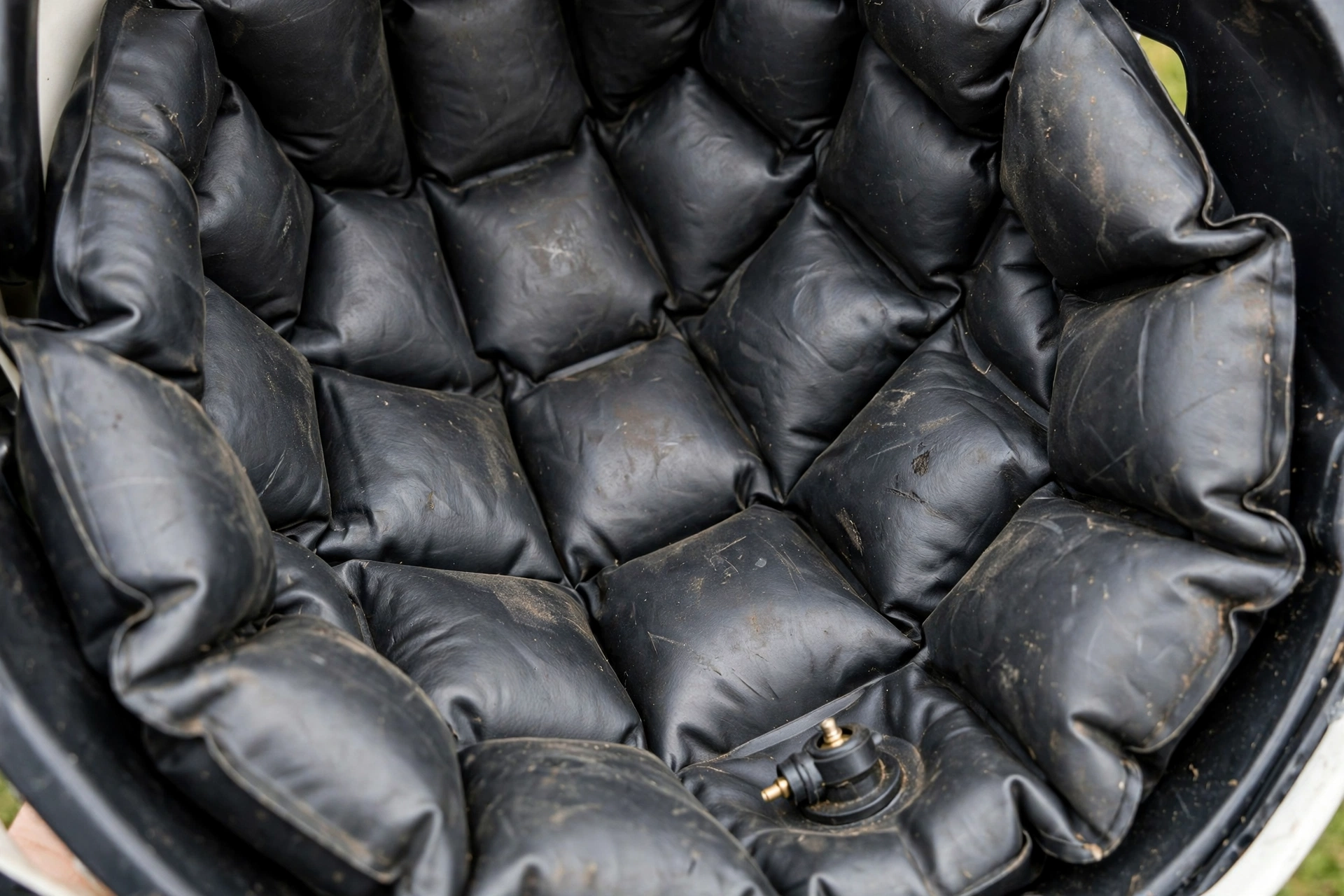
Many football helmets use inflatable bladders as part of their internal padding system, most often at the crown — the top of the head — and in some models at the sides, back, or in the jaw area. Each bladder is a sealed air cell behind the comfort padding, with a small valve on the outside of the shell where a pump needle goes in.
Their job is customisation. Heads are not standard shapes, and shells come in a handful of sizes. The bladder system bridges the gap: the shell size gets the helmet close, and the air lets a fitter — or the player — dial the last part of the fit precisely, raising or lowering the helmet on the head and evening out the pressure.
Bladders sit alongside fixed foam, not instead of it. The foam liner does the impact-absorbing work; the bladders position the helmet so the foam is where it should be. A deflated bladder is therefore a fit problem waiting to happen, not a minor detail.
How Do You Inflate a Football Helmet’s Air Bladders Correctly?
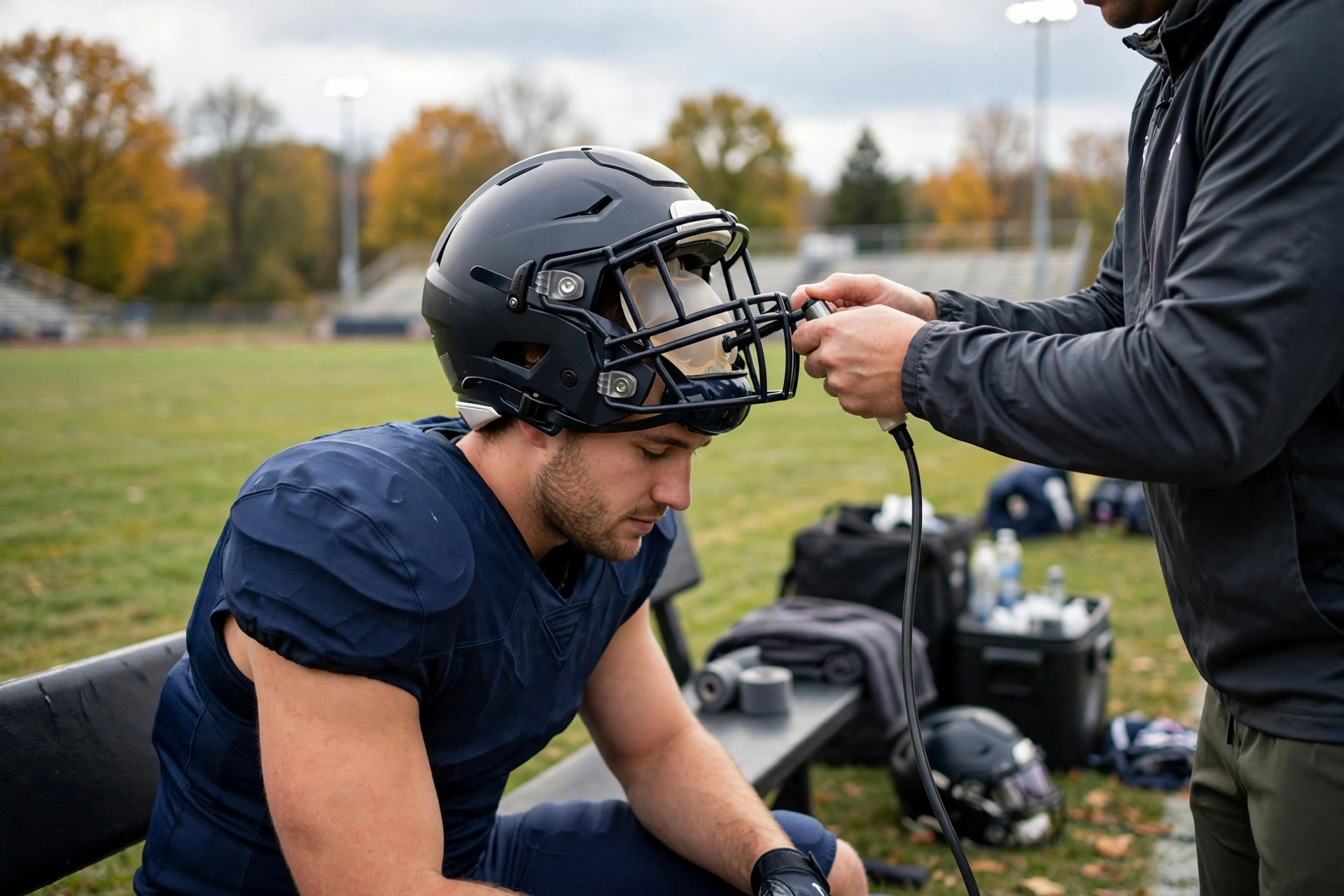
You need a small hand pump with a ball-inflation needle, and a drop of glycerine or water on the needle — never force a dry needle in, which can damage the valve. Insert the needle gently into the valve, and add air in short pumps while the helmet is on the player’s head, because fit is what you are adjusting and you cannot judge it on a table.
Work in order and in small steps. In general terms, the crown bladder is usually set first, because it decides how high the helmet sits — the front edge should end up in its correct position above the eyebrows with the helmet level. Then the other bladders are evened up until pressure feels equal all round, with no single point squeezing.
- Lubricate the needle: a drop of glycerine or water protects the valve
- Inflate on the head: fit can only be judged while the helmet is worn
- Little and often: short pumps, checking between each, beats one big inflation
- Firm, not hard: the finished bladder should feel like a firm cushion, never a rock
To let air out, the valve is opened with the needle inserted without the pump (or as the maker directs). Make small releases and re-check; it is easy to overshoot in both directions.
How Do Air Bladders Change How a Helmet Fits?
The crown bladder is the powerful one. More air in the crown lifts the helmet and takes up space above the head, which suits a player the shell sits low on; less air lets the helmet settle lower. Getting this wrong in either direction matters: a helmet riding too high leaves the lower head exposed and wobbles, and one sunk too low pushes the front edge into the eyeline and the back down the neck.
Side and rear bladders control stability. Even, moderate pressure stops the helmet rotating or rocking when the player turns quickly or takes a glancing blow. The test is the standard one: with the chin strap fastened, the helmet should not shift when the player shakes, nods, or you gently try to move it by the facemask.
The fit should feel like even pressure everywhere, described by players as snug rather than tight. Any localised squeeze — a headache building at the crown, pain at one temple — means the air is uneven or overdone, and the fix is to release some and start the sequence again, not to play through it.
What Problems Do Air Bladders Cause?
The classic problem is slow leaks. Valves get grit in them, seals age, and a bladder that was perfect on Monday is soft by Friday — which is why fit with air systems is a weekly check, not a one-time setup. A bladder that will not hold air at all has failed and needs replacement parts; tape and home repairs are not a fix for a fit-and-safety component.
Over-inflation is the second problem. A rock-hard bladder feels secure in the locker room, but it concentrates pressure, causes headaches, and leaves no compliance in the system — the pad should be able to give a little. Temperature plays a part too: air expands in heat and contracts in cold, so a helmet set up in a warm locker room can feel different on a freezing field, and vice versa.
The third problem is neglect. Because bladders work invisibly when they are right, they are forgotten — until the helmet that “never fitted right” turns out to have had one flat bladder all season, shifting the whole helmet off-centre. Any fit complaint in an air-bladder helmet should start with checking every valve.
How Do You Maintain Air Bladders Through a Season?
Check pressure the same way you check the chin strap: briefly, often. Before games, press each padded area and compare sides; a soft spot means the pump comes out before warm-ups, not after the game. Keep the valves clean — a wipe when you clean the helmet stops grit being pushed inside by the needle.
Store the helmet sensibly. Leaving bladders at playing pressure in a cool, dry place is fine; leaving the helmet baking in a hot car speeds up the ageing of every rubber seal in the system. In general terms, and following your maker’s guidance, there is no need to deflate bladders fully for storage.
Keep the bigger picture in mind: bladders position the helmet, and position is what lets the protective liner do its job — including handling the angled, rotational forces covered in this guide to what MIPS is for helmets. A five-minute bladder check is genuinely part of the helmet’s safety system, and replacement bladders and valves are maker parts that any equipment manager can source. When in doubt, have the helmet checked rather than guessing — fit is too central to improvise.
Frequently Asked Questions
Q: How firm should helmet air bladders feel?
A: Like a firm cushion: they should hold the helmet snug with even pressure and still give slightly when pressed. Rock-hard bladders are over-inflated — they cause headaches and pressure points. If the player can feel a single spot squeezing, release a little air and even things up.
Q: My helmet’s bladder will not hold air. Can I still play?
A: Not safely as fitted — a flat bladder leaves the helmet loose or off-centre, and a loose helmet cannot protect properly. Have the bladder or valve replaced with the maker’s parts, or use a correctly fitting helmet in the meantime. Do not pad the gap out with cloth or foam that was not designed for the helmet.
Q: Do all football helmets have air bladders?
A: No. Some models use inflatable systems, others use fixed foam, gel, or dial-adjusted liners. The fit principles are identical — level position, even snug pressure, no movement — only the adjustment method differs. Follow the system your helmet actually has, per the maker’s instructions.

Olivia
Writer at Helmet Today, covering helmet reviews, fit and riding safety.