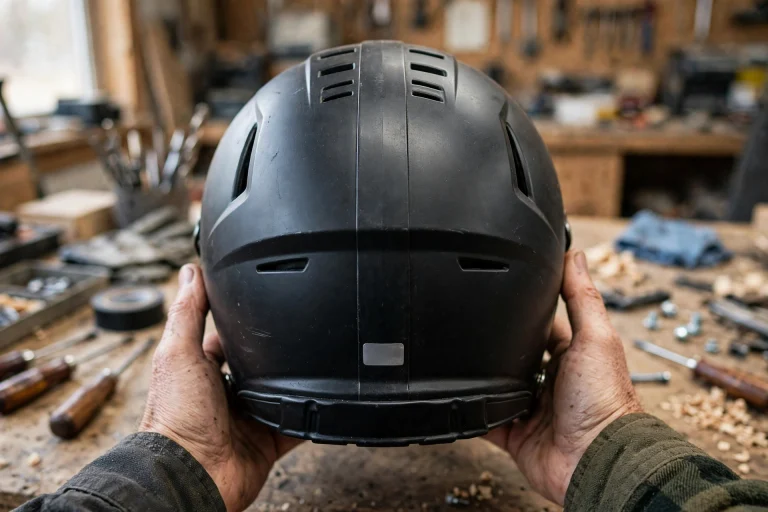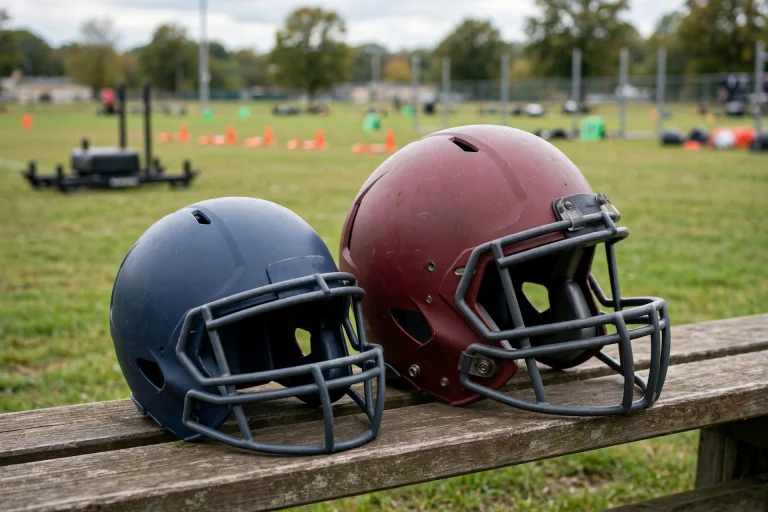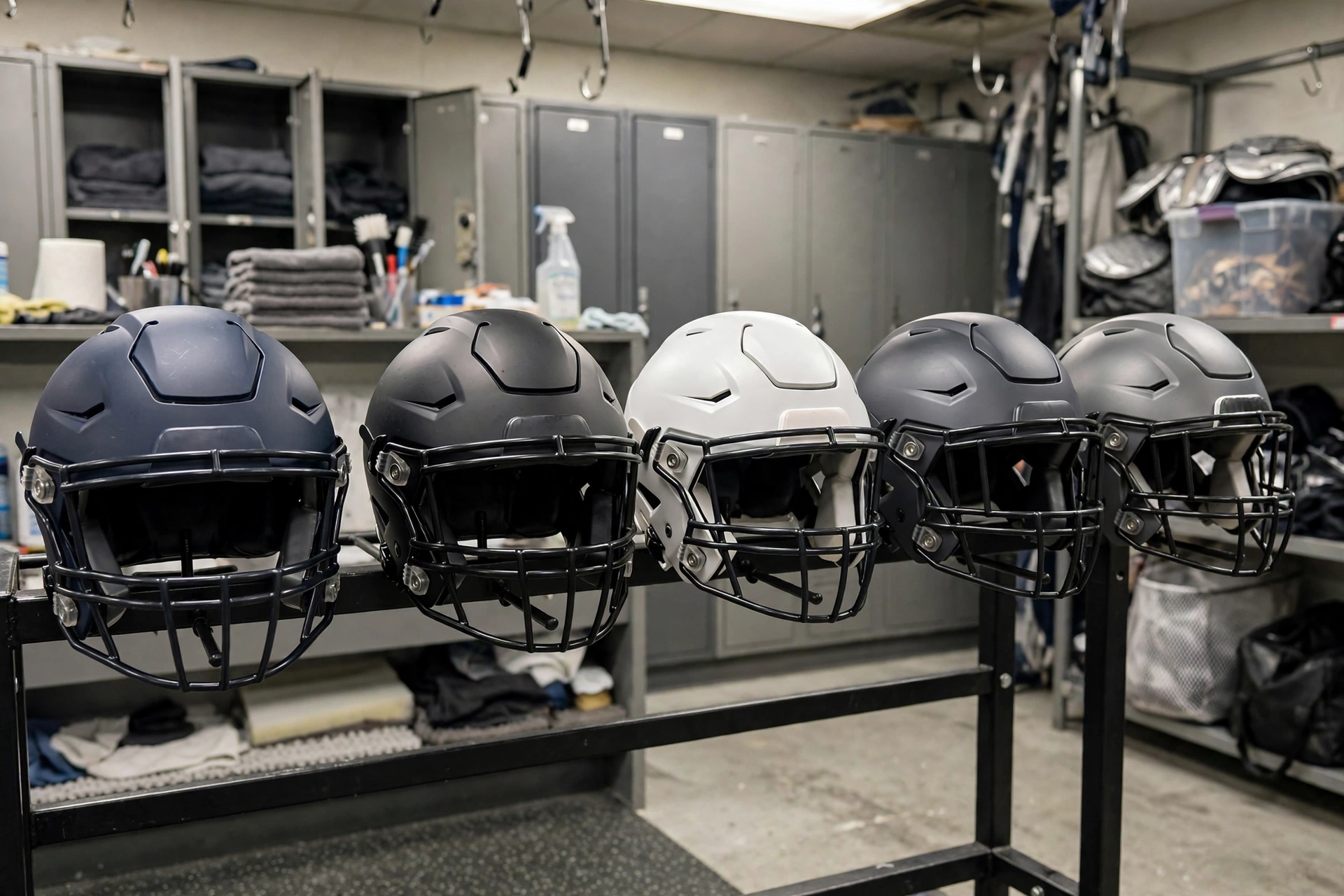
Football helmet reconditioning is the professional process where a helmet is fully cleaned, inspected, repaired or fitted with replacement parts, and recertified — and in general terms helmets in organised programmes are sent in on a regular cycle, commonly every season or every couple of seasons depending on use, the maker’s guidance, and league or school policy. It is not a wash at home; only authorised reconditioners can recertify a helmet.
This guide explains what reconditioning involves, how often it is typically done, and when a helmet is too old or too damaged for the process to save.
What Is Football Helmet Reconditioning?
Reconditioning is a factory-level service carried out by specialist companies. The helmet is stripped down, the shell is cleaned and inspected, padding and hardware are checked piece by piece, worn or damaged parts are replaced with the maker’s own components, the helmet is reassembled, sanitised, and tested.
The crucial outcome is recertification: in general terms, a reconditioned helmet that passes is certified again as meeting the standard for play, and it comes back with documentation saying so. A helmet that fails inspection is rejected and returned marked as not fit for use — which is a valuable result too, because it takes a dangerous helmet out of circulation.
Schools and leagues rely on this cycle because a helmet’s condition cannot be judged reliably from the outside. Foam compresses, hardware corrodes, and small cracks start in places a sideline check will not catch. Reconditioning is the system that catches them.
How Often Should a Football Helmet Be Reconditioned?
There is no single universal interval, and any guide — including this one — can only describe the general pattern. In general terms, many school and league programmes recondition helmets every season or every other season, and makers and reconditioners give guidance based on the level and amount of play. Helmets used hard, in all weather, every week, sit at the frequent end; a little-used backup helmet may go longer between services.
What sets the actual schedule for your helmet is the policy around it: check your league’s or school’s rules and the helmet maker’s recommendations, and follow whichever applies to you. Where a programme requires reconditioning or recertification on a set cycle as a condition of play, that cycle is not optional, whatever a helmet looks like.
- Every season: common for heavily used helmets in established school programmes
- Every couple of seasons: a common pattern where use is lighter and policy allows it
- Immediately: after any heavy impact, visible damage, or unknown-history purchase, regardless of the schedule
The mistake to avoid is treating appearance as the schedule. A shiny helmet can hide tired foam; a scuffed one may pass easily. The cycle exists precisely because looks mislead.
What Actually Happens During Reconditioning?
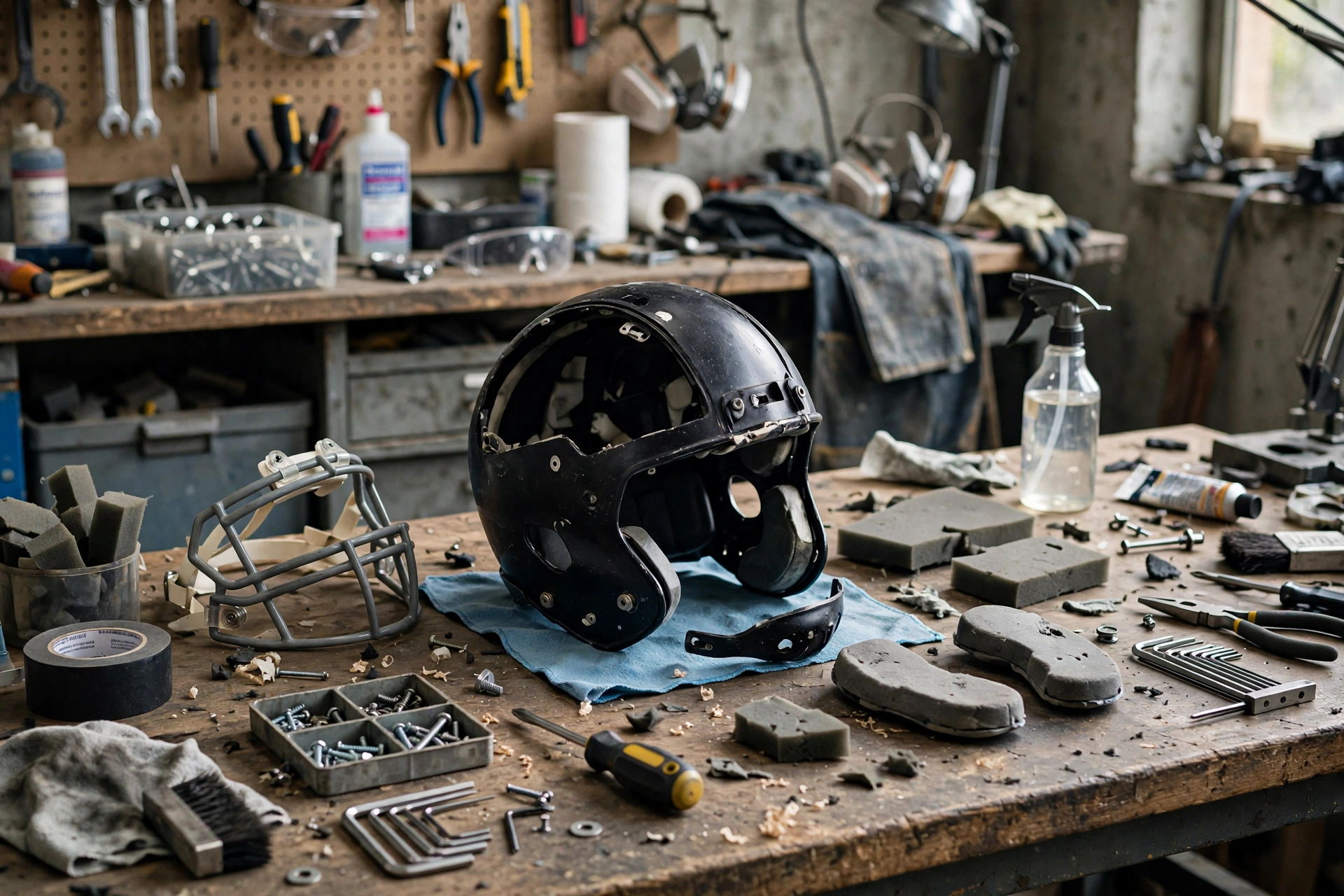
The helmet is first logged and inspected as it arrives. The shell is checked for cracks and stress damage, inside and out. The facemask and its hardware are examined and removed, padding is taken out and assessed, and everything is washed and sanitised — reconditioning is also the deep clean a season of sweat genuinely needs.
Then comes the decision work. Padding that is compressed, cracked, or no longer resilient is replaced with maker-approved parts. Damaged hardware, straps, and bumpers are renewed. A shell with structural damage fails at this point: cracked shells are not repaired back into service.
Finally the helmet is reassembled, any recertification testing and checks are completed, and it is documented and returned — typically with its status recorded so the programme knows each helmet’s history. Painting or refinishing, where offered, happens as part of the process; it is cosmetic and is never a substitute for the inspection underneath.
What Is the Difference Between Reconditioning and Recertification?
The two words travel together but mean different things. Reconditioning is the work: cleaning, inspection, parts replacement, and repair of what can legitimately be repaired. Recertification is the judgement at the end: the formal confirmation that the finished helmet meets the standard required for play.
A helmet can be reconditioned and still not be recertified — if the shell is cracked or the helmet has reached the end of its serviceable life, no amount of new padding fixes that, and a proper reconditioner will say so. Conversely, recertification only means something when it follows genuine reconditioning by an authorised provider; a sticker or a receipt from anyone else is not the same thing.
For players and parents, the practical translation is simple: ask who did the work and whether the helmet was recertified, and keep the paperwork with the programme’s records. “It was cleaned” and “it was reconditioned and recertified” are very different statements about the same-looking helmet.
When Is a Helmet Too Old or Too Damaged to Recondition?
Every helmet has a finite service life. In general terms, makers set a maximum lifespan for their helmets — a point beyond which the helmet should be retired regardless of condition, because shells and foams age even in storage — and reconditioners enforce that limit during inspection. Check the maker’s guidance for your model rather than assuming a number.
Damage can end a helmet’s life earlier at any age. The protective system works as a unit — shell, foam liner, padding, and retention — and it is also designed around angled, glancing impacts as well as straight ones, which is why rotational protection has become such a focus, as explained in this guide to what MIPS is for helmets. A helmet whose shell is cracked cannot play its part in that system, and reconditioning does not change that.
The everyday rule for players and parents is to hand the decision to the process: send helmets in on the programme’s cycle, retire them when a reconditioner rejects them or the maker says their life is over, and never put a rejected helmet back into play “just for practice”. Impacts in practice count exactly the same.
Frequently Asked Questions
Q: Can I recondition a football helmet myself at home?
A: You can clean it, check it, and replace comfort parts the maker sells for user fitting — but you cannot recertify it. Recertification requires an authorised reconditioner’s inspection and testing. A home-cleaned helmet with no current certification is not the same as a reconditioned one, and programmes that require recertification will not treat it as such.
Q: Does reconditioning make an old helmet as good as new?
A: It restores a helmet to a certified, serviceable condition — fresh padding, sound hardware, verified shell — which is a great deal, but it does not reset the helmet’s age or extend its life past the maker’s limit. Think of it as keeping a helmet honestly within its service life, not abolishing that life.
Q: What should I do with a helmet that fails reconditioning?
A: Retire it from all play, including practice and lending to other players. Rejected helmets are typically marked so they cannot quietly return to service. Keep it only as a display item if you wish — never as spare playing equipment.

Olivia
Writer at Helmet Today, covering helmet reviews, fit and riding safety.