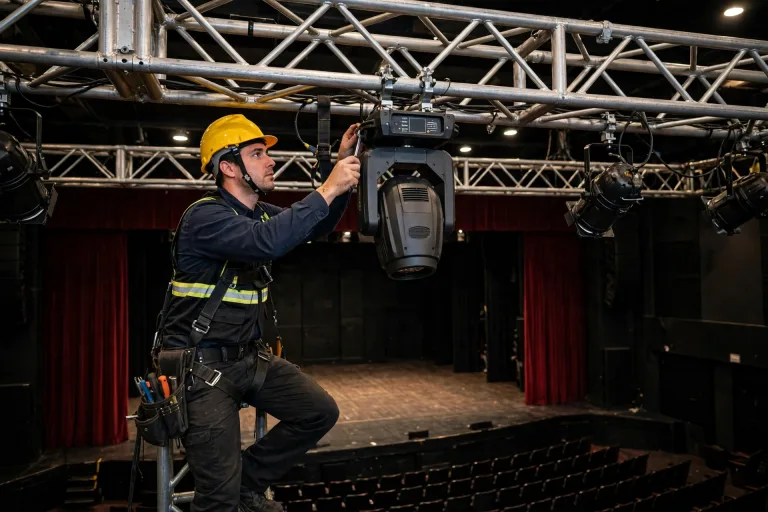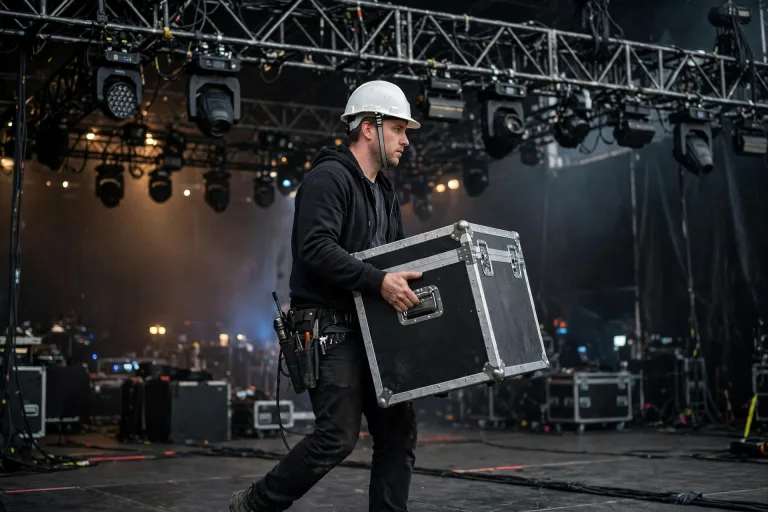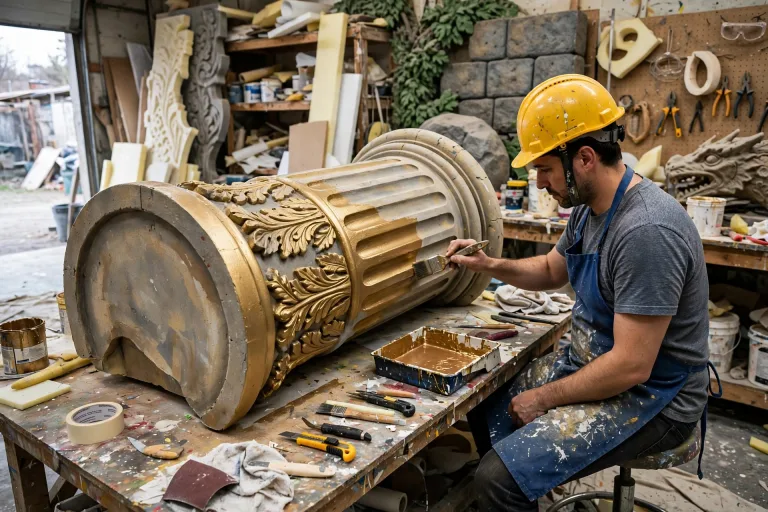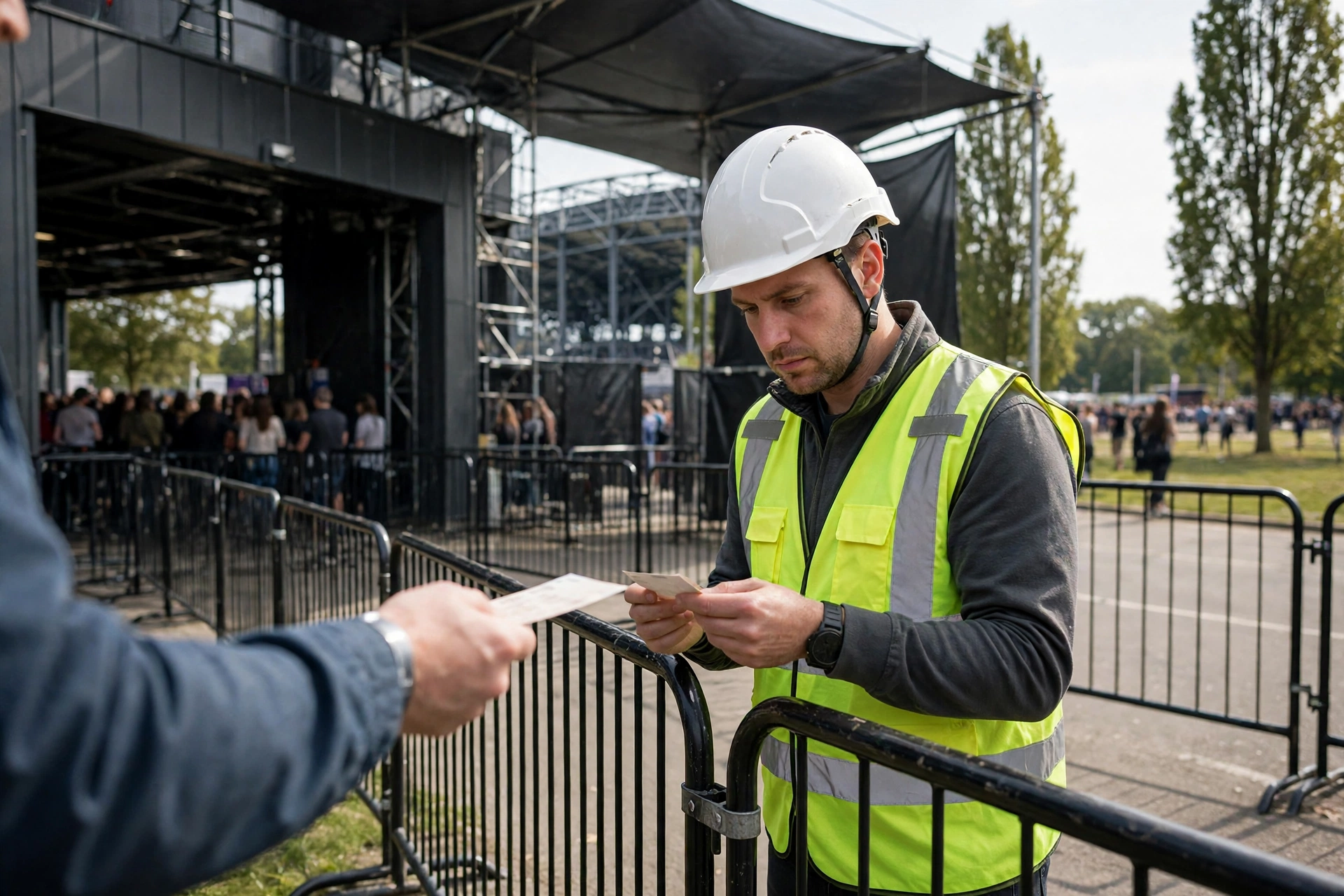
A helmet for event stewards is a helmet worn by a steward who works at a public event, and in general terms it is usually a lightweight work helmet or hard hat that protects against falling objects, bumps, and knocks while the steward is on duty. Event stewards work in busy places such as stadiums, festivals, concerts, and exhibitions, where they guide crowds, watch for hazards, and help people in an emergency. A helmet is part of their safety equipment when the event site has overhead risks, and it should be comfortable enough to wear for a whole shift.
Stewards are often on their feet for hours, moving between entrances, stands, stages, and backstage areas, and they may be working while rigging, lighting, and staging equipment is still being moved overhead. A helmet protects them if something falls or if they bump their head on a low beam, a scaffold pole, or a piece of stage equipment.
Why do event stewards need a helmet?
Event stewards need a helmet because they work in places where objects can fall from above or where they can bump their head on equipment. A concert stage, a festival site, or a stadium can have lighting rigs, speakers, scaffolding, and banners overhead, and a piece of equipment or a tool can fall during set-up, during the event, or during take-down. A helmet protects the steward’s head if that happens, and it also protects against a bump when working in a low or crowded space backstage.
A helmet gives a measure of protection in a crowded and fast-moving situation, and it helps to keep the steward safe while they are helping others. In general terms, a helmet is a sensible part of a steward’s kit whenever the event site has overhead hazards, and the event organiser or the safety plan for the event will usually say when a helmet must be worn.
What kind of helmet is best for event stewards?
The best helmet for event stewards is, in general terms, a lightweight work helmet or hard hat that meets the safety standard for the event site and fits the steward well. A lightweight helmet is important, because stewards wear it for a long shift, and a heavy helmet can cause neck strain and tiredness. The helmet should sit level on the head, stay in place when the steward bends over or turns quickly, and leave the steward able to hear instructions and crowd noise clearly.
Many event stewards wear a helmet in a bright colour, such as white or yellow, so that they are easy to see in a crowd and in low light. The helmet may also carry a sticker or a marking that shows the steward’s role, which helps the public and the event team to find the right person quickly. The steward should check that the helmet works with any other gear they wear, such as ear protection or a radio headset.

How should a helmet for event stewards fit?
A helmet for event stewards should fit snugly, sit level on the head, and stay in place during a long shift of walking, bending, and turning. The helmet should cover the top of the head and the forehead, and the suspension or fitting system inside should be adjusted so that the shell sits evenly, without tilting to one side. A chin strap, where one is fitted, should be fastened when the steward is working near overhead hazards, so that the helmet does not fall off if the steward bends over.
The fit should be checked with the other gear the steward will wear, such as a high-visibility jacket with a hood, a radio headset, or ear protection, because these can change how a helmet sits. The steward should also check that the helmet does not block their hearing, because a steward needs to hear instructions from the control room, warnings from colleagues, and calls for help from the public. A helmet that fits well feels secure but not painful, even after hours on duty.
What rules apply to helmets for event stewards?
The rules for helmets for event stewards are set by the event organiser and the safety plan for the event, and they can be different from one event to another. Most events ask for a helmet that meets a recognised work helmet standard, and the organiser will usually say when and where a helmet must be worn, such as during set-up and take-down, or in areas with overhead equipment. A steward should read the event briefing before the shift, and should ask the supervisor if they are unsure when a helmet is needed.
Some events also have rules about the colour or the marking of the helmet, so that stewards can be told apart from other staff, such as security or medical teams. A steward who turns up without the right helmet may not be allowed to work in certain areas of the site, which can cause problems for the whole team. It is far better to check the briefing in advance and to bring the helmet that the event asks for. A steward who is unsure should ask the event organiser directly, because a short question before the event can save trouble on the day.
How should an event steward’s helmet be looked after?
An event steward’s helmet should be looked after with regular cleaning and sensible storage, in the same way as any work helmet. After a shift, the steward should wipe the shell clean, let the inside air out, and check the suspension and the fitting system for wear or damage. The helmet should be stored in a cool, dry place, away from direct heat and sunlight, and kept in a bag or on a shelf where it will not be knocked about. A helmet that is looked after will last longer and will be ready for the next event.
The helmet should also be checked for cracks, dents, or damage to the shell before each event, and in general terms a helmet that has taken a hard impact should be replaced rather than used again. Stewards who are choosing a new helmet may also want to learn about features that can help in a crash, including a system designed to reduce rotational forces, such as MIPS, which is found in some modern helmets. A well-kept helmet, worn whenever the event asks for it, gives an event steward the best chance of staying safe on duty.
Do all event stewards need to wear a helmet?
Not all event stewards need a helmet, because it depends on the event and the area where they work. A steward working near a stage, scaffolding, or overhead equipment usually needs one, while a steward at a gate or in an office may not. The event briefing will say when a helmet is needed.
Can an event steward use a cycling helmet?
No, a cycling helmet should not be used for stewarding, because it is not designed or tested to protect against falling objects on a work site. A work helmet that meets the standard for the event is the right choice.
When should an event steward’s helmet be replaced?
An event steward’s helmet should be replaced after a hard impact, or when it shows cracks, damage, or wear to the shell or the fitting system. When in doubt, replace it rather than keep working in it.

Olivia
Writer at Helmet Today, covering helmet reviews, fit and riding safety.