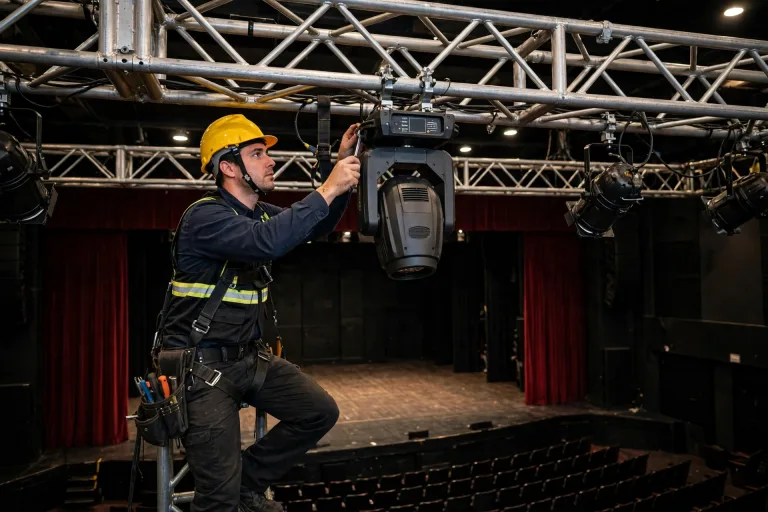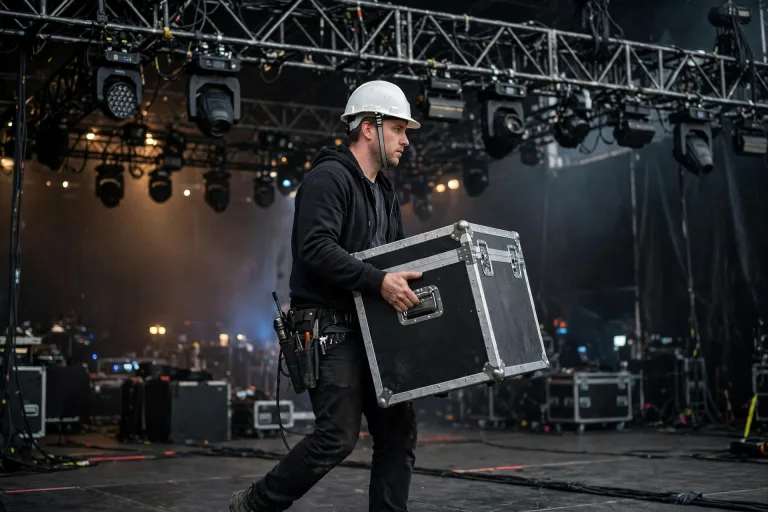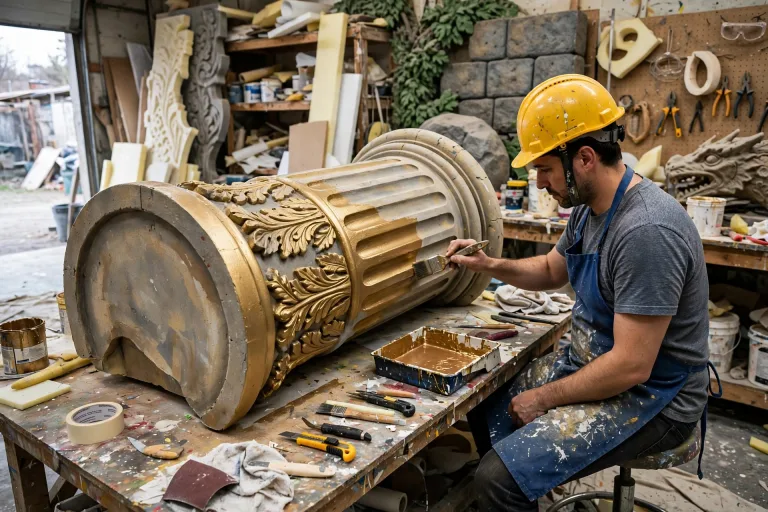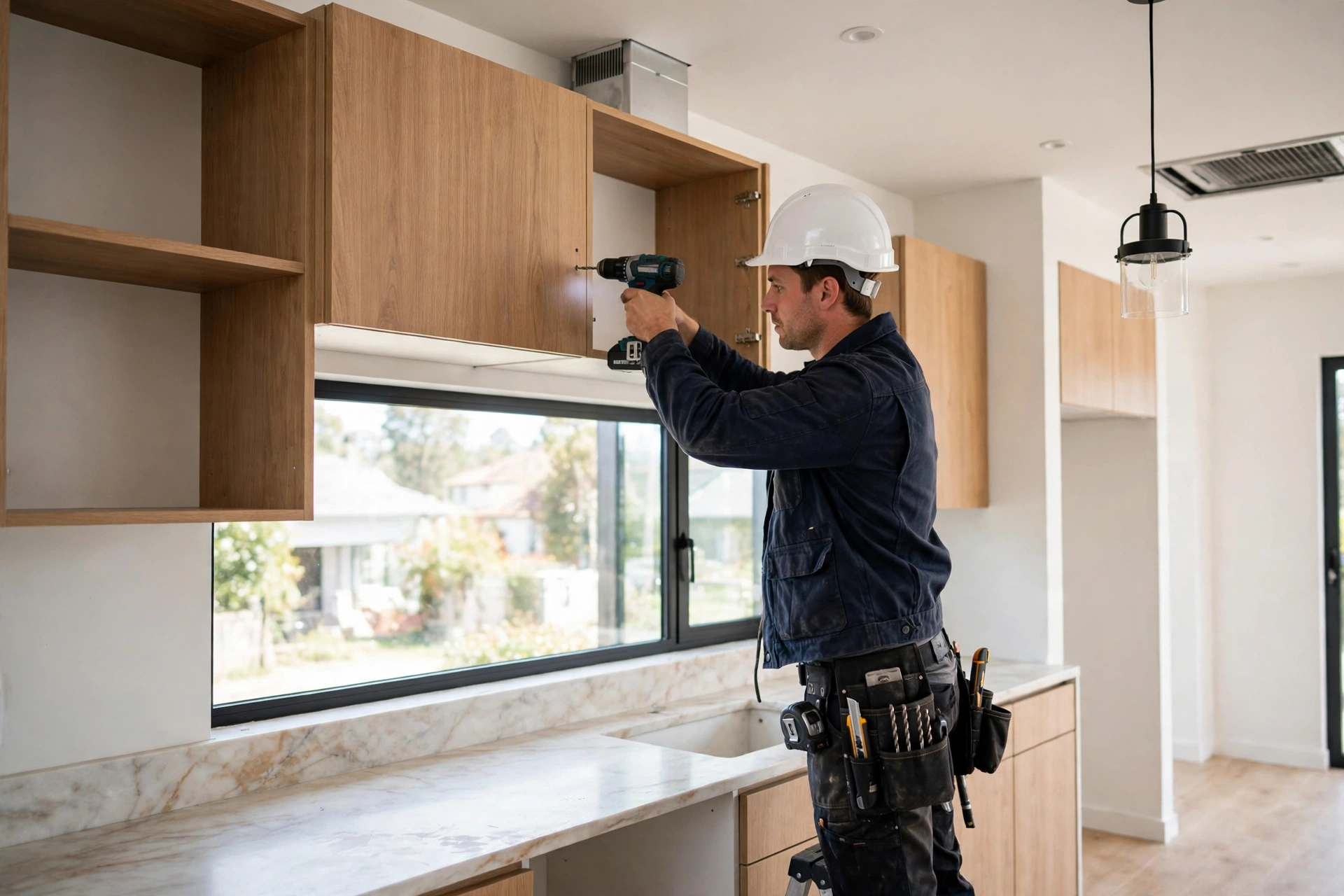
A helmet for kitchen fitters is a protective helmet worn on site while fitting a kitchen, to guard the head against knocks from overhead cabinets, falling tools, and low door frames, and in general terms a kitchen fitter should wear one whenever there is work going on above head height or in a tight, busy space. Kitchen fitting looks like neat indoor work, but the fitting stage involves heavy wall units, worktops, tall larder cabinets, and power tools, all handled in a room that is often crowded with tradespeople, boxes, and offcuts. A helmet gives the fitter a simple layer of protection in a place where a bump to the head can happen in a second.
A kitchen fitter spends much of the day reaching up, crouching down, and moving between the worktop, the wall units, and the tall units, often while carrying something heavy or awkward. The head is close to sharp cabinet corners, open doors, and the underside of wall units that are still being fixed in place. A helmet helps to take the force out of those everyday knocks, and it also protects against dust, splinters, and small items dropped from a step ladder or a work platform.
Why do kitchen fitters need a helmet?
Kitchen fitters need a helmet because the fitting stage of a kitchen is a construction job, even though the finished room will look like a normal part of the home. Wall units are lifted, held, and screwed into place above the fitter’s head, and a unit that slips, a fixing that fails, or a tool left on top of a cabinet can fall without warning. In general terms, a helmet spreads the force of an impact and helps to protect the skull, and that protection matters most when the fitter is looking up, holding a unit steady, and cannot move out of the way quickly.
There are other risks too. A fitter may be working under a builder, an electrician, or a plasterer who is working above them, and items such as screws, offcuts, and small tools can be knocked off a ladder or a scaffold board. Low ceilings, open loft hatches, and the sharp corners of tall units are also common causes of bumps and cuts. A helmet will not remove every risk on site, but it gives the head a layer of protection that a cap or a bare head simply cannot offer, and it also makes the fitter easier to see in a busy room.
What kind of helmet is best for kitchen fitters?
The best helmet for kitchen fitters is, in general terms, a light, comfortable hard hat or safety helmet with a secure chin strap, good ventilation, and a fit that works with the other protection the fitter uses on site. Many kitchen fitters choose a standard site hard hat, because it is light, easy to put on and take off, and made to cope with knocks from above. The key points are a snug fit, a shell that is free from cracks, and a strap that holds the helmet in place when the fitter bends, reaches, or turns quickly.
The helmet should also suit indoor work. A kitchen fitter moves between rooms, climbs a step ladder, and works in warm, dusty conditions, so a helmet that is heavy or hot will soon be left on the worktop instead of worn on the head. Vents that let air in, a lining that can be wiped clean, and a brim that keeps dust out of the eyes are all useful features. Some fitters also choose a helmet with slots for ear defenders or a clip-on visor, which is helpful when cutting worktops or drilling into walls, but the basic job of the helmet is always the same: to protect the head from knocks and falling objects.
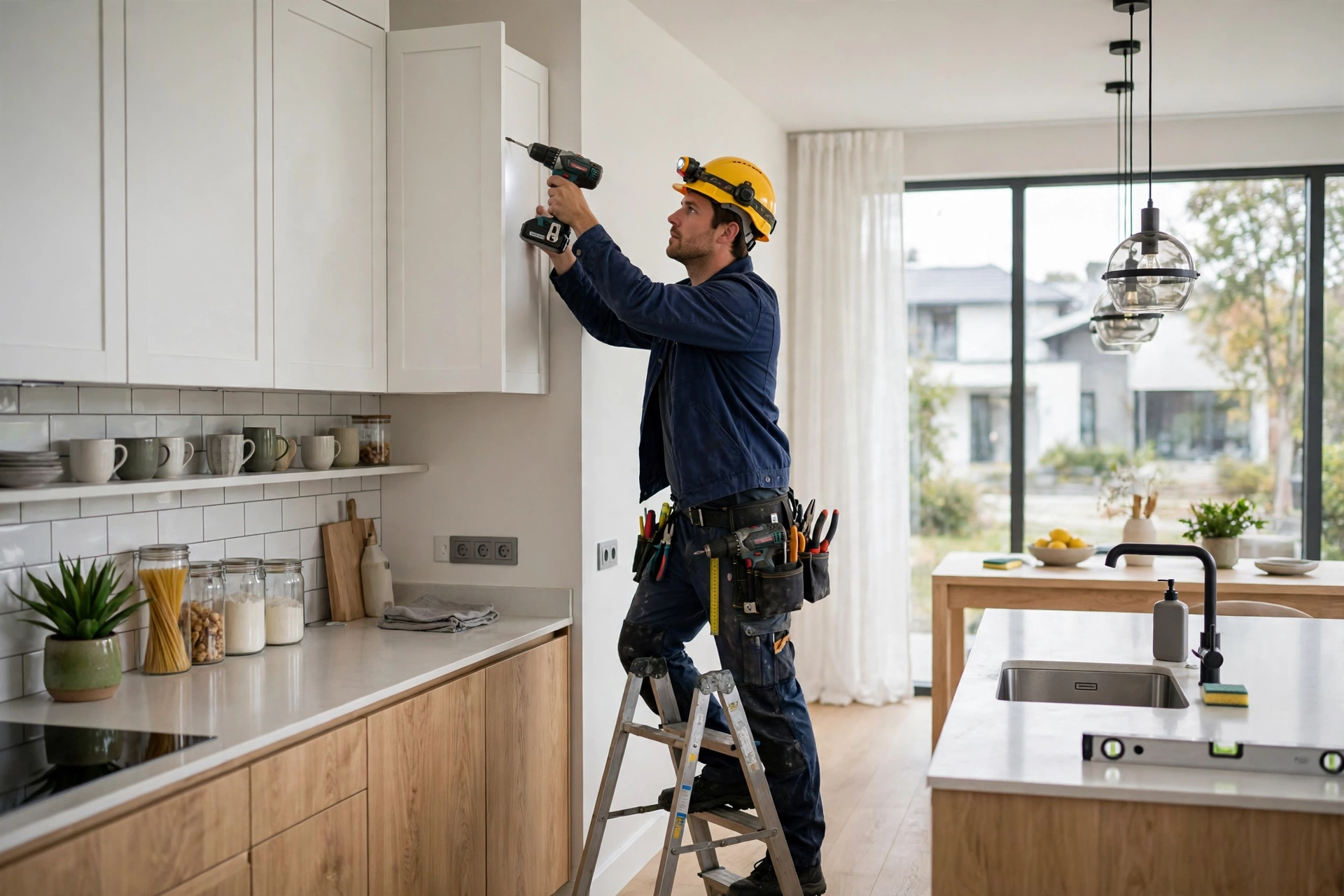
How should a helmet for kitchen fitters fit?
A helmet for kitchen fitters should fit snugly, sit level on the head, and stay in place when the fitter bends down to level a base unit or reaches up to fix a wall unit. The helmet should cover the top of the head and the forehead, and the chin strap should be fastened whenever the fitter is working, because a helmet that is loose can slip forward over the eyes or fall off at the very moment it is needed. A strap that is left dangling is no help at all, and a helmet that keeps slipping is a distraction as well as a risk.
What features should a kitchen fitter look for in a helmet?
A kitchen fitter should look for a helmet that is light, comfortable, and easy to adjust, with a suspension system inside that spreads the weight evenly and keeps the shell away from the head. An adjustable headband is useful, because it lets the fitter fine-tune the fit in seconds, and a lining that can be removed and washed is a practical feature for dusty indoor work. A helmet with a short brim is often a good choice for kitchen fitting, because a long brim can catch on cabinet doors and tall units, while a short brim still gives some shade and keeps dust out of the eyes.
How should a kitchen fitter look after a helmet?
A kitchen fitter should look after a helmet with regular cleaning and sensible storage, in the same way as any work helmet. After a day on site, the fitter should brush off the dust, wipe the shell with a damp cloth, and let the helmet dry naturally away from direct heat. Strong heat, such as a hot van in summer, can harm the materials in a helmet over time, so a cool, dry place is a better choice for storage, and the helmet should not be left where it can be knocked about or used as a shelf for tools.
The helmet should be kept where it will not be crushed under heavy boxes or dropped onto a hard floor, because a hard knock can damage it even when no crack is visible. A helmet bag is a simple way to protect it between jobs. Fitters who are choosing a new helmet may also want to learn about features that can help in a fall, including a system designed to reduce rotational forces, such as MIPS, which is found in some helmets made for work and sports use. A well-kept helmet, worn every time the fitter is on site, gives the best chance of finishing the job safely and going home without a head injury.
Do all kitchen fitters need to wear a helmet?
In general terms, a kitchen fitter should wear a helmet whenever there is a risk of a knock or a falling object, and many sites and employers expect it. A fitter who is unsure should check the rules for the site before starting work.
Can a normal hard hat be used for kitchen fitting?
Yes, in general terms a normal hard hat that fits well and is in good condition is often suitable for kitchen fitting. The key points are fit, comfort, and a secure chin strap.
When should a kitchen fitter replace a helmet?
A kitchen fitter should replace a helmet after a hard knock or a fall, or when it no longer fits well, shows cracks or damage, or has been worn for a long time. When in doubt, replace it rather than keep working in it.

Olivia
Writer at Helmet Today, covering helmet reviews, fit and riding safety.