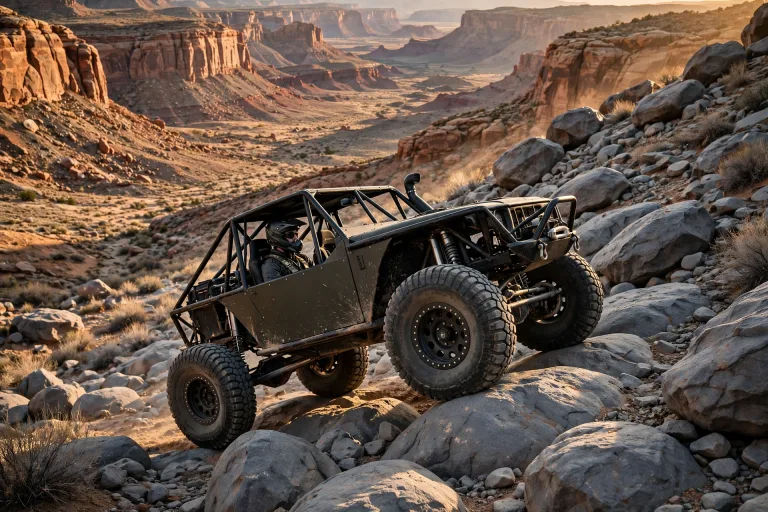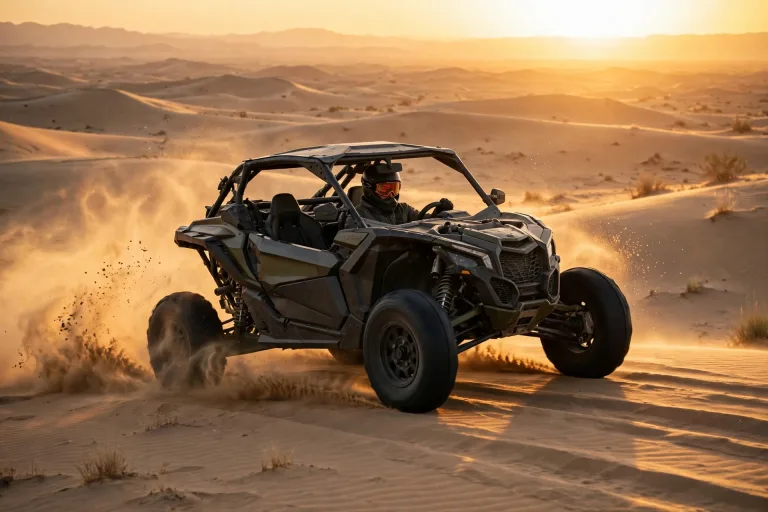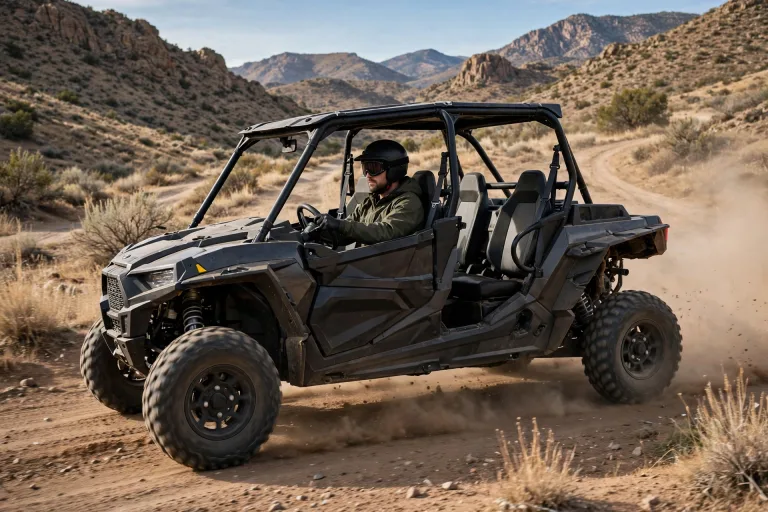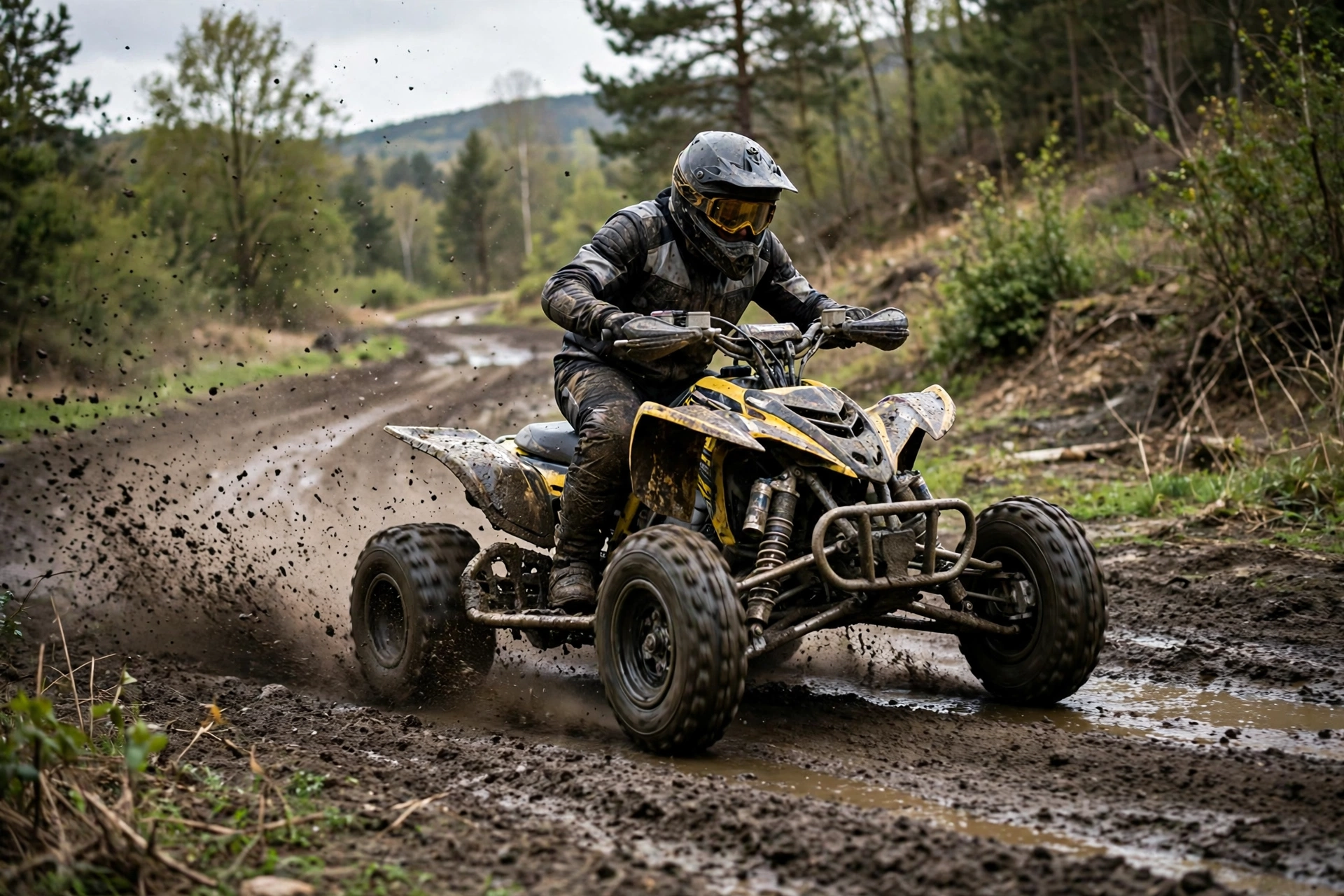
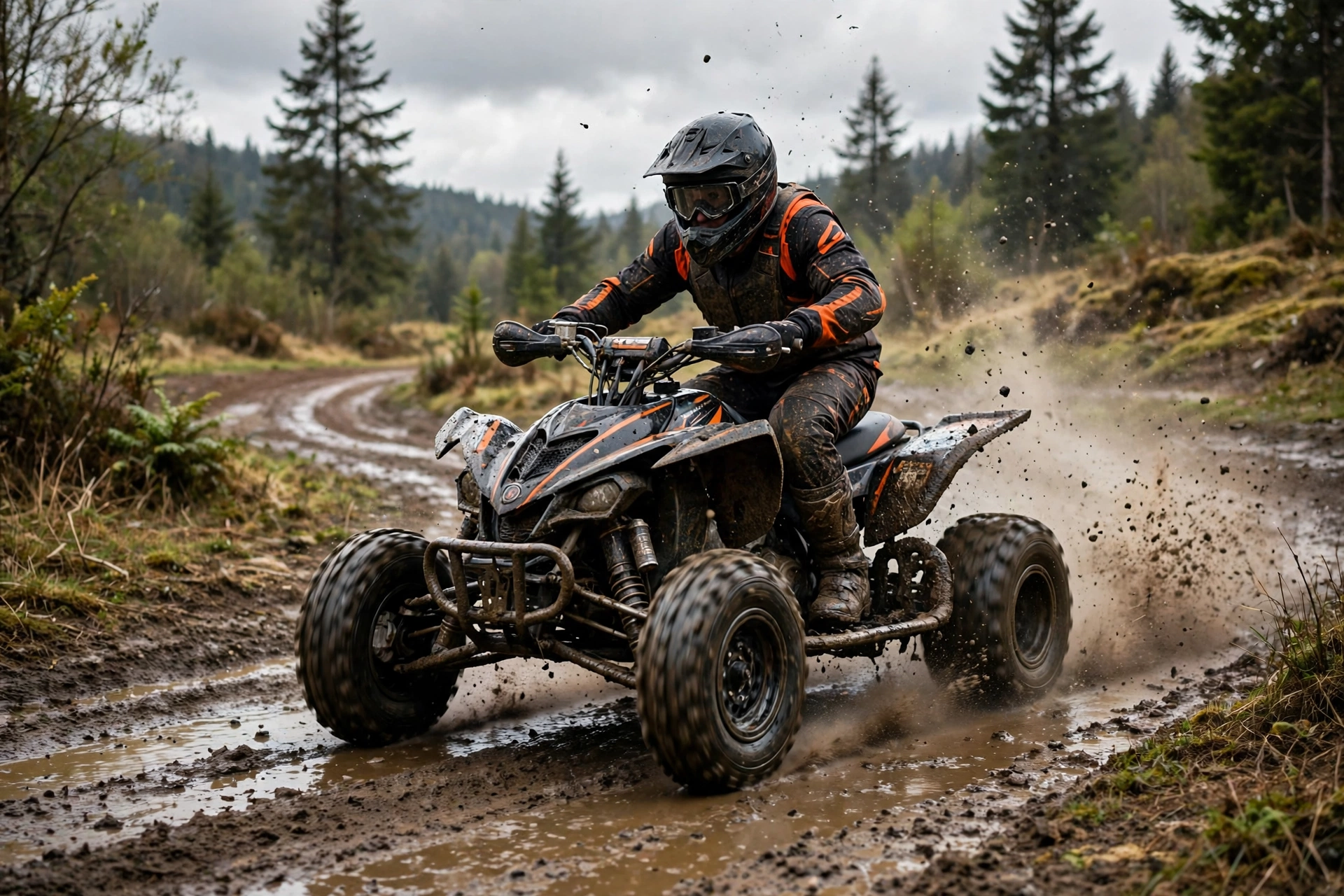
A helmet for ATV racing is a helmet worn by a rider on an all-terrain vehicle to protect the head from hard falls, rollovers, flying mud and stones, and knocks from the vehicle itself, and in general terms every ATV racer should wear one that fits well, fastens securely, and is in good condition. ATV racing is a rough, fast sport in which riders race four-wheeled vehicles over dirt tracks, mud, jumps, and uneven ground. A fall or a rollover can happen in a moment, so a helmet is treated as essential safety equipment, not as an optional extra.
An ATV is heavy, powerful, and open, with no roof or doors to protect the rider. The rider sits high, the ground is uneven, and the vehicle can tip over if a wheel catches a rut or a jump goes wrong. A helmet gives the rider protection in that moment, and it also keeps mud, stones, and dust out of the face at speed.
What kind of helmet is best for ATV racing?
The best helmet for ATV racing is, in general terms, a full-face off-road helmet with a hard outer shell, a secure chin strap, a peak to shield the eyes from sun and mud, and a wide opening that works with goggles. An off-road helmet is made for dirt, dust, and rough ground, and it has strong ventilation to keep the rider cool during hard physical work. Many ATV racers use a helmet made for motocross, because motocross helmets are built for the same kind of dirt track, jumps, and impacts.
A full-face helmet covers the chin and jaw as well as the top and sides of the head, and that extra coverage matters in a sport where a rider can be thrown from the vehicle or struck by part of it. An open-face helmet leaves the chin and face exposed, so it is a weaker choice for racing. The helmet should work well with goggles, because goggles keep mud and dust out of the eyes, and the goggles should sit neatly against the helmet without leaving a gap.
How should a helmet for ATV racing fit?
A helmet for ATV racing should fit snugly, sit level on the head, and stay in place when the rider shakes their head or bounces over rough ground. The helmet should cover the forehead and the top of the head, and the chin strap should be fastened securely every time the rider is on the ATV. A strap that is left loose lets the helmet lift in the wind or slide in a fall, and a helmet that comes off at speed is no help at all.
The fit should be checked with the goggles the rider will actually wear, because goggles can change how a helmet sits. Goggles should sit neatly against the helmet without leaving a gap that lets mud in, and the helmet should not press on the arms of glasses or push them out of place. The rider should also check that the helmet does not block their hearing, because an ATV racer needs to hear other vehicles, the sound of their own engine, and any warnings from the track marshals.
What safety rules apply to ATV racing helmets?
In general terms, most ATV racing clubs and events ask riders to wear a helmet that meets a recognised safety standard and is in good condition, and some events check helmets before a rider is allowed on the track. A rider who is unsure should check the rules for the club or the event before the race day, because the rules can differ from one organiser to another. Wearing a helmet that is damaged, very old, or bought second-hand with an unknown history is a risk that is easy to avoid by choosing a new helmet from a trusted seller.
A helmet that has taken a hard impact in a fall or a rollover should be looked at with care, and in general terms a helmet that has taken a serious impact should be replaced rather than used again. The damage may not be easy to see, because the part that absorbs the impact can be hidden inside the shell. A rider who keeps a record of falls and knocks will find it easier to judge when a helmet has done its job and needs to be retired.
What other kit should an ATV racer wear?
A helmet is only one part of an ATV racer’s kit, and it works best when the rider also wears the rest of the protective clothing that the sport calls for. Goggles protect the eyes from mud, dust, and stones, and gloves protect the hands from blisters and from the ground in a fall. A racing suit or body armour protects the arms, chest, and back, and sturdy boots protect the feet and ankles. Riding in ordinary clothes and trainers leaves the skin exposed, and a fall at racing speed on dirt and stones can cause painful injuries that proper kit would have prevented.
The rider should also think about the ATV itself, because a well-kept vehicle is a safer vehicle. Brakes, tyres, steering, and the throttle should be checked before every race, and anything loose or worn should be fixed before the rider goes out on the track.
How should an ATV racing helmet be looked after?
An ATV racing helmet should be looked after with regular cleaning and sensible storage, in the same way as any off-road helmet. After a muddy race day, the rider should wipe the shell clean, wash the mud out of the vents, clean the goggles, and let the lining air out so it does not stay damp with sweat. Strong heat, such as a hot car, can harm the materials in a helmet over time, so a cool, dry place is a better choice for storage.
The helmet should be kept where it will not be knocked about or used as a seat or a shelf, because a hard knock can damage it even when no crack is visible. A helmet bag is a simple way to protect it between race days. Riders who are choosing a new helmet may also want to learn about features that can help in a fall, including a system designed to reduce rotational forces, such as MIPS, which is found in some helmets made for off-road and motorsport use. A well-kept helmet, worn every time, gives an ATV racer the best chance of enjoying a fast day on the dirt track in safety.
Can a motocross helmet be used for ATV racing?
Yes, in general terms a motocross helmet that fits well and is in good condition is often a good choice for ATV racing. The key points are fit, ventilation, goggles that sit well, and a secure chin strap.
Do ATV racers have to wear goggles with a helmet?
Most ATV racers wear goggles with their helmet, because goggles keep mud, dust, and stones out of the eyes. In general terms, a helmet and goggles that fit together well are the best combination.
When should an ATV racing helmet be replaced?
An ATV racing helmet should be replaced after a hard impact, a rollover, or a fall, or when it no longer fits well, shows damage, or has been worn for a long time. When in doubt, replace it rather than keep racing in it.

Olivia
Writer at Helmet Today, covering helmet reviews, fit and riding safety.