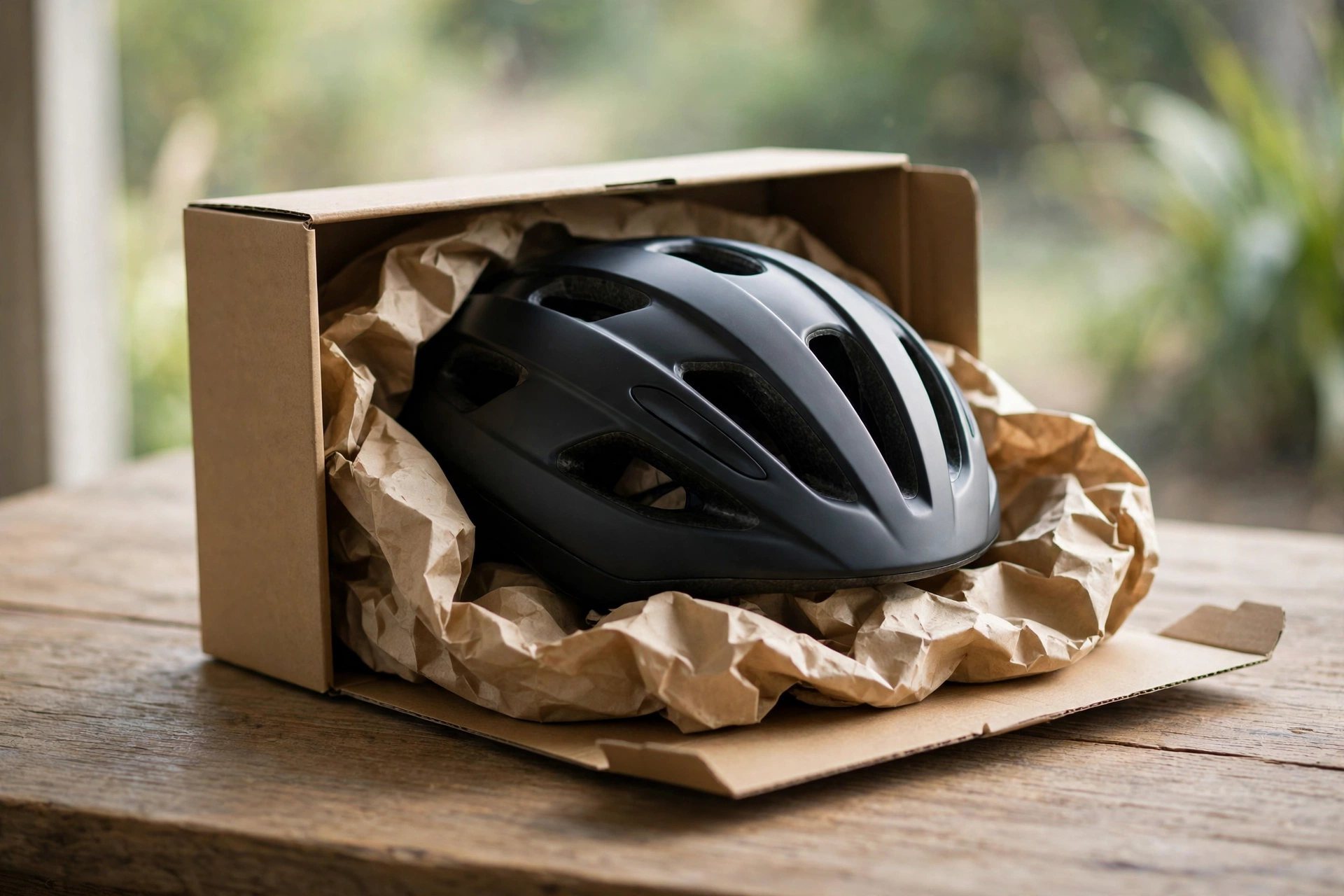
Helmet packaging waste is the box, inserts, bags, and ties that come with a new helmet, and in general terms makers are changing it by cutting plastic, shrinking boxes, and switching to recycled or recyclable materials. A helmet box can contain a surprising amount of packaging for a single product: a printed box, a moulded insert, a plastic bag, a tag, and sometimes a carry bag. Riders are noticing, and makers are responding — slowly, and unevenly.
This guide explains what helmet packaging is made of, what makers are changing, and what you can do with the packaging that arrives with your next helmet. The changes are modest, but they add up across millions of helmets sold each year.
What Is Helmet Packaging Made Of?
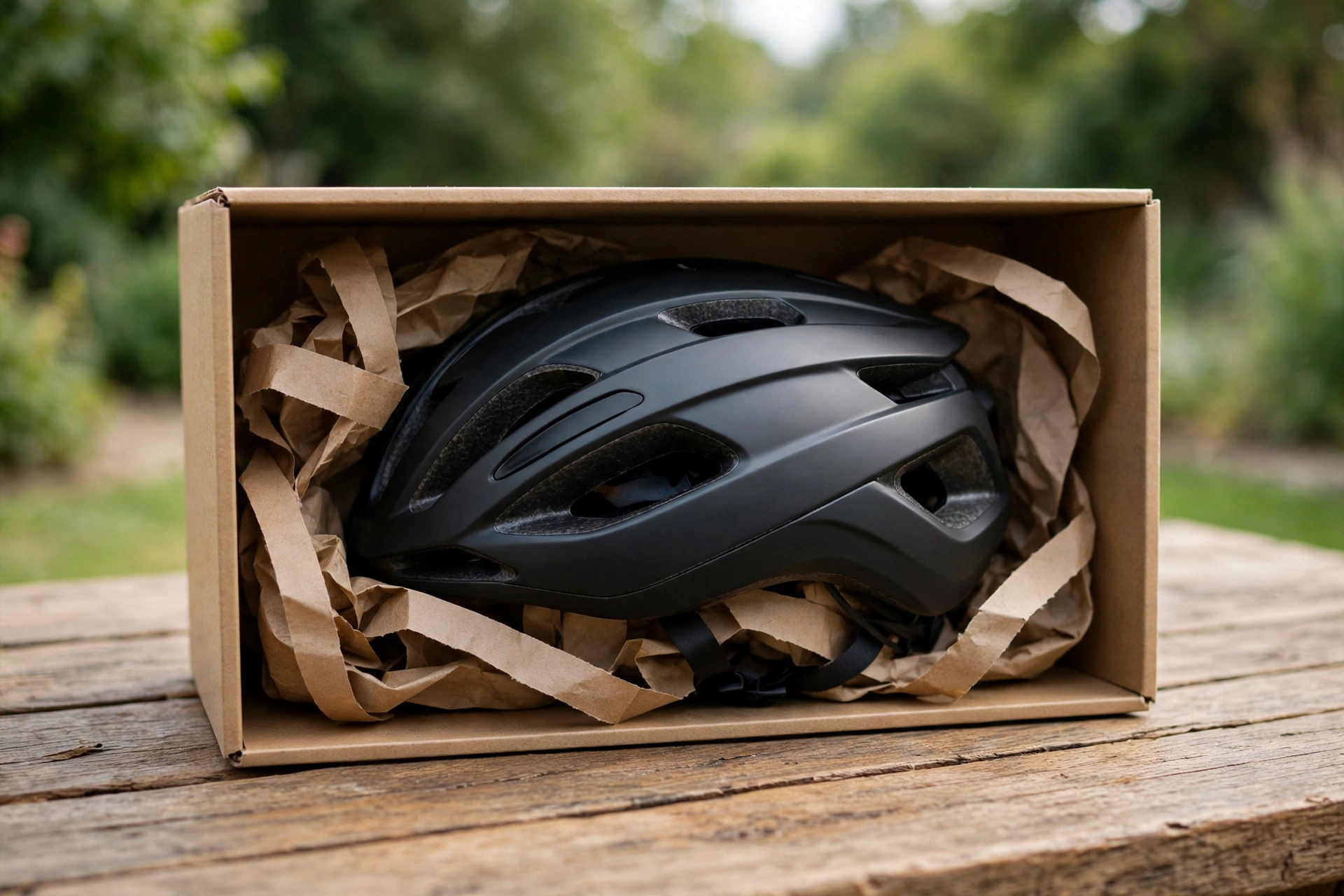
Most helmet boxes are cardboard, printed with the brand, the model name, and safety information. Inside, the helmet usually sits in a moulded insert or a cardboard cradle that holds it in place during shipping. Many helmets also arrive in a thin plastic bag to keep dust off, and some come with a fabric carry bag or a helmet sock.
The box itself is usually the easiest part to deal with: plain cardboard is widely recyclable, and many boxes are already made from recycled board. The insert is more variable. Some are cardboard, which is recyclable; others are moulded plastic or foam, which often is not accepted in household recycling. The plastic bag is usually recyclable at specialist collection points, but not in a kerbside bin.
Tags, stickers, and cable ties add to the pile. A helmet may arrive with a hang tag, a size sticker, a certification sticker, and a plastic tie holding the strap in place. Each is small on its own, but together they make the unboxing experience feel wasteful — and they are the parts riders most often throw straight in the bin.
What Are Makers Changing About Packaging?
The most common change is removing plastic. Several makers have dropped the plastic bag around the helmet, or replaced it with a paper wrap. Others have replaced moulded plastic inserts with cardboard cradles that can be recycled with the box. A few have removed the carry bag, or made it from recycled fabric instead of new material.
Boxes are getting smaller too. A box that fits the helmet closely uses less board and takes up less space in shipping, which means more helmets per delivery and fewer lorries on the road. Some makers have also switched to printing with fewer inks or to uncoated board, which is easier to recycle.
Another change is information moving online. Instruction leaflets, warranty cards, and fitting guides are increasingly delivered as a QR code on the box rather than as printed sheets. That saves paper, though it does assume the rider has a phone to hand — and it is worth checking whether the information you need is actually available online before you throw the box away.
Is the New Packaging Actually Better?
In general terms, yes — but the gains are modest, and some changes are more about appearance than impact. Replacing a plastic bag with paper is a real improvement, because the paper can be recycled at home. Shrinking the box saves material and shipping space. Those are straightforward wins.
Other changes are harder to judge. A box printed with “recycled” on the side may contain only a small share of recycled board, and a “compostable” bag may need industrial composting rather than a home compost heap. As with eco-friendly helmet materials, the claim matters less than the detail behind it. If a maker publishes the recycled content of its packaging, that number is worth more than a green leaf symbol.
There is also a trade-off between protection and packaging. A helmet that arrives damaged because its packaging was too thin is worse than a helmet in a slightly larger box. Good packaging protects the helmet in transit, and a damaged helmet is a wasted helmet. The best packaging is the smallest amount that still does that job properly.
What Can You Do with Helmet Packaging?
Recycle the cardboard box and any cardboard inserts through your household recycling, after removing tape, stickers, and plastic windows. Flatten the box to save space. If the box is in good condition, consider keeping it — it is the safest way to store or post a helmet, and it protects the helmet far better than a bag.
Plastic bags and moulded plastic inserts usually need a specialist collection point, such as the soft-plastic recycling bins found at many supermarkets. Check the label on the bag: if it carries a recycling symbol with a number, your local guidance will tell you whether it is accepted. If in doubt, put it in general waste rather than contaminating a recycling bin.
Keep the fabric carry bag if one came with the helmet. It protects the helmet from scratches and sunlight in storage, and it is useful for carrying the helmet on trips. If you do not need it, pass it on rather than throwing it away — it can serve as a storage bag for another rider’s helmet.
What Should You Look for When Buying a Helmet?
Packaging is a reasonable thing to notice, but it should not decide your purchase. Fit, certification, ventilation, and comfort matter far more than the box the helmet arrives in. A helmet in minimal packaging that does not fit is a worse choice than a well-fitting helmet in a bigger box.
That said, if two helmets are equal on safety and fit, packaging is a fair tiebreaker. A maker that has clearly thought about its packaging — smaller box, no plastic bag, recycled board — is often a maker that thinks carefully about its product too. And if you want to understand the safety features inside the box, reading about what MIPS is for helmets can help you compare helmets on what matters most.
Finally, remember that the biggest packaging decision is yours: keeping the box for storage, recycling what you do not need, and not buying a new helmet before the old one is finished. The greenest packaging is the packaging you never need, because the helmet you already own is still doing its job.
Frequently Asked Questions
Q: Can I recycle a helmet box with the helmet’s stickers on it?
A: In general terms, yes — small stickers and tape are usually fine in cardboard recycling. Remove any plastic windows, metal staples, or large labels first, and flatten the box before putting it in the bin.
Q: Why do some helmets still come in plastic bags?
A: The bag keeps dust and moisture off the helmet during shipping and storage, and some makers have not yet switched to a paper alternative. If your helmet arrives in plastic, take the bag to a soft-plastic collection point rather than putting it in household recycling.
Q: Should I keep the box my helmet came in?
A: Yes, if you have space. The box is the best way to store a helmet safely and to post it if you ever need to send it for a warranty claim or a repair. It also protects the helmet from sunlight and knocks.

Olivia
Writer at Helmet Today, covering helmet reviews, fit and riding safety.