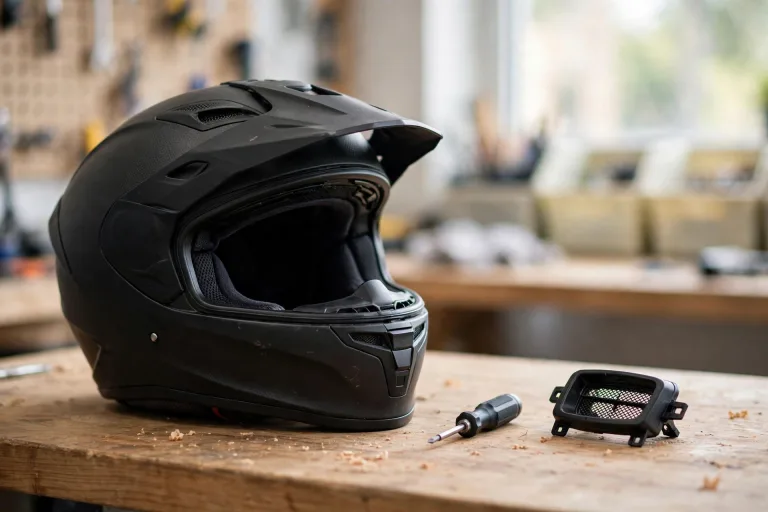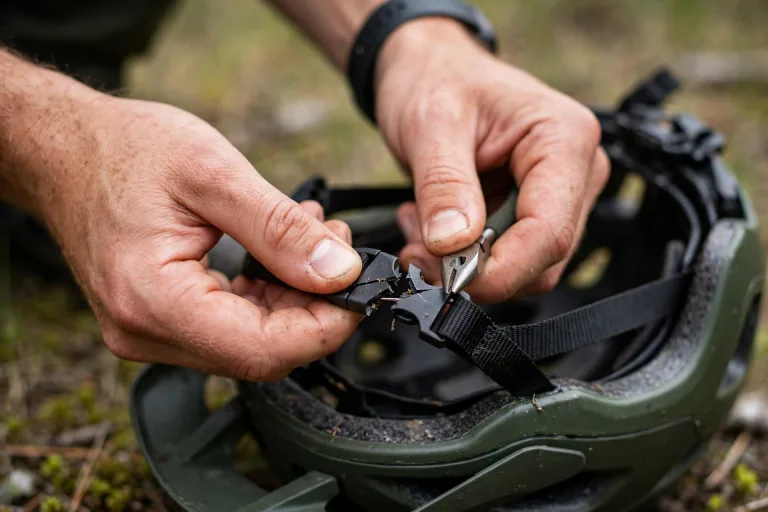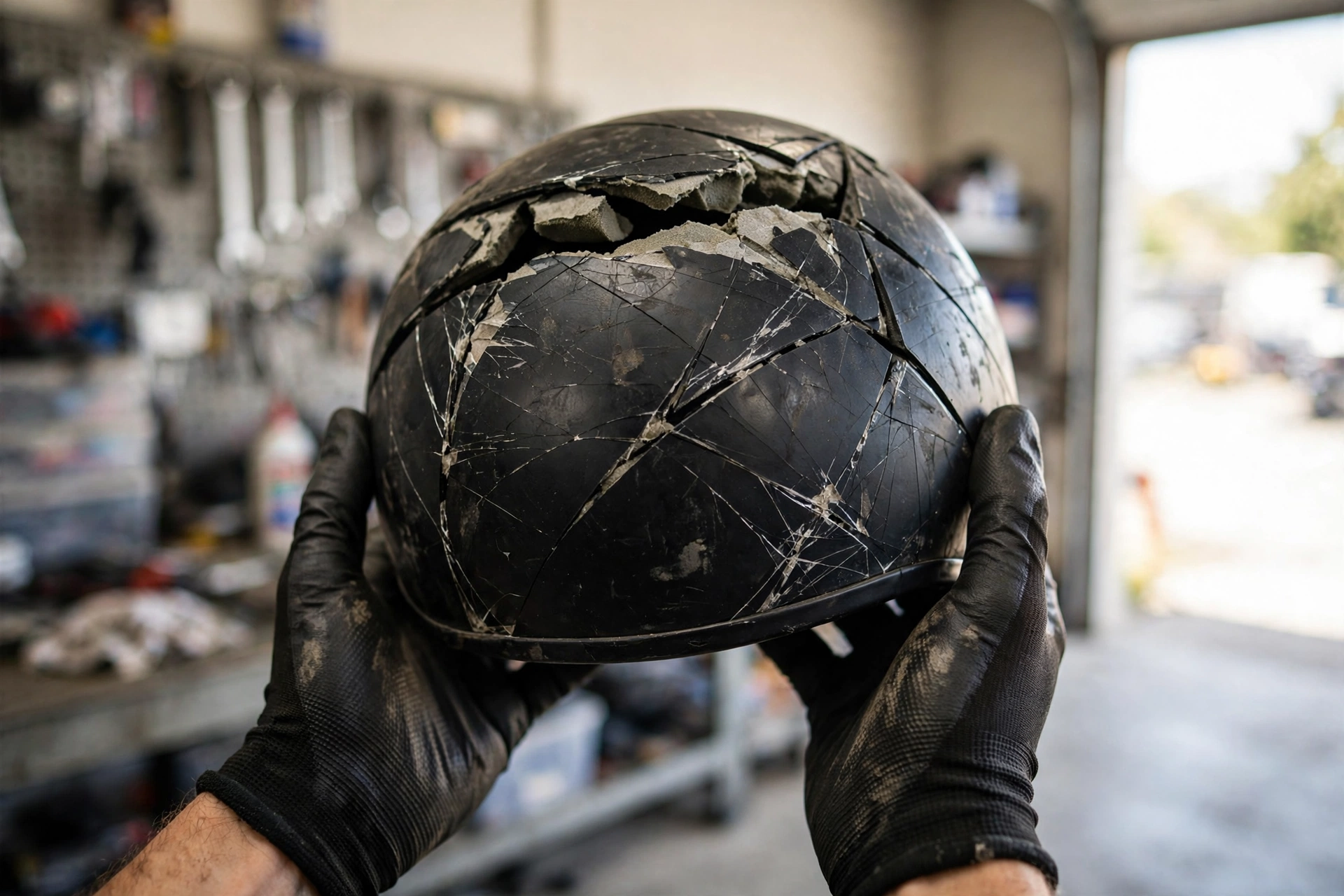
A helmet cannot be repaired after a crack, in general terms, because a crack in the shell means the helmet’s protective structure has been damaged, and no glue, filler, or patch can restore the strength it had before the crack appeared. A cracked helmet should be replaced rather than repaired, even if the crack looks small and the helmet still feels solid in the hand. The damage that matters most is often hidden inside the helmet, where the lining and the foam may have been compressed or split by the same impact that cracked the shell.
Many riders ask this after dropping a helmet or after a fall, because a helmet is not cheap and a small crack can look like a minor problem. The trouble is that a helmet is designed to absorb one serious impact by breaking down in a controlled way, and once the shell has cracked, that breakdown has already begun.
Why can’t a cracked helmet be repaired?
A cracked helmet cannot be repaired because the shell and the inner foam work as one system, and a repair to the outside does not fix what happened inside. The outer shell spreads the force of an impact over a wide area, and the foam liner underneath absorbs the energy by compressing slowly. When the shell cracks, the force has already travelled through to the foam, and the foam may be crushed or split in places that cannot be seen from the outside.
Glue and filler can close a visible crack, but they do not restore the shell’s ability to spread force, and they do not un-crush the foam. A helmet that has been glued back together may look whole, but it may fail at the same spot in a second fall, because the repaired area is weaker than the rest of the shell. In general terms, a helmet’s safety depends on its materials behaving in a known way on impact, and a repair changes that behaviour in ways that cannot be tested at home.
What should you do with a cracked helmet?
A cracked helmet should be taken out of use straight away and replaced with a new helmet that fits well and is in good condition. The rider should not keep using it for short rides while waiting for a replacement, because a fall can happen on any ride, and a damaged helmet may not protect the head when it is needed most.
The old helmet should be thrown away in a way that stops anyone else from using it. Cutting the straps stops the helmet being picked up and worn by someone else, and removing the lining can help too. A cracked helmet that is left lying around a garage or a club room is a temptation for someone who has forgotten their own helmet, so disposing of it properly is part of looking after the people around you.
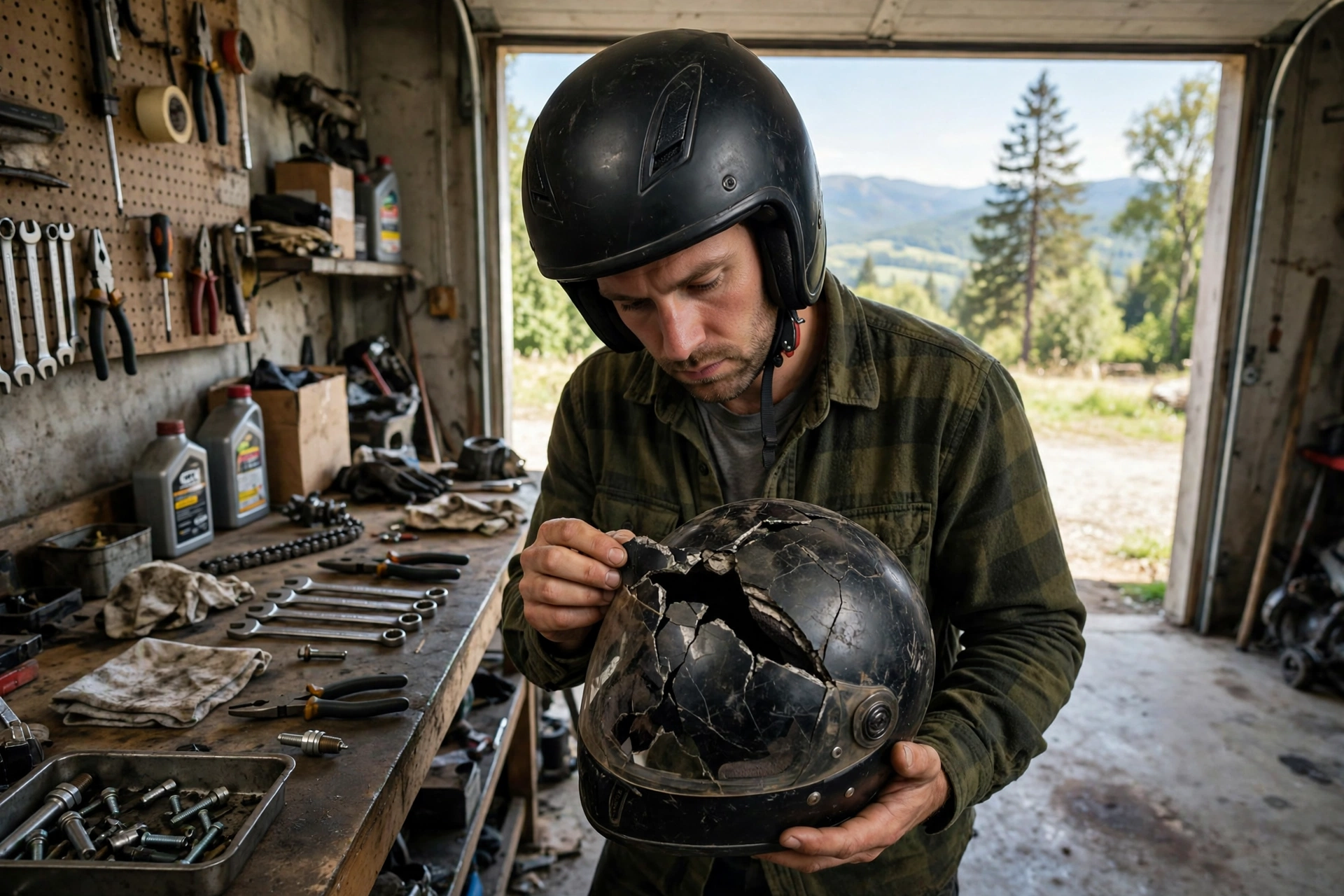
Can small cracks and scratches be fixed?
Small surface scratches can often be lived with, because a scratch that only marks the paint does not usually weaken the shell. A scratch should still be looked at closely, because a scratch that is deep enough to be felt with a fingernail may be a crack rather than a surface mark. If the rider is unsure whether a mark is a scratch or a crack, it is safer to treat it as a crack and to get the helmet checked by a shop or replaced.
Small chips in the paint, scuffs from being put down on a rough surface, and marks from a strap buckle are common and do not usually mean the helmet is unsafe. The rider can clean the helmet, check the straps and the lining, and keep using it if the shell is sound. The key difference is depth: a surface mark stays on the outside, while a crack goes through the shell or into the foam, and that is the line between a helmet that can still be used and one that cannot.
Some riders ask about filling a small crack with resin or epoxy, but in general terms this does not make the helmet safe again. The filler may hold the two sides of the crack together, but it does not restore the shell’s strength, and it can hide further damage underneath. A helmet that has been filled and painted may look new, but it is still a damaged helmet, and the rider has no way of knowing how it will behave in a fall.
How can you tell if a helmet is cracked?
A helmet can be checked for cracks by looking at the shell in good light, running a hand over the surface to feel for splits, and pressing gently around any mark to see if it opens or moves. The rider should look at the inside of the helmet too, because a crack in the shell may show as a split or a dent in the foam liner. The straps, the buckle, and the vents should also be checked, because damage to these parts can be a sign that the helmet has taken a hard knock.
A helmet that has been in a crash should be checked even more carefully, and in general terms it should be replaced after a serious impact whether a crack is visible or not. The foam inside a helmet is designed to compress once, and it may have been compressed by a crash without leaving any mark on the outside. If the rider felt a hard knock to the head, the helmet has done its job, and it should be retired rather than used again.
How can you stop a helmet from cracking?
A helmet can be protected from cracking by storing it safely, carrying it in a bag, and avoiding drops onto hard surfaces. A helmet should never be left on a high shelf where it can fall, on the ground where it can be stepped on, or in a hot car where heat can weaken its materials over time. A helmet bag is a simple and cheap way to protect the shell from knocks during travel and storage.
The helmet should also be cleaned and looked after regularly, with mild soap and water, and dried naturally away from direct heat. Strong chemicals and solvents should be kept away from the shell, because they can damage the materials and make the helmet more likely to crack. Riders who are choosing a new helmet may want to learn about features that help in a fall, such as MIPS, a system designed to reduce rotational forces, which is found in many modern helmets. A well-kept helmet, replaced promptly when it is cracked or damaged, gives the rider the best protection on every ride.
Can a cracked helmet be used for a short ride?
No, in general terms a cracked helmet should not be used for any ride, however short. A fall can happen at any time, and a damaged helmet may not protect the head.
Does a drop always crack a helmet?
No, a drop does not always crack a helmet, but a hard drop onto a hard surface can damage the shell or foam even without a visible crack, so check the helmet carefully after any drop.
How long does a helmet last?
In general terms, a helmet lasts for several years of regular use, but replace it after a serious impact, when it no longer fits, or when it shows cracks or worn straps and lining.

Olivia
Writer at Helmet Today, covering helmet reviews, fit and riding safety.