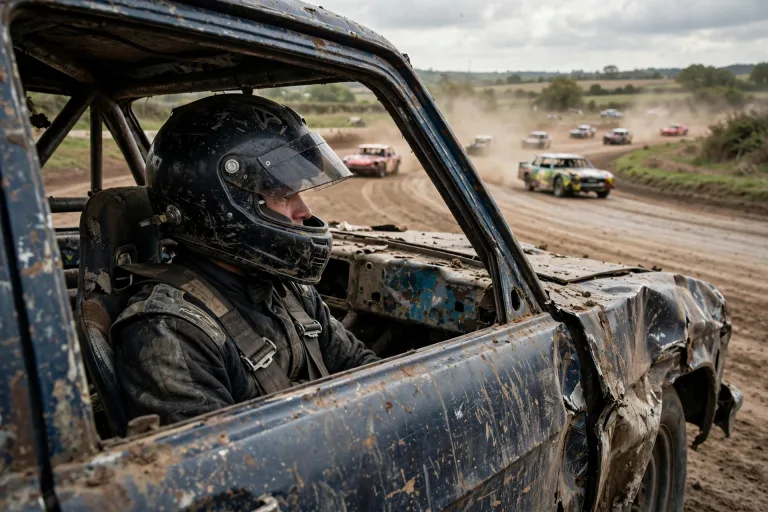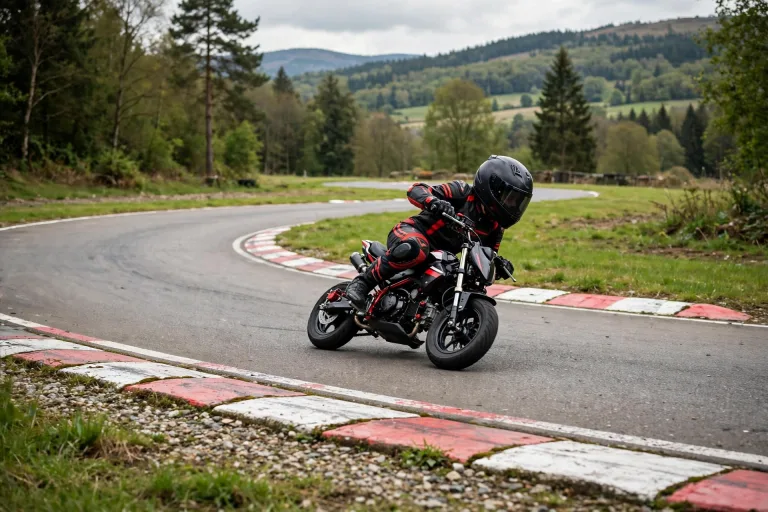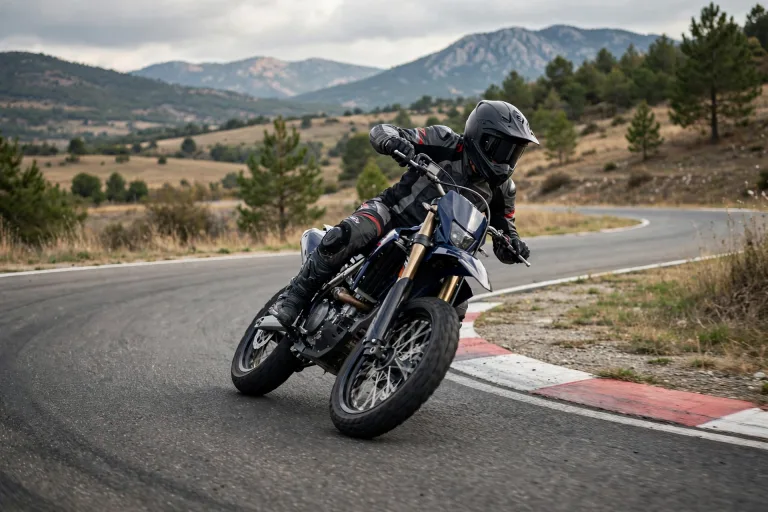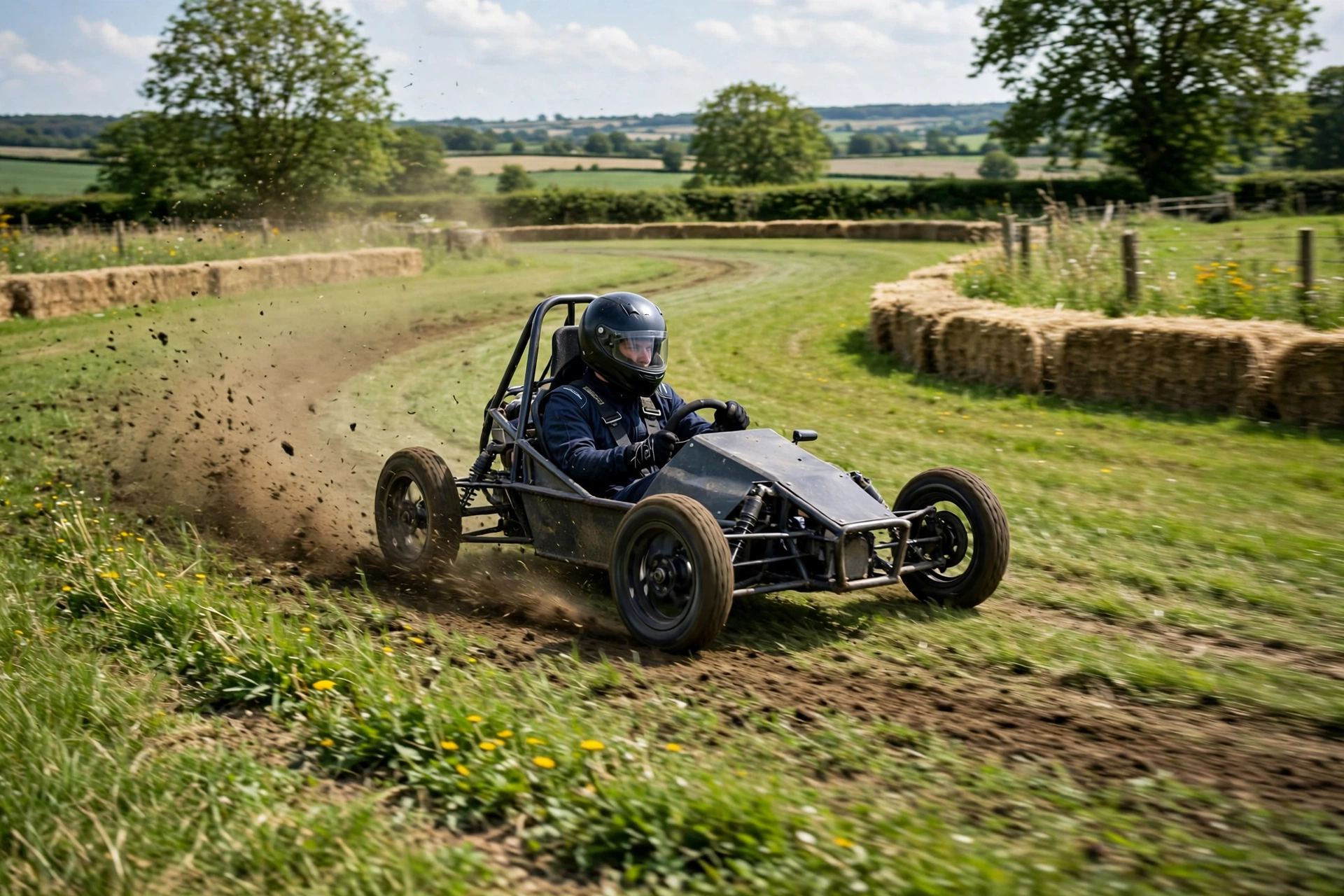
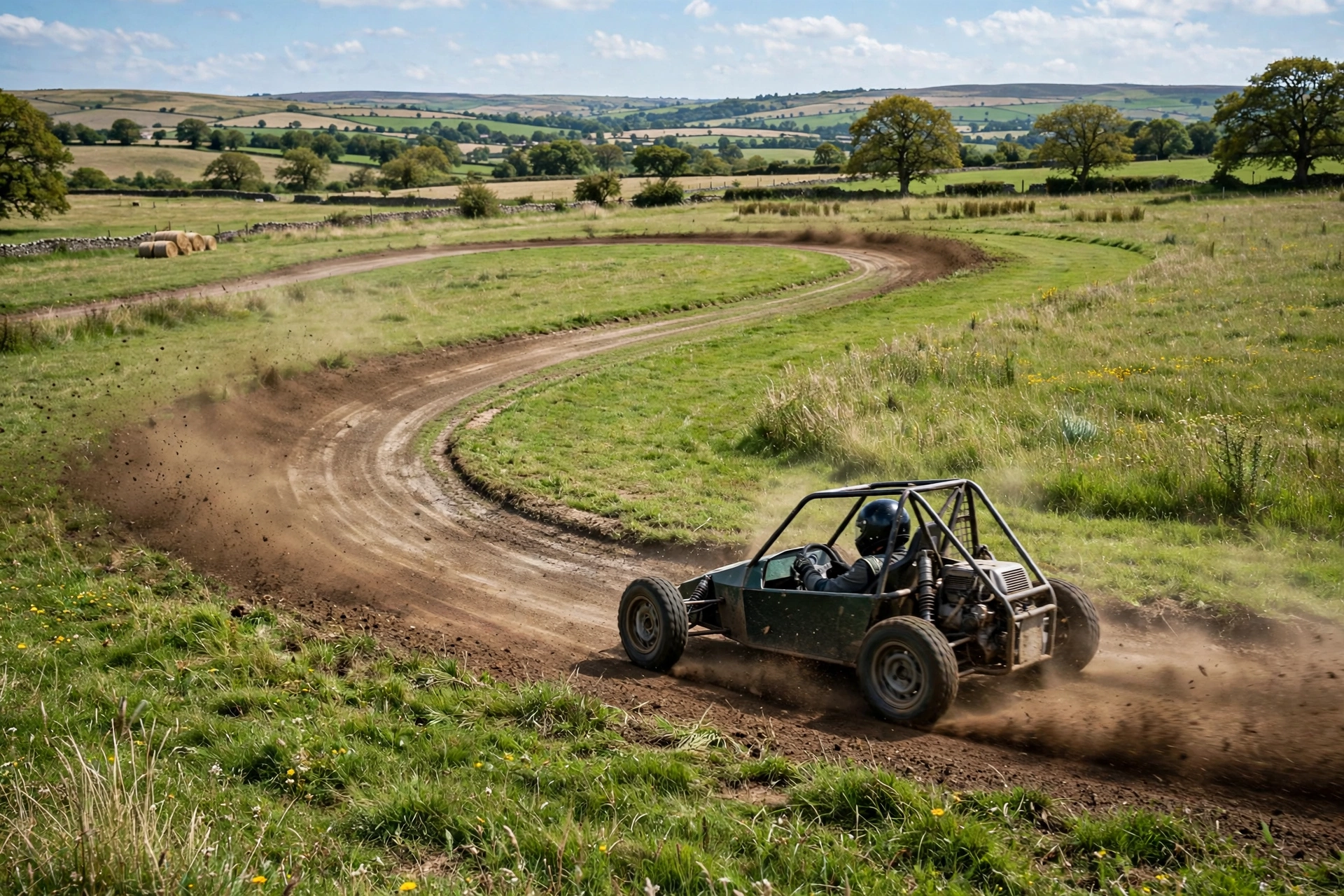
A helmet for autograss racing is a helmet worn by a driver racing a small single-seater car on a grass track, to protect the head from rolls, knocks, flying dirt, and contact with the roll cage, and in general terms every autograss driver should wear one that fits well and stays in place at speed. Autograss is a form of grass-track motorsport in which drivers race lightweight cars around a marked grass circuit, often in close packs where contact between cars is common. The speeds are modest by motorsport standards, but a roll or a collision on uneven grass can still be a hard one, so a helmet is treated as essential safety equipment.
Autograss cars are built with a roll cage around the driver, and the driver sits low with the head close to the bars of the cage. The track surface is grass, often rutted and dusty in dry weather and muddy when wet. A helmet gives the driver protection in a roll, a knock against the cage, or a bump from another car, and it also keeps dirt and stones out of the face.
Why do autograss drivers need a helmet?
Autograss drivers need a helmet because the cars race close together on an uneven surface, and a roll or a collision can happen without warning. Grass looks soft, but a rutted track with hard dry patches can be almost as firm as dirt, and a driver thrown against the roll cage in a roll can hit it with real force. In general terms, a helmet spreads the force of an impact and helps to protect the skull, and that protection matters all the more when the driver cannot control how or where the car ends up.
There is also the risk of being struck by flying dirt, stones, and grass thrown up by the cars ahead. At racing speed, a stone kicked up by another car can sting or cut, and a helmet with a visor helps the driver to keep their eyes clear and their focus on the track ahead. Dust is another reason: on a dry day, the cars ahead throw up clouds of dust, and a helmet with a visor or with goggles keeps the driver’s vision clear through the worst of it.
What kind of helmet is best for autograss racing?
The best helmet for autograss racing is, in general terms, a motorsport helmet with a hard outer shell, a secure chin strap, and a fit that works with a visor or goggles. Many drivers use a full-face helmet, because it protects the whole head and the face, and the visor keeps out dirt and dust. The key points are a snug fit, good ventilation, and a strap that holds the helmet in place when the car is bouncing over ruts.
The helmet should also cope with dirt and mud. A helmet used on a grass track will get dirty, so it should be easy to wipe clean and to dry out. Vents that let air in without letting in too much dust are useful, and a lining that can be removed and washed is a practical feature. Drivers should also check the rules of their club or class before buying, because some classes ask for a helmet that meets a particular safety standard, and a helmet that meets the standard is the safest choice.
How should a helmet for autograss racing fit?
A helmet for autograss racing should fit snugly, sit level on the head, and stay in place when the driver shakes their head or is jolted by a rut. The helmet should cover the forehead and the top of the head, and the chin strap should be fastened securely every time the driver is in the car. A strap that is left loose lets the helmet lift or slide in a roll, and a helmet that comes off at speed is no help at all.
The fit should be checked with the visor or goggles the driver will actually wear, because eyewear can change how a helmet sits. Goggles should sit neatly against the helmet without leaving a gap that lets dust in, and the helmet should not press on the arms of glasses or push them out of place. The driver should also check that the helmet does not block their hearing, because an autograss driver needs to hear the engine, other cars, and any warnings from the marshals.
What should a driver check before a race?
Before a race, a driver should check the helmet for cracks, dents, or damage to the shell, and should look at the lining, the strap, the buckle, and the visor to make sure they are sound and working. A helmet that has been in a roll or a crash should be looked at with care, and in general terms a helmet that has taken a serious impact should be replaced rather than used again. The damage may not be easy to see, so the driver should think honestly about what the helmet has been through.
The driver should also check the car, the track, and the weather before setting off. A helmet is only one part of staying safe on the grass, and it works best when the driver also checks that the car is in good order, that the track is clear, and that the weather is within their ability. Listening to the marshals’ briefings is part of race day too.
How should an autograss helmet be looked after?
An autograss helmet should be looked after with regular cleaning and sensible storage, in the same way as any motorsport helmet. After a race, the driver should shake out the dirt, wipe the shell with a damp cloth, and let the helmet dry naturally away from direct heat. Strong heat, such as a hot car, can harm the materials in a helmet over time, so a cool, dry place is a better choice for storage.
The helmet should be kept where it will not be knocked about or used as a seat or a shelf, because a hard knock can damage it even when no crack is visible. A helmet bag is a simple way to protect it between race days. Drivers who are choosing a new helmet may also want to learn about features that can help in a crash, including a system designed to reduce rotational forces, such as MIPS, which is found in some helmets made for motorsport and speed sports. A well-kept helmet, worn every time, gives an autograss driver the best chance of enjoying a fast day on the grass in safety.
Do all autograss drivers wear a helmet?
Yes, in general terms a helmet is required for autograss racing, and clubs and events expect every driver to wear one. A driver who is unsure should check the rules for the club or the event before race day.
Can a bike helmet be used for autograss racing?
No, in general terms a bike helmet is not the right choice for autograss racing. A motorsport helmet with a hard shell and a full-face design gives better protection against rolls, the roll cage, and flying dirt.
When should an autograss helmet be replaced?
An autograss helmet should be replaced after a hard impact or a roll, or when it no longer fits well, shows damage, or has been worn for a long time. When in doubt, replace it rather than keep racing in it.

Olivia
Writer at Helmet Today, covering helmet reviews, fit and riding safety.