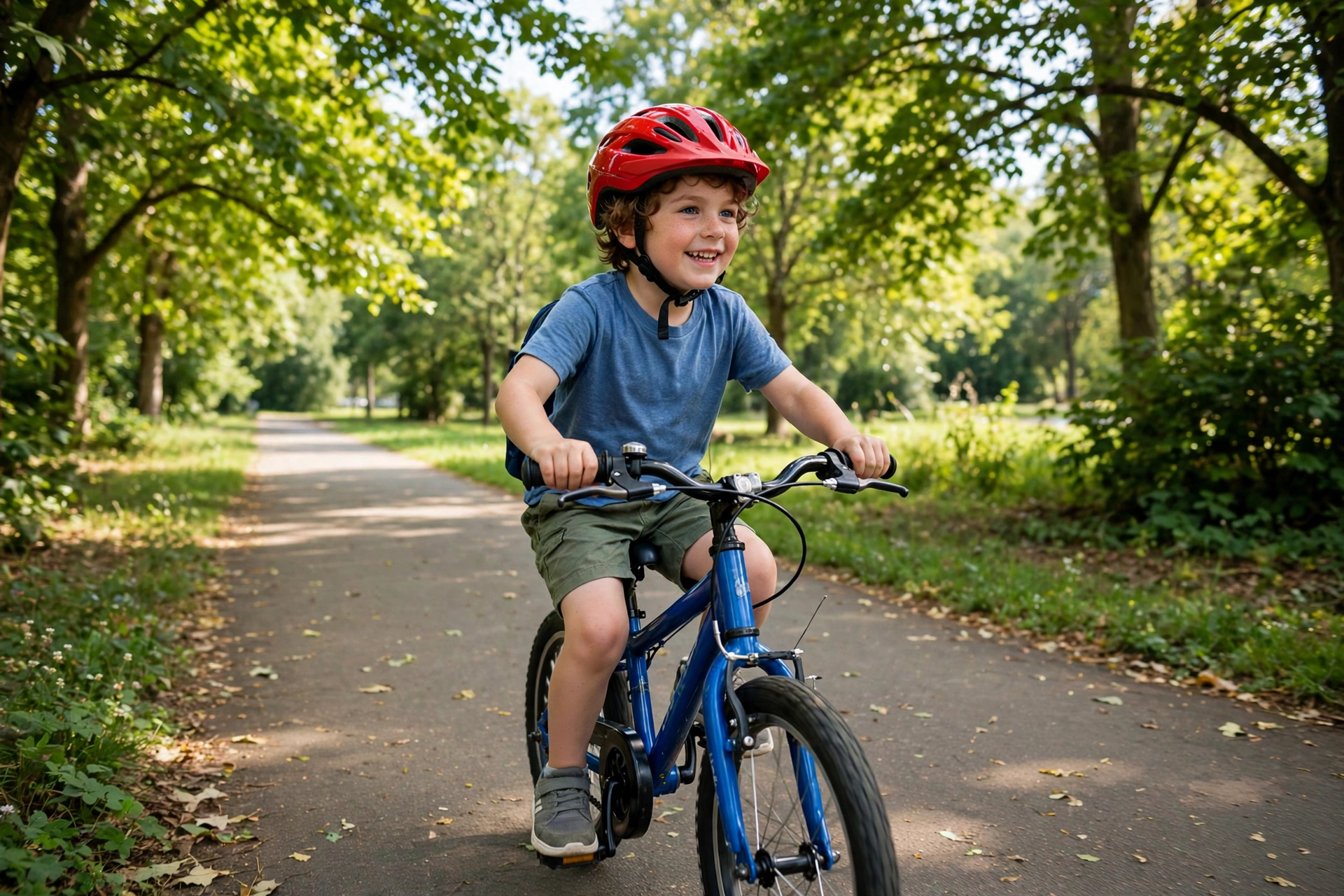
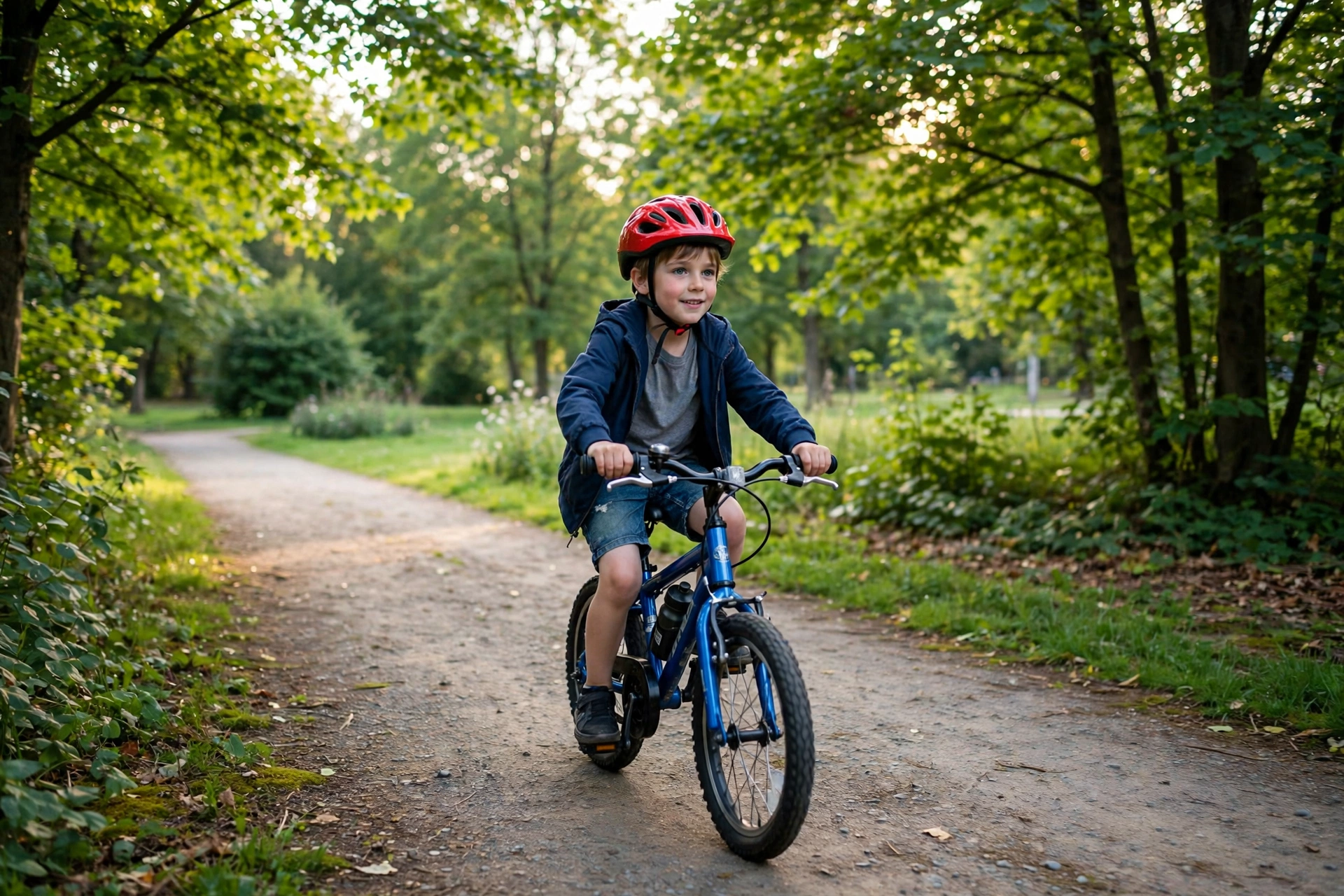
A helmet for a seven-year-old should fit snugly, sit level just above the eyebrows, and stay put when your child shakes their head — and the best one is the one your child is happy to wear every time they ride. At seven, most children are riding further and faster than they did a year ago, often on the road to school or on family rides, so fit, comfort and visibility all matter more than they used to. Look for a helmet that matches your child’s head measurement, meets a recognised cycling standard, and has straps your child can fasten without help.
Seven-year-olds are at an in-between stage. They are too big for toddler helmets, but still need a children’s helmet that is light, well ventilated and easy to adjust. They also have opinions of their own, and a helmet they dislike will spend more time hanging on a handlebar than on their head. This guide covers what to look for when choosing a helmet for a seven-year-old, how to check the fit, and how to keep it comfortable enough that wearing it becomes a habit.
How Do You Know If a Helmet Fits a Seven-Year-Old?
The fit check starts with the head measurement. Wrap a soft tape measure around the widest part of your child’s head, about a finger’s width above the eyebrows and ears, and note the number in centimetres. Then compare it with the size range printed on the helmet. In general terms, many seven-year-olds measure around 52 to 55 centimetres, which usually puts them in a small or medium children’s size, but the measurement matters far more than the age on the box.
Once the helmet is on, it should sit level, with the front edge just above the eyebrows. Ask your child to shake their head from side to side and nod up and down. The helmet should move with the head and stay in place. If it slides forward over the eyes or tips back to expose the forehead, the fit is wrong. Tighten the rear dial a little first, but if the helmet still moves, try a different size or shape.
Check the sides as well. The helmet should feel snug all round without pressing on the temples. A good test is to press gently on the side of the helmet: the skin underneath should move with it. If the helmet slides over the skin, it is too loose. If it leaves red marks after a few minutes, it is too tight. A helmet that fits well should be comfortable enough to forget about once the ride starts.
What Safety Features Should a Helmet for a Seven-Year-Old Have?
The first thing to check is the safety standard. Look for a label inside the helmet or on the packaging showing that it meets a recognised cycling standard. This tells you the helmet has been tested for the kinds of impacts a young cyclist might have. A helmet without a clear standard label is not worth buying, however attractive it looks.
Next, look at the shell. A hard outer shell protects against knocks and scrapes, while the foam liner inside absorbs impact. Check that the shell covers the back of the head well, because children often fall backwards as well as forwards. Some helmets have extra coverage at the back, which is worth looking for if your child rides on rougher ground or trails.
How Important Is Ventilation and Weight for a Seven-Year-Old?
Ventilation matters more than many parents expect. Seven-year-olds ride hard, and a helmet with too few vents will get hot and sweaty quickly. Look for a helmet with vents across the top and front, so air can flow through as your child rides. A well-ventilated helmet is one your child will keep on for the whole ride instead of pulling off at the first hill.
Weight matters too. A child’s neck is still developing, and a heavy helmet can feel tiring on longer rides. Hold a few helmets in your hand and compare them. In general terms, a lighter helmet is easier to wear, but do not choose the lightest helmet if it means giving up good coverage or a proper fit. The right balance is a helmet that feels light on the head and still covers the head fully.
How Do You Adjust the Straps and Buckle?
Good straps make a good helmet work properly. Each side strap should form a V that meets just below the ear, and the chin buckle should sit flat under the chin. Most children’s helmets have small sliders that let you move the V into position. Take a minute to set these up properly the first time, because once they are right they rarely need moving again.
The chin strap should be tight enough that you can fit one finger between the strap and the chin, but not much more. If the strap hangs loose, the helmet can come off in a fall. If it is too tight, it will be uncomfortable and your child will keep fiddling with it. Check the strap every time your child rides, because straps stretch slightly over time and children grow fast at this age.
Let your child learn to fasten and unfasten the buckle themselves. A buckle that pinches the skin will put them off wearing the helmet, so look for one with a soft pad or guard under the chin. If the buckle does pinch, a small piece of soft fabric can help, but most modern children’s helmets are designed to avoid pinching in the first place.
What Else Should Parents Check Before Buying?
Let your child have a say in the colour and design. At seven, children care about how things look, and a helmet they chose themselves is one they will wear without being asked. Bright colours are a good idea anyway, because they make a small cyclist easier to spot. Avoid helmets with parts that stick out or could catch on branches or clothing.
Think about how long the helmet will last. Seven-year-olds grow quickly, so a helmet with a good adjustment dial and spare pads will fit for longer. Even so, do not buy a size up to grow into. A helmet that is too big now will not protect properly while your child waits to grow into it. Buy the size that fits today and plan to check the fit again in a few months.
If you are curious about the technology inside modern helmets, reading about what MIPS is for helmets can help you understand one of the features some children’s helmets now offer. It is not essential for every young rider, but it is useful to know what the label means when you see it on a helmet in the shop.
Frequently Asked Questions
Q: What size helmet does a seven-year-old need?
A: Measure around the widest part of the head, about a finger’s width above the eyebrows, and match the result to the helmet’s size range. In general terms, many seven-year-olds measure around 52 to 55 centimetres, which is usually a small or medium children’s size.
Q: How can I tell if my child’s helmet is too small?
A: It will press on the forehead or temples, leave red marks, or sit high on the head with the forehead exposed. If the rear dial is fully loose and the helmet still feels tight, try the next size up.
Q: How often should I check my child’s helmet fit?
A: Check it every few months and at the start of each new season, because children grow quickly at this age. Also check it after any fall, and if your child starts wearing a hat underneath in cold weather.

Olivia
Writer at Helmet Today, covering helmet reviews, fit and riding safety.