A helmet for a six-year-old should fit snugly and sit level on the head, with the front edge just above the eyebrows and the straps forming a snug V under the ears. The right size is the one that matches your child’s head measurement, not their age, so always measure first and try the helmet on before you buy. A helmet that is too loose will slide around and leave the forehead unprotected, while one that is too tight will be uncomfortable and your child will not want to wear it.
Six is a big year for cycling. Many children are moving from a balance bike or stabilisers to a proper pedal bike, riding further from home, and starting to cycle to school with a parent. That makes a well-fitting helmet more important than ever. This guide explains how to measure your six-year-old’s head, how to choose the right size, and how to check the fit at home so the helmet does its job every time your child rides.
How Do You Measure a Six-Year-Old’s Head for a Helmet?
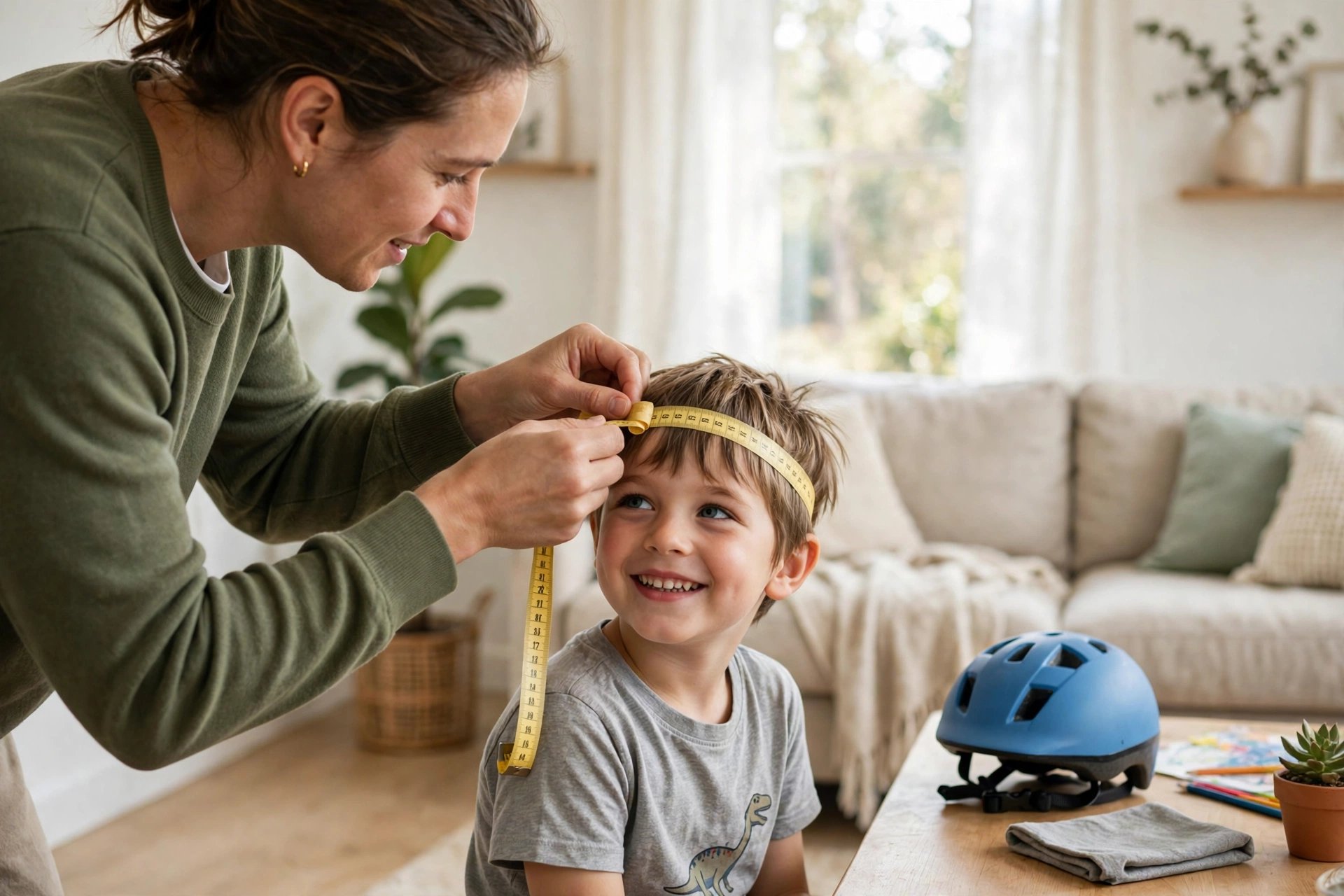
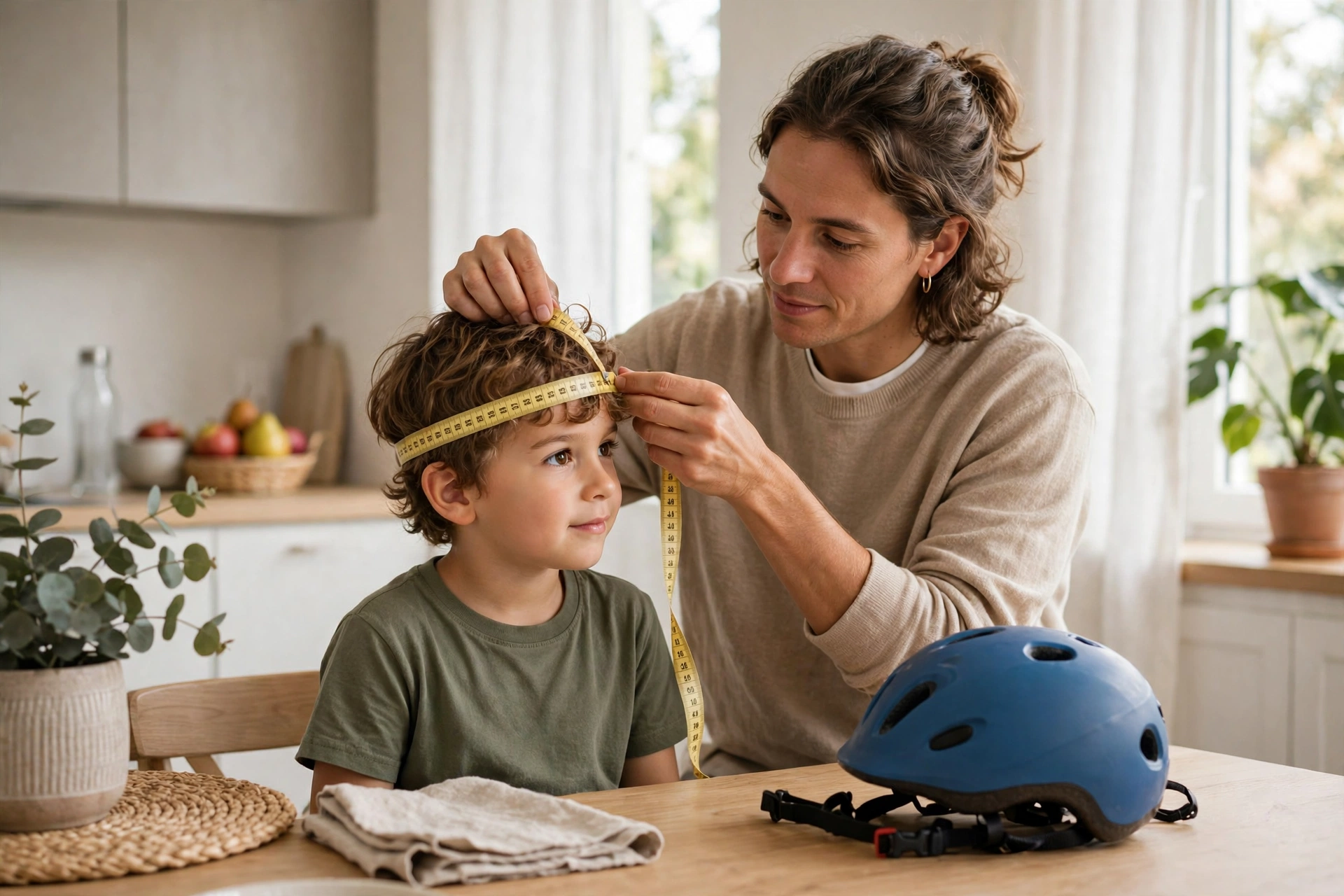
Measuring your child’s head takes less than a minute and needs nothing more than a soft tape measure. Wrap the tape around the widest part of the head, about a finger’s width above the eyebrows and ears, and keep it level all the way round. Take the measurement twice to be sure, and write it down in centimetres. If you do not have a soft tape, a length of string works just as well: mark where it meets, then measure the string against a ruler.
Most children’s helmets are sold in size ranges, such as small, medium and large, and each range covers a span of head sizes. Match your child’s measurement to the size range on the helmet’s packaging or listing, and choose the size where their measurement falls near the middle of the range rather than at the very edge. A child at the top end of one size is often better in the next size up, especially if they have thick hair or wear a thin hat underneath in cold weather.
Remember that age labels on helmets are only a rough guide. Two six-year-olds can have quite different head sizes, and head shape matters too. Some children have rounder heads and some have longer, narrower heads, so a helmet that fits one six-year-old perfectly may press on another child’s forehead. That is why measuring and trying on matter far more than the age printed on the box.
What Size Helmet Does a Six-Year-Old Usually Need?
In general terms, many six-year-olds have a head measurement in the region of 51 to 54 centimetres, which usually falls into a small or medium children’s helmet size. But this is only a starting point, and your child’s measurement is what counts. If your child’s head measures near the top of a size range, try the next size up as well and compare how each one feels.
Most children’s helmets have a dial or pads at the back that let you fine-tune the fit. These adjusters are there to take up a small amount of slack, not to make a wrong size fit. If you have to tighten the dial all the way to stop the helmet wobbling, the helmet is too big. If the dial is fully loose and the helmet still presses, it is too small. The right size should feel snug with the dial somewhere in the middle of its range.
How Should a Helmet Sit on a Six-Year-Old’s Head?
A helmet should sit level on the head, not tipped back like a hat and not pulled down over the eyes. The front edge should sit just above the eyebrows, about one or two finger widths above them. If you can see the child’s forehead clearly below the helmet, the helmet is sitting too far back and the forehead is not covered.
To check the fit, ask your child to shake their head gently from side to side and then nod up and down. The helmet should move with the head, not slide around on its own. If it wobbles or slips over the eyes, tighten the rear dial a little and check again. If it still moves, the size or shape is wrong and you should try a different helmet.
How Do You Adjust the Straps on a Child’s Helmet?
The straps are just as important as the shell. Each side strap should form a V shape that meets just below the ear, with the buckle sitting flat under the chin. Most children’s helmets have small plastic sliders on the straps that let you move the V into the right position. Slide them until the V sits neatly below each ear, then check that the straps lie flat and are not twisted.
Once the V is in place, fasten the chin buckle and tighten it until you can fit one finger between the strap and your child’s chin, but not much more. If the strap is too loose, the helmet can come off in a fall. If it is too tight, it will be uncomfortable and your child will fiddle with it. Do this check every time your child puts the helmet on, because straps loosen over time and children grow quickly.
What Should Parents Look for When Buying a Helmet for a Six-Year-Old?
Start with the safety standard. Look for a helmet that meets a recognised standard for cycling, which will be shown on a label inside the helmet or on the packaging. A helmet that meets the right standard has been tested for the kind of impacts a young cyclist might have. If you are learning about the technology inside modern helmets, reading about what MIPS is for helmets can help you understand one of the features some helmets offer.
Next, think about comfort and ventilation. Six-year-olds ride in all weathers, and a helmet with good vents will keep them cooler on warm days. A lighter helmet is also easier for a small child to wear for longer, so hold a few helmets in your hand and compare their weight. A helmet that feels heavy on the shelf will feel heavier still after half an hour of riding.
Finally, let your child choose the colour or pattern if you can. A helmet your child likes is a helmet they will wear without a fuss. Bright colours also help other road users spot a small cyclist more easily. Avoid helmets with extras that stick out or could catch on things, and do not be tempted to buy a size up to grow into — a helmet that is too big now will not protect properly while your child waits to grow into it.
Frequently Asked Questions
Q: What size helmet does a six-year-old need?
A: It depends on their head measurement, not their age. Measure around the widest part of the head, about a finger’s width above the eyebrows, and match the result to the size range on the helmet. In general terms, many six-year-olds measure around 51 to 54 centimetres.
Q: How tight should a child’s helmet be?
A: Snug all round, without pressing hard anywhere. It should stay in place when your child shakes their head, and you should be able to fit one finger between the chin strap and the chin. The rear dial should sit in the middle of its range.
Q: Should I buy a helmet a size bigger so my child can grow into it?
A: In general terms, no. A helmet that is too big will slide around and can leave the forehead unprotected. Buy the size that fits now, and use the rear dial and pads to fine-tune the fit as your child grows a little.

Olivia
Writer at Helmet Today, covering helmet reviews, fit and riding safety.