In general terms, shelves are better than hooks for everyday helmet storage, because a shelf supports the whole helmet evenly, while a hook concentrates the weight on one small point and can distort the padding over time. Hooks do have their place — they save floor space and keep a helmet off a cluttered surface — but for long-term storage a shelf, or a flat surface of any kind, is the kinder option for your helmet.
The choice matters because a helmet is not just a hard shell. Inside it there is a liner and soft padding shaped to fit your head, and those parts are easily compressed or pulled out of shape if the helmet hangs in the wrong way for months at a time. The right storage keeps the helmet’s shape, keeps air moving around it, and keeps it ready to wear. This guide compares hooks and shelves honestly, so you can choose what suits your space and your helmet.
How Do Helmet Hooks Work, and What Are Their Advantages?
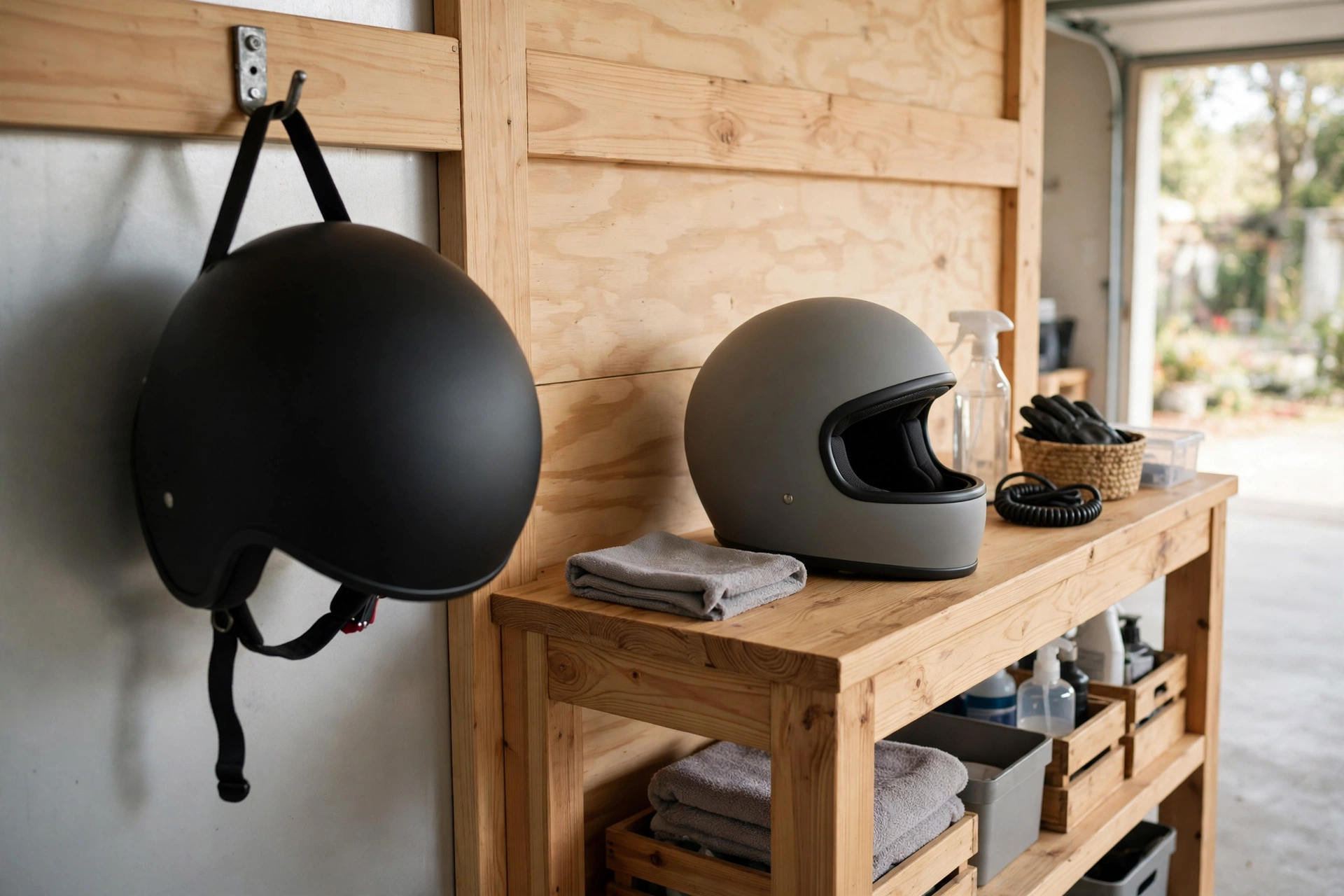
A helmet hook is a wall-mounted peg, hook, or bracket that holds a helmet by its opening, its strap, or the inside of the shell. Some hooks are simple metal pegs, while others are shaped cradles that cup the bottom of the helmet. They are popular in garages, hallways, and workshops because they use wall space that would otherwise be wasted, and they keep the helmet visible and easy to grab on the way out.
The main advantage of a hook is space. A helmet on a hook takes up almost no floor or shelf space, which matters in a small flat, a shared hallway, or a garage already full of bikes and tools. Hooks also keep the helmet off the ground, away from dust, damp, and accidental kicks, and they make it easy to see at a glance which helmet is which if you own more than one.
Hooks are also cheap and easy to fit. A single sturdy hook screwed into a wall stud or a solid wall can hold a helmet for years, and you can add more hooks as your collection grows. For short-term storage — hanging a helmet up between rides during the week — a hook is perfectly practical in general terms, and many riders use one without any trouble.
What Are the Problems with Storing a Helmet on a Hook?
The main problem with a hook is pressure. A helmet hanging from a hook rests its whole weight on one small contact point, usually at the rim of the opening or on the padding inside. Over weeks and months, that pressure can compress the padding, stretch the liner, or leave a dent in the comfort foam. The damage is slow and easy to miss, but it can change how the helmet fits, and a helmet that fits badly is less comfortable and less secure.
Hooks can also damage the shell if they are narrow or sharp. A thin metal peg pressing against the inside of a helmet can mark the liner or scuff the shell, especially if the helmet is taken on and off roughly. Hanging a helmet by its chin strap is worse still: the strap is not designed to carry the helmet’s weight for long periods, and it can stretch, fray, or pull at its anchor points.
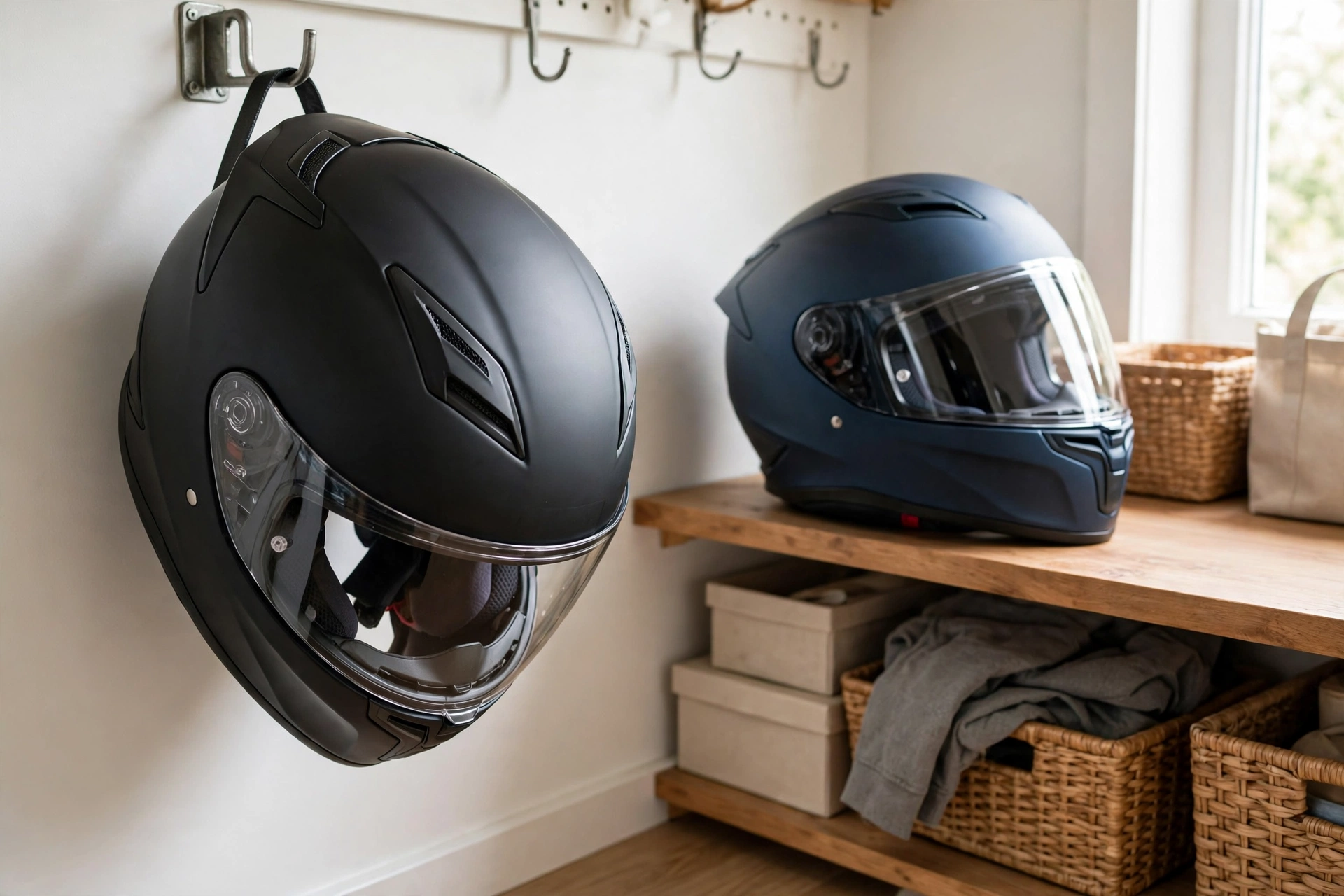
Why Are Shelves Better for Long-Term Helmet Storage?
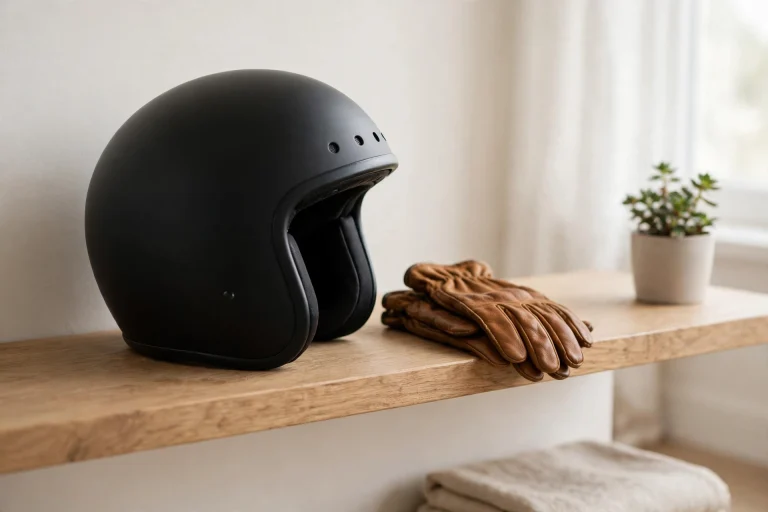
A shelf supports the helmet across its whole base, spreading the weight evenly instead of concentrating it on one point. The helmet sits the way it was designed to sit — shell up, opening down — and nothing presses on the padding or pulls at the liner. Over months and years, that even support keeps the helmet’s shape and fit much better than hanging does.
Shelves also give you control over the helmet’s surroundings. You can place the helmet away from direct sunlight, away from heat sources, and away from chemicals such as paints, solvents, and cleaning products that can damage a shell. You can leave a gap around the helmet so air can circulate, which helps the padding stay dry and fresh.
A shelf is easier to organise too. You can line up several helmets in a row, each with its own space, and add small items such as gloves, a visor cloth, or a spare visor beside them. If you store helmets for a family, a shelf with a labelled space for each person keeps things tidy and stops helmets being stacked on top of each other, which is something to avoid in any case.
When Is a Hook the Better Choice?
A hook is the better choice when space is tight and the helmet is used often. If you ride every day and the helmet is only on the hook overnight, the padding will not be under pressure long enough to matter much. A wide, padded hook or a shaped cradle that supports the helmet from underneath is far better than a narrow peg, because it spreads the load over a larger area.
Some riders use both: a hook by the door for the helmet in daily use, and a shelf in a cupboard or on a wardrobe for helmets that are stored for the season. That combination gives you the convenience of a hook where you need it and the protection of a shelf where it matters most.
How Should You Set Up Helmet Storage at Home?
Whether you choose hooks or shelves, a few rules apply to both. Store the helmet in a cool, dry place out of direct sunlight, because heat and sunlight can age the shell and the liner faster. Keep it away from petrol, solvents, and strong cleaning chemicals, and never store a helmet near a radiator, a boiler, or a hot water tank.
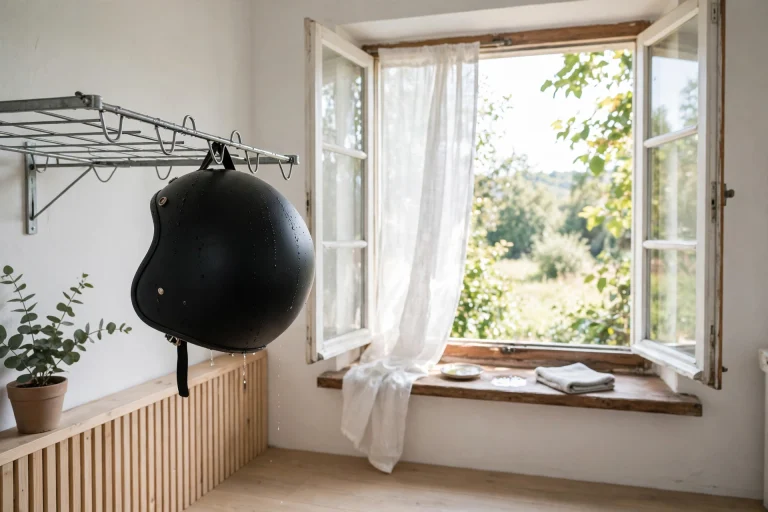
Always let a helmet dry before you store it. After a ride, the padding holds sweat and moisture, and sealing a damp helmet in a cupboard or a bag is an invitation to mould and smells. Leave the helmet out in a ventilated spot until it is dry to the touch, then put it away. If you are learning how helmets protect the head, reading about what MIPS is for helmets can help you understand one of the technologies used in modern helmet design.
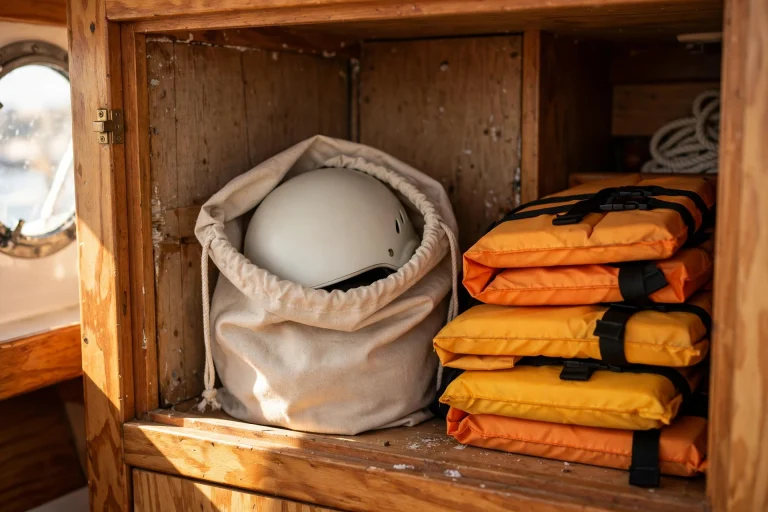
Finally, give each helmet its own space. Never stack helmets on top of each other, and never pile heavy items on a helmet. A helmet that is squashed under other things will lose its shape, and a visor pressed against a hard object will scratch. A little space around each helmet is the simplest way to keep it in good condition.
Frequently Asked Questions
Q: Will hanging a helmet on a hook ruin it?
A: In general terms, no, not over a few days or weeks. But hanging a helmet on a narrow hook for months can compress the padding, so a shelf is better for long-term storage.
Q: Can I hang a helmet by its chin strap?
A: It is best not to. The strap is not made to carry the helmet’s weight for long periods, and it can stretch or fray. Use a hook under the helmet or a shelf instead.
Q: Is it okay to store helmets on top of each other on a shelf?
A: No. Stacking helmets presses on the shells and the padding below, and it makes the bottom helmet hard to reach without knocking the others. Give each helmet its own space.

Olivia
Writer at Helmet Today, covering helmet reviews, fit and riding safety.