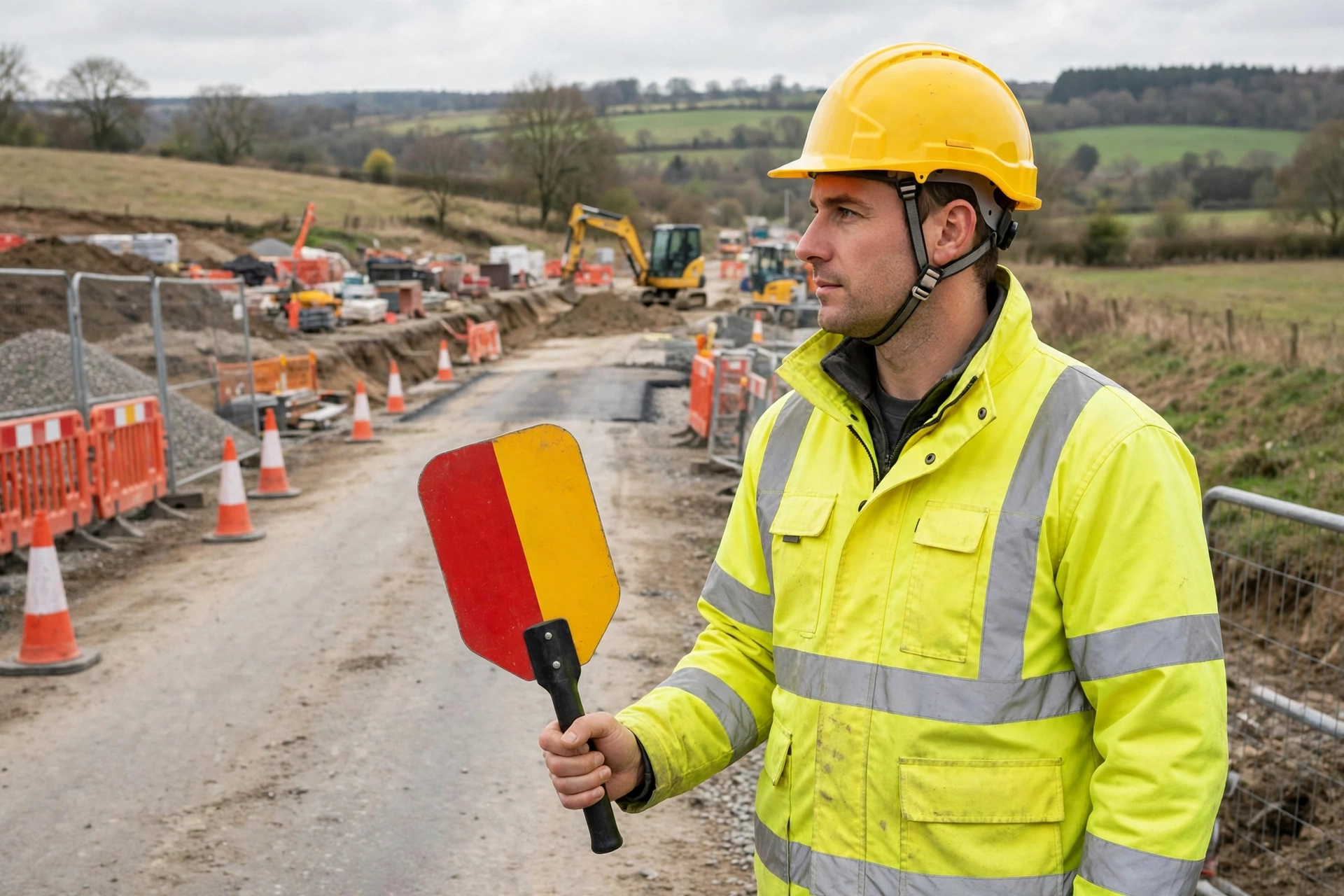
A helmet for traffic controllers is a hard hat worn by a person who directs traffic around roadworks, and in general terms it should protect the head while also making the worker easy for drivers to see. A traffic controller stands close to moving vehicles, often on a live road, and guides drivers past a work area with a stop and slow bat or with hand signals. A helmet is part of the protective clothing for that job, and it should be worn whenever the controller is on the road, not only when traffic is heavy.
The work of a traffic controller is done outdoors, in all weathers, and often for long stretches at a time. The controller may be standing near a lane of moving traffic, beside a truck that is turning, or under a raised load on a works vehicle. In general terms, a helmet for traffic controllers is a safety item that should fit well, stay visible, and be checked often.
Why do traffic controllers need a helmet?
Traffic controllers need a helmet because they work close to moving traffic, where a small mistake by a driver can put them in danger. A vehicle may drift out of its lane, a mirror may swing past, or a load may shift on a passing truck, and the controller has little time to move out of the way. A helmet spreads the force of a blow and helps to protect the skull from a serious injury if something strikes the head.
There is also the risk of a knock inside the work area itself, from a sign, a barrier, or a piece of plant that is being moved. A helmet helps in all of these cases, and it also keeps the sun and the rain off the head during a long shift outdoors. In general terms, a helmet is worth wearing because the risks on a live road are present from the first car to the last.
What kind of helmet is best for traffic controllers?
The best helmet for traffic controllers is, in general terms, a hard hat that meets the safety standard required by the site and is easy for drivers to see. Most traffic controllers wear a hard hat in a bright colour, such as white, yellow, or orange, often with a reflective strip, because a bright helmet stands out against the road and the work area. A helmet with a short peak is often chosen, because it gives some shade and keeps rain from running down the face, while still leaving a clear view of the traffic.
Some controllers choose a helmet with a chin strap, which keeps the helmet in place in wind or when they turn quickly to face traffic coming from another direction. A chin strap is useful on an open road, because a helmet that blows off or slips forward over the eyes is no help at all. A controller should also think about comfort, because a helmet that pinches or feels heavy will be tempting to take off. A helmet with an adjustable headband and good ventilation is easier to wear for a full shift outdoors.
How should a helmet for traffic controllers fit?
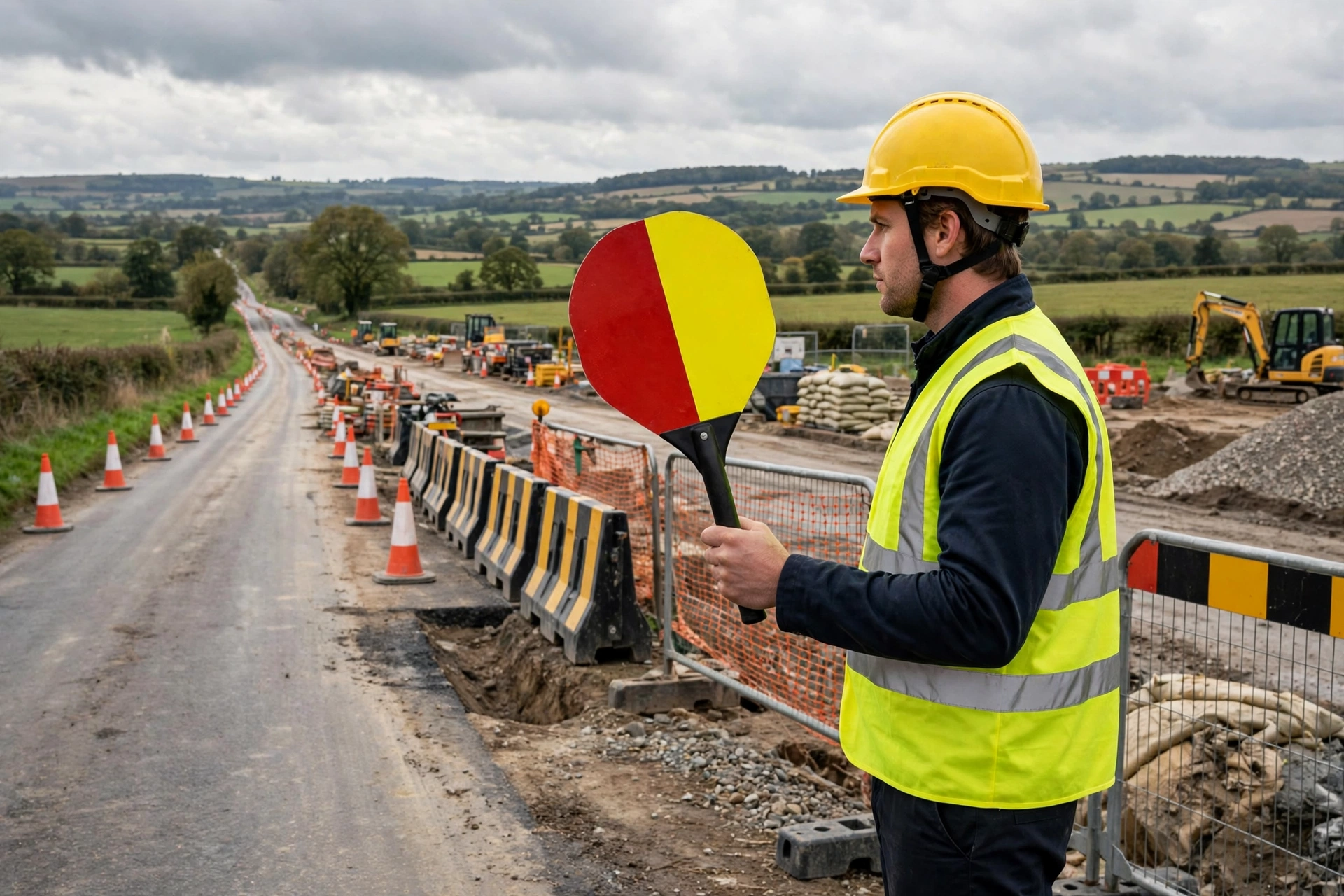
A helmet for traffic controllers should fit snugly, sit level on the head, and stay in place when the controller turns, bends, or walks along the road. The helmet should cover the top of the head and the forehead, and the headband should be adjusted so that the helmet does not rock from side to side. A chin strap, where one is fitted, should be fastened securely every time the controller is on the road, because a loose strap lets the helmet lift in wind or slide when the controller moves quickly.
The fit should be checked with the other clothing the controller wears, such as a high-visibility jacket, a hood, or ear protection, because these can change how a helmet sits. A hood should lie flat under the helmet without bunching up, and ear protection should sit neatly without pushing the helmet forward. The controller should also check that the helmet does not block their hearing, because a traffic controller needs to hear vehicles, horns, and calls from other workers on site.
What visibility rules apply to traffic controllers?
The visibility rules for traffic controllers are set by the site and by the road authority, because a controller who cannot be seen in time is in danger. In general terms, a traffic controller should wear a bright helmet, a high-visibility jacket, and, where the site asks for it, reflective strips, so that drivers can spot them from a safe distance. A helmet in a dull colour, or a helmet covered by a dark hood, can make the controller harder to see, so the site may have rules about the colour of the helmet and what may be worn over it.
A controller should wipe the shell clean at the start of a shift and check that any reflective strip is still in place. A controller who is unsure about the visibility rules should ask a supervisor, because a short question can save a problem later in the day, and a controller who feels unsafe should step back to a safe place and tell the supervisor at once.
How should a traffic controller’s helmet be looked after?
A traffic controller’s helmet should be looked after with regular cleaning and sensible storage, in the same way as any industrial helmet. After a shift, the controller should wipe the shell clean, let the inside dry out, and check the headband for wear. A helmet that is stored wet or dirty can smell, can irritate the skin, and can wear out faster, so it should be kept in a dry place away from direct heat and sunlight. The helmet should be stored in a bag or on a shelf, not thrown in the back of a truck, where it can be stepped on or damaged.
The helmet should also be checked for cracks, dents, or damage to the shell before every shift, and in general terms a helmet that has taken a serious impact should be replaced rather than used again. Controllers who want to learn more about how helmets protect the head may find it useful to read about features that can help in an impact, including a system designed to reduce rotational forces, such as MIPS, which is found in some helmets. A well-kept helmet, worn every time, gives a traffic controller the best chance of getting through a shift on a live road without a head injury.
Do traffic controllers have to wear a helmet?
Yes, in general terms a helmet is required for traffic controllers on most roadworks, and the site rules decide where it must be worn. A controller should follow the site rules and wear the helmet for the whole shift on the road.
What colour helmet should a traffic controller wear?
A traffic controller should wear a bright helmet, often white, yellow, or orange, so that drivers can see them easily. The site may set the colour, so a controller should check the site rules first.
When should a traffic controller’s helmet be replaced?
A traffic controller’s helmet should be replaced after a hard impact, or when it no longer fits well, shows cracks or damage, or has lost its bright colour or reflective strip. When in doubt, replace it rather than keep working in it.

Olivia
Writer at Helmet Today, covering helmet reviews, fit and riding safety.