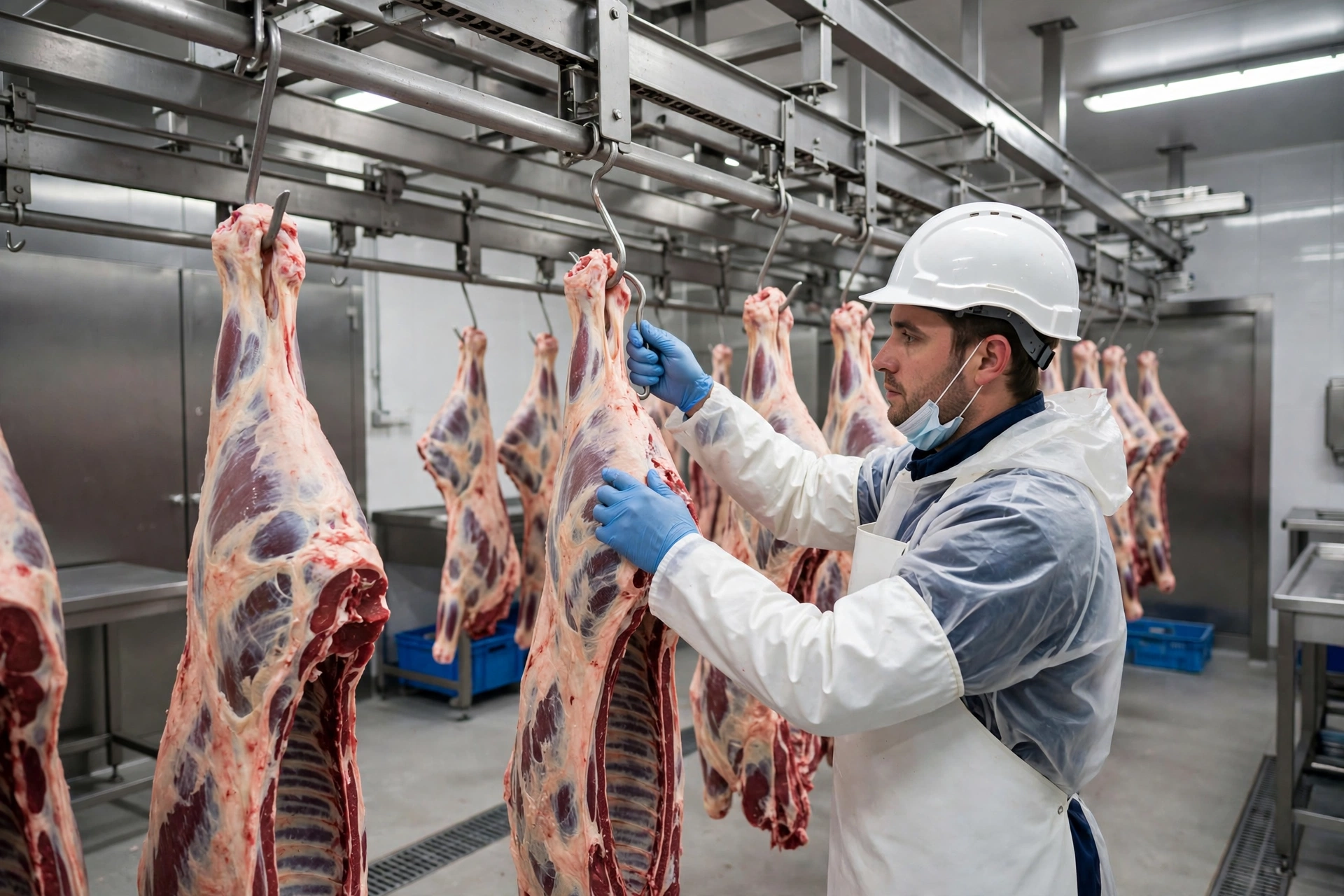
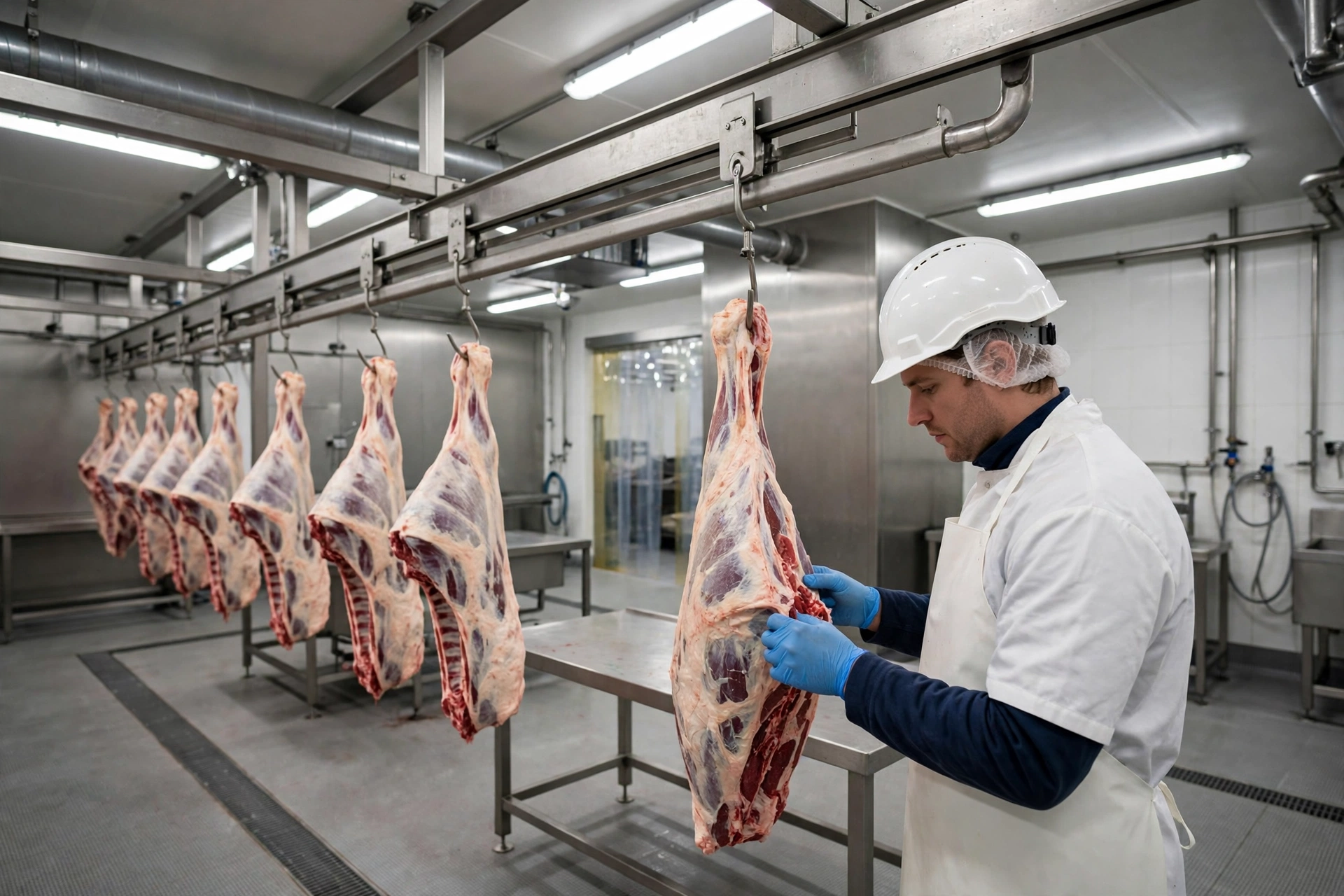
A helmet for abattoir workers is a hard hat worn in a meat processing plant, and in general terms it should protect the head from falling objects, bumps against equipment, and knocks in low or crowded work areas. An abattoir is a busy place, with overhead rails, moving carcasses, machinery, and people working close together in wet and cold conditions. A helmet is part of the everyday protective clothing in that setting, and it should be worn whenever the site rules ask for it, not only when a job looks risky.
The work in an abattoir is physical and fast moving, and the head can be at risk in ways that are easy to overlook. A worker may walk under a rail, step into the path of a swinging load, or bang their head on a low beam or a piece of equipment. In general terms, a helmet for abattoir workers is a simple piece of safety equipment that should fit well, stay clean, and be checked often.
Why do abattoir workers need a helmet?
Abattoir workers need a helmet because they work under overhead rails and hoists, around moving loads, and beside machinery in a crowded hall. A carcass on a rail can swing as it moves, a hook or a piece of equipment can fall from above, and a worker can strike their head on a low pipe, a beam, or the edge of a machine. A helmet spreads the force of a blow and helps to protect the skull from a serious injury.
There is also the risk of a slip or a fall on a wet floor, where a worker may hit their head on the ground or on nearby equipment. A helmet does not stop a fall, but it can reduce the harm if the head strikes something hard. In general terms, a helmet is worth wearing because the risks in an abattoir are present all through the shift, not only during one task.
What kind of helmet is best for abattoir workers?
The best helmet for abattoir workers is, in general terms, a hard hat that meets the safety standard required by the site and fits the worker well. Most abattoir workers wear a standard industrial hard hat with a smooth shell that is easy to wash down, because the shell can be wiped clean after a shift and will not hold dirt in cracks or seams. A helmet with a short peak is often chosen, because it gives some shade and keeps water from running down the face, while still leaving a clear view of the work.
Some workers choose a helmet with a chin strap, which keeps the helmet in place when they bend, reach, or look up at an overhead rail. A chin strap is useful in a busy hall, because a helmet that slips forward over the eyes or falls off is no help at all. A worker should also think about comfort, because a helmet that pinches or feels heavy will be tempting to take off. A helmet with an adjustable headband and good ventilation is easier to wear for a full shift in a cold, damp hall.
How should a helmet for abattoir workers fit?
A helmet for abattoir workers should fit snugly, sit level on the head, and stay in place when the worker bends down or looks up. The helmet should cover the top of the head and the forehead, and the headband should be adjusted so that the helmet does not rock from side to side. A chin strap, where one is fitted, should be fastened securely every time the worker is on the floor, because a loose strap lets the helmet lift or slide at the worst moment.
The fit should be checked with the other clothing the worker wears, such as a hairnet, a hood, or ear protection, because these can change how a helmet sits. A hairnet should lie flat under the helmet without bunching up, and ear protection should sit neatly without pushing the helmet forward. The worker should also check that the helmet does not block their hearing, because an abattoir worker needs to hear warnings, machinery, and calls from other workers in a noisy hall.
What hygiene rules apply to helmets in an abattoir?
The hygiene rules for helmets in an abattoir are set by the site, because the plant handles food and must keep the work area clean. In general terms, a helmet worn in a food area should be kept clean, should be washed or wiped down as the site asks, and should not be worn outside the food area and then brought back in without cleaning.
Some sites ask workers to wear a hairnet under the helmet, and some ask for a helmet in a light colour so that dirt shows up easily and can be cleaned off. A worker should follow the site rules on cleaning and storage, and should not share a helmet with another worker, because a shared helmet can spread dirt and can also be the wrong size. A worker who is unsure about the hygiene rules should ask a supervisor, because a short question can save a problem later in the shift.
How should an abattoir worker’s helmet be looked after?
An abattoir worker’s helmet should be looked after with regular cleaning and sensible storage, in the same way as any industrial helmet. After a shift, the worker should wipe the shell clean, let the inside dry out, and check the headband for wear. A helmet that is stored wet or dirty can smell, can irritate the skin, and can wear out faster, so it should be kept in a dry place away from direct heat. The helmet should be stored on a hook or a shelf, not thrown on the floor, where it can be stepped on or damaged.
The helmet should also be checked for cracks, dents, or damage to the shell before every shift, and in general terms a helmet that has taken a serious impact should be replaced rather than used again. Workers who want to learn more about how helmets protect the head may find it useful to read about features that can help in an impact, including a system designed to reduce rotational forces, such as MIPS, which is found in some helmets. A well-kept helmet, worn every time, gives an abattoir worker the best chance of getting through a shift without a head injury.
Do abattoir workers have to wear a helmet?
Yes, in general terms a helmet is required in most abattoir work areas, and the site rules decide where it must be worn. A worker should follow the site rules and wear the helmet for the whole shift in those areas.
Can a normal hard hat be used in an abattoir?
A normal hard hat that meets the site standard is often the right choice, as long as it can be kept clean and fits well. A worker should check the site rules first, because some sites have rules about colour, cleaning, or hairnets.
When should an abattoir worker’s helmet be replaced?
An abattoir worker’s helmet should be replaced after a hard impact, or when it no longer fits well, shows cracks or damage, or has become hard to keep clean. When in doubt, replace it rather than keep working in it.

Olivia
Writer at Helmet Today, covering helmet reviews, fit and riding safety.