Helmet wall mounts and racks are simple brackets, hooks, or shelves fixed to a wall that hold your helmet off the floor, in the open air, so it keeps its shape, dries properly, and stays safe from knocks. A good mount costs little, takes minutes to fit, and is one of the best things you can do for a helmet you use regularly.
Most helmets spend far more time in storage than they do on your head, and where they sit during that time matters. A helmet left on the floor gets kicked, tripped over, and knocked against furniture. One left on a shelf can roll off. One shut in a damp cupboard can go musty. A wall mount solves all three problems at once: it keeps the helmet up, out of the way, and in moving air. This guide explains the types available and how to choose and fit one.
What Types of Helmet Wall Mount Are There?
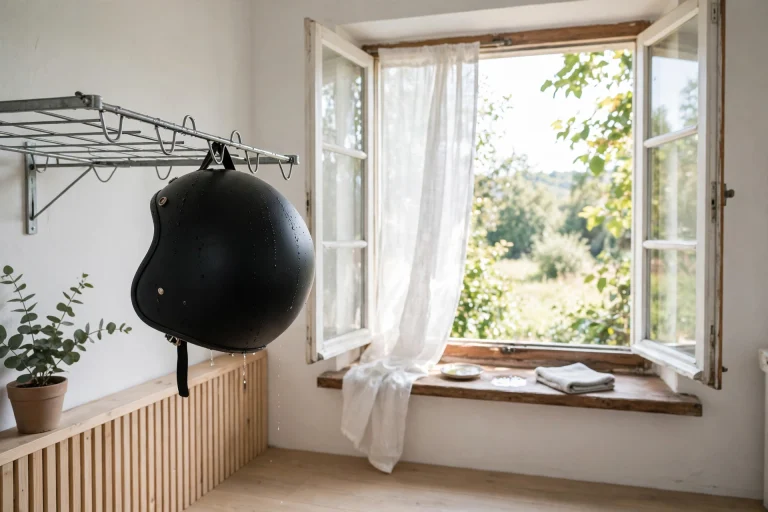
The simplest type is a single hook or peg. It is a short, padded arm fixed to the wall, and the helmet hangs from it by its chin bar or by the opening at the bottom. Hooks are cheap, easy to fit, and suit a hallway, garage, or bedroom. The key detail is padding: a bare metal hook can scratch a helmet shell, so look for one with a foam or rubber cover, or add a piece of soft tubing over the hook yourself.
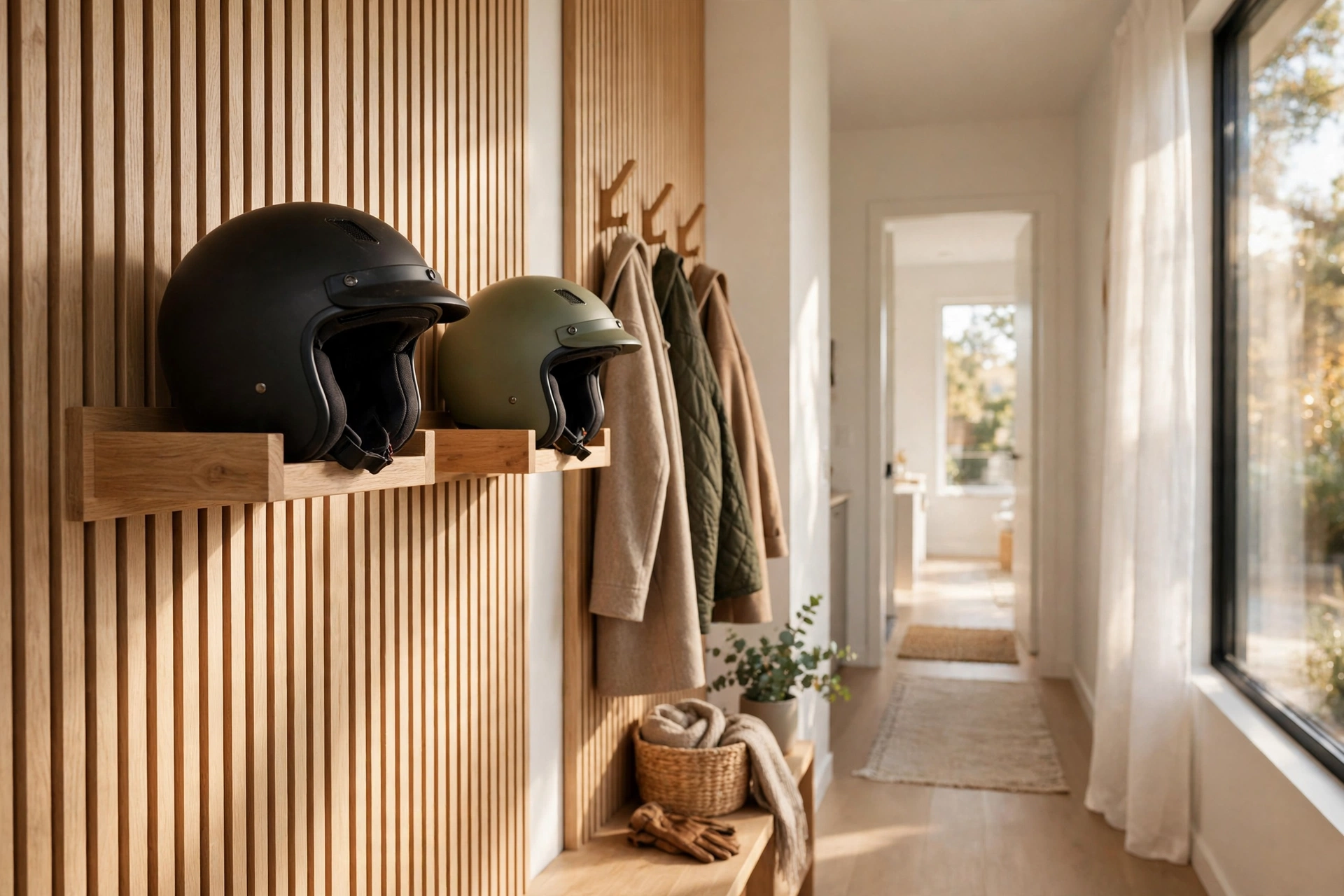
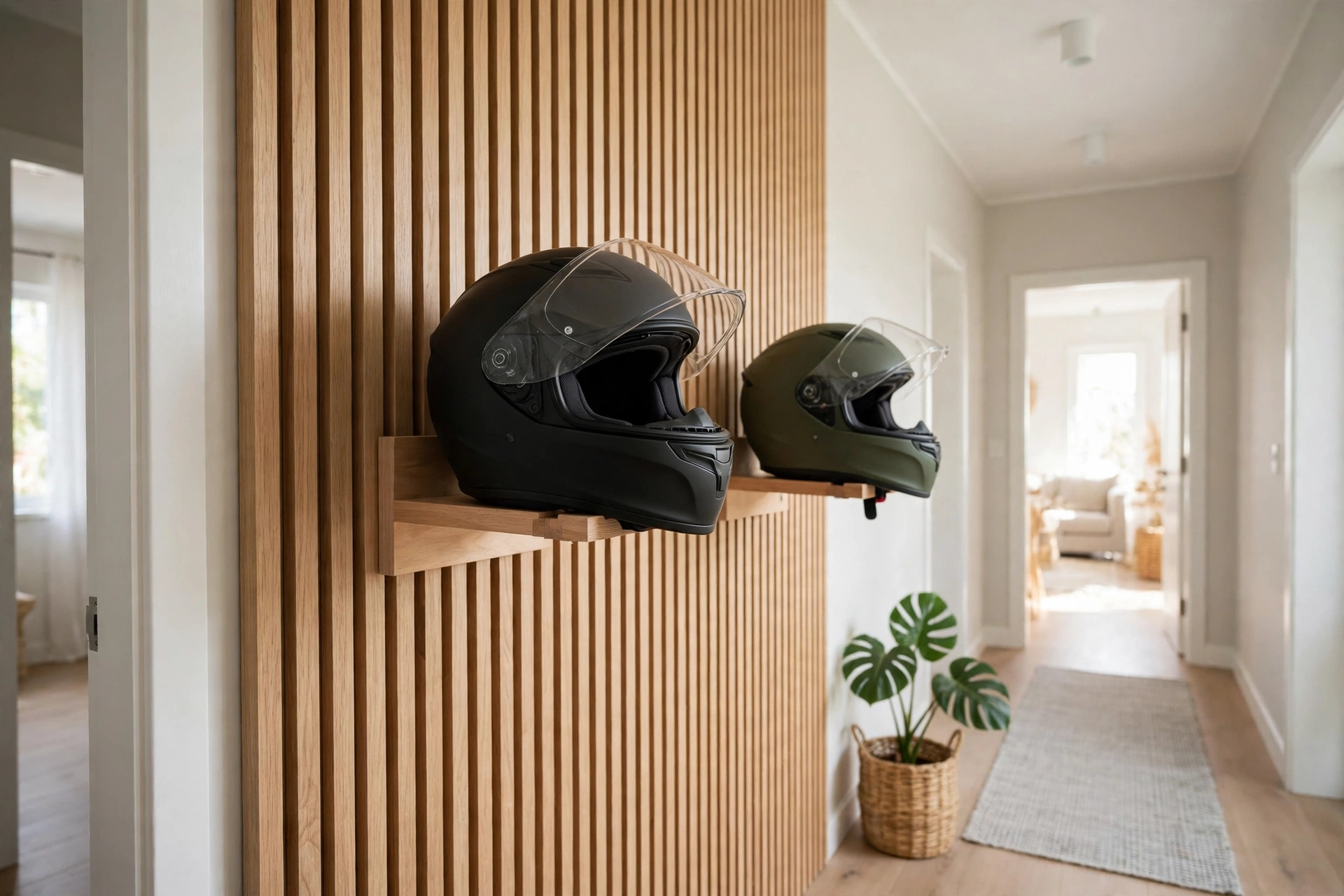
A wall-mounted rack or cradle is the next step up. It holds the helmet on a shaped support that spreads the weight, rather than hanging it from a single point. Some racks are a simple curved shelf, while others are a metal frame shaped to the inside of a helmet. Cradles are kinder to the helmet’s shape, and they make it easy to lift the helmet off and put it back with one hand.
Multi-helmet racks hold two, three, or more helmets on one frame, and they suit a family or a rider with several helmets. They are usually a ladder-style frame or a set of arms on a single upright, fixed to the wall. Before you buy one, measure your wall space and check that there is room to lift each helmet off without banging it against the one below.
Where Should You Put a Helmet Wall Mount?
Choose a cool, dry place indoors, away from direct sunlight and away from radiators, boilers, and other sources of heat. Sunlight and heat age the materials inside a helmet, and a mount on a sunny wall can do more harm than good over time. A hallway, a bedroom wall, or a dry garage wall are all good choices, as long as the spot is out of the way of passing traffic.
Height matters. The mount should be high enough that the helmet is clear of the floor and cannot be knocked by feet, pets, or children, but low enough that you can lift the helmet off and put it back without stretching or standing on a chair. For most adults, a height around shoulder level works well. If the helmet is heavy, a lower mount is safer, because lifting a heavy helmet overhead is awkward and risks a drop.
How Do You Fit a Helmet Wall Mount Safely?
Fitting a wall mount is a simple job, but it needs to be done properly, because a helmet is heavy and a mount that comes off the wall can damage the helmet — or hurt someone. Start by finding a solid fixing point. A screw into a wall stud or into solid masonry holds far better than a screw into plasterboard alone, so use a stud finder or tap the wall to find the solid spots.
Use the fixings that suit your wall. For a brick or block wall, use wall plugs and screws of the right size. For plasterboard, use proper plasterboard fixings rather than ordinary screws, which can pull out under the weight of a helmet. If you are not sure what your wall is made of, ask at a hardware shop, or get someone with experience to help. The fixings are the part that matters most.
Before you drill, hold the mount up and check the position. Make sure there is enough room above and to the sides for the helmet, and that the helmet will not hit a door, a light switch, or a picture frame when you lift it off. Mark the holes, drill carefully, and test the mount by pulling on it firmly before you trust it with your helmet. A mount that feels solid when you pull on it will hold a helmet safely.
What Should You Avoid When Storing a Helmet on a Wall?
Do not hang a helmet by its chin strap. The strap is not designed to carry the helmet’s weight for long periods, and hanging it this way can stretch or damage the strap and the buckle. Hang the helmet by its shell or by the opening at the bottom, on a padded hook or cradle that spreads the load.
If you are learning about how helmets handle different kinds of impact, reading about what MIPS is for helmets can help you understand one of the technologies used in modern helmet design. A wall mount protects the helmet between rides, and knowing how the helmet itself is built helps you look after it properly.
Are Wall Mounts Better Than Shelves for Helmets?
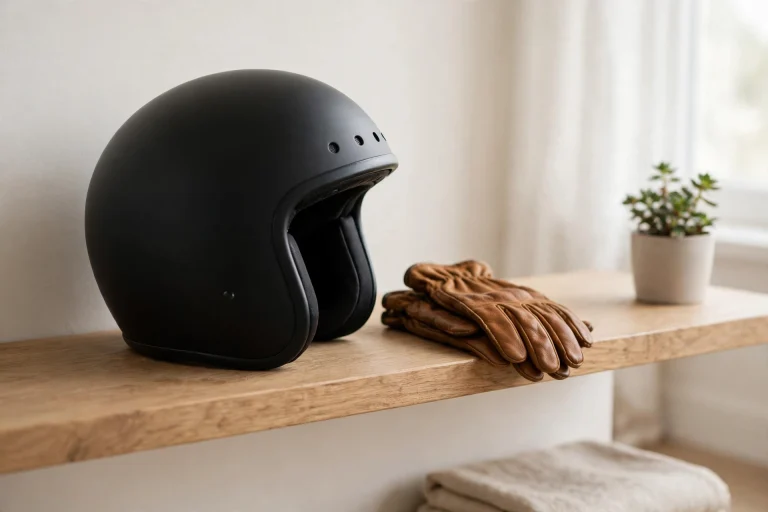
In general terms, yes for everyday use. A wall mount keeps the helmet in the open air, which helps it dry, and it keeps the helmet visible, so you can see at a glance whether it is clean, dry, and ready to ride. A shelf can work too, but a helmet on a shelf can be knocked off, and a shelf inside a cupboard gets little airflow.
Shelves do have their place. A deep, stable shelf with a lip at the front can hold a helmet safely, and it is a good choice if you have no suitable wall or if you want to store several helmets side by side. If you use a shelf, put the helmet the right way up, with the opening facing down or to the side, and leave space around it so it cannot be knocked into another object.
Frequently Asked Questions
Q: Can I hang my helmet on a coat hook?
A: In general terms, yes if the hook is wide and padded, and you hang the helmet by its shell rather than by the strap. A narrow bare hook can scratch the shell, so add padding or use a proper helmet mount instead.
Q: Will a wall mount damage my helmet over time?
A: A well-made mount with a padded, wide support should not damage a helmet. Avoid narrow hooks and hanging by the chin strap, and check the mount regularly to make sure it is still secure on the wall.
Q: Is it okay to store a helmet in the garage on a wall mount?
A: In general terms, yes if the garage is dry and not too hot or cold. Avoid mounting a helmet near fuel, solvents, or strong chemicals, and keep it out of direct sunlight coming through a window.

Olivia
Writer at Helmet Today, covering helmet reviews, fit and riding safety.