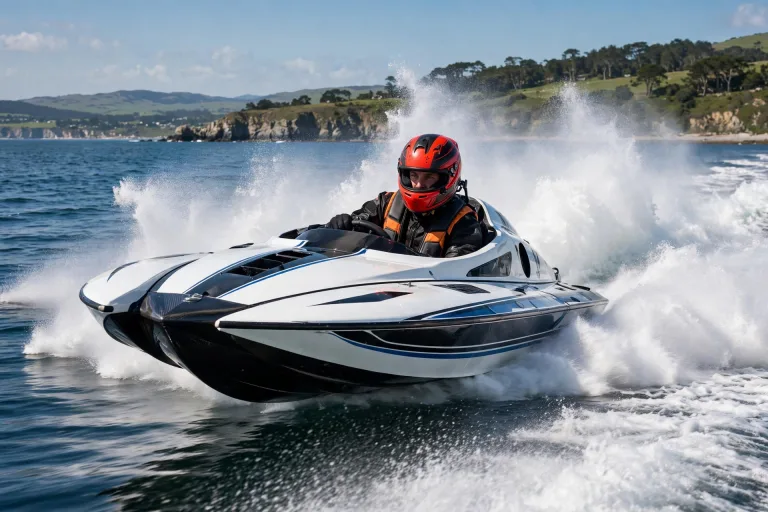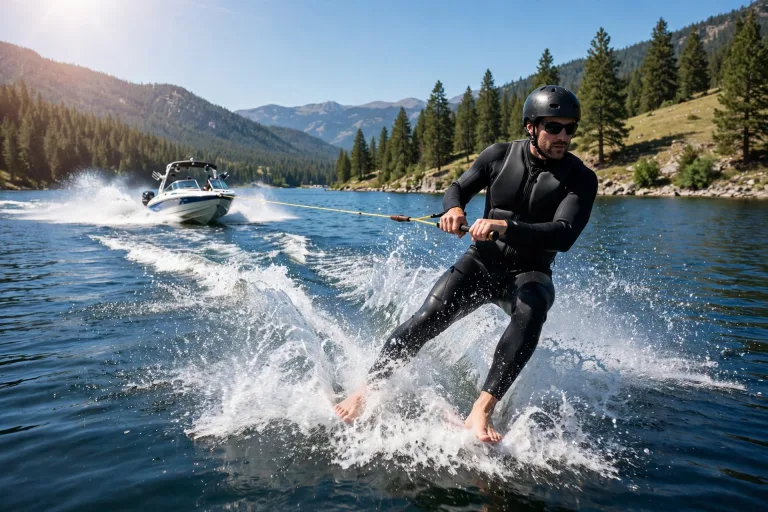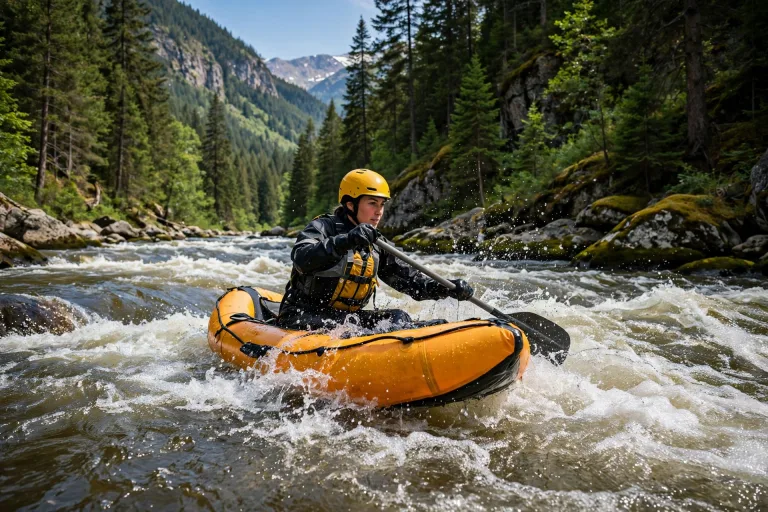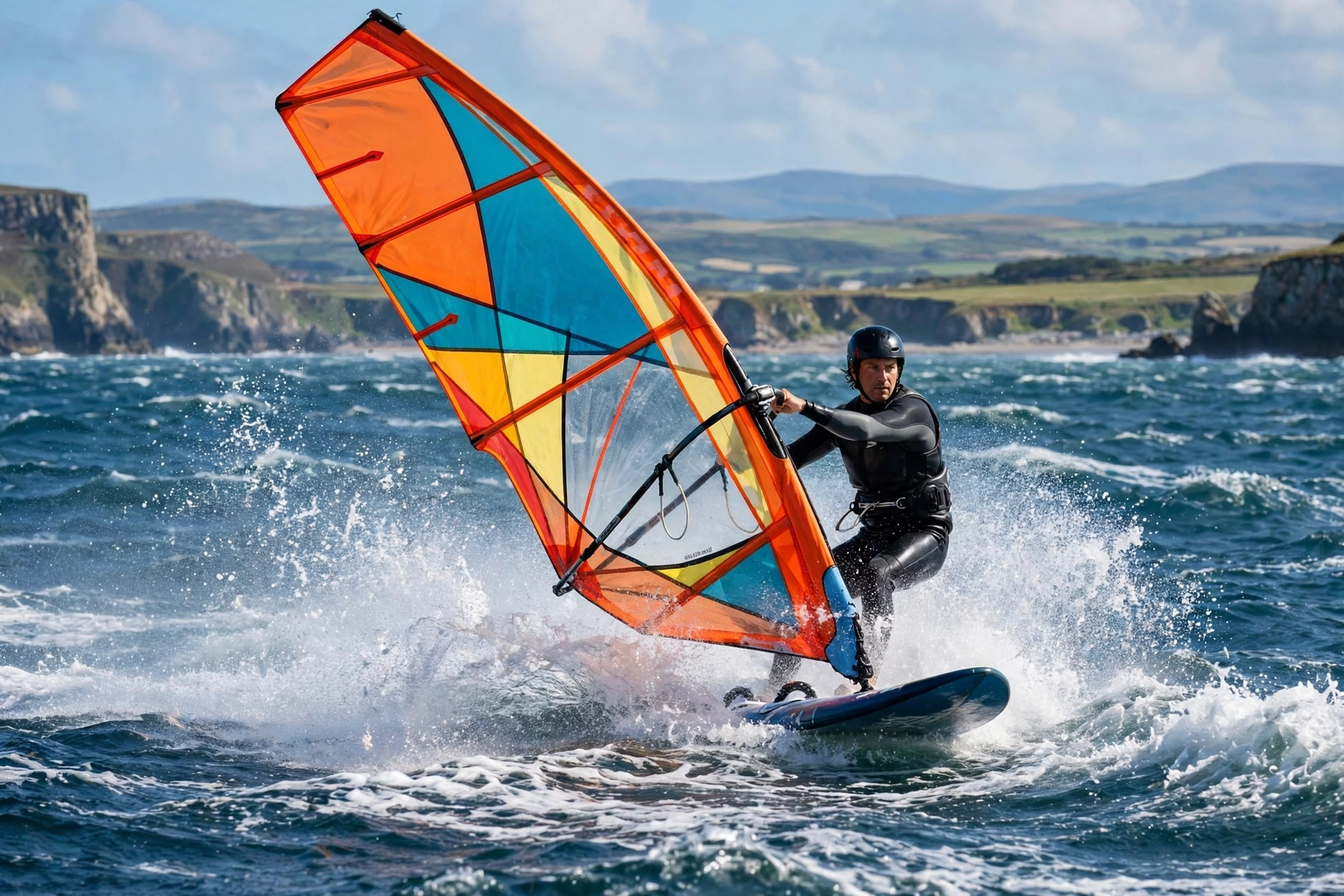
A helmet for windsurfers is a light water-sports helmet worn to protect the head from the board, the boom, and the mast, and in general terms every windsurfer should consider one, because a fall at speed can end with the head striking hard equipment or the water itself. It is a simple piece of kit that guards against one of the most common injuries in the sport.
Windsurfing joins a board, a sail, and the wind into one fast-moving package, and the rider stands in the middle of it all. When a gust catches the sail, when a turn goes wrong, or when a wave knocks the board sideways, the rider falls — and the fall often brings the head close to the boom, the mast, or the edge of the board. Water feels soft at low speed, but at planing speed it hits hard, and a helmet takes the worst out of those knocks.
Why do windsurfers need a helmet?
Windsurfers need a helmet because the main dangers in the sport are impacts with their own equipment and hard landings on the water, and both can injure the head. A fall forwards can send the rider into the mast or the boom, while a fall backwards can throw the head onto the board or the fin. Even a slow fall in shallow water can end with the head striking the bottom, and a helmet helps to protect the skull in that moment.
The boom is the most common cause of head knocks in windsurfing, because it swings across the sail during a turn and sits at head height. A mistimed gybe can bring the boom around fast, and a rider who is looking the wrong way may not see it coming. A helmet spreads the force of that blow and can turn a serious injury into a minor one. In general terms, the risk is higher in strong wind and choppy water, but it exists in every session.
What kind of helmet is best for windsurfing?
The best helmet for windsurfing is a light, well-ventilated water-sports helmet that fits snugly, drains quickly, and stays in place when you fall in. Most windsurfers choose a helmet made for surfing, kayaking, or wakeboarding, because those helmets are designed to get wet, dry fast, and resist damage from salt water. A bike helmet or a climbing helmet is not the right choice, because it soaks up water, becomes heavy, and is not built for repeated dunkings.
Ear coverage matters, because a hard landing on the water can burst an eardrum, and some water helmets have ear flaps or covers that soften that blow. A helmet with drainage holes is also worth looking for, because it lets water escape instead of pooling inside the shell and pulling the helmet down over the eyes. The helmet should have no sharp edges or protruding parts that could catch on the sail or the lines, and the chin strap should be easy to fasten with cold, wet hands.
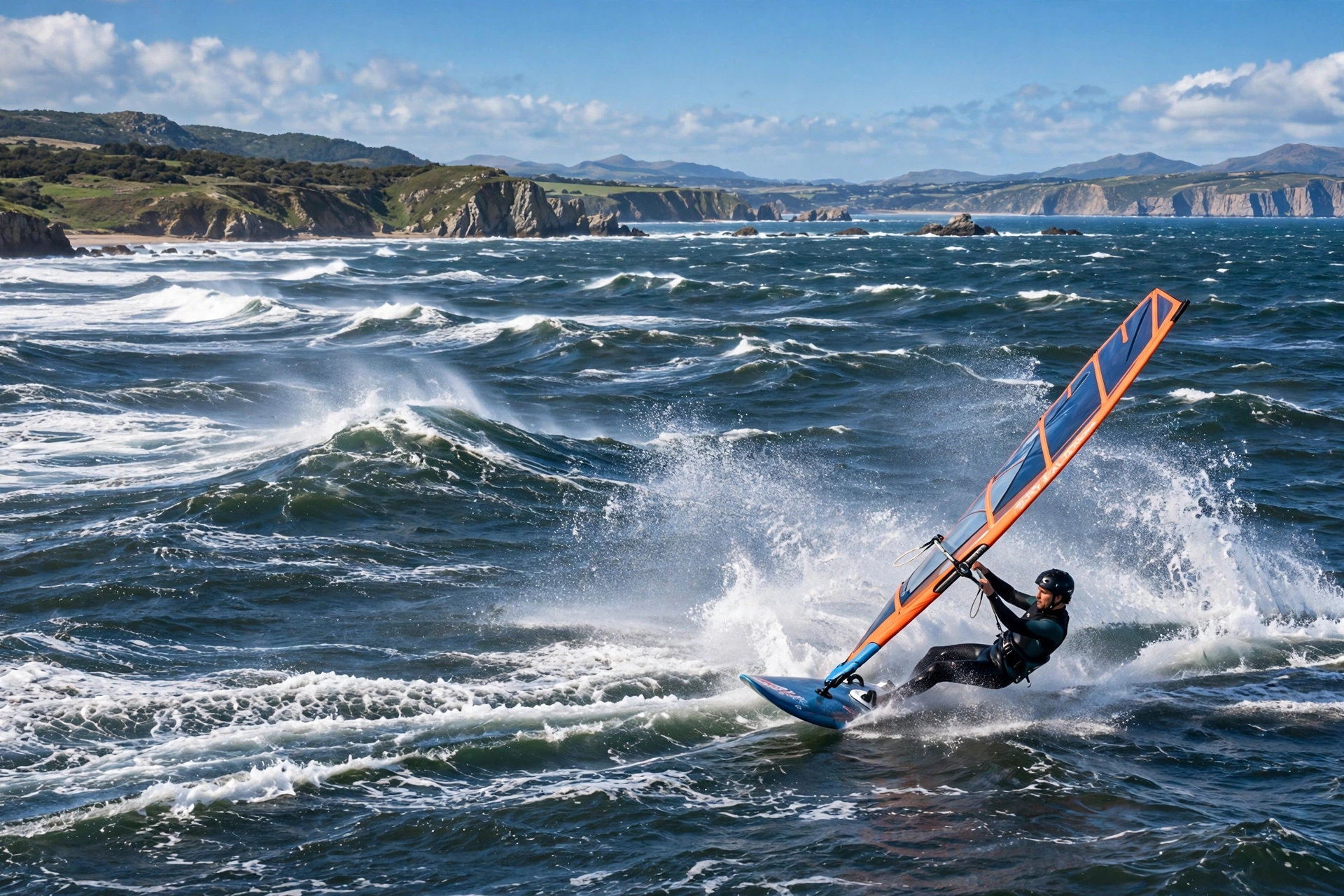
How should a windsurfing helmet fit?
A windsurfing helmet should fit snugly, sit level on the head, and cover the forehead and the back of the head. It should not rock forwards or backwards when you shake your head, and it should not slide over your eyes when you fall in, because a helmet that shifts in a fall may not protect the part of the head that hits the boom or the board. A helmet that is too loose will fill with water and pull forwards, while a helmet that is too tight will be painful and will be left in the car.
To check the fit, put the helmet on, adjust the fit system at the back if it has one, and fasten the chin strap so that only one or two fingers fit between the strap and the chin. Shake your head gently from side to side and up and down: the helmet should move with your head, not slide around on it. Try the helmet with the hairstyle you sail in, and with a neoprene hood if you sail in cold water, because extra layers change the fit.
Do windsurfers wear helmets in all conditions?
Whether windsurfers wear helmets in all conditions depends on the wind, the water, and the rider, and in general terms it is more common in strong wind, waves, and freestyle than in a gentle cruise on flat water, but it is still a sensible choice in every session. A light breeze on a flat lake carries less risk than a windy day at a wave spot, yet even a gentle fall can end with the head striking the boom if the turn goes wrong.
Beginners, who fall often and unpredictably, gain the most from a helmet, and so do freestyle sailors, who throw the board and the sail around and fall hard. Wave sailors wear helmets because a wave can drive the rider and the board together, and speed sailors wear them because a crash at high speed hits the water like concrete. There is no rule against wearing one, and other sailors rarely think twice about it.
How should a windsurfing helmet be looked after?
A windsurfing helmet should be looked after with regular checks and sensible storage. After each session, rinse it in fresh water to wash out the salt, and let it dry in the shade, because salt and sun can wear out the straps and the padding over time. Check the shell for cracks, dents, and deep scratches, and check the liner, the straps, and the buckle for wear. A helmet that has taken a hard impact, whether from the boom or from a fall, should be replaced, even if the damage is not easy to see, because the foam inside may have compressed and may not protect as well in a second impact.
Replace the helmet when it no longer fits well, when the pads are worn out, or when it has had a long life of regular use. In general terms, a water helmet should be replaced after a few seasons of steady use, and sooner after a serious impact. Riders choosing a new helmet may also want to learn about features that can help in a fall, including a system designed to reduce rotational forces, such as MIPS, which is now found in some water-sports helmets. A well-kept helmet, worn every session, is one of the simplest ways a windsurfer can stay safe on the water.
Is a helmet required for windsurfing?
In general terms, a helmet is not legally required for windsurfing in most places, but many schools, clubs, and hire centres recommend one, and some require it for lessons and for children. The decision is usually left to the rider, and the safe choice is to wear one.
Can I use a bike helmet for windsurfing?
A bike helmet is better than no helmet, but a water-sports helmet is the right choice for windsurfing, because it is made to get wet, drains quickly, and stays light when soaked. A bike helmet absorbs water, becomes heavy, and may slip over the eyes in a fall.
Does a helmet make windsurfing less comfortable?
A well-fitting water helmet is light and easy to forget once you are sailing, and most riders get used to it within a session or two. A helmet that feels heavy or hot is usually the wrong size or the wrong type, and trying a lighter water-sports model often fixes the problem.

Olivia
Writer at Helmet Today, covering helmet reviews, fit and riding safety.