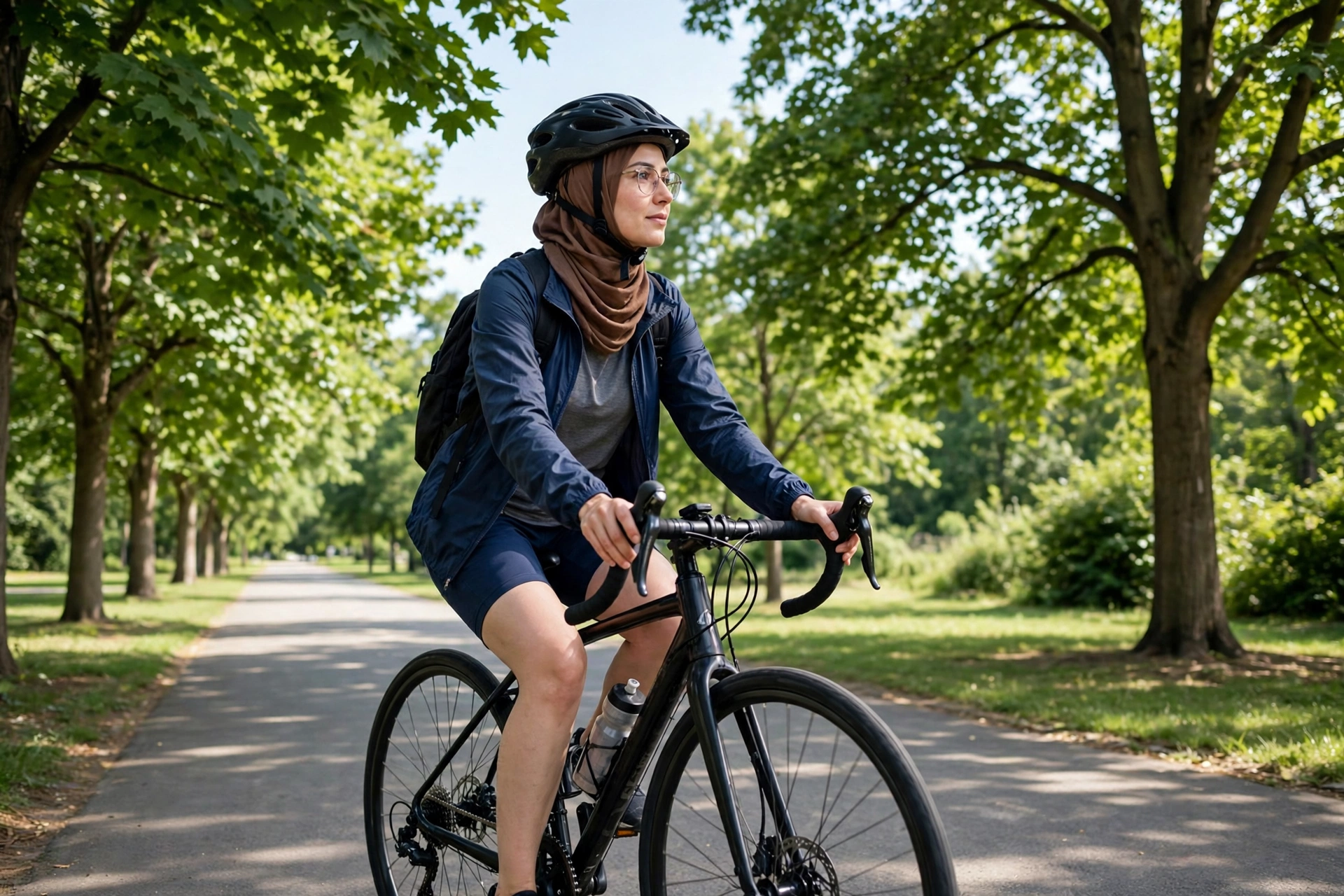
A helmet for hijab wearers is a helmet that fits comfortably and safely over a hijab, and in general terms the key is to choose a helmet with enough room, an adjustable fit system, and a shape that works with the volume of hair and fabric underneath. The right helmet protects just as well as any other, and it can be worn with confidence for cycling, riding, and other sports.
Many Muslim women who wear a hijab also ride a bike, a scooter, or a motorcycle, and they need a helmet that works with their hijab rather than against it. The challenge is simple: a hijab adds volume around the head and neck, and a standard helmet may feel tight, sit too high, or press uncomfortably on the fabric. The good news is that the problem is a matter of fit and choice, and there are practical ways to solve it without giving up either safety or modesty.
Can you wear a helmet over a hijab?
Yes, you can wear a helmet over a hijab, and many women do so every day. The helmet sits over the hijab in the same way it would sit over hair, and it protects the head in the same way. The main difference is that the hijab changes the shape and the volume of the head, so the helmet needs to be chosen and adjusted with that in mind. A helmet that fits well over a hijab is safe, comfortable, and secure.
The most important point is that the helmet must still fit properly. A helmet worn over a hijab should sit level, cover the forehead, and stay in place when the wearer shakes their head. If the hijab makes the helmet sit high like a cap, or if the helmet rocks from side to side, the fit is wrong and the helmet may not protect properly in a fall. The solution is usually a larger size, a different model, or a different way of wearing the hijab under the helmet.
What kind of helmet works best with a hijab?
The best helmet for a hijab wearer is one with an adjustable fit system, a roomy shape, and enough depth to sit over the hijab without pressing on it. A helmet with a dial or ratchet adjuster at the back is useful, because it lets the wearer fine-tune the fit each time they put the helmet on. A helmet with a deeper shell, or one that comes in a larger size range, is often a better choice than a shallow, tight-fitting model.
Some helmet makers now design helmets with hijab wearers in mind, and a few models have extra room at the back or a shape that works with a low bun or a wrapped hijab. These are worth looking for, but they are not the only option: many standard helmets work well too, especially in a larger size. The key is to try the helmet on with the hijab you actually wear, and to check the fit in the shop rather than guessing from a size chart.
How should you wear a hijab under a helmet?
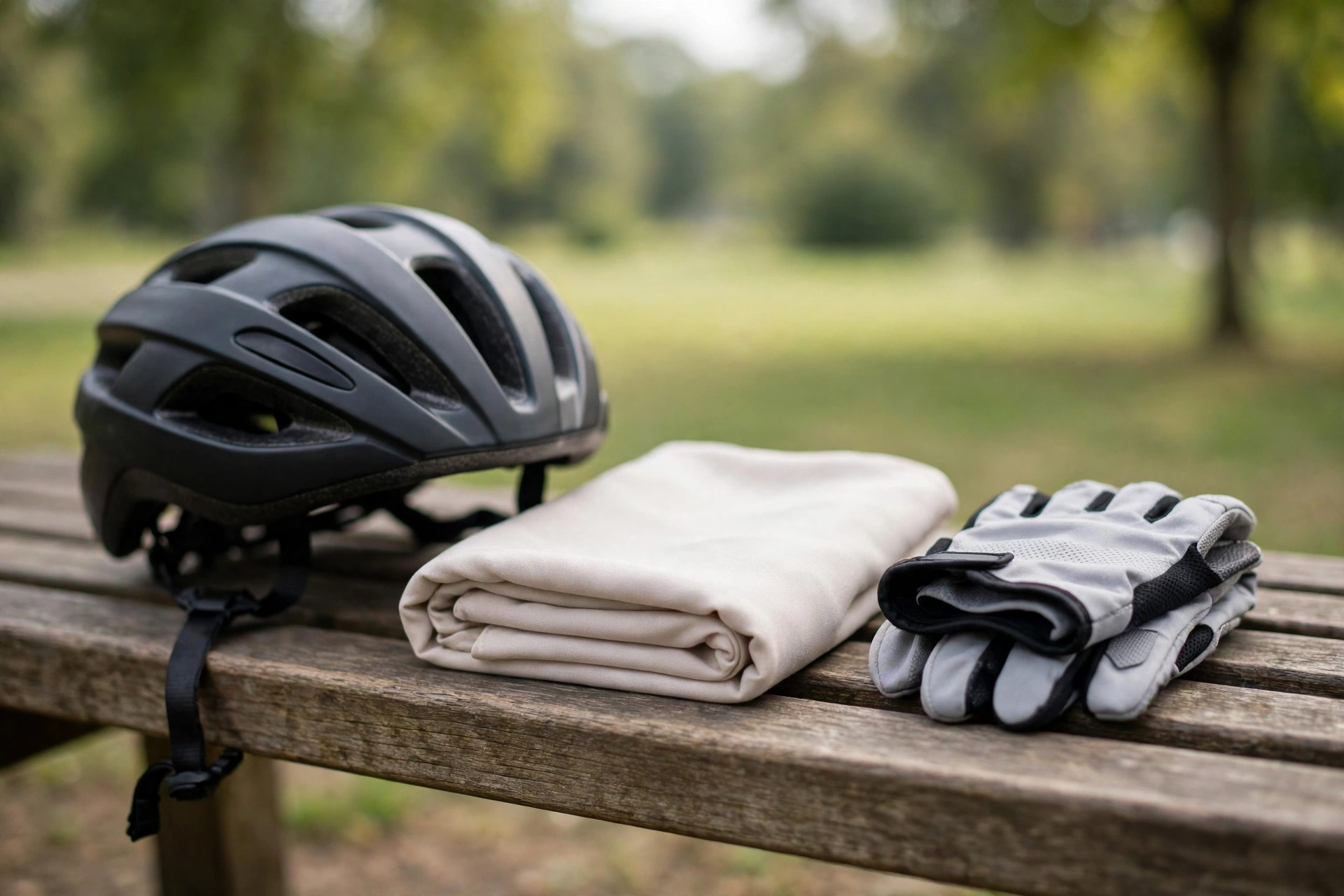
How you wear the hijab under the helmet makes a real difference to the fit. In general terms, a low, flat wrap works better than a high bun or a bulky knot, because a low wrap keeps the volume away from the crown of the head, where the helmet needs to sit. A lightweight, breathable hijab fabric also helps, because it takes up less space and stays cooler under the helmet than a heavy fabric.
Some women use a sports hijab, which is made from light, stretchy, moisture-wicking fabric and is designed to be worn under a helmet. A sports hijab is usually thinner and closer-fitting than a everyday hijab, and it stays in place better during activity. It can be a good investment for a regular rider, because it makes the helmet fit more easily and keeps the wearer cooler. A thin underscarf or cap can help in the same way, by keeping the hijab smooth and in place under the helmet.
How do you find the right size?
Finding the right size starts with measuring your head with the hijab on, not without it. Wrap a tape measure around the widest part of the head, over the hijab, just above the eyebrows, and use that measurement against the maker’s size chart. In general terms, a hijab wearer will often need one size larger than they would wear without a hijab, but the only way to be sure is to try the helmet on.
When you try a helmet on, wear the hijab you will actually ride in, and fasten the chin strap. The helmet should sit level, feel snug all the way round, and stay in place when you shake your head. Check that it does not press painfully on the forehead or the crown, and check that you can still hear and see clearly. If the helmet feels tight in one place and loose in another, try a different model, because helmet shapes differ between brands.
What else should hijab wearers know about helmets?
Hijab wearers should know that the usual rules of helmet care apply just the same. Check the helmet for cracks and wear, replace it after a hard impact, and store it in a cool, dry place out of direct sunlight. Clean the pads now and then, and let the helmet dry naturally. A helmet that is looked after lasts longer and protects better, whatever is worn underneath it.
Riders choosing a new helmet may also want to learn about features that can help in a fall, including a system designed to reduce rotational forces, such as MIPS, which is found in many helmets made for cycling and riding. A helmet that fits well, over a hijab or over hair, is the best protection a rider can have, and every rider deserves one that works for them.
Do I need a bigger helmet to wear over a hijab?
In general terms, yes, most hijab wearers need one size larger than they would wear without a hijab. Measure your head with the hijab on and try the helmet on before you buy, because sizes differ between brands.
Can I wear a sports hijab under a helmet?
Yes, a sports hijab is a good choice under a helmet, because it is made from light, stretchy fabric that stays in place and takes up less room than a everyday hijab. It also helps to keep you cool on a ride.
Will a helmet damage my hijab?
No, a well-fitting helmet should not damage a hijab, though a tight helmet can crease the fabric. A sports hijab or a thin underscarf can help, and the hijab can be smoothed out again after the ride.

Olivia
Writer at Helmet Today, covering helmet reviews, fit and riding safety.