
An aero helmet is a smooth, rounded helmet shaped to cut through the air with as little drag as possible, while a vented helmet is a helmet built around large air vents that keep the rider cool, and in general terms the difference comes down to speed versus cooling: aero helmets are faster in still air, vented helmets are cooler and more comfortable on long, hot rides.
Both helmets are road cycling helmets, and both are designed to protect the rider’s head, but they solve different problems. An aero helmet trades airflow for a slippery shape, while a vented helmet trades a little speed for a lot of cooling. Most riders will feel the difference most clearly on a hot climb, where a vented helmet feels cooler, or on a flat time trial, where an aero helmet feels faster. Choosing between them means thinking honestly about the riding you actually do.
What is an aero helmet?
An aero helmet is a cycling helmet with a smooth, elongated shape, few vents, and often a closed or nearly closed shell, designed to let air flow over it with as little resistance as possible. Some aero helmets have a short tail at the back that helps the air rejoin smoothly behind the rider, while others are short-tailed or tail-free so they still work well when the rider moves their head. The smooth shell is the key feature: air slides over it instead of catching in vents and edges.
Aero helmets are most often seen in time trials, triathlons, and flat road races, where small savings in drag can add up over a long ride. In general terms, the speed gain from an aero helmet is modest for a casual rider but real for a rider holding a fast, steady pace, because drag grows quickly as speed rises. An aero helmet also tends to be slightly heavier than a vented helmet of similar size, because the closed shell uses more material.
What is a vented helmet?
A vented helmet is a cycling helmet with large openings that let air flow through the helmet and over the rider’s head, carrying heat and sweat away. The vents are usually placed at the front, where air enters, and at the back, where warm air escapes, and internal channels guide the airflow across the scalp. A good vented helmet can make a hot ride feel much more bearable, because the moving air cools the head continuously.
Vented helmets are the standard choice for most road riders, and they are the helmet you will see most often on group rides, sportives, and mountain stages. They are usually lighter than aero helmets, because the large vents mean less shell material, and they are easier to live with on a long ride. In general terms, a vented helmet is the better all-round choice for a rider who rides in varied weather and terrain.
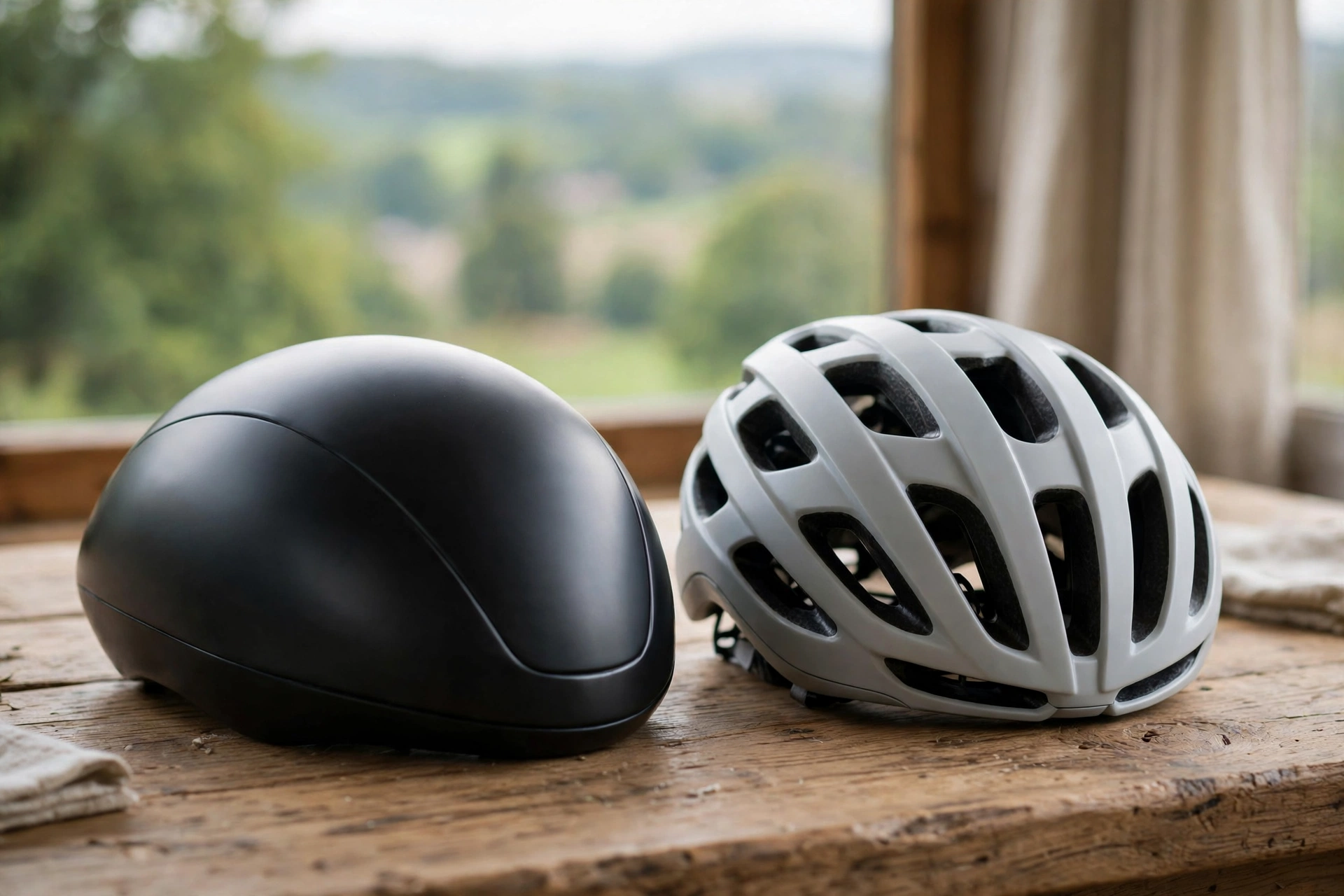
How do aero and vented helmets compare for speed?
For speed, the aero helmet wins, but the size of the win depends on how fast you ride. At time-trial speeds, an aero helmet can save a rider a meaningful amount of effort over a long, flat course, because drag is the biggest force a fast rider fights. At slower speeds, the saving shrinks, and a rider cruising at a relaxed pace will notice little difference between the two helmets.
Position matters too. An aero helmet works best when the rider holds a low, steady position, with the head still and the tail of the helmet lined up with the back. If the rider sits up, looks around, or moves their head a lot, the aero advantage fades, because the helmet is no longer lined up with the airflow. A vented helmet is more forgiving of head movement, because its shape is less dependent on a perfect position.
Which helmet is better for hot weather?
For hot weather, a vented helmet is clearly the better choice. The large vents let air flow over the head, sweat evaporates, and the rider stays cooler for longer. On a long climb in summer, the difference between a vented helmet and an aero helmet can be the difference between finishing strong and overheating, because the head is one of the main places the body loses heat.
An aero helmet in hot weather can feel stuffy within minutes, and the trapped heat can make a rider feel tired sooner. Some aero helmets have a few vents or a removable cover to help, but they still cannot match a well-vented helmet for cooling. A rider who races in the heat will often choose a vented helmet even for a flat course, because staying cool matters more than a small speed gain.
How should you choose between them?
Start by thinking about your riding. If you race time trials or triathlons, ride mostly on flat roads, and hold a steady pace, an aero helmet is worth considering. If you ride in a group, climb hills, ride in hot weather, or want one helmet that does everything well, a vented helmet is the safer choice. Most riders are better served by the vented helmet, because comfort over a long ride matters more than a small gain in speed.
Price is worth considering as well. Aero helmets are often more expensive than vented helmets, because the smooth shell and the wind-tunnel testing cost more to develop. A rider on a budget will usually get better value from a good vented helmet, which offers the same protection and better cooling for less money. Riders comparing helmets may also want to learn about features that can help in a fall, including a system designed to reduce rotational forces, such as MIPS, which is available in both aero and vented helmets. The best helmet is the one that fits well, suits your riding, and gets worn every time you ride.
Can I use an aero helmet for everyday riding?
Yes, you can use an aero helmet for everyday riding, but it will feel warmer than a vented helmet, especially in summer. For daily rides and long climbs, a vented helmet is usually more comfortable.
Are aero helmets safe in a crash?
Yes, in general terms an aero helmet that meets the same safety standards as a vented helmet offers the same level of protection. The shape is about airflow, not about safety, and both types must pass the same tests.
Do I need an aero helmet to ride fast?
No, you do not need an aero helmet to ride fast. Training, bike fit, and riding position make a far bigger difference, and a vented helmet is fast enough for most riders. An aero helmet is a small extra gain for riders who have already covered the basics.

Olivia
Writer at Helmet Today, covering helmet reviews, fit and riding safety.