Yes, you can wear a helmet on a plane in the sense that you can carry one on board and store it in the cabin, and in general terms there is no rule that bans a helmet from a flight, but you cannot wear it during the flight itself, because the cabin crew will ask you to remove it for take-off, landing, and any time the seatbelt sign is on. A helmet is best carried as hand luggage, not worn in your seat.
The question comes up most often for travellers who are flying to a cycling, skiing, or motorcycling trip and want to take their own helmet with them. A helmet is bulky, expensive, and personal, so it makes sense to carry it on board rather than risk it in checked luggage, where it can be crushed or knocked about. The good news is that airlines generally allow this, and a helmet is a familiar sight at airport security and at the gate.
Can you take a helmet through airport security?
Yes, you can take a helmet through airport security, and in general terms it is treated like any other bulky item of hand luggage. The helmet will go through the X-ray scanner, just like a bag or a laptop, and you will be asked to place it in a tray on its own. Security staff see helmets regularly, and a bicycle, ski, or motorcycle helmet raises no alarm on its own.
There are a few practical points to keep in mind. A helmet with a lot of metal, such as a motorcycle helmet with a metal buckle or a visor mechanism, may need a second look, but that is normal and takes only a moment. A helmet with a built-in camera or a communication system should have its battery rules checked, because lithium batteries have their own limits for air travel. Remove any loose items from inside the helmet before the scan, and keep the helmet where you can reach it easily in the queue.
Can you carry a helmet as hand luggage?
Yes, you can carry a helmet as hand luggage, and many travellers do exactly that. A helmet usually counts as part of your hand luggage allowance, so it needs to fit within the airline’s size and weight limits for cabin bags. A bicycle or ski helmet is small enough to fit inside a cabin bag or to be carried on its own, while a full-face motorcycle helmet is bulkier and may need to be your main cabin item.
Some airlines allow a helmet as an extra personal item, while others count it as part of the standard allowance, so the rule depends on the airline. The safest approach is to check the airline’s hand luggage rules before you travel, and to be ready to pack the helmet inside a bag if the gate staff ask you to. A helmet clipped to the outside of a bag is more likely to be counted as a separate item than one packed neatly inside it.
Can you wear a helmet during the flight?
No, you should not wear a helmet during the flight, and the cabin crew will ask you to remove it. A helmet worn in your seat would block the view of the passenger behind you, make it hard to hear announcements, and get in the way of the oxygen mask and the seatbelt. In an emergency, a helmet could also slow you down or catch on the seat in front of you, so the crew need every passenger to be unobstructed and able to move quickly.
The rule is the same as for hats and hoods during take-off and landing: anything that covers the head or the ears in a way that blocks hearing or movement must come off. A helmet is an extreme version of that, so there is no chance of being allowed to keep it on. The crew may also ask you to remove it during turbulence, because the seatbelt sign is on and passengers are expected to be seated normally.
Should you pack a helmet in checked luggage instead?
Packing a helmet in checked luggage is possible, but it carries risks. Checked bags are stacked, thrown, and squeezed, and a helmet in a suitcase can be crushed or knocked hard enough to damage it. A helmet that has taken a hard knock in transit may look fine on the outside while the liner inside has compressed, and a helmet that has already absorbed an impact may not protect properly in a second one. For that reason, most riders prefer to carry their helmet on board.
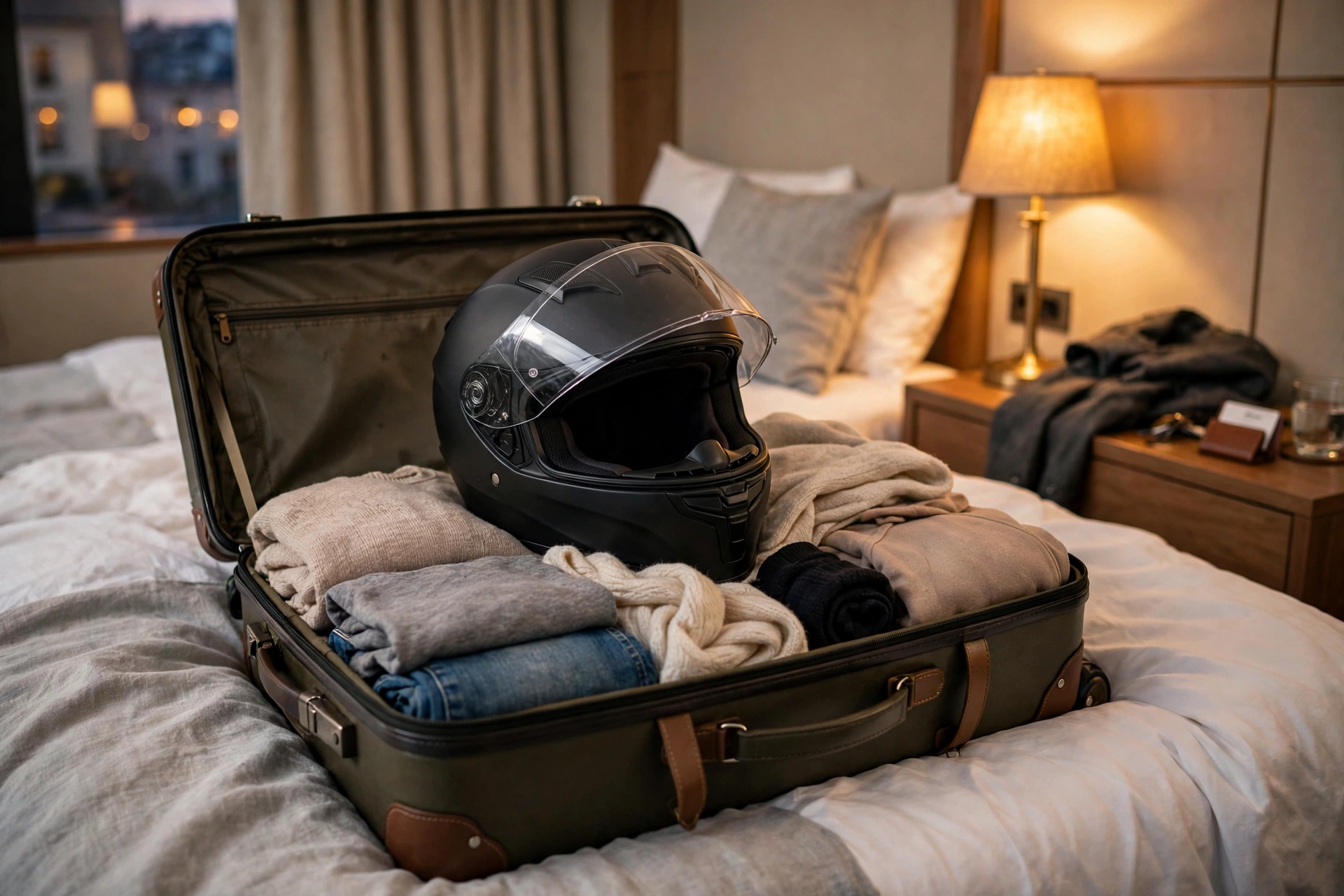
If you must check a helmet, protect it well. Pack it in the middle of the suitcase, surrounded by soft clothing, and fill the inside of the helmet with socks or a soft top so it keeps its shape. A hard case is better than a soft bag, and a helmet bag inside the case adds another layer of protection. Remove the visor if you can, and wrap it separately, because a scratched visor is a common result of a helmet travelling in a hold.
How should you carry a helmet on a plane?
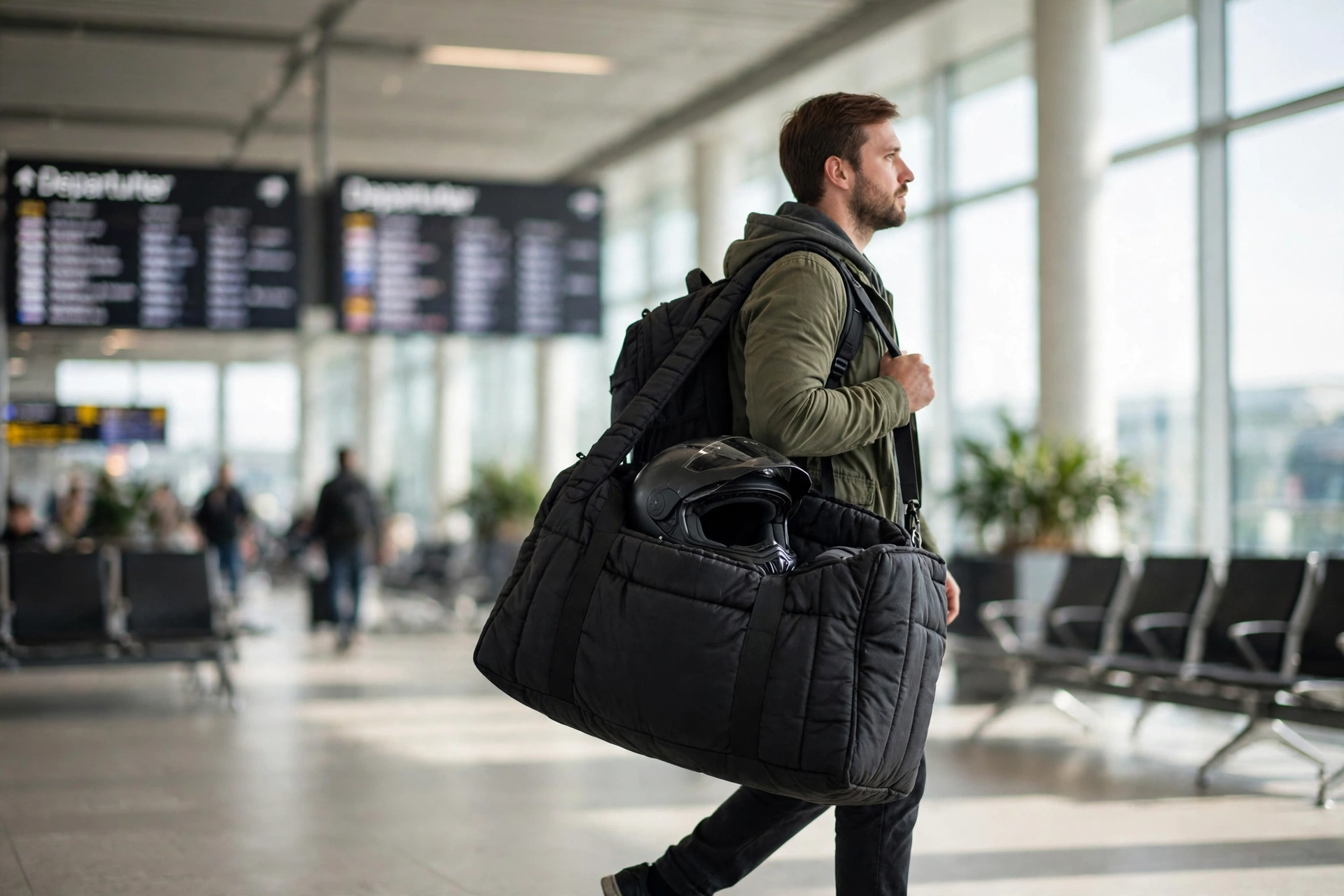
The best way to carry a helmet on a plane is in a helmet bag, worn over your shoulder or packed inside your cabin bag. A helmet bag protects the shell and the visor from scratches, keeps the straps tidy, and makes the helmet easy to carry through the airport. Stuff the inside of the helmet with soft clothing to help it keep its shape, and clip the chin strap loosely so it does not dangle and catch on things.
Travellers choosing a new helmet may also want to learn about features that can help in a fall, including a system designed to reduce rotational forces, such as MIPS, which is found in many helmets made for cycling, skiing, and motorcycling. A helmet carried carefully onto the plane, stored safely in the cabin, and worn properly at your destination is the best way to travel with the helmet you trust.
Does a helmet count as hand luggage?
In general terms, a helmet counts as part of your hand luggage allowance on most airlines, so it needs to fit within the size and weight limits for cabin bags. Check your airline’s rules before you travel, because some airlines treat it as an extra item.
Can I wear my helmet through airport security?
No, you will be asked to remove your helmet and place it in a tray for the X-ray scanner, just like a hat or a jacket. Security staff see helmets regularly, and the check usually takes only a moment.
Is it safe to put a helmet in the overhead bin?
Yes, a helmet in a bag is safe in the overhead bin, and it is far safer there than in checked luggage. Place it where it will not be crushed by heavier bags, and take it down carefully when you land.

Olivia
Writer at Helmet Today, covering helmet reviews, fit and riding safety.