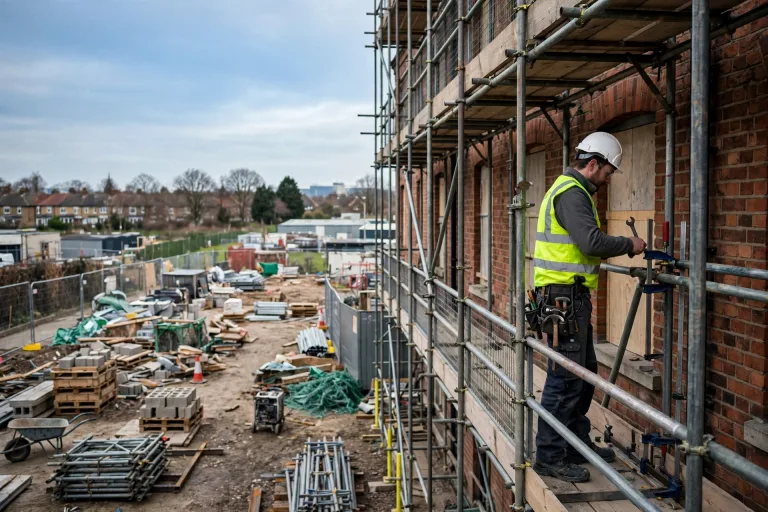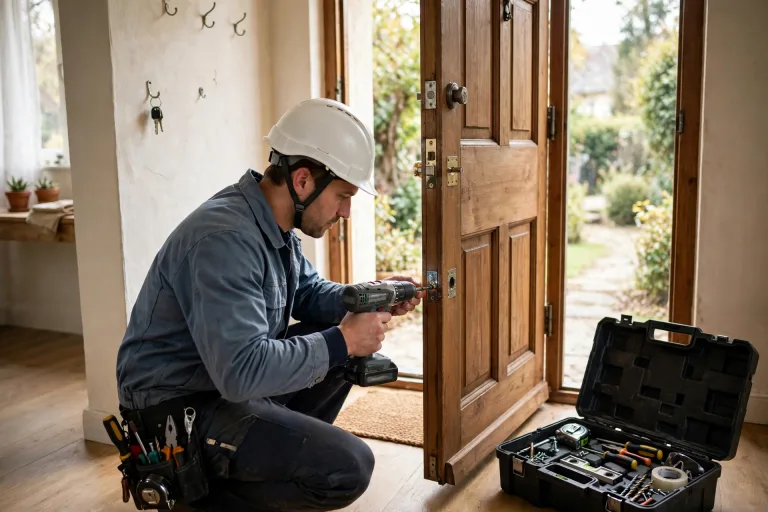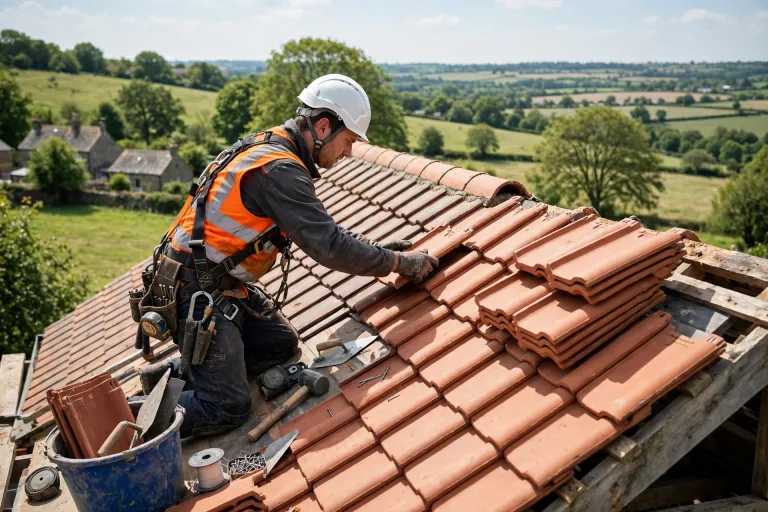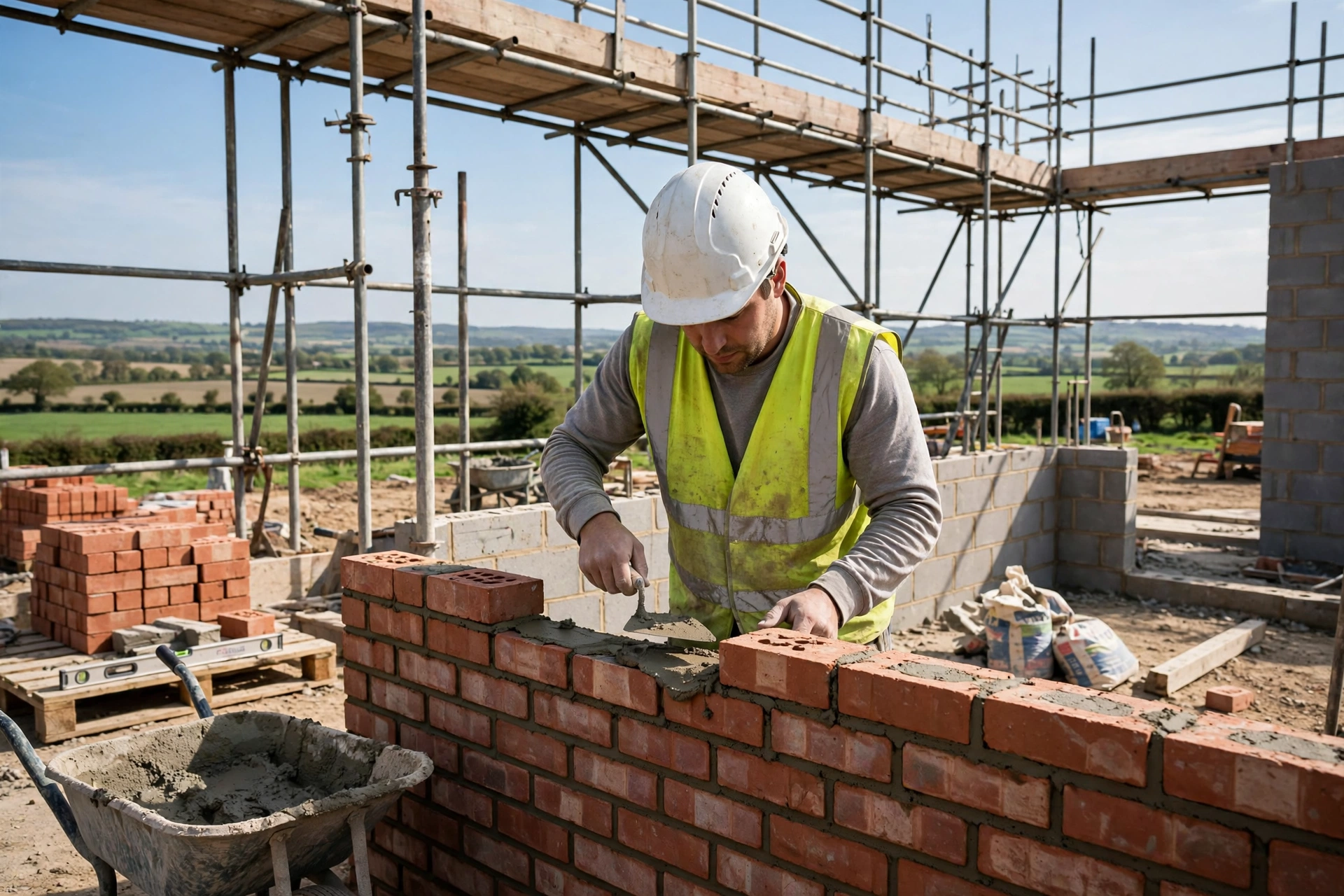
Yes, bricklayers wear helmets on most building sites, and in general terms a hard hat is required wherever there is a risk of falling objects, overhead work, or head injury from structures and equipment. A bricklayer working on an active site is expected to wear one, and the site rules usually make it compulsory rather than optional.
Bricklaying looks like ground-level work from a distance, but a bricklayer on a building site works beneath scaffolding, cranes, and other trades, and that means working under loads that are being lifted, moved, and stacked overhead. A dropped brick, a falling tool, or a piece of scaffolding can cause a serious head injury, and a hard hat is the simple protection that guards against it. For that reason, helmets are part of the standard kit on a construction site, alongside boots, gloves, and high-visibility clothing.
Why do bricklayers need helmets?
Bricklayers need helmets because a building site is full of hazards above head height. Materials are lifted by crane, scaffolding is built and taken down overhead, and other workers are active on the floors above. A brick, a block, or a tool dropped from even a modest height can hit with enough force to cause a serious injury, and a hard hat spreads that force and helps to protect the skull. In general terms, a hard hat is the last line of defence when something falls.
Bricklayers also work close to structures that can cause knocks and bumps. Low beams, scaffold poles, door frames, and the edges of walls and openings are all at head height, and a bricklayer moving quickly between tasks can easily catch their head. A hard hat protects against those everyday knocks as well as against falling objects, and it gives the wearer confidence to move freely around the site.
What kind of helmet do bricklayers wear?
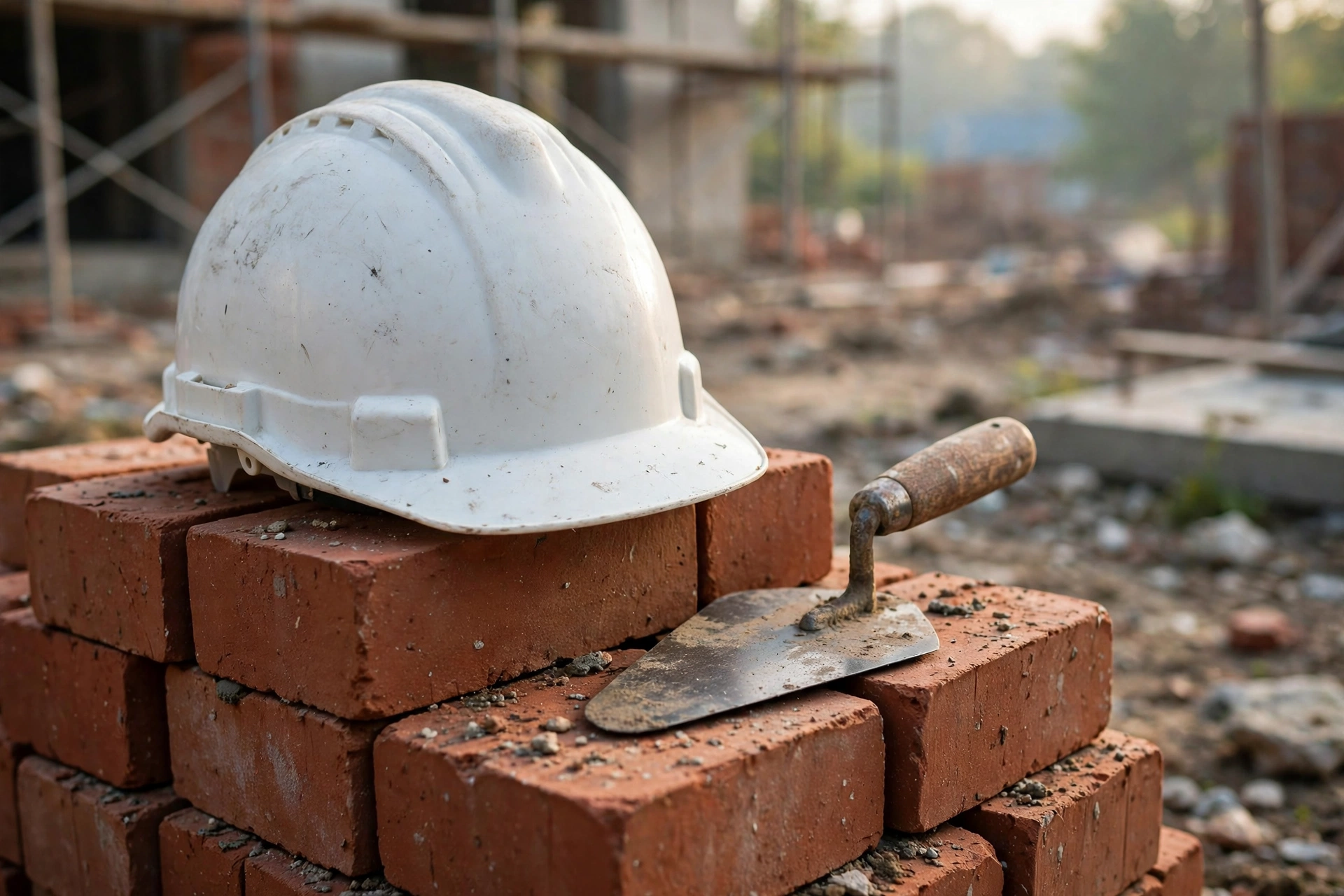
Bricklayers wear a hard hat, which is a light, rigid helmet made for construction work, usually with a hard outer shell and a suspension system inside that holds the shell away from the head. The gap between the shell and the head is important, because it gives the shell room to flex and absorb the force of an impact before it reaches the wearer. The shell is usually made from a tough plastic that can cope with knocks and weather.
Most bricklayers wear a standard white or yellow hard hat, though colours are often used to show a worker’s role on site, with different colours for managers, visitors, and trades. The hard hat usually has a short peak at the front to shield the eyes from sun and rain, and it may have slots on the sides for ear defenders or a visor. A chin strap is often fitted, and it should be used when working at height or in windy conditions, so the hat stays on.
Are bricklayers legally required to wear helmets?
In general terms, bricklayers are required to wear helmets on building sites where the risk assessment shows a risk of head injury, and on most active construction sites that risk is present. The law in many countries places a duty on employers to provide suitable head protection and on workers to wear it, and site rules usually make the hard hat compulsory for everyone on site, including visitors. A bricklayer who refuses to wear one can be asked to leave the site.
The exact legal position depends on the country and the type of work. In some places, the rule is written into workplace safety law, while in others it is set by the main contractor through site rules. Either way, the practical result is the same: a bricklayer turning up on a building site without a hard hat will not be allowed to work. The employer or the main contractor is usually responsible for supplying the helmet, and the worker is responsible for wearing it and looking after it.
How should a bricklayer’s helmet fit?
A bricklayer’s hard hat should sit level on the head, with the suspension adjusted so the shell sits just above the head and does not touch it directly. The hat should feel snug but not tight, and it should stay in place when the wearer bends, looks up, or moves quickly. Most hard hats have an adjustable band or a ratchet at the back, and that should be set so the hat fits firmly without pressing painfully on the forehead.
The chin strap, where fitted, should be fastened when working at height, on scaffolding, or in windy weather, because a hard hat that falls off is no protection at all. The wearer should also check that the hat does not block their view or press on their ears, and that it works with any other protection they wear, such as safety glasses or ear defenders. A hard hat that is uncomfortable will be worn badly or taken off, so comfort matters.
How should a bricklayer look after a hard hat?
A hard hat should be looked after with the same care as any safety equipment. It should be stored in a cool, dry place, out of direct sunlight, and it should not be left in a hot van or on a dashboard, because heat and sunlight weaken the shell over time. It should be cleaned with mild soap and water, and the suspension and sweatband should be checked and replaced when they wear out. Strong cleaners and solvents should be kept away from the shell.
Workers choosing head protection may also want to learn about features that can help in a fall, including a system designed to reduce rotational forces, such as MIPS, which is now found in some work helmets as well as sports helmets. A well-kept hard hat, worn every day on site, is one of the simplest and most effective ways a bricklayer can protect themselves at work.
Do bricklayers wear helmets on small domestic jobs?
In general terms, a bricklayer on a small domestic job with no overhead work may not be required to wear a helmet, but it is still wise if there is any risk above head height. A quick risk check before the job starts will settle the question.
What colour hard hat do bricklayers wear?
There is no single colour for bricklayers, and colours vary by site and by country. White and yellow are common, and some sites use colour to show a worker’s trade or role, so bricklayers should follow the colour scheme of the site they are on.
How often should a bricklayer replace a hard hat?
In general terms, a hard hat should be replaced after a few years of regular use, or sooner if it is cracked, faded, or has taken a hard impact. The maker’s guidance and the site’s rules should be followed, and a damaged hat should never be kept in use.

Olivia
Writer at Helmet Today, covering helmet reviews, fit and riding safety.