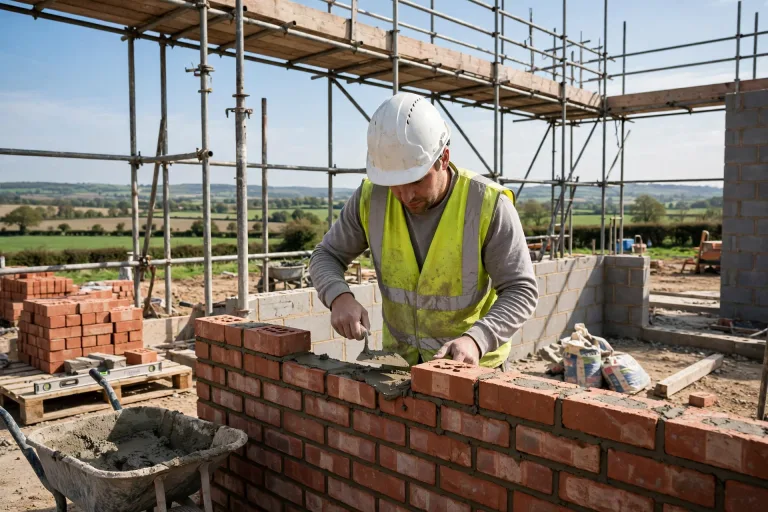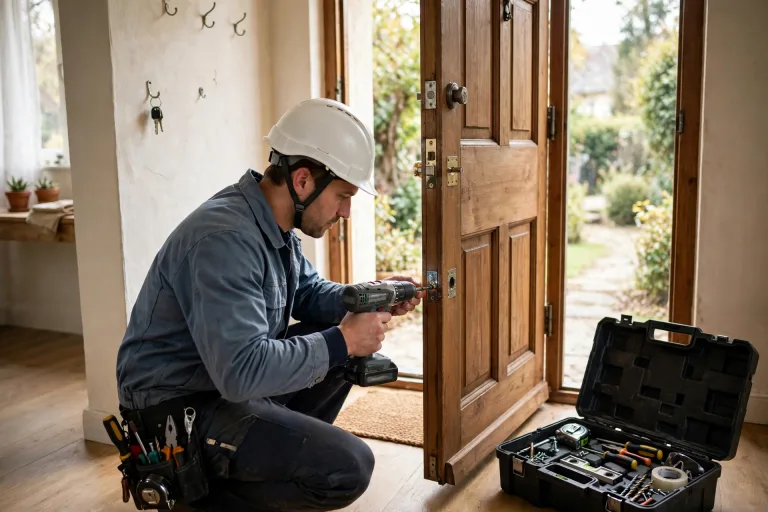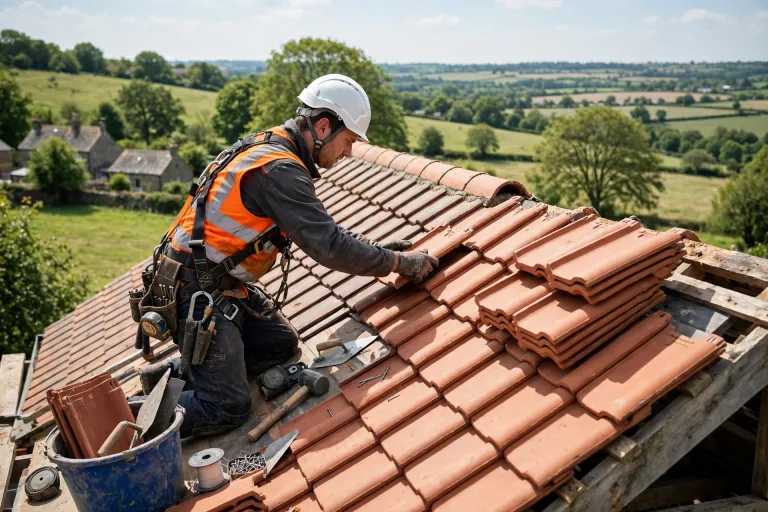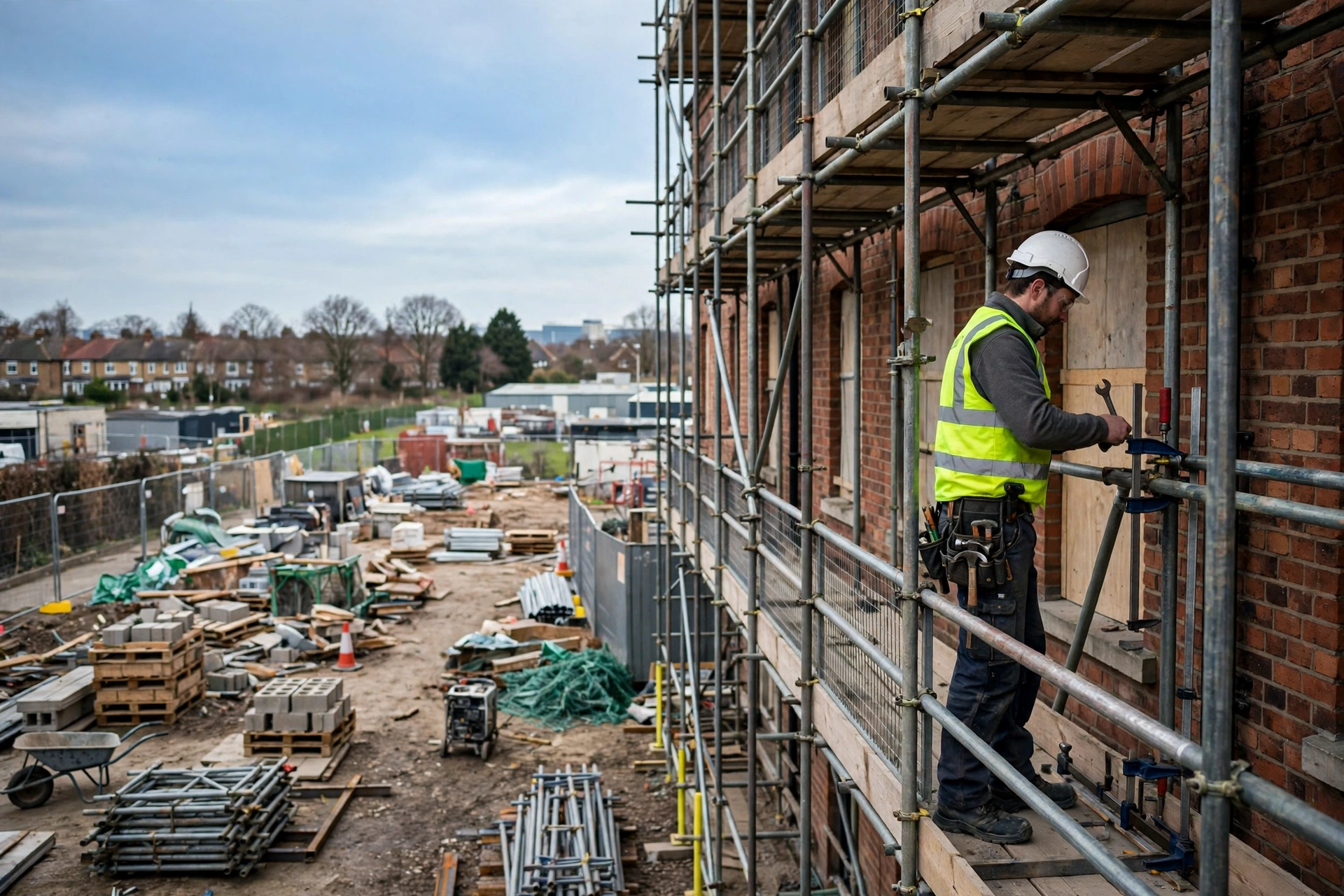
Yes, in general terms scaffolders wear helmets on site. A hard hat is standard personal protective equipment for scaffolding work, because the job involves working at height, handling heavy tubes and boards, and moving around a site where objects can fall from above. On most construction sites, wearing a hard hat is a site rule, and scaffolders are expected to follow it like everyone else on site.
What Kind of Helmet Do Scaffolders Wear?
Scaffolders usually wear a hard hat, which is a different kind of helmet from a cycling or motorcycle helmet. A hard hat has a rigid outer shell and a suspension system inside that holds it slightly away from the head. That gap is important: it gives the shell room to flex and absorb the force of an impact, so less of it reaches the head. Most site hard hats also have a small brim or peak at the front, which helps keep rain and sun out of the eyes.
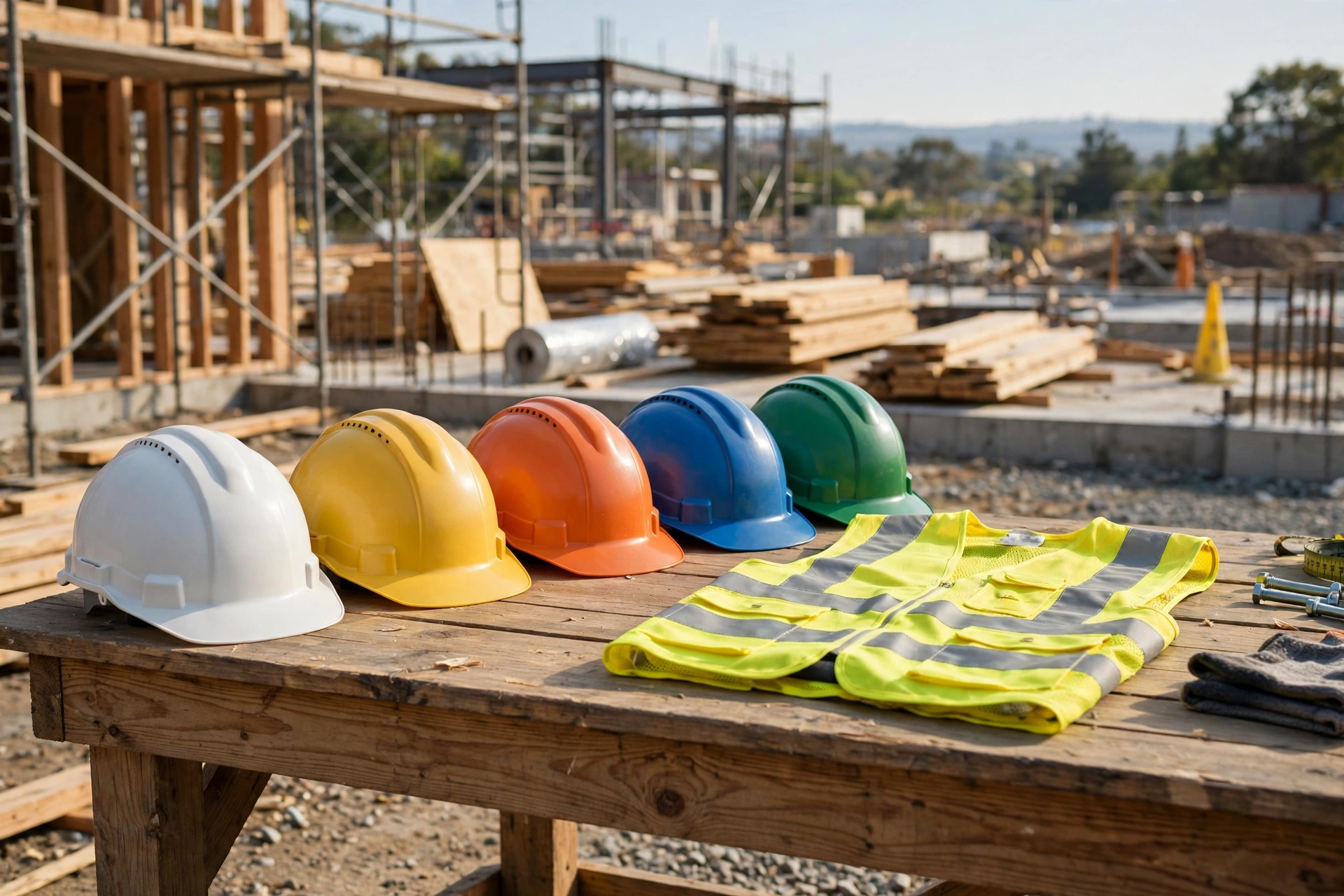
Hard hats come in different styles, and scaffolders often choose a model with a chin strap, so the hat stays on when they are looking up, bending down, or working at height. A hard hat that falls off a scaffold is no use to anyone, so a secure fit matters. Some scaffolders also wear a helmet with a built-in visor or ear defenders, or one that accepts clip-on accessories such as a head torch for early starts or winter work. The colour of a hard hat can mean different things on different sites, but there is no single universal code, and the colour does not affect the protection the hat offers.
When Must a Scaffolder Wear a Helmet?
In general terms, a scaffolder must wear a hard hat whenever they are on a construction site where there is a risk of head injury, which in practice means most of the working day. Site rules usually require a hard hat in all construction areas, and scaffolders spend their working day in exactly those areas: on the scaffold, on the ground handling materials, and moving between the two. The helmet is not something to put on only when a risk is obvious; it is worn as a matter of routine.
There are times when the risk is higher, and the helmet matters even more. Working under an existing scaffold, handling tubes overhead, dismantling a structure, or working near a crane lift are all moments when objects can fall. Weather can add to the risk too: high winds can move loose materials, and rain can make boards slippery. Off site, the rules are different: a scaffolder travelling to work or eating lunch away from the construction area may not need a hard hat. The key point is the risk in the place you are working. If there is a chance of something falling on your head, wear the helmet, and if you are unsure, ask the site manager.
How Should a Scaffolder’s Hard Hat Fit?
A hard hat should sit level on the head, with the suspension adjusted so that it feels snug but not tight. Most hard hats have an adjustable band or a ratchet dial at the back, and taking a minute to set it properly makes a real difference. The hat should stay in place when you look up, bend down, or shake your head gently, and it should not slide over your eyes or slip backward. If it moves around freely, it is either the wrong size or it needs adjusting.
The chin strap, where one is fitted, should be fastened whenever you are working at height or in windy conditions. A hard hat that falls off a scaffold is a hazard in itself, and it leaves your head unprotected. Some scaffolders find chin straps uncomfortable at first, but a properly adjusted strap should feel secure rather than tight. Comfort matters on a long working day: a hard hat that is heavy, poorly balanced, or too hot will tempt the wearer to take it off, which defeats the purpose. Look for a lightweight model with good ventilation, and keep the sweatbands and padding fresh.
What Should a Scaffolder Look for in a Helmet?
When choosing a hard hat for scaffolding, the first thing to check is that it meets the relevant safety standard for industrial head protection. The label or marking inside the shell should state the standard clearly, and the hat should be made for construction work rather than for sport or leisure. A cycling helmet or a climbing helmet is not a substitute for a site hard hat, because it is designed for a different kind of impact.
Beyond the standard, look at the practical features. A ratchet adjustment at the back makes it easy to get a snug fit, even with gloves on. Vents help in warm weather, though some sites prefer unvented hats where there is a risk of electrical contact, so check the site rules first. A short peak or brim is useful in rain, and slots on the sides let you attach ear defenders or a visor. Some scaffolders also choose a helmet with a MIPS style liner or a similar system designed to reduce rotational forces, though the fit and the standard matter more than any single feature. Durability is worth considering too: a scaffolder’s hard hat gets knocked, dropped, and left in the sun, so choose a model that can take everyday knocks and is easy to clean.
How Do You Care for a Scaffolder’s Helmet?
A hard hat needs regular checks, and a quick inspection before each use is a good habit. Look at the shell for cracks, dents, or deep scratches, and check the suspension for frayed straps, broken fittings, or worn padding. If the shell is cracked or the suspension is damaged, take the hat out of service and replace it. A damaged hard hat may look fine from a distance, but it may not protect properly in an impact.
Clean the hat with mild soap and water, and let it dry naturally. Avoid harsh solvents, paints, or stickers that could weaken the shell, and do not drill holes in it to attach accessories unless the manufacturer says it is safe to do so. Keep the hat out of direct sunlight and away from extreme heat when it is not being worn, because heat and sunlight can degrade the shell over time. In general terms, a hard hat that is well looked after can last several years, but it should still be replaced on a regular schedule and immediately after any serious impact.
Do scaffolders have to wear a hard hat?
Yes, in general terms scaffolders wear a hard hat on construction sites, where site rules require head protection. The helmet protects against falling objects and knocks, and it is part of the standard kit for the trade.
What colour hard hat do scaffolders wear?
It varies by site and company, and there is no single universal code. The colour does not affect the protection offered, so follow the rules of the site you are on rather than assuming a colour has a fixed meaning.
When should a scaffolder replace a hard hat?
Replace it immediately after a serious impact or if the shell is cracked or the suspension is damaged. In general terms, a well-kept hard hat can last several years, but check it before each use and replace it on a regular schedule.

Olivia
Writer at Helmet Today, covering helmet reviews, fit and riding safety.