
A helmet hurts the top of your head when it presses on the crown instead of spreading pressure evenly around your head, and in general terms the most common causes are a helmet that is too small, the wrong shape for your head, or pads that have gone flat or bunched up inside. The pain often builds slowly over a ride or a shift, and it usually means the fit needs adjusting rather than simply waiting for the helmet to break in.
Pressure on the top of the head is one of the most common helmet complaints, and it can turn an enjoyable ride or a normal working day into a miserable one. The crown of the head has little padding of its own, so even a small amount of pressure from a helmet shell or a hard pad can become painful over time. The good news is that the cause is usually easy to find once you know what to look for, and many cases can be fixed with a simple adjustment or a change of pads.
What causes pressure on the top of your head?
The most common cause of pressure on the top of the head is a helmet that is too small. When a helmet is a size too small, the shell sits high and the inner lining presses down on the crown, because there is not enough room for the head to sit properly inside it. The helmet may feel fine for the first few minutes, but as the minutes pass the pressure builds, and by the end of an hour it can feel like a heavy weight resting on one spot. A helmet that is too small may also leave a red mark on the forehead or the crown when you take it off.
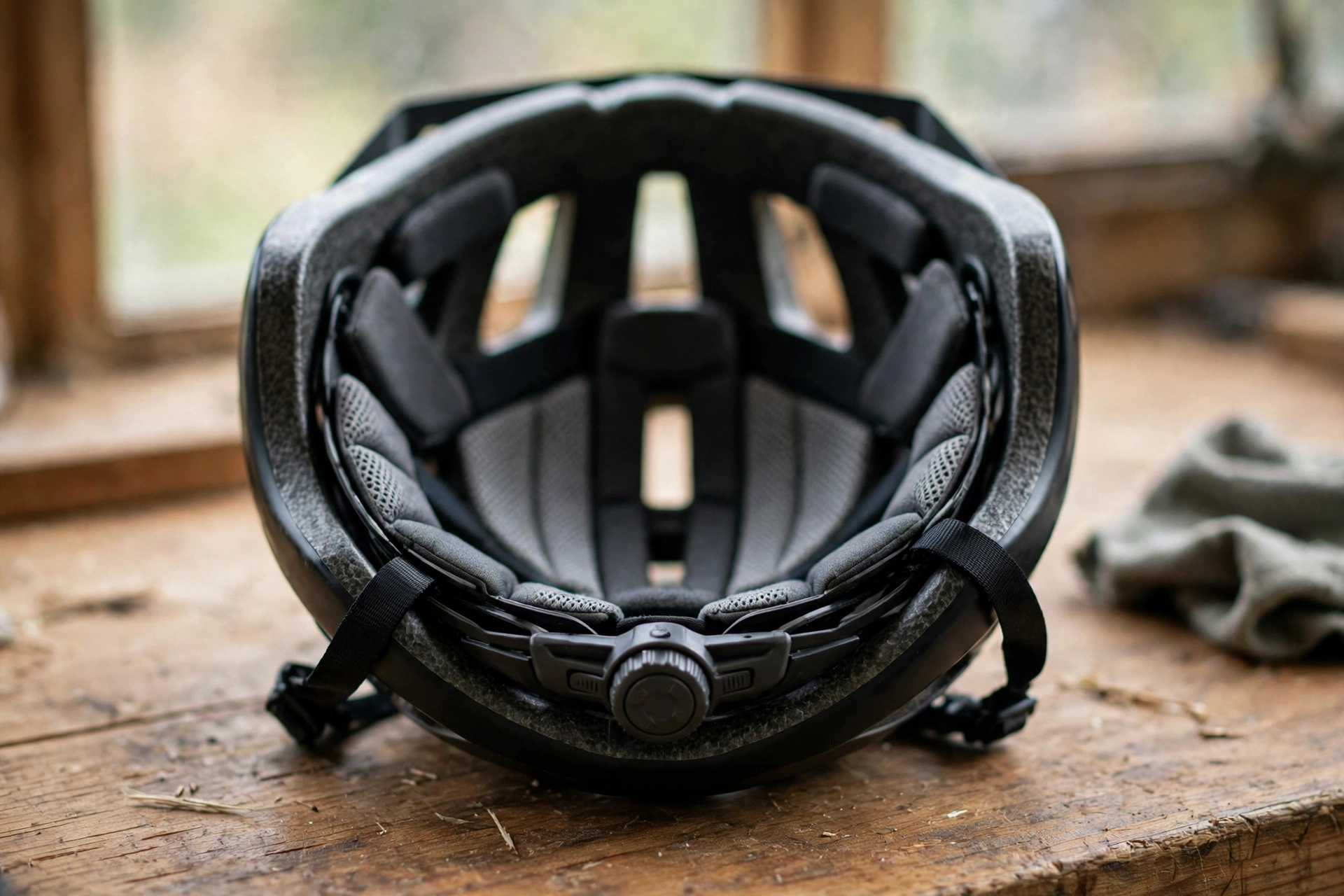
Another common cause is padding that has worn down or shifted. The comfort pads inside a helmet are designed to spread pressure across a wide area, but over time they can flatten, harden, or bunch up in one place. When that happens, the shell or a hard part of the liner can press directly on the crown. This is more likely in an older helmet, or in a helmet that has been stored in a hot place, because heat can change the shape and softness of foam. Sweat and regular use also wear pads down, so a helmet that once felt comfortable can slowly become painful.
Is your helmet the wrong shape for your head?
Heads come in different shapes, and helmets do too, so a helmet can be the right size and still hurt the top of your head. In general terms, some helmets are made for rounder heads and some are made for longer, narrower heads, and wearing a round helmet on a long head, or the other way round, can leave a pressure point at the crown or the forehead. The helmet may feel snug at the sides but tight on top, or loose at the sides and tight on top, and that uneven fit is a sign that the shape does not match.
To check the shape, put the helmet on and feel where it touches your head. It should touch evenly all the way round, with no single spot carrying most of the pressure. If you can feel a hard point pressing on the crown while the sides feel loose, the shape is probably wrong. Trying on a different model from the same brand, or a helmet from a different brand, can make a surprising difference, because brands shape their shells differently. A shop that stocks several brands is the best place to compare shapes.
How can you tell if the fit is the problem?
A simple test can tell you whether the fit is the problem. Put the helmet on, fasten the chin strap, and wear it indoors for about fifteen minutes while you move around normally. If pressure builds on the top of your head during that time, the fit is the cause. If the helmet feels comfortable for the full fifteen minutes but hurts after an hour outdoors, heat, sweat, or the way the helmet moves during activity may be adding to the problem.
What can you do to stop the pain?
Start with the simplest fixes. First, check that the pads are sitting flat and in the right place, and replace them if they are flat, hard, or torn. Many helmets have replacement pad sets, and a fresh set can change the feel of a helmet completely. Second, adjust the fit system if your helmet has one, so that the helmet sits level and the pressure is shared around the head rather than focused on the crown. Third, try wearing your hair differently, with a low ponytail or a thin skull cap instead of a bun or a thick hat.
If the helmet is only slightly tight, a thinner pad set may help, because it gives your head a little more room without changing the shell size. Some riders also find that a helmet liner or a thin sweat-wicking skull cap spreads the pressure and stops the shell from pressing on one spot. Avoid the temptation to remove pads altogether, because that leaves the hard shell closer to your head and can make the pressure worse, as well as reducing the protection the helmet offers.
When should you replace a helmet that hurts?
You should replace a helmet that hurts when the pain comes from the shell pressing on your head and no adjustment or new pads can fix it. A helmet that is too small cannot be stretched, and a helmet with the wrong shape cannot be reshaped, so continuing to wear it only means continuing pain. If the helmet is new and still within the return period, take it back and try a different size or model, and wear the replacement for a good fifteen minutes in the shop before you decide.
When you shop for a replacement, take your time and try on several models. Look for a helmet that feels even all the way round, with no single pressure point on the crown, and check the fit again after a few minutes of wearing it. Riders choosing a new helmet may also want to learn about features that can help in a fall, including a system designed to reduce rotational forces, such as MIPS, which is found in many modern helmets. A helmet that fits well from the start is the best cure for pain on the top of your head.
Can a helmet that is too small cause headaches?
Yes, in general terms a helmet that is too small can cause headaches, because steady pressure on the crown and forehead can build into a dull ache over time. A better-fitting helmet usually removes the problem.
Will a tight helmet loosen up over time?
A helmet may feel a little less tight as the pads settle, but the shell itself will not stretch. If the helmet presses painfully on the top of your head from the start, it is unlikely to become comfortable with use.
Should I wear a cap under my helmet to stop the pain?
A thin skull cap can help by spreading pressure and absorbing sweat, but a thick cap takes up space and can make the fit tighter. Try a thin cap first, and check that the helmet still sits level and secure.

Olivia
Writer at Helmet Today, covering helmet reviews, fit and riding safety.