
Your helmet hurts your forehead, in general terms, because it is the wrong size, the wrong shape for your head, or adjusted so that it presses in one spot. A helmet should sit evenly all round the head, so pain at the front is a sign that something about the fit needs to change, and it is worth fixing before the next ride or work session.
Forehead pain is one of the most common helmet complaints, and it can turn a pleasant ride or a normal working day into a miserable one. The pain often starts as a dull pressure after a few minutes and grows into a headache that lasts long after the helmet comes off. A good helmet should feel snug and secure, not painful, and forehead pain is a clear signal that the fit is wrong.
What causes a helmet to hurt the forehead?
A helmet hurts the forehead when it presses too hard in one place instead of spreading the pressure evenly around the head. The most common cause is a helmet that is too small, which squeezes the head and pushes hardest at the front where the skull curves. Another common cause is a helmet that is the wrong shape, because heads are not all the same shape, and a helmet made for a round head will press on the forehead of a person with a longer head. The padding can also be the problem, if it is too thin, worn out, or bunched up at the front.
The way the helmet is worn matters too. A helmet pushed too far forward sits low on the forehead and presses on the brow, while a helmet that is tilted back can dig in at the front edge. The straps and the fitting system can also pull the helmet forward, which adds pressure to the same spot. In general terms, forehead pain is rarely caused by one thing alone, and it is often a mix of size, shape, and adjustment that needs to be sorted out together.
Is the helmet the wrong size?
The helmet may well be the wrong size, and size is the first thing to check when the forehead hurts. A helmet that is too small will feel tight all round the head, not just at the front, and it will leave a red mark on the forehead when it comes off. A helmet that is too large, on the other hand, will wobble and slide, and the wearer may tighten the straps to stop the movement, which pulls the helmet forward and presses it into the forehead. Both problems end in the same pain, so size alone does not tell the whole story.
To check the size, measure around the head just above the eyebrows, and compare the number with the maker’s size guide. A helmet should sit level, cover the forehead without pressing on it, and stay in place when the head is shaken gently. If the helmet only feels right when it is pulled hard into place, it is probably the wrong size.
Can the fit be adjusted to stop the pain?
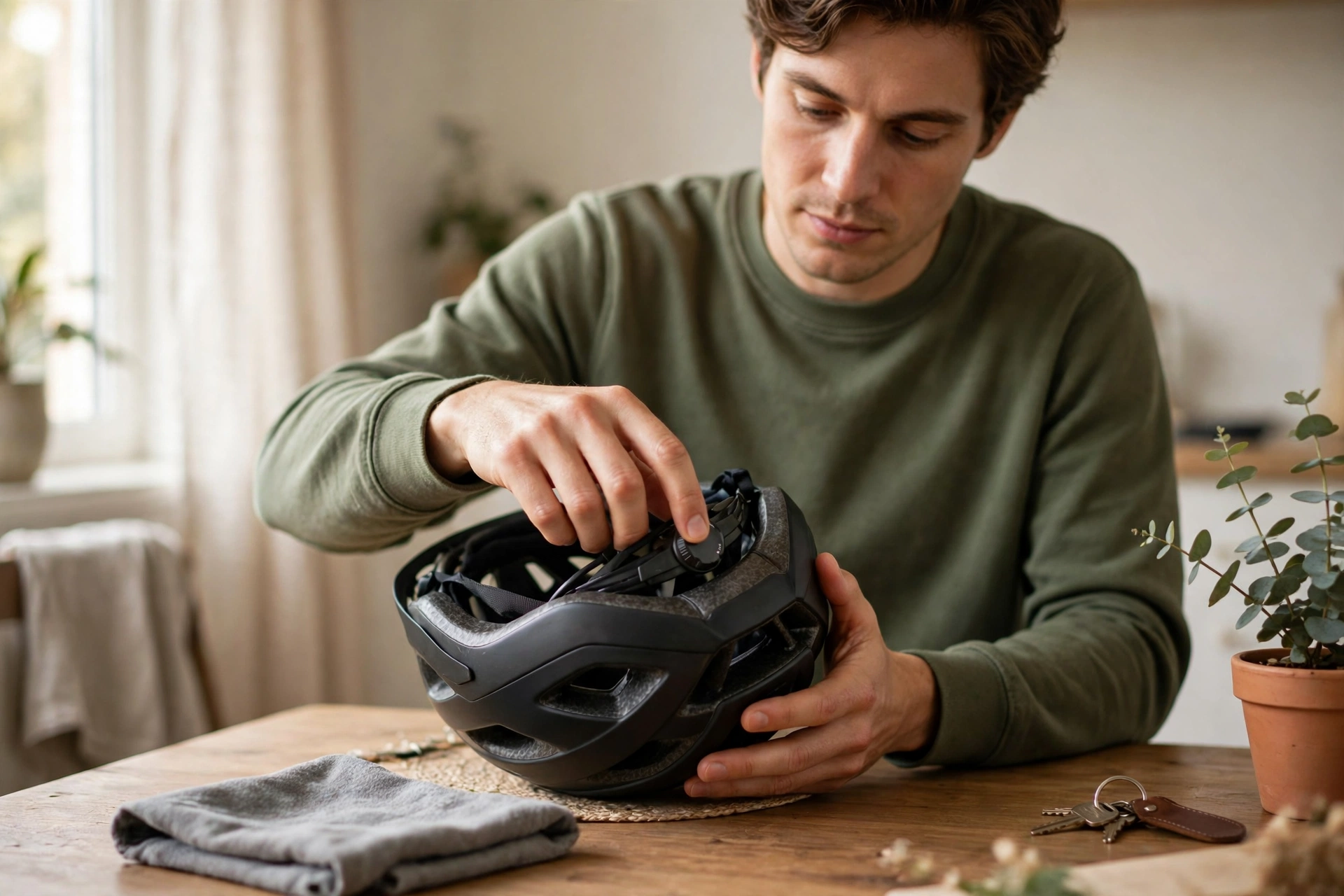
In many cases the fit can be adjusted to stop the pain, and it is worth trying the simple fixes before buying a new helmet. Start by loosening the fitting dial or straps a little, then put the helmet on and sit it level on the head, about two fingers above the eyebrows. The straps should be snug but not tight, and the helmet should not move when the head is shaken. Small changes to the padding can help too, because many helmets come with spare pads of different thicknesses that can be swapped to ease pressure at the front.
The position of the helmet matters as much as the tightness. A helmet worn too far forward presses on the forehead, so lifting the front edge slightly and levelling the helmet can take the pressure off. If the pain fades after these changes, the helmet was simply adjusted badly, and the fix is free. If the pain stays the same after a fair try, the problem is more likely to be size or shape.
Could the helmet be the wrong shape for your head?
The helmet could well be the wrong shape for your head, and shape is the cause that many people miss. Heads come in different shapes, and helmets are made in different shapes too, with some fitting rounder heads and others fitting longer, narrower heads. A helmet made for a round head will press on the forehead and the back of a longer head, while a helmet made for a long head will feel loose at the sides of a rounder head. No amount of adjusting the straps will fix a shape mismatch, because the shell itself is pressing in the wrong place.
The way to check is to try on several different models in the same size and feel how each one sits. The right helmet should touch the head evenly all round, without a hard spot at the front or a gap at the sides. Trying helmets on in a shop, with time to wear each one for a few minutes, is the best way to find the right shape.
When should you replace a helmet that hurts?
A helmet that hurts should be replaced when the pain does not go away after the size, the shape, and the adjustment have all been checked. A helmet that causes a headache on every ride or every working day is not a helmet to keep, because pain is a distraction, and a distracted rider or worker is more likely to make a mistake.
A helmet should also be replaced after a hard knock or a fall, even if it looks fine, because the lining inside may have been damaged. When choosing a replacement, take the time to try on several models and to wear each one for a few minutes before deciding, so the new helmet does not bring the same problem. Riders who want extra protection in a fall may also look for a helmet with a system that helps reduce rotational forces, such as MIPS, which is found in a growing number of helmets made for cycling, work, and sport. The right helmet should feel comfortable from the first wear, not after weeks of putting up with pain.
Is it normal for a new helmet to hurt the forehead?
A new helmet may feel snug at first, but it should not cause real pain. Mild tightness that fades after a few short wears is common, but a headache or a sore spot that stays is a sign the fit is wrong.
Can I add padding to stop the pain?
Yes, in general terms adding or swapping the front padding can help, and many helmets come with spare pads. Padding should ease pressure evenly, not push the helmet into a new position that causes pain elsewhere.
Should I wear a helmet that hurts my forehead?
No, a helmet that hurts should not be worn for long periods, because pain is a distraction and a sign of a bad fit. Adjust it first, and if the pain stays, try a different size or shape.

Olivia
Writer at Helmet Today, covering helmet reviews, fit and riding safety.