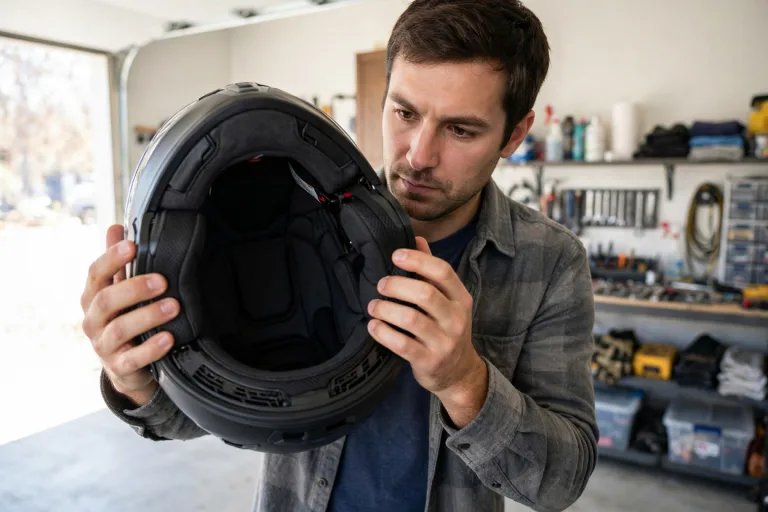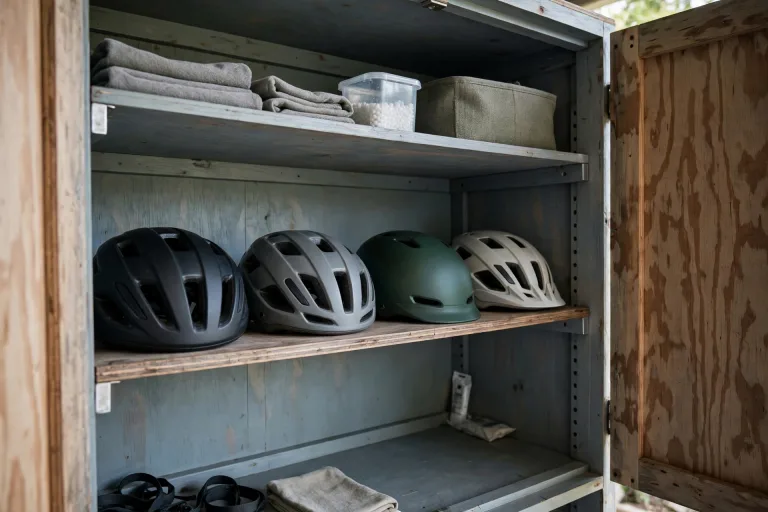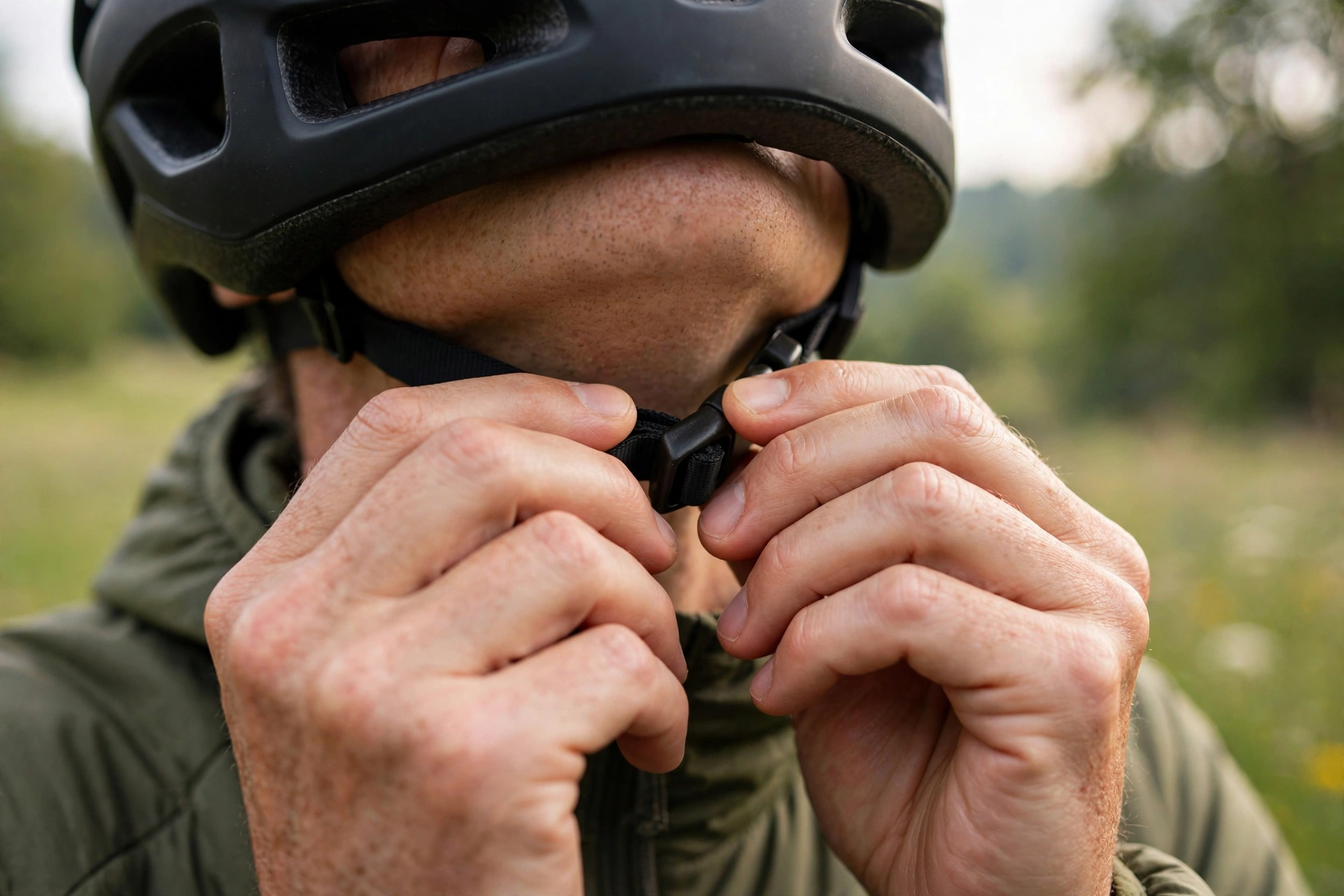
A helmet chin strap lasts, in general terms, for the life of the helmet itself, which for most riders means around three to five years of regular use, but the strap can wear out sooner if it is used hard, left in the sun, or soaked in sweat day after day. The honest answer is that there is no fixed expiry date for a strap, so you should judge it by its condition, not by the calendar alone.
The chin strap is the part of the helmet that keeps it on your head, so it matters more than it looks. A strap that is frayed, stretched, stiff, or has a buckle that no longer holds firmly can let the helmet shift or come off in a fall, and that defeats the purpose of wearing a helmet at all. Because the strap works hard every time you put the helmet on and take it off, it is worth checking it as often as you check the shell and the pads.
How long should a helmet chin strap last?
For most riders, a chin strap should last as long as the helmet, which in general terms means three to five years of regular use. The strap is made from strong woven webbing, and it is designed to cope with daily fastening, pulling, and adjusting. A rider who wears a helmet a few times a week and stores it indoors will usually find the strap still feels strong and secure after several years, even when the pads have started to wear.
Heavy use shortens that life. A helmet worn every day for commuting or work, taken on and off many times a day, puts far more wear on the strap and the buckle than a helmet worn once a week. Sweat is another factor, because salt and moisture left in the webbing can stiffen the fibres and weaken them over time. Sunlight matters too: a helmet left in a hot car or hanging in direct sun can see its strap fade and stiffen, and faded webbing is often weaker webbing.
What makes a chin strap wear out?
Repeated fastening is the main cause of wear. Every time you clip and unclip the buckle, the webbing rubs against the buckle and the adjuster, and over hundreds of uses that rubbing frays the edges of the strap. The part of the strap that passes through the buckle wears fastest, so that is the place to look first when you check it. A strap that has gone thin or fuzzy at the buckle is a strap that has done a lot of work.
Sweat and dirt speed up the wear. A strap that is never cleaned collects salt, skin oils, and road dust, and those deposits make the webbing stiff and rough. Stiff webbing does not slide smoothly through the buckle, so riders pull harder, which wears it faster still. Washing the strap now and then with mild soap and water, and letting it dry naturally, keeps the fibres flexible and helps the strap last longer.
How can you tell if a chin strap needs replacing?
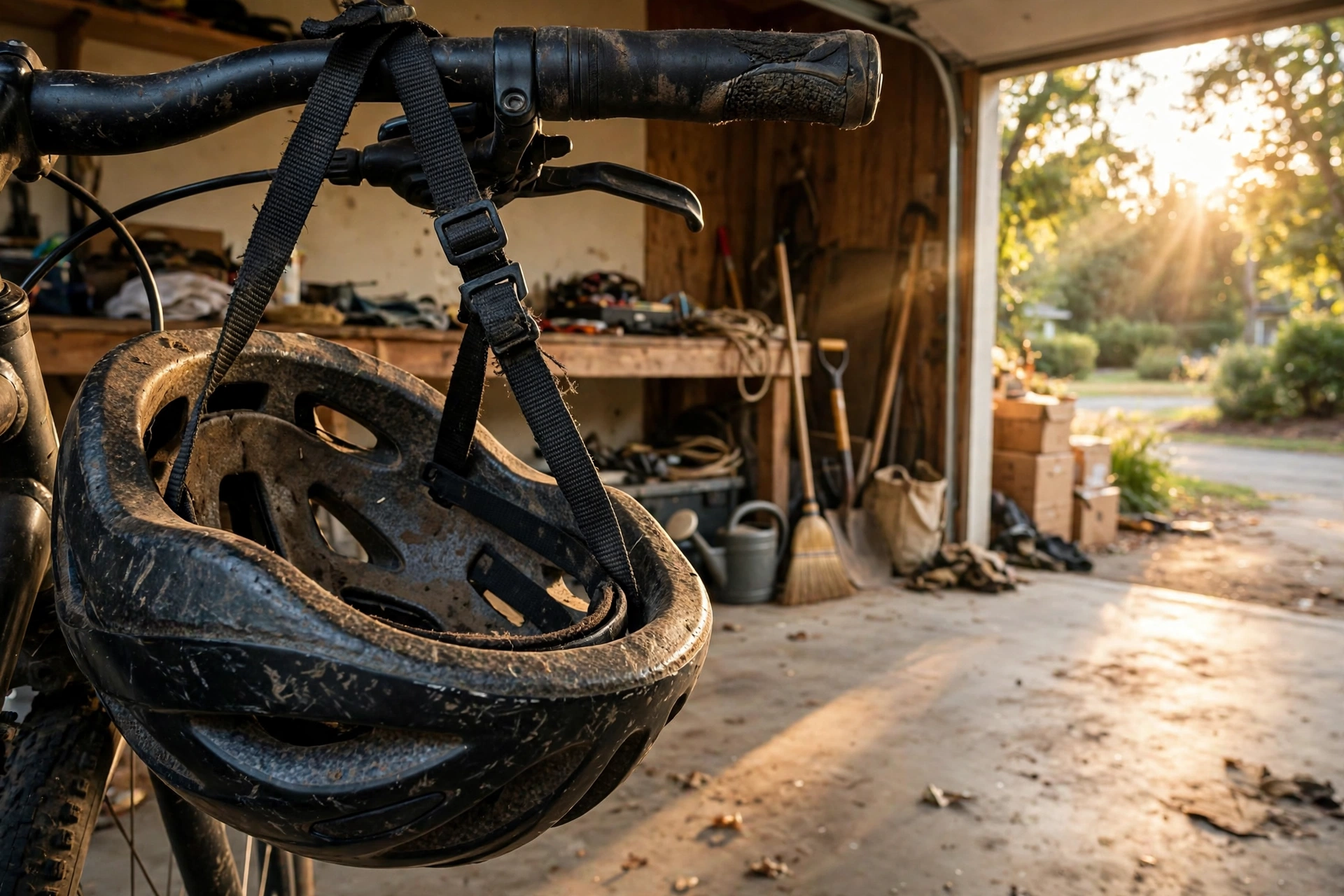
Look at the strap closely in good light. A strap that needs replacing will show clear signs: frayed or split edges, thin patches where the webbing has worn, faded colour, or stitching that has come loose where the strap joins the helmet. Run your fingers along the strap and feel for stiff sections, rough patches, or places where the webbing feels thinner than the rest. Any of these signs means the strap is no longer at its best.
Test the buckle as well. Fasten it and pull firmly on the strap, and check that the buckle holds without slipping. Then unfasten it and fasten it again several times, and listen and feel for a clean, firm click each time. A buckle that feels loose, sticks, or needs force to close may be worn, bent, or full of dirt. Clean it gently first, because grit in the buckle is a common cause of sticking, but if it still feels unreliable after cleaning, the strap and buckle should be replaced.
Can you replace a chin strap on its own?
Whether you can replace a chin strap on its own depends on the helmet. Some helmets have straps that are sewn or riveted into the shell, and on those helmets the strap is not meant to be replaced by the rider. Trying to fit a new strap to such a helmet can weaken the attachment, so the maker will usually advise replacing the whole helmet instead. Other helmets, especially work helmets and some motorcycle helmets, have straps that can be replaced with a spare part from the maker.
If your helmet has a replaceable strap, buy the spare from the maker or an authorised dealer, and follow the maker’s instructions carefully. Use only the part made for your exact helmet model, because a strap from another model may not fit the attachment points or the buckle correctly. Never improvise a strap from ordinary webbing or a spare buckle, because the strength and the attachment of a helmet strap are safety-critical, and a home-made repair may fail when it is needed most.
How should you look after a chin strap?
Looking after a chin strap is simple and takes only a few minutes. After a sweaty ride or a dusty day, wipe the strap with a damp cloth and let it dry naturally away from direct heat. Now and then, wash it gently with mild soap and water, rinse it well, and let it air dry completely before you store the helmet. Never use strong cleaners or solvents on the strap, and never dry it on a radiator or with a hair dryer, because heat can damage the webbing.
Make the strap part of your regular helmet check. Each month, look at the webbing, feel for wear, and test the buckle, just as you would check the shell for cracks and the pads for wear. Riders choosing a new helmet may also want to learn about features that can help in a fall, including a system designed to reduce rotational forces, such as MIPS, which is found in many modern helmets. A strap that is checked often is a strap that will not let you down, and a helmet that stays firmly on your head is a helmet that can do its job.
Does a loose chin strap make a helmet unsafe?
Yes, in general terms a loose chin strap makes a helmet less safe, because the helmet can shift or come off in a fall. The strap should be snug enough that you can fit only one or two fingers between the strap and your chin.
Can sunlight damage a chin strap?
Yes, sunlight can damage a chin strap over time, because ultraviolet light weakens the webbing fibres and fades the colour. Store the helmet out of direct sun to help the strap last longer.
Should I replace my helmet if only the strap is worn?
If the strap is not replaceable on your helmet, then yes, replace the whole helmet. If a maker-approved spare strap is available for your model, fitting that spare is fine, but check the shell and liner for wear at the same time.

Olivia
Writer at Helmet Today, covering helmet reviews, fit and riding safety.