To choose a helmet for a woman, start with fit, because in general terms the best helmet is the one that matches her head size and shape, sits level, and stays comfortable for the whole ride or work session. Women’s helmets are not very different from men’s, but head shape, hair, and comfort matter more than colour or style, so fit should come first.
Helmet shopping can feel confusing, because the choice is wide and the advice is often aimed at men. A woman buying her first helmet may wonder whether she needs a special women’s model, whether her hair will get in the way, and whether a helmet will even be comfortable for a long ride. The good news is that the rules are simple: the right helmet is the one that fits her head, suits the activity, and feels good to wear. Everything else, from colour to extra features, comes second.
Are women’s helmets different from men’s helmets?
Women’s helmets are, in general terms, much the same as men’s helmets, and the main difference is in the sizing and the styling rather than in the protection. Some makers offer women’s models in smaller sizes, with slimmer padding and colours aimed at women, while other makers offer the same helmet to everyone and simply cover a wide range of sizes.
That means a woman does not have to buy a helmet labelled for women. The label is a guide, not a rule, and the fit matters far more than the name on the box. Some women find that a women’s model fits them best, because it suits a smaller head or a narrower shape, while others find that a standard model fits them better. The best approach is to try on helmets from both ranges, in the right size, and to choose the one that feels best, whatever the label says.
How do you measure for a woman’s helmet?
Measuring for a woman’s helmet is simple, and it takes only a soft tape measure and a minute of time. Wrap the tape around the head just above the eyebrows and ears, keeping it level all round, and note the number in centimetres. That number is the head size, and it can be compared with the maker’s size guide to find the right size.
Hair can change the measurement, so it is best to measure with the hair worn as it will be under the helmet. A thick ponytail or a bun can add bulk in one place, so a woman who rides with her hair tied back should measure with it tied back. The tape should sit snugly but not tightly, and the number should be written down before shopping, because it is easy to forget. A helmet bought in the right size from the start is far more likely to fit well than one chosen by guesswork.
What should you look for when trying a helmet on?
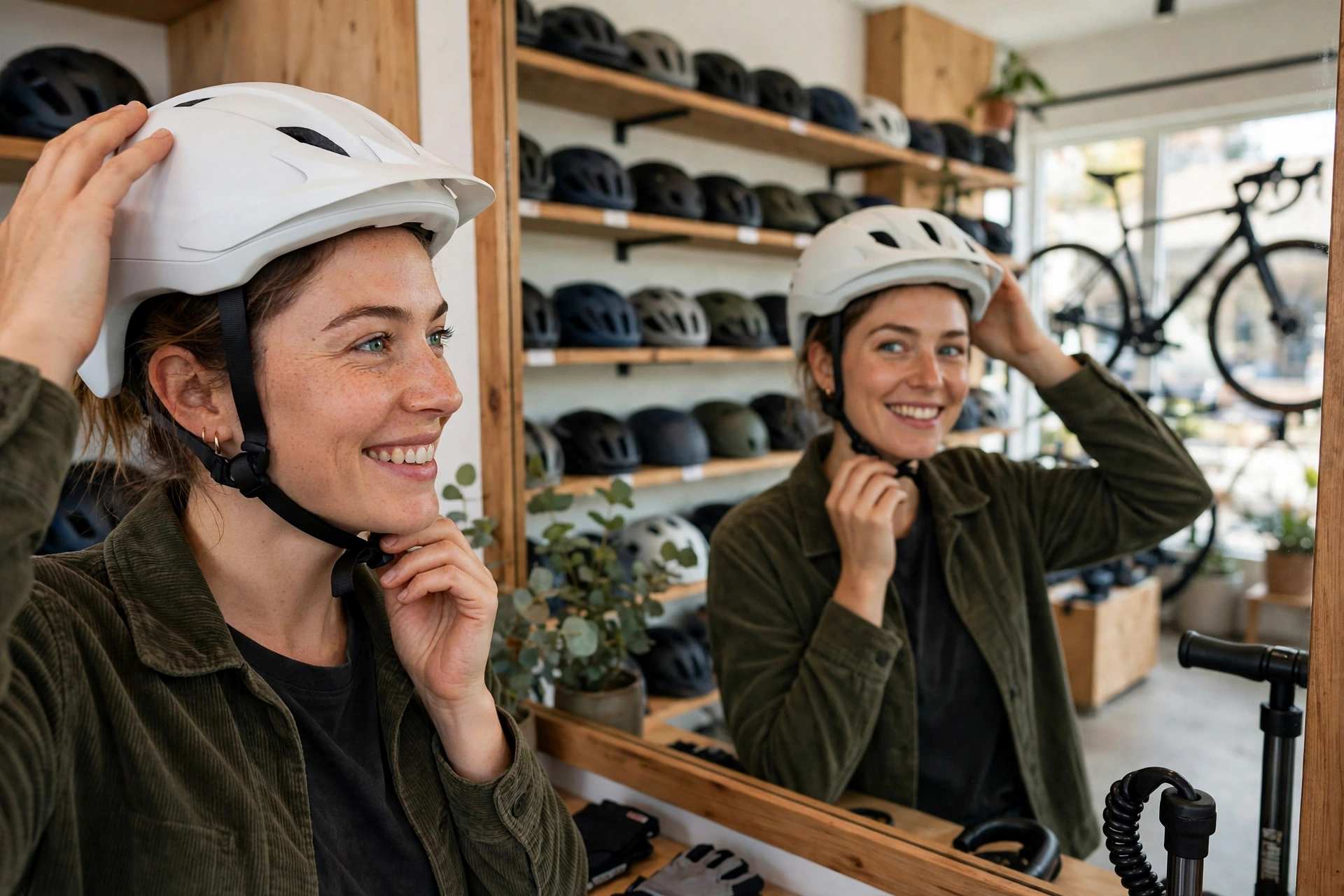
When trying a helmet on, a woman should look for a fit that is snug all round the head, level from front to back, and free of pressure in any one spot. The helmet should sit about two fingers above the eyebrows, cover the forehead without pressing on it, and stay in place when the head is shaken gently. The straps should form a neat shape around the ears, and the buckle should sit comfortably under the chin without pinching. A helmet that wobbles, slips forward, or leaves a red mark is the wrong size or the wrong shape.
Time matters when trying a helmet on. A helmet that feels fine for ten seconds in a shop may start to hurt after ten minutes, so it is worth wearing it for a few minutes before deciding. The helmet should also work with the rest of the kit, including glasses and any ear protection, and it should not catch on earrings or a necklace. A careful try-on is the best way to avoid a helmet that ends up unused.

How does hair affect helmet fit?
Hair affects helmet fit more than many people expect, and it is worth thinking about before buying. Thick or curly hair takes up space inside a helmet, so a woman with a lot of hair may need the next size up, or a helmet with padding that can be adjusted. A low ponytail is usually the easiest style under a helmet, because it sits below the back of the shell, while a high bun can push the helmet forward and change the way it sits. Some helmets have a gap or a channel at the back for a ponytail, and that is a useful feature to look for.
Long hair can also get caught in the straps or the fitting dial, which is uncomfortable and can pull the helmet out of place. A woman with long hair may find it helps to tie the hair back before putting the helmet on, and to check that the straps sit clear of the hair. The aim is a fit that works with the hair as it will actually be worn, not with the hair as it looks in the shop mirror.
What features matter most in a helmet for a woman?
The features that matter most in a helmet for a woman are comfort, ventilation, and a fitting system that is easy to adjust. A light helmet is easier to wear for a long time, and good vents keep the head cool on a warm day. A dial at the back that adjusts the fit with one hand is useful, especially for a woman who wears gloves or who needs to adjust the helmet while riding. The padding should be soft, easy to remove for washing, and thick enough to sit well without pressing on the forehead.
Other features are worth weighing too. A visor can help on a bright day, a mount for a light can help on a dark road, and a helmet in a bright colour can help other road users see the rider. Women who want extra protection in a fall may also look for a helmet with a system that helps reduce rotational forces, such as MIPS, which is found in a growing number of helmets made for cycling, work, and sport. Colour and style are personal choices, and they matter, but they should come after fit, comfort, and safety, not before them.
Do women need a special women’s helmet?
No, women do not need a special women’s helmet, and many women find that a standard helmet fits them best. A women’s model can help when it offers smaller sizes or a shape that suits the wearer, but fit matters far more than the label.
What size helmet should a woman buy?
A woman should buy the size that matches her head measurement, using the maker’s size guide. Measuring around the head just above the eyebrows gives the number to compare, and trying the helmet on is the best way to confirm the size.
Can a woman wear a helmet with long hair?
Yes, a woman can wear a helmet with long hair, and a low ponytail or a braid usually works best. The hair should be worn as it will be under the helmet when the size is measured and the helmet is tried on.

Olivia
Writer at Helmet Today, covering helmet reviews, fit and riding safety.