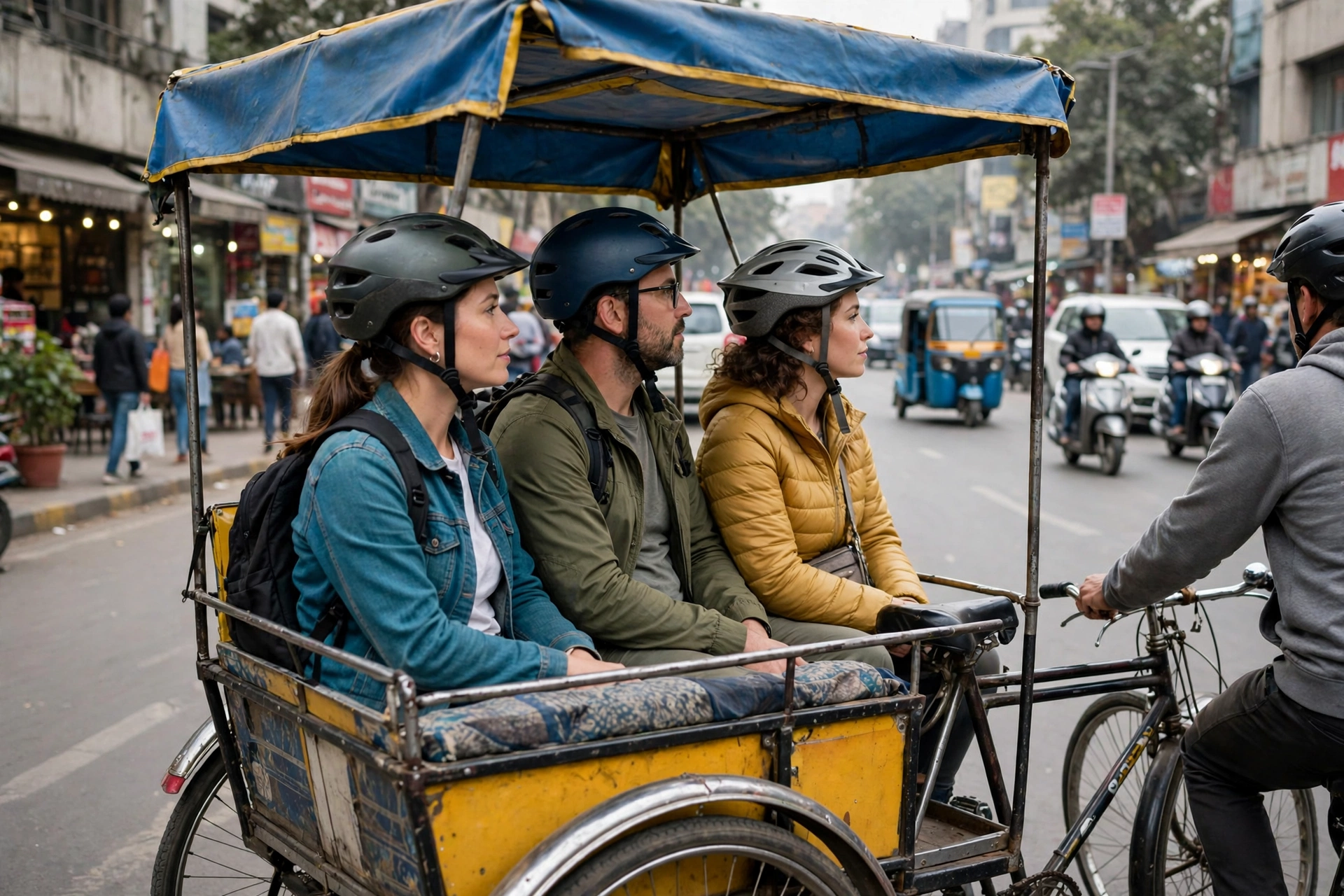
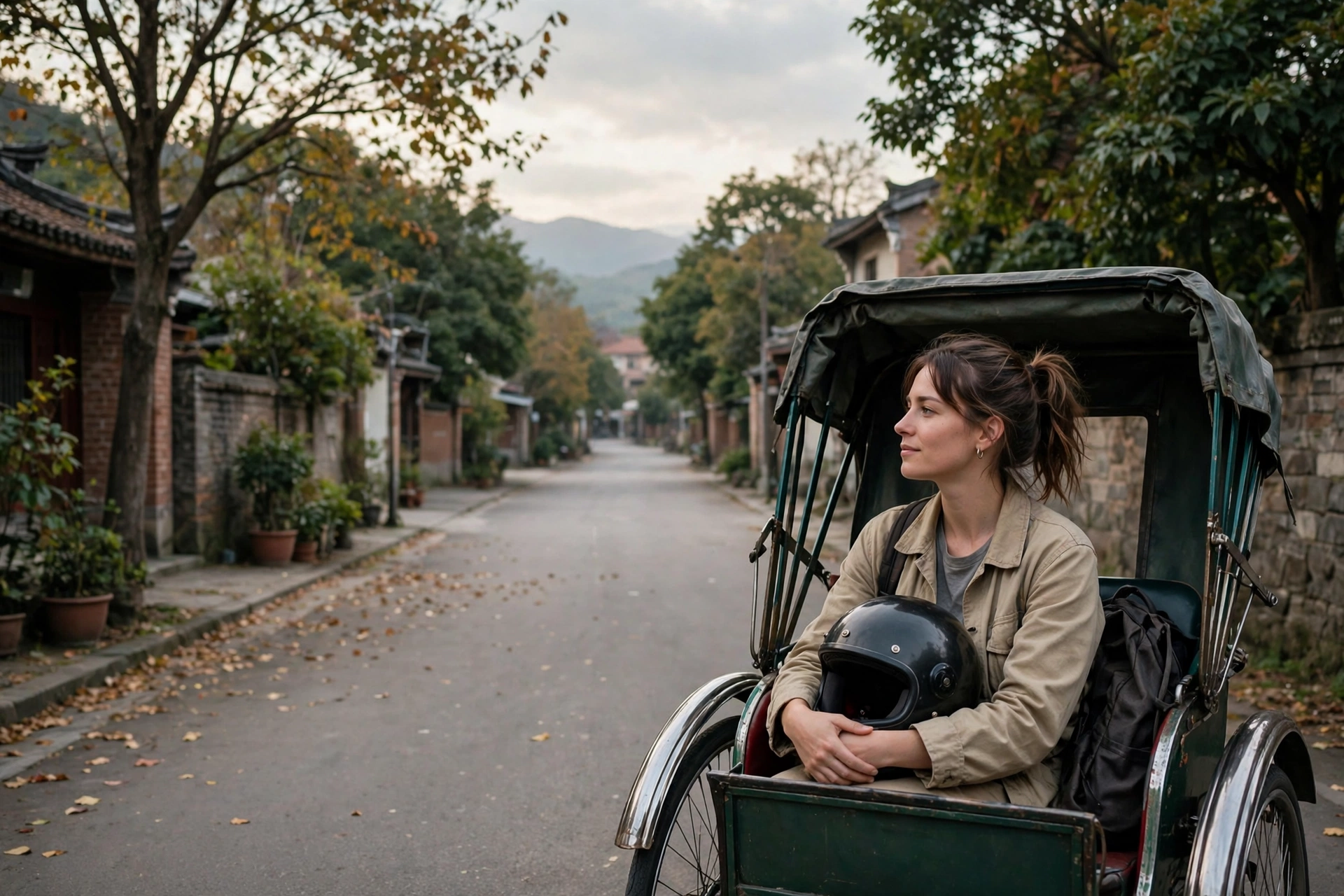
A helmet for rickshaw passengers is a light, well-fitting bike helmet worn by a person riding as a passenger in a rickshaw, to protect the head if the rickshaw stops suddenly, tips, or is hit by another vehicle. In general terms, the passenger sits in an open vehicle with no seat belt and no bodywork around them, so a helmet is the simplest piece of protection they can wear. It is the same kind of thinking that makes cyclists wear helmets, applied to a slower but still exposed ride.
Rickshaws are a familiar sight in many towns and cities, used for short trips to the market, to school, or to the nearest bus stop. The ride feels slow and safe, and most passengers never think about head protection at all. But a rickshaw shares the road with cars, buses, motorcycles, and bicycles, and it can be jolted by a pothole, cut off by another vehicle, or caught in a sudden stop. In those moments, a passenger with nothing to hold on to can be thrown forward or sideways, and the head is the part of the body most at risk.
What is a helmet for rickshaw passengers?
A helmet for rickshaw passengers is, in practice, a standard bicycle helmet: a light helmet with a hard outer shell, a foam lining that absorbs impact, vents for airflow, and an adjustable strap that fits under the chin. In general terms, there is no special helmet made only for rickshaw passengers, so a good bike helmet is the right choice. It should sit level on the head, cover the forehead, and stay in place when the wearer shakes their head gently from side to side.
The reason a bike helmet suits a rickshaw passenger is that the risks are similar to those of a cyclist: a fall from a low height at a low speed, a knock against a hard surface, or a collision with another road user. The helmet is designed for exactly that kind of impact, and it is light enough to wear comfortably on a short trip in warm weather. A heavy motorcycle helmet would be uncomfortable and unnecessary for a rickshaw ride, while no helmet at all leaves the head unprotected in the one place a passenger is most exposed.
Why would a rickshaw passenger wear a helmet?
A rickshaw passenger would wear a helmet because the open design of the vehicle offers no protection in a crash or a sudden jolt. In general terms, the passenger sits on a bench or a seat with no restraint, no airbag, and no roof, and their hands may be full of shopping bags or a child. If the rickshaw brakes hard or swerves, the passenger’s body keeps moving, and the head can strike the frame, the road, or another vehicle. A helmet reduces the force of that strike.
Children are the passengers who benefit most. A child riding in a rickshaw may be sitting on a parent’s lap or on the seat beside them, and a small child’s head is large in proportion to their body and harder to protect in a fall.
What kind of helmet suits a rickshaw passenger?
A light, ventilated bicycle helmet suits a rickshaw passenger best. In general terms, it should be a helmet that meets a recognised bicycle helmet safety standard, fits the wearer’s head size, and has an adjustable strap and a dial or pads at the back for fine-tuning the fit. Bright colours or a light colour help the passenger to be seen by other road users, which matters on a slow, open vehicle that is easy to overlook in traffic.
Fit is more important than price or brand. A helmet that is too big will slide forward over the eyes or slip backwards when the rickshaw jolts, while a helmet that is too small will be uncomfortable and may be left at home. The helmet should sit level, about two fingers’ width above the eyebrows, and the straps should form a neat shape around the ears with the buckle snug under the chin. Some helmets include a system designed to reduce rotational forces in a fall, such as MIPS, which is a useful extra for a passenger who may be thrown sideways in a sudden stop.
Is a helmet required for rickshaw passengers?
In general terms, helmets are not usually required by law for rickshaw passengers, and the rules vary from place to place. Rickshaw passengers are rarely mentioned in helmet laws, which tend to focus on motorcycle riders and, in some places, cyclists. That means wearing a helmet as a rickshaw passenger is usually a personal choice rather than a legal duty, and it is a choice that depends on the road, the traffic, and the passenger’s own judgement about risk.
The absence of a legal requirement does not make the helmet useless. Many safety habits are voluntary: wearing a seat belt in the back seat, holding a child’s hand near traffic, or wearing a helmet on a bicycle where no law requires it.
How should a rickshaw passenger choose and wear a helmet?
A rickshaw passenger should choose a helmet by size first, then by comfort, and then by visibility. In general terms, measure around the head just above the eyebrows, match that measurement to the helmet’s size range, and try the helmet on before buying if possible. The helmet should feel snug all round without pressing painfully in one spot, and it should not rock forward or backward when the head moves. If the helmet has a rear dial, tighten it until the fit feels secure but comfortable.
Wearing the helmet correctly matters as much as choosing it. The strap should be fastened every time, even for a short trip, and the buckle should sit snugly under the chin with room for no more than two fingers between the strap and the chin.
Do rickshaw passengers need a helmet?
In general terms, a helmet is not usually required by law for rickshaw passengers, but a light bike helmet protects the head in a sudden stop, a tip, or a collision, and it is a sensible choice on busy roads and for children.
What type of helmet should a rickshaw passenger wear?
A light, ventilated bicycle helmet that meets a recognised safety standard and fits snugly is the best choice. A heavy motorcycle helmet is uncomfortable and unnecessary for a slow rickshaw ride.
Should children wear a helmet in a rickshaw?
Yes, children benefit most from a helmet in a rickshaw, since their heads are harder to protect in a fall. A properly fitting child’s bike helmet with a snug chin strap is a simple and inexpensive safeguard.

Olivia
Writer at Helmet Today, covering helmet reviews, fit and riding safety.