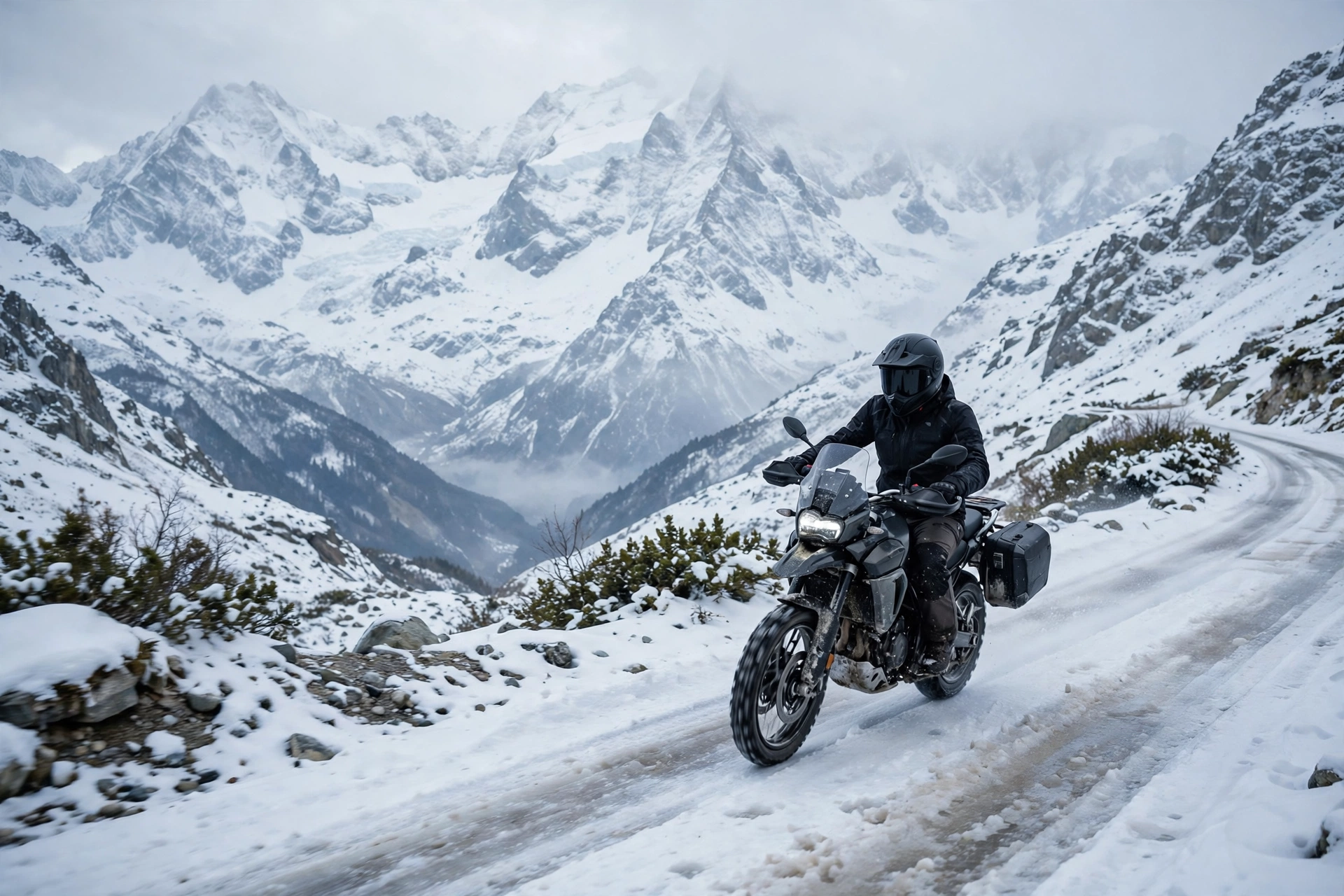
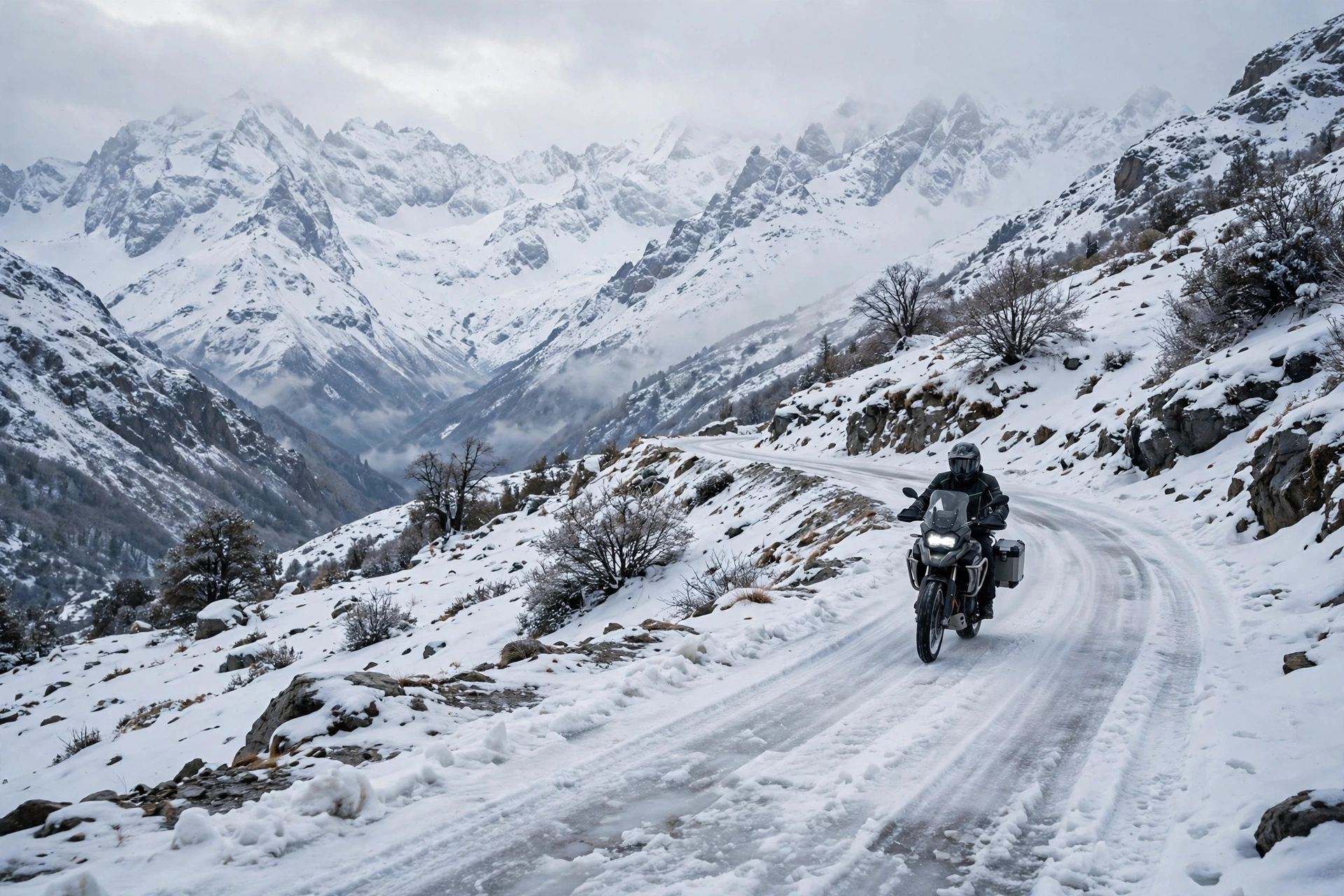
For high-altitude cold, you need a helmet that keeps your head warm, seals out wind, resists fogging, and still fits properly over the thin layers you wear underneath — because at altitude the cold is sharper, the wind is stronger, and the air is thinner than most riders expect. Riding in mountains brings a combination of challenges that do not exist at sea level. Temperatures drop fast as you climb, the wind finds every gap in your gear, and the thin air makes your body work harder while making you feel colder.
This guide explains what to look for in a helmet for high-altitude cold, how to keep warm without losing the fit, and how to deal with fogging, wind chill, and changing conditions. It covers motorcycle, cycling, and snow sports riding in general terms, because the principles are the same even though the helmets differ. Whether you are crossing a mountain pass or riding up to a ski resort, the right helmet setup makes the difference between an enjoyable ride and a miserable one.
Why Is High-Altitude Cold Different for Helmet Wearers?
Altitude changes the cold in two ways. First, the temperature falls as you climb — roughly speaking, it gets noticeably colder with every few hundred metres of height, so a pleasant morning at the bottom of a mountain can become bitterly cold at the top. Second, the wind at altitude is often stronger and more constant, and wind chill strips heat from your head faster than still air ever could. Your head is one of the main places your body loses heat, so a helmet that lets cold air in will leave you chilled within minutes.
Conditions can change very quickly in the mountains. A sunny valley road can turn into a freezing, windy pass in under an hour, and a shower at altitude may fall as sleet or snow even when it is rain lower down. A helmet that works well in mild weather may not cope with that change, which is why planning for the cold before you set off matters more than reacting to it once you are already up there.
What Kind of Helmet Works Best in High-Altitude Cold?
In general terms, a full-face helmet is the best choice for cold at altitude, because it covers your whole head and face and keeps the wind out. For motorcyclists, a full-face helmet with a closable vent system lets you seal the helmet against the cold and open a vent only when you need fresh air. For cyclists, a helmet with fewer vents, or one with vent covers, holds warmth far better than a heavily ventilated summer helmet. For snow sports, a helmet designed for cold weather will already have less ventilation and a warmer lining.
Look for a helmet with a good seal around the visor and a chin curtain, because these stop cold air streaming in from below and around the edges. A helmet with a double-layer or pinlock-ready visor is a real advantage, since it resists fogging far better than a single-layer visor. Some helmets come with a breath deflector — a small shield inside the helmet that directs your breath downwards, away from the visor — and this is worth having in cold conditions.
The lining matters too. A helmet with a thicker, warmer comfort liner will feel much better in the cold than a thin summer liner, and some helmets let you swap the liner for a winter version. If you are learning about the safety systems inside modern helmets, reading about what MIPS is for helmets can help you understand one of the technologies that protects your head in a fall.
How Do You Keep Warm Without Ruining the Fit?
The most common mistake in cold weather is to wear a thick hat or a bulky balaclava under the helmet. A thick layer changes the fit, pushing the helmet up and making it sit too high on your head, which reduces protection and lets cold air in around the edges. The right approach is to wear a thin, close-fitting balaclava or skull cap made from a warm, moisture-wicking material. It should add warmth without adding bulk.
Try the helmet on with the balaclava before you ride. It should still feel snug all round, without pressure points, and it should not rock when you shake your head. If the helmet feels tight with the balaclava on, the answer is not to wear a thinner helmet but to check whether the helmet still fits safely — a helmet that is too tight because of extra layers is not protecting you properly. In general terms, if you need a thick layer to stay warm, you may need a helmet a size up, or a winter liner designed for your helmet model.
How Do You Stop Your Visor Fogging Up at Altitude?
Fogging is the biggest visibility problem in cold weather at altitude, and it happens because your warm breath meets the cold visor and condenses on it. The most effective solution is a pinlock insert, a second layer that sits inside the visor and creates an insulating air gap. Many helmets are sold pinlock-ready, and fitting the insert takes only a few minutes. If your helmet does not support one, an anti-fog coating or spray can help, though it usually needs reapplying.
If the visor does fog up while you are riding, do not try to wipe it with a glove while moving, because you will smear the moisture and scratch the visor. Pull over safely, lift the visor a crack to let fresh air in, and let it clear before you continue. Carry a soft cloth for wiping the visor when you stop. In very cold conditions, the moisture can freeze on the visor, so keeping it clear before you set off is far easier than fixing it on the road.
What Else Should You Prepare for Cold Riding at Altitude?
Your hands and feet feel the cold as much as your head, and cold hands make it harder to control the bike safely. Good gloves and warm, windproof clothing matter just as much as the helmet, and heated grips or heated gloves are worth considering for long mountain rides. Layer your clothing so you can add or remove a layer as the temperature changes on the way up and down.
Plan your route and your fuel with the cold in mind. Mountain roads can close in bad weather, and fuel stations may be far apart, so check conditions before you leave and let someone know your route. Carry extra layers, a charged phone, and some food and water, because a delay in the mountains in cold weather is far more serious than the same delay at sea level. Thin air and cold together can tire you faster than you expect, so plan breaks.
Frequently Asked Questions
Q: Can I wear a balaclava under my helmet in cold weather?
A: Yes, but keep it thin and close-fitting. A thick or bulky layer changes the helmet’s fit and can push it too high on your head, which reduces protection. Try the helmet on with the balaclava before you ride.
Q: What is the best way to stop a visor fogging at altitude?
A: A pinlock insert is the most effective solution, because it creates an insulating layer inside the visor. A breath deflector and a small amount of ventilation also help by keeping moist air away from the visor.
Q: Is a full-face helmet always better in high-altitude cold?
A: In general terms, yes. A full-face helmet covers your whole head and face, seals out wind, and resists fogging better than an open-face helmet. For cycling, a helmet with fewer vents or vent covers gives similar warmth benefits.

Olivia
Writer at Helmet Today, covering helmet reviews, fit and riding safety.