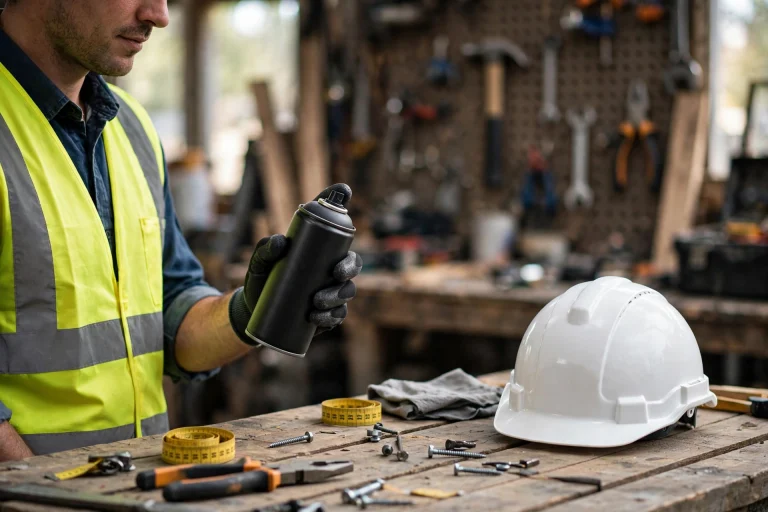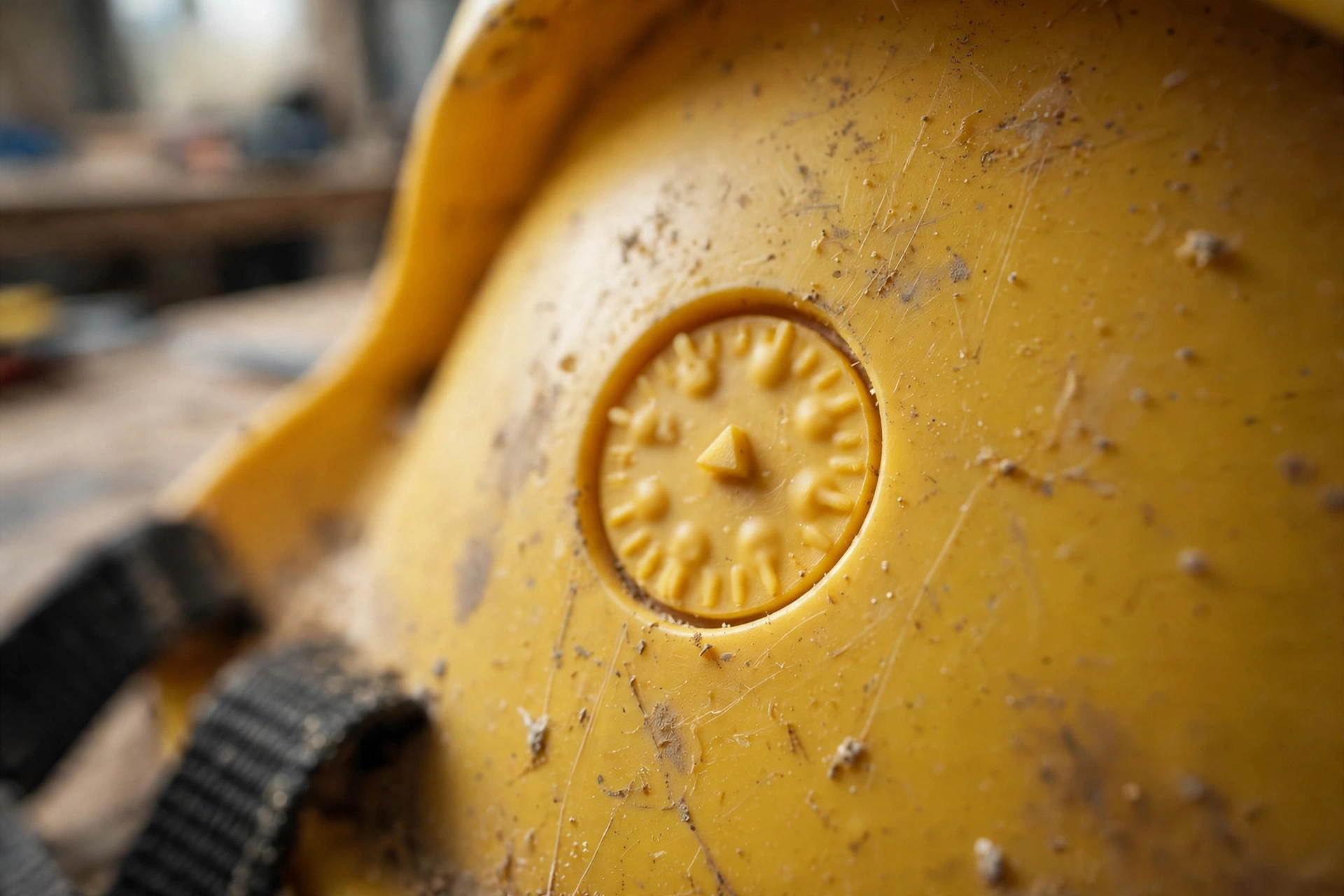
To check a hard hat’s expiration date, look inside the shell for the date of manufacture — usually shown as a circular date wheel stamped into the plastic, with an arrow pointing to the month and a year number in the middle — then add the manufacturer’s stated service life, which in general terms is often around five years from first use for the shell. You will rarely find a printed “expires on” date; the date is worked out from the manufacturing marks plus the maker’s guidance.
Hard hats do not last forever. Sunlight, heat, chemicals and daily knocks slowly degrade the shell and suspension, and a hat that looks fine can be well past the age its maker intended. This guide shows you how to read the stamps inside any hard hat and how to judge when a hat is done, whatever the calendar says.
Where Is the Date Stamp on a Hard Hat?
Turn the hat over and look at the inside of the shell, usually near the center or under the brim. Most manufacturers mould a small circular dial into the plastic. Around the dial are numbers for the months, an arrow points to one of them, and a two-digit number in the center gives the year — that combination is the month and year the shell was made.
Some hats carry more than one dial. A second wheel may show the quarter of the year, or a row of dots may track the weeks. If you are unsure which mark is the manufacturing date, the manufacturer’s website or manual for your model will decode its exact symbols, since the layout varies a little between brands.
You should also find the printed label nearby — maker, model, standard, type and class. If neither the date stamp nor the label can be read, the hat’s age cannot be verified at all, and the honest conclusion is to retire it rather than guess.
How Do You Work Out the Expiry From the Manufacture Date?
Start with the maker’s service-life guidance for your model. In general terms, many manufacturers suggest replacing the shell after about five years in service, and the suspension — the harness inside — much sooner, often around a year of regular use, because it stretches, cracks and absorbs sweat and oils. These are guidelines, not laws, and your employer’s policy may set its own limits.
Count service life from when the hat went into use, not from when it was made. A hat manufactured two years ago but stored properly in its box until last month has most of its life ahead of it; a hat made at the same time and worn daily in the sun may already be finished. That is why some workers write the date of first use inside the hat with a marker — on the label or a dedicated sticker, never scratched into the shell.
If your hat has no record of when it entered service and has clearly been in circulation a long time, err on the side of caution. Hard hats are inexpensive compared with the job they do, and an unknown history is a good enough reason on its own to replace one.
What Else Ages a Hard Hat Besides Time?
Ultraviolet light is the biggest enemy. A hat worn outdoors every day, or stored on a vehicle dashboard or a sunny shelf, can become brittle long before its nominal life ends. Fading, a chalky surface feel, and a shell that has lost its flex are all signs the material has degraded, whatever the date stamp says.
Chemicals come next. Solvents, fuels, some cleaning products and even certain insect repellents and sunscreens can attack the shell material. Stickers and paints matter here too — adhesives and solvents can soften the plastic locally — which is why manufacturers usually restrict what may be applied to a shell.
Heat, cold and knocks add up as well. A hat baked in a hot vehicle, dropped repeatedly onto concrete, or used as a seat, a bucket or a step is living a harder life than the calendar assumes. Age limits are written for hats that have been treated reasonably.
What Signs Mean a Hard Hat Should Be Replaced Now?
Retire a hard hat immediately if you find cracks, dents or gouges in the shell, however small they look. Do the same if the shell feels brittle, flexes oddly, or has a dull, chalky finish. Any hat that has taken a significant impact — a falling object, a fall, a strike from moving equipment — should be replaced even if you cannot see damage, because the shell and suspension may have absorbed energy in ways that do not show.
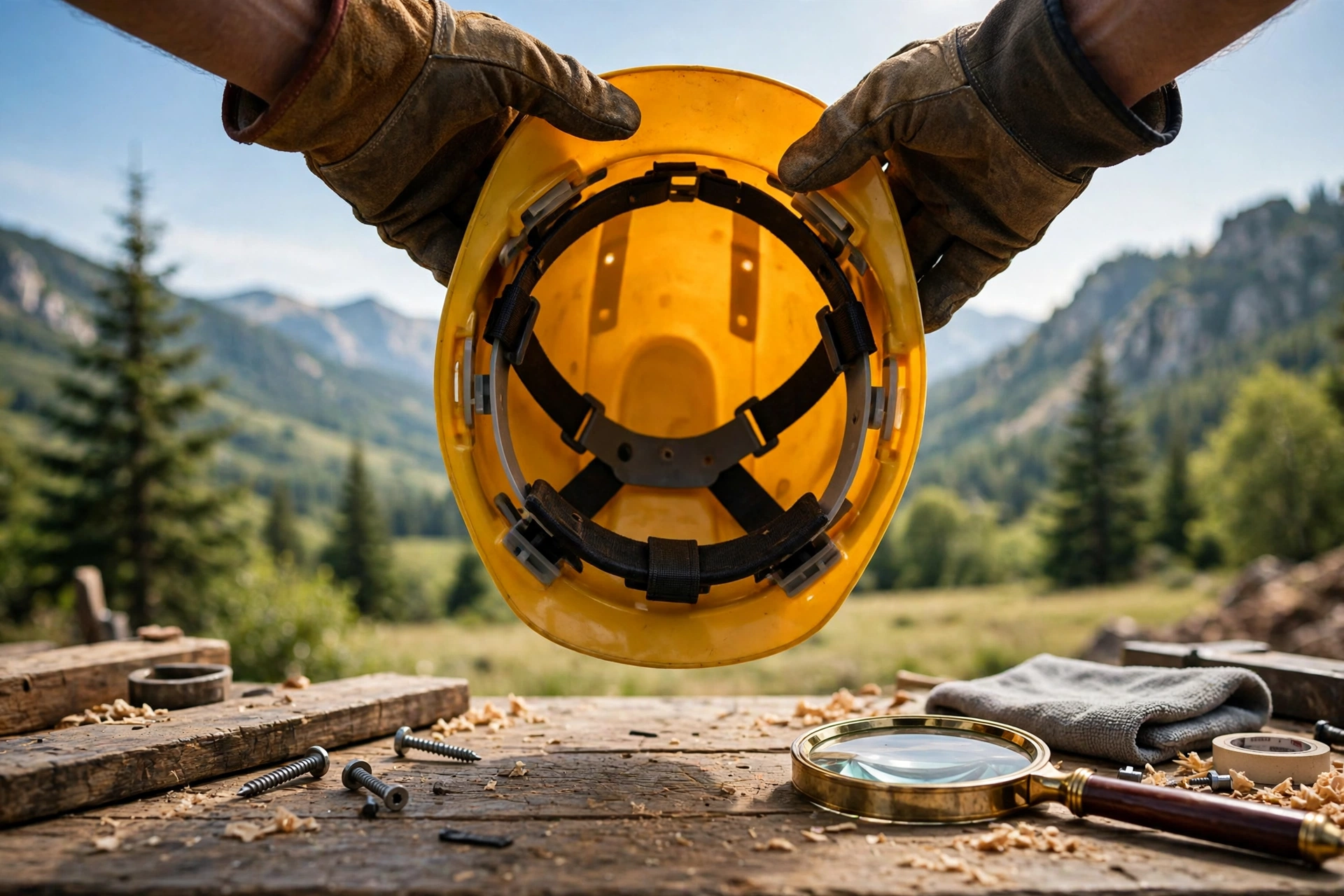
Check the suspension just as carefully. Cracked or brittle plastic parts, frayed webbing, broken attachment points and a harness that no longer holds its adjustment all mean the suspension needs replacing — and since suspensions are cheap and replaceable, this is the one part you should refresh routinely rather than wait to fail.
Treat stickers with suspicion too: never place one where it could hide a crack, and inspect under them from time to time. A hat you cannot fully inspect is a hat you cannot fully trust.
How Should You Record and Manage Hard Hat Dates at Work?
For employers and supervisors, the system matters more than any single check. Record the issue date and wearer for each hat, write the date of first use inside it, and set a reminder based on the manufacturer’s guidance so replacements are planned rather than discovered. Many sites tie hard hat checks into a quick monthly inspection round.
As an individual worker, the habit is simpler: check the stamp when a hat is issued to you, glance at the shell and suspension whenever you clean the hat, and speak up when something looks wrong. A two-minute inspection catches almost every problem on this page.
Every helmet discipline runs on the same principle. Motorcycle and bicycle helmets carry manufacture dates too, and their makers give similar service-life guidance because foam and plastic age in the same ways — our article on what MIPS is and how helmet protection works looks at the liner side of that story. Wherever you wear a helmet, knowing its birthday — and respecting it — is basic maintenance for the thing protecting your head.
Frequently Asked Questions
Q: Do hard hats have a printed expiry date?
A: Usually not. Most hard hats show only the date of manufacture, as a stamped date wheel inside the shell. You work out the end of service life by adding the manufacturer’s guidance — often around five years of use for the shell — to when the hat entered service.
Q: Does a hard hat expire if it has never been worn?
A: A hat stored correctly, in the dark and away from heat and chemicals, ages very slowly and many makers allow a shelf life before use. A hat stored in sunlight or heat can degrade even unworn, so inspect any stored hat before issuing it.
Q: How often should the suspension inside a hard hat be replaced?
A: In general terms, makers commonly suggest replacing the suspension about once a year in regular use, sooner if it is cracked, frayed or no longer holds its adjustment. The shell typically lasts longer; the harness is the wear item.

Olivia
Writer at Helmet Today, covering helmet reviews, fit and riding safety.