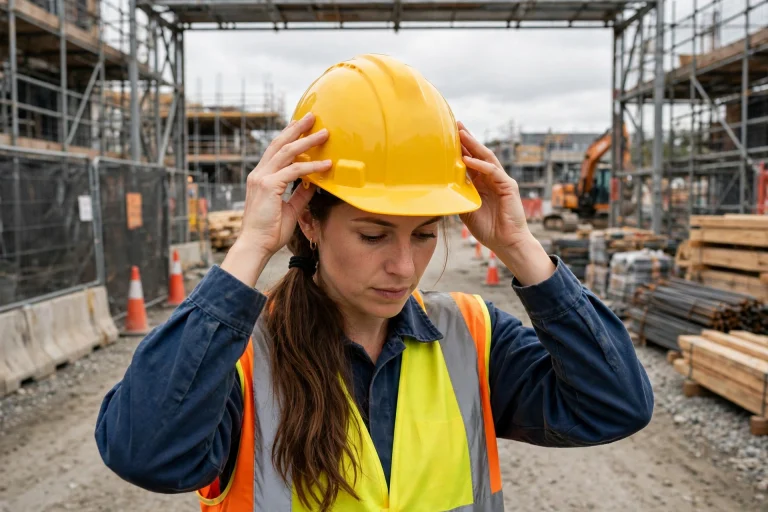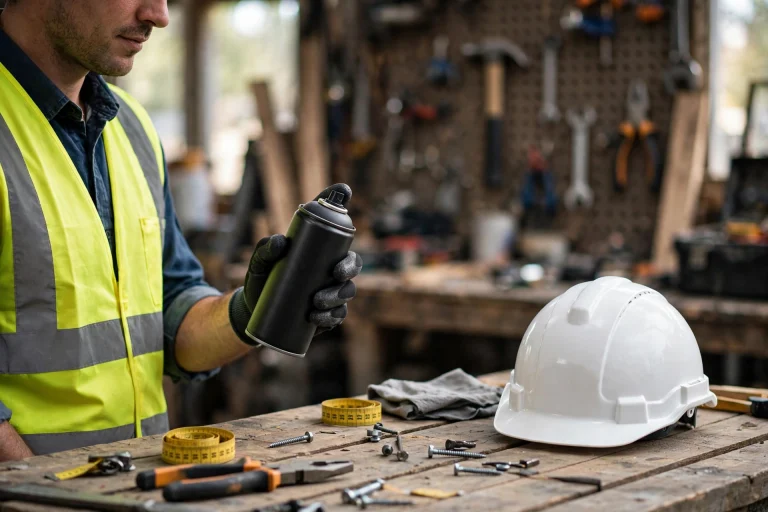
Yes, you can wear a hard hat backwards — but only if the hat is specifically designed and certified for reverse wearing, with a suspension that can be reversed, and only if your site rules allow it. Wearing an ordinary hard hat backwards, with its suspension still facing the wrong way, is not approved and can leave the hat failing to protect you properly. In general terms, “reverse wearing” is a tested feature of certain models, not something any hard hat can do.
Welders, electricians and workers in tight spaces often want the brim at the back so they can see upwards or fit a face shield. The good news is that the industry anticipated them. This guide explains when backwards wearing is legitimate, how to check whether your hat allows it, and the situations where the brim should stay at the front.
Why Do Workers Want to Wear a Hard Hat Backwards?
The usual reason is vision. A standard hard hat’s brim sits over your eyes, which is fine for general work but awkward when the job involves looking up — into a ceiling void, up a structure, along the underside of machinery. Turning the hat around puts the short back edge over the face and clears the view.
Welding is the classic case. A welder needs to flip a welding shield down over the face and get close to the work, and a front brim can foul the shield’s headgear or push it out of position. Electricians working inside cabinets and panels, and mechanics under vehicles, run into the same geometry problem in miniature.
Comfort plays a smaller part. Some workers simply find the reversed position sits better with other equipment, such as headlamps, earmuffs or a respirator. But comfort alone is never the justification — the hat has to be approved for it, which is the subject of the next section.
What Makes a Hard Hat Approved for Reverse Wearing?
Hard hats that may be worn backwards are tested that way. In general terms, the relevant standards allow a hat to be certified for “reverse wearing” when the manufacturer has designed the suspension to be turned around and has had the hat pass its tests in that configuration. These hats are marked accordingly — look for a reverse-wearing symbol or wording on the label inside the hat, typically two arrows showing the permitted orientations.
The design detail that matters is the suspension. In a normal hat, the harness and sweatband are arranged for front-to-back orientation. A reverse-donning model lets you remove the suspension, rotate it 180 degrees, and refit it so the sweatband is still against your forehead when the shell is turned. Wearing the shell backwards over an unreversed suspension leaves the wrong parts against your head and the energy-absorbing geometry wrong.
If your hat’s label shows no reverse-wearing mark, assume it is a front-only hat. That covers the large majority of basic hard hats on general construction sites.
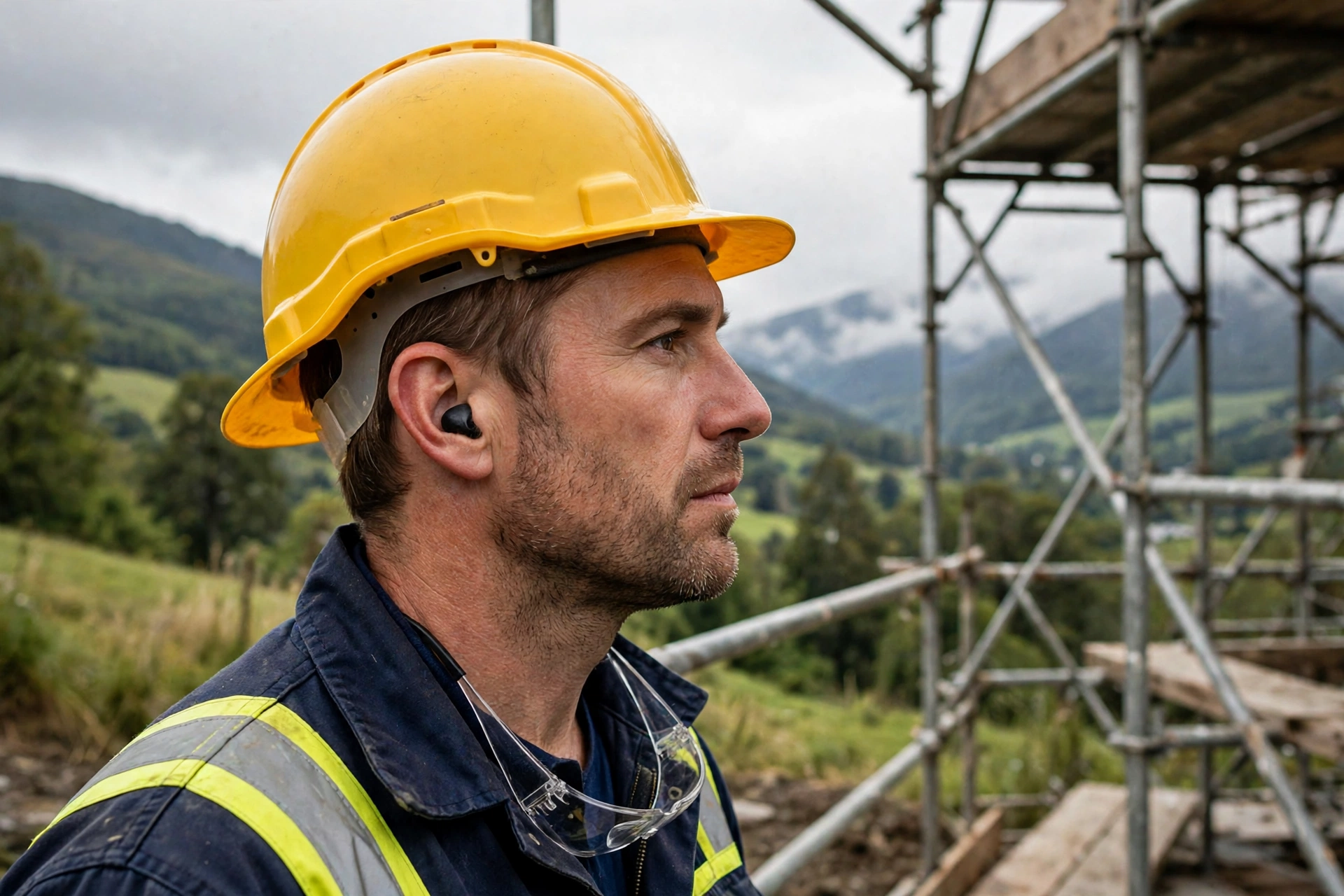
How Do You Wear a Hard Hat Backwards Correctly?
First, confirm the marking. Check the label inside the shell for the reverse-wearing indication, and check your site rules at the same time, because an employer can insist on forward wearing even for a hat approved to reverse.
Second, reverse the suspension, not just the shell. Take the harness out as the manufacturer instructs, turn it so the sweatband will sit on your forehead with the shell reversed, and refit it securely at every attachment point. Then put the hat on, adjust the fit as you normally would, and make sure it sits level and snug — a reversed hat should feel as stable as a forward one, with no wobble when you shake your head.
Finally, check the combination with everything else you wear. If the reason for reversing was a welding shield or face shield, test the two together before starting work: the shield should flip and sit without catching, and the hat should not be pushed up or tilted by the shield’s headgear.
When Should a Hard Hat Stay Facing Forwards?
Keep the brim at the front whenever your hat is not marked for reverse wearing — which, again, is most hats. Keep it forward, too, when falling-object protection over the face and the shading of the brim are part of the job, such as general outdoor site work where the brim shields your eyes from sun and your face from drips and debris.
Full-brim hats deserve a special mention: reversing one gains you nothing in vision, since the brim is the same all the way around, and it can disturb how accessories like earmuffs and chin straps were fitted. Cap-style hats with accessory slots are likewise designed around a front.
And if a supervisor or site rule says forward, that settles it. Site identification schemes sometimes rely on brim direction more than you would expect, and arguing the point at the gate helps nobody. If your work genuinely needs the reversed position, raise it through your supervisor and get a certified reverse-wearing model issued.
Does Wearing a Hard Hat Backwards Reduce Its Protection?
On a hat certified for reverse wearing, with the suspension correctly reversed, no — the hat has been tested in that position and performs as designed. On any other hat, the honest answer is that it is untested: the shell’s shape, the brim’s coverage and the suspension’s geometry were all arranged for the forward position, and nobody can tell you exactly how a backwards one will behave in an impact.
Fit is the other half of the question. A hat worn backwards over an unreversed harness tends to sit higher, looser and less level, and a badly seated helmet of any kind protects badly. Impact systems only work as tested when the equipment sits as intended — the same reason cycling helmets depend on correct position and strap adjustment, and why technologies like the rotational protection explained in our guide to what MIPS is in a helmet assume a properly fitted helmet to begin with.
So the rule is short: backwards is fine when the hat, the harness and the site all say so — and not a moment before.
Frequently Asked Questions
Q: How can I tell if my hard hat can be worn backwards?
A: Look at the label inside the shell for a reverse-wearing mark — typically a symbol with arrows indicating the hat is approved in both orientations — or check the manufacturer’s instructions for your model. No mark means front only.
Q: Do I need to turn the suspension around too?
A: Yes. On approved models the suspension is designed to be removed and refitted the other way round, so the sweatband stays on your forehead. Simply flipping the shell over an unreversed harness is not correct reverse wearing.
Q: Why do welders wear their hard hats backwards?
A: So the brim does not interfere with the welding shield and they can see the work at close range. Welders who do this should use a hat certified for reverse wearing, often combined with a shield mounted to suit that position.

Olivia
Writer at Helmet Today, covering helmet reviews, fit and riding safety.