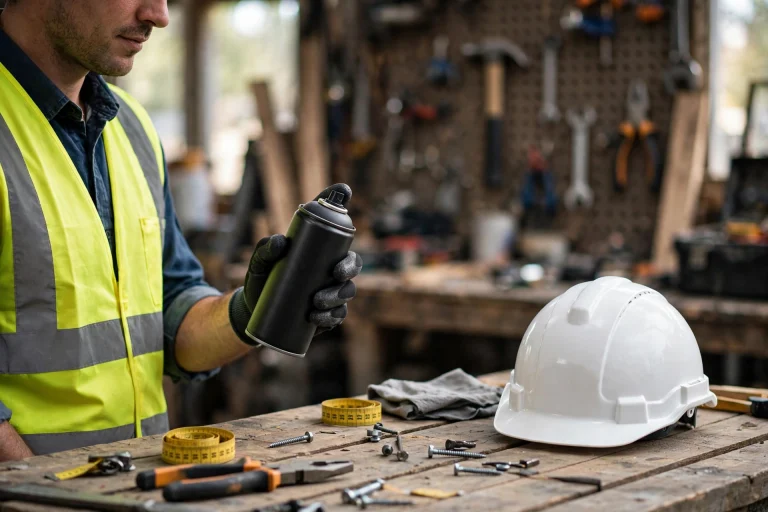
Stickers on a hard hat are generally safe if you use helmet-safe vinyl stickers sparingly, keep them away from the edges of the shell, and never let them cover damage — but in general terms some manufacturers and sites restrict or ban them, because certain adhesives and solvents can attack the shell material and any sticker can hide a crack. Your employer’s policy and the hat maker’s guidance always come first.
Hard hats everywhere carry union badges, training stickers, first-aider markers and the odd personal touch. The practice is mostly harmless and sometimes genuinely useful for identification, but it has real limits. This guide explains where the risks actually lie and how to sticker a hat without weakening it or failing an inspection.
Can Stickers Actually Damage a Hard Hat Shell?
They can, though the risk depends on the sticker. The concern is chemistry: some adhesives, and the solvents in some paints and marker pens, can react with the plastics most hard hat shells are made from, softening or embrittling a small patch of shell over time. A softened patch is exactly where you do not want weakness if something falls on it.
Modern vinyl safety stickers made for helmets are formulated to avoid this, and in normal use a few of them on a shell cause no measurable harm. The problems come from the unregulated end of the drawer — old stickers with aggressive glue, industrial labels never meant for plastic, paint pens, and solvent-based markers scrawled directly onto the shell.
Metallic and foil stickers raise a separate issue on electrically rated hats: anything conductive stuck to the shell is a bad idea on a hat whose class depends on insulation, and reflective metallic tape is best kept off Class E hats altogether.
Why Do Stickers Cause Problems at Inspection Time?
The bigger everyday problem is not chemistry but concealment. A hard hat must be inspected for cracks, dents and gouges, and a sticker makes a perfect hiding place for exactly the damage an inspection is meant to find. A shell can crack underneath a badge and nobody sees it until the hat fails or an inspector goes looking.
For that reason, many safety officers take a dim view of heavily stickered hats, and some sites limit stickers to a small number, to particular positions, or to approved types only. Others ban personal stickers entirely while issuing official ones — for first aiders, fire marshals, new starters or permitted tasks — precisely because those have to be visible and controlled.
If you are ever handed a second-hand hat covered in stickers, treat it with suspicion. Peel back anything that looks like it might be covering a blemish, or simply decline the hat: you cannot verify the condition of a shell you cannot see.
What Are the Rules for Placing Stickers Safely?
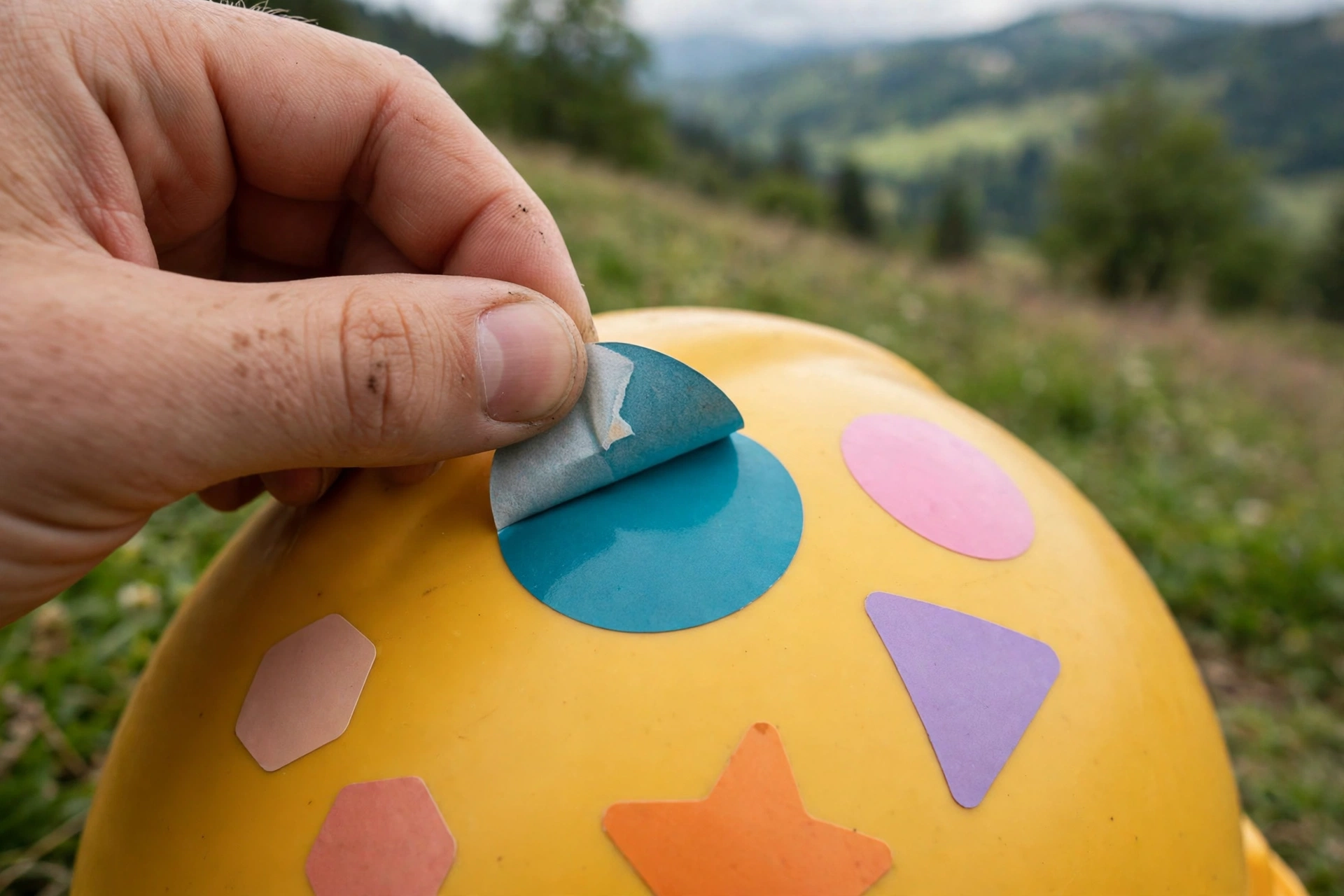
Keep stickers on the shell’s sides, in the open areas away from the brim edge, the crown and any vents or accessory slots. Manufacturers commonly suggest keeping a small margin — in general terms, at least a finger’s width or so — from the edge of the shell, because the brim area is where flexing and stress concentrate and where damage most needs to stay visible.
Use fewer, larger stickers rather than a collage. Each sticker is one more patch of shell you cannot inspect, so the total covered area is what matters. Never sticker over any existing mark, scuff or suspect spot “to tidy it up” — that converts a cosmetic question into a safety one.
Only use stickers intended for helmets or smooth plastics, press them onto a clean shell, and never use paint, correction fluid or solvent markers on the shell itself. If you need to write your name on your hat, write it on the label inside or on a sticker, not on the plastic.
How Do You Remove Stickers Without Harming the Shell?
Peel them slowly, warming them gently with your hands or warm air from a distance if they resist. The temptation is to reach for a solvent or adhesive remover, but that is precisely what the shell does not need — strong solvents can attack the plastic you are trying to protect.
For sticky residue, warm soapy water, patience and a fingernail or a soft plastic scraper are the safe tools. A little vegetable oil on a cloth can help lift glue, washed off afterwards with soapy water. Never use a metal blade, which can gouge the shell and create the very damage inspections look for.
When a sticker comes off, inspect the shell underneath it before doing anything else. Look for cracks, discoloration or a soft or rough patch where the adhesive sat. If the surface underneath looks or feels different from the rest of the shell, show the hat to your supervisor rather than covering the spot again.
What Does Your Employer or the Manufacturer Say?
In general terms, manufacturer guidance is cautious but not absolutist: most makers acknowledge that helmet-safe stickers exist, warn against adhesives and paints that can damage shells, and remind users that the shell must remain inspectable. Where a maker’s instructions for your model ban stickers outright, that instruction rules — it is part of the conditions the hat was certified under.
Employer rules sit on top of that, and they vary from sites that hand out official stickers freely to sites that allow none at all. Since the employer is responsible for the PPE system, their rule is the one you work to, even if it is stricter than the science strictly requires.
Think of it the way other helmet users do. Cyclists are told not to paint or modify helmets because solvents and heat can damage protective foam — the liner technologies described in our guide to what MIPS is and how it works only perform as tested in an unmodified helmet. Hard hats are tougher, but the principle is identical: keep the protective shell in the condition it was tested in, keep it inspectable, and identification stickers stay a convenience instead of a risk.
Frequently Asked Questions
Q: Can stickers void a hard hat’s certification or warranty?
A: They can if the manufacturer’s instructions prohibit them or if a sticker’s adhesive has damaged the shell. Using helmet-safe stickers in line with the maker’s guidance and your site rules keeps you clear of that problem.
Q: How many stickers are too many?
A: There is no universal number — the test is whether the shell can still be properly inspected. A few official stickers on the sides are normal on most sites; a shell plastered edge to edge cannot be checked for cracks and will fail most inspections.
Q: Are reflective stickers a good idea on a hard hat?
A: Plain reflective vinyl can help visibility in low light and is popular for night and road work. Avoid metallic or foil types on electrically rated hats, keep them away from the shell edges, and follow the same placement rules as any other sticker.

Olivia
Writer at Helmet Today, covering helmet reviews, fit and riding safety.