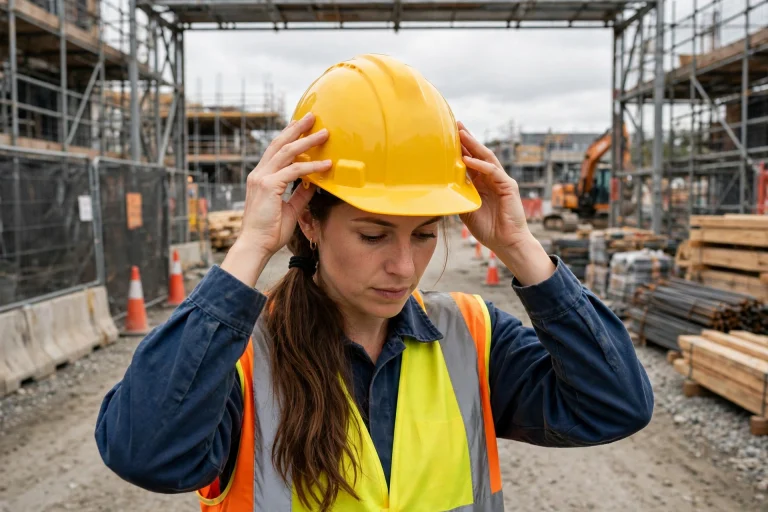
Replace a hard hat after any significant impact — a falling object that strikes it, a fall in which your head hits the ground or a structure, or a blow from moving equipment — even if the hat looks completely undamaged. In general terms, a hard hat that has done its job once should be treated as finished, because the shell or suspension may have absorbed energy in ways you cannot see. When in doubt, take the hat out of service and let a supervisor or safety officer decide.
This is one of the clearest rules in head protection, and one of the most often bent, because a hat that has just saved someone usually looks fine. This guide explains how to judge an impact, what to inspect, and what to do with the hat afterwards.
What Counts as a Significant Impact?
Think in terms of events, not just visible damage. A tool, fitting or lump of material falling from height and striking the hat counts. You falling — from a ladder, off a platform, or even tripping hard onto concrete or steel — counts. Being struck by a swinging load, a vehicle mirror, an excavator counterweight or anything else moving at head height counts.
The common thread is energy. Your hard hat protects by managing a dose of it: the shell resists penetration and spreads force, the suspension stretches and, in some designs, small plastic components are designed to deform or break to absorb the blow. Those components do not reset. A suspension that has stretched to absorb one impact has less to give for the next one.
Small events sit at the other end of the scale. Brushing a door frame, tapping a low beam at walking pace, or the hat slipping off your head onto grass are not the impacts this rule is about — though each is a good prompt to give the hat a thirty-second look over.
Why Should a Hard Hat Be Replaced Even If It Looks Fine?
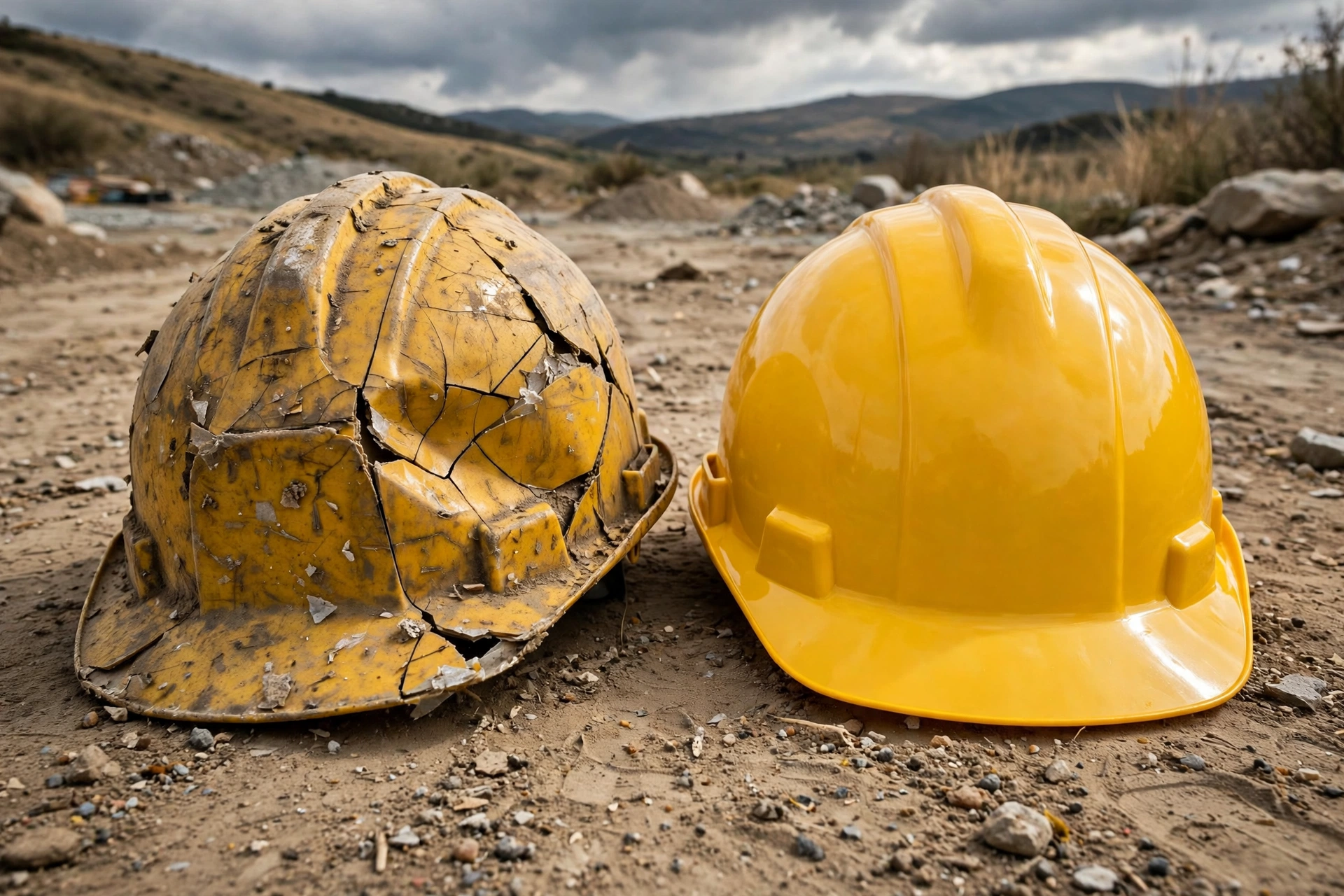
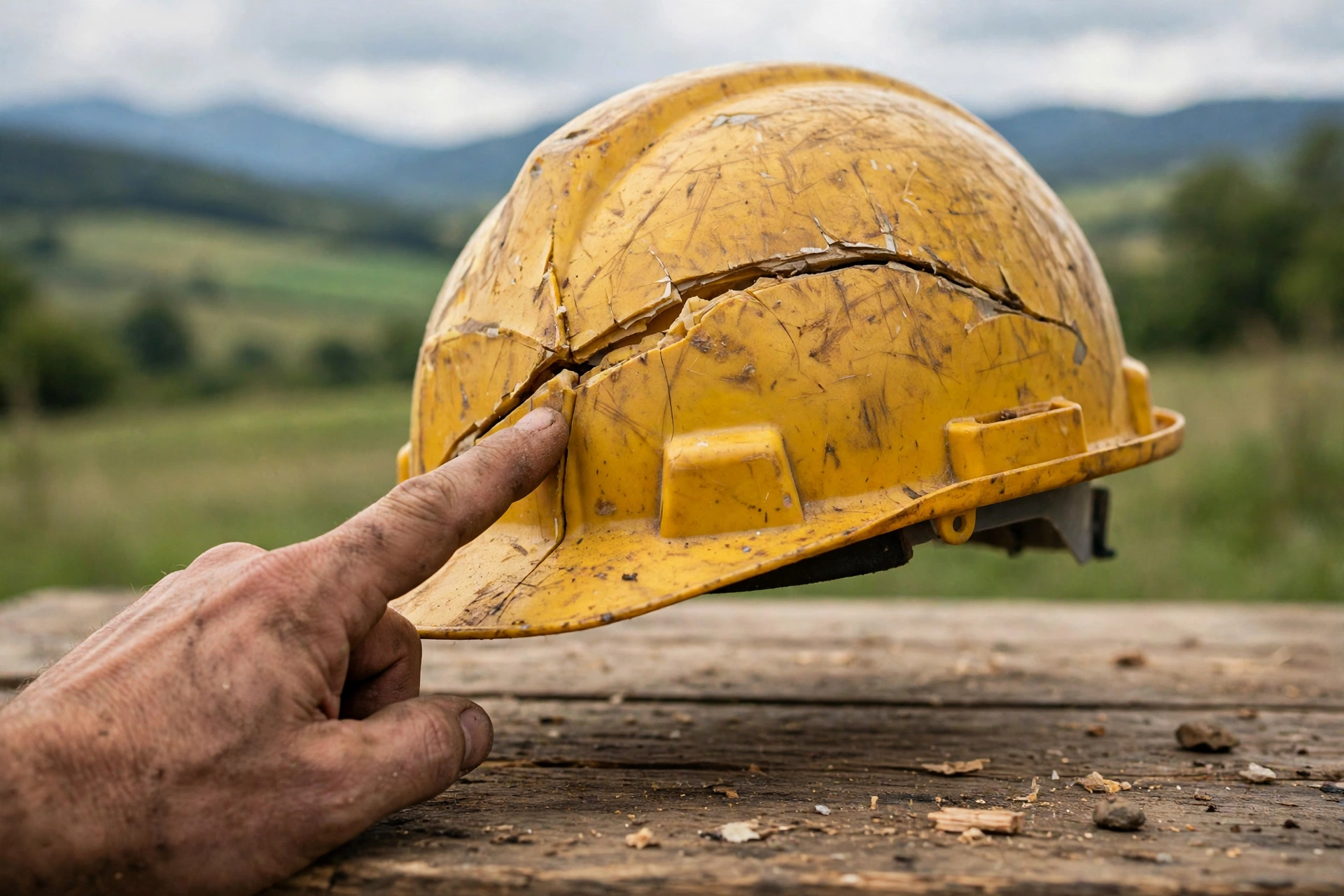
Because the damage that matters is often invisible. A shell can develop fine cracks in the material that do not show on the surface, or take a set that reduces the vital gap between shell and head that the suspension maintains. The suspension itself can crack at its attachment points or stretch at the key slots, none of which is obvious in a quick glance.
Manufacturers and safety bodies are consistent on this point in general terms: a hat that has sustained a significant blow should be withdrawn. The hat is proof-tested as a new article; nobody can re-test the one in your hand on site, so the only safe assumption after a real impact is that its protective capacity is spent or reduced.
There is also a fairness argument supervisors use: hard hats are among the cheapest pieces of safety equipment on any site. Retiring one early costs very little. Debating whether a struck hat “still looks okay” risks a great deal for a very small saving.
How Should You Inspect a Hard Hat After Any Knock?
Take the hat off, take it to good light, and work around it slowly. Look over the whole shell for cracks, dents, gouges, deep scratches and any pale stress marks in the plastic. Run your fingers over suspect areas — a crack you cannot see can often be felt. Flex the shell very gently; a healthy shell feels uniformly springy, while a damaged one may feel soft or creaky in one spot.
Then remove the suspension and inspect it separately. Check every strap for fraying or stretching, every plastic part for cracks, and the attachment points where the harness clips into the shell. Squeeze and tug each fixing. If any part of the suspension is damaged, the good news is that suspensions are replaceable on their own — provided the shell itself is sound and the impact was minor.
Check under stickers and around the brim edge and accessory slots, the places cracks like to start and hide. If anything about the hat makes you hesitate, that hesitation is your answer: withdraw it and report it.
What Should You Do With a Hard Hat After a Serious Impact?
Report it and hand it in. Tell your supervisor what happened — every impact significant enough to retire a hat is significant enough to be recorded, and the report protects the next person as much as you. Your employer should issue a replacement before you return to the task, not after the paperwork.
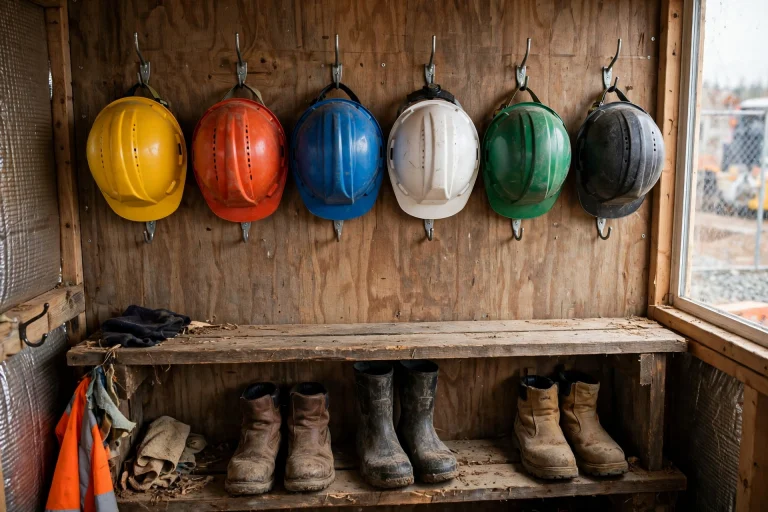
Do not pass the hat on, lend it, or keep it as a spare. Retired hats should be taken out of circulation decisively: many sites cut the suspension or mark the shell so a withdrawn hat cannot drift back into use, because a damaged hat on a peg looks exactly like a good one.
If the impact involved an injury, however minor it seems, follow your site’s first aid and reporting procedure as well. Head impacts deserve medical attention in their own right; the hat’s fate is the second question, not the first.
Do Minor Bumps Mean a Hard Hat Can Stay in Service?
Usually, yes — hard hats are work equipment and are built to survive the small knocks of a working day. The dividing line is whether the event could plausibly have damaged the shell or suspension: a genuine blow from a falling or moving object, or your own fall, is over the line; incidental contact at walking pace is not.
Build the habit of inspecting rather than assuming. A quick shell and suspension check after any knock sorts the trivial from the serious far better than a rule of thumb, and a monthly once-over catches the cracks, fading and wear that end a hat’s life without any single dramatic event.
The same replace-after-impact logic runs through every kind of helmet. A bicycle helmet that has been in a crash is retired even when the shell looks intact, because its foam liner has crushed to absorb the blow — the impact systems discussed in our explanation of what MIPS is in a helmet are designed around a liner that does its job once. Hard hats differ in construction, but the honesty is the same: protection that has been used up should be replaced, not trusted twice.
Frequently Asked Questions
Q: My hard hat fell off a scaffold but did not hit anyone. Should I replace it?
A: Inspect it carefully. A hat that has fallen a long way onto a hard surface may have cracked on landing. If you find any crack, dent or damaged fixing, retire it; if it dropped only a short distance onto a soft surface and passes a thorough inspection, it can usually stay in service — ask your supervisor if unsure.
Q: Can I just replace the suspension after an impact?
A: Only if the shell is confirmed sound and the impact was minor. The suspension is a replaceable wear part, but after a significant impact the shell may be compromised too, and the whole hat should be withdrawn rather than rebuilt.
Q: Who pays for a replacement hard hat after an impact?
A: In general terms, protective equipment is the employer’s responsibility to provide and replace, and a hat retired after doing its job is a normal cost of work. Report the impact and you should be issued a new hat before returning to the task.

Olivia
Writer at Helmet Today, covering helmet reviews, fit and riding safety.