To choose a helmet for canyoning, pick a watersports-rated helmet that fits snugly enough to stay on under waterfalls, drains water fast instead of holding it, carries a certification label suited to whitewater use, and has no brim or fittings to snag when you are sliding, jumping, and abseiling through the canyon. Canyoning mixes swimming, climbing, and falling water in one sport, so the buying decision is about how a helmet behaves when wet, vertical, and knocked about — all at the same time.
This guide walks through the actual buying decision: fit, drainage, the label, and the features that matter for waterfalls and rappels.
What Should You Check First When Buying a Canyoning Helmet?
Start with intended use, stated plainly on the product. A canyoning helmet should be sold as a watersports or whitewater helmet, built for repeated immersion, swims, and slides. A pure climbing helmet is made for rockfall from above on dry rock, and a pure paddling helmet may assume you stay in a boat — canyoning sits between those worlds, and the helmet you buy should be made for the wet one.
Next, look at construction. You want an impact-absorbing foam liner under a tough shell, with closed-cell materials that do not soak up water and turn heavy halfway down the canyon. Smooth, rounded external shaping matters too: ledges, rope, and rock are everywhere, and a helmet with few snag points slides past obstacles instead of catching on them.
Finally, check the strap system before anything else tempts you. In a canyon your helmet will be pushed by falling water, dragged in swims, and knocked on jumps. A secure chin strap with a firm buckle, straps that hold their adjustment, and ideally coverage that keeps the helmet centred on your head are the foundation every other feature stands on.
How Should a Canyoning Helmet Fit?
Snug, level, and unmoving — tested wet, not just dry in the shop. Measure your head as the maker directs, try the helmet with your hair as you would wear it in the canyon, then shake your head hard and push the helmet from front, back, and sides. It should resist moving and spring back to level, because a plunge pool exit or a waterfall blast will push it far harder than your hands can.
Pay attention to sizing systems. Many watersports helmets fine-tune fit with interchangeable pad kits or a rear adjustment dial. Pad kits tend to stay put when wet and are simple to rinse and dry, while a dial is quicker to adjust with cold hands — either is fine, as long as the result is a fit with no pressure points and no free play. A helmet that only fits with a woolly hat underneath is the wrong size.
Check compatibility with the rest of your canyon kit while fitting. The helmet should sit comfortably with a wetsuit hood in cold canyons, not clash with harness or pack straps when you look up on a rappel, and leave your ears clear enough to hear partners’ calls and whistle signals.
Why Does Drainage Matter So Much in a Canyoning Helmet?
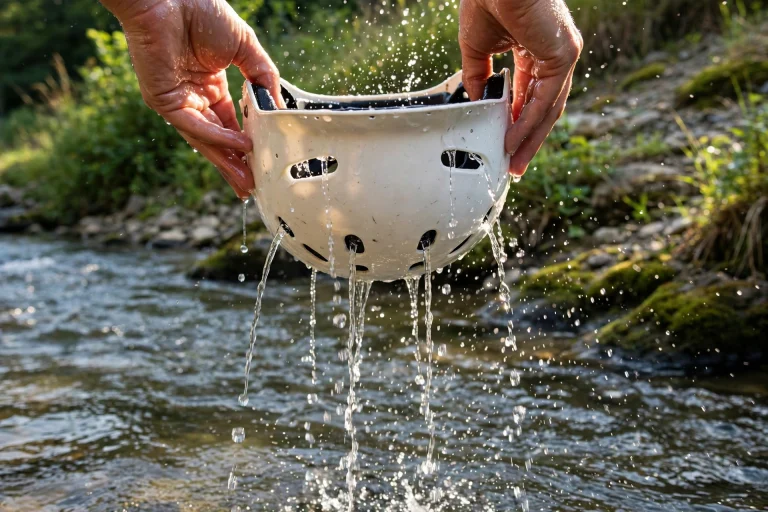
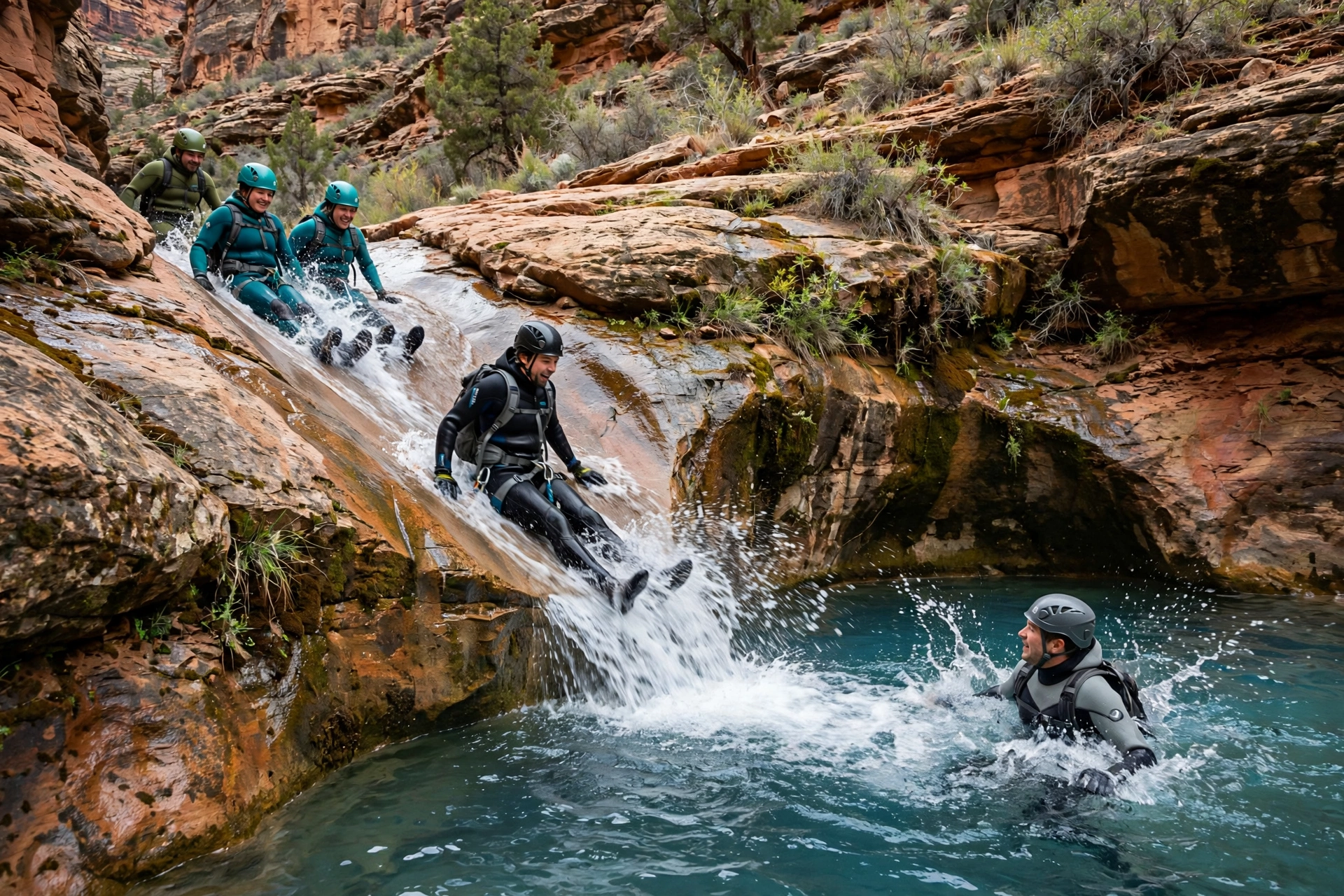
Because canyoning puts your head directly under falling water, again and again. Every waterfall pitch, every slide, and every jump fills a poorly designed helmet with water — and a helmet holding water is heavy, pulls at its straps, and tries to shift exactly when you are on rope or mid-jump. Good drainage holes or channels shed that water in moments, so the helmet feels the same dry at the top of a pitch as it does soaked at the bottom.
Drainage also decides comfort over a long day. Padding that drains and dries quickly stays comfortable across a multi-hour descent, while pads that hold water go cold and heavy. Removable pads you can rinse and dry overnight are a genuine plus for back-to-back days.
When you compare models, look at where the holes are and how the liner is shaped. You want water to escape freely at the sides and back rather than pooling above the foam, and you want the drainage designed in, not drilled as an afterthought. If a helmet’s description says nothing about drainage, assume it was not a priority in the design.
What Certification Label Should a Canyoning Helmet Carry?
In general terms, look for a label showing the helmet has been tested to a recognised watersports standard — whitewater helmet standards exist specifically for helmets used in moving water, and a canyoning helmet should carry the label the maker states for that kind of use. Read the label and the product description together: the standard named, and the activities the maker lists, tell you what the helmet was actually tested for.
Be wary of two traps. The first is assuming a climbing certification covers canyoning: a rock helmet’s testing is aimed at falling objects striking the top of the head, not repeated water impacts, swims, and slides, so the label does not transfer just because the helmet looks similar. The second trap is the unlabelled bargain helmet with no standard named at all — with no tested claim behind it, you are trusting a shape, not a result.
While you are thinking about protection, consider angled impacts as well. Canyon knocks are rarely straight-on: heads glance off wet rock on slides and swings. It is worth understanding what MIPS is for helmets, since rotational systems aim to reduce the twisting forces in exactly those glancing blows. They are uncommon in canyoning helmets, so treat one as a bonus — the watersports label, drainage, and fit remain the deciding factors.
Which Features Matter Most for Waterfalls and Rappels?
For waterfalls, retention and drainage do the heavy lifting: the helmet must stay centred when a pitch’s full flow lands on your head, and shed that water instantly. Ear coverage helps many canyoneers, protecting the ears from pressure and hard water strikes during jumps and slides, as long as it still lets you hear signals.
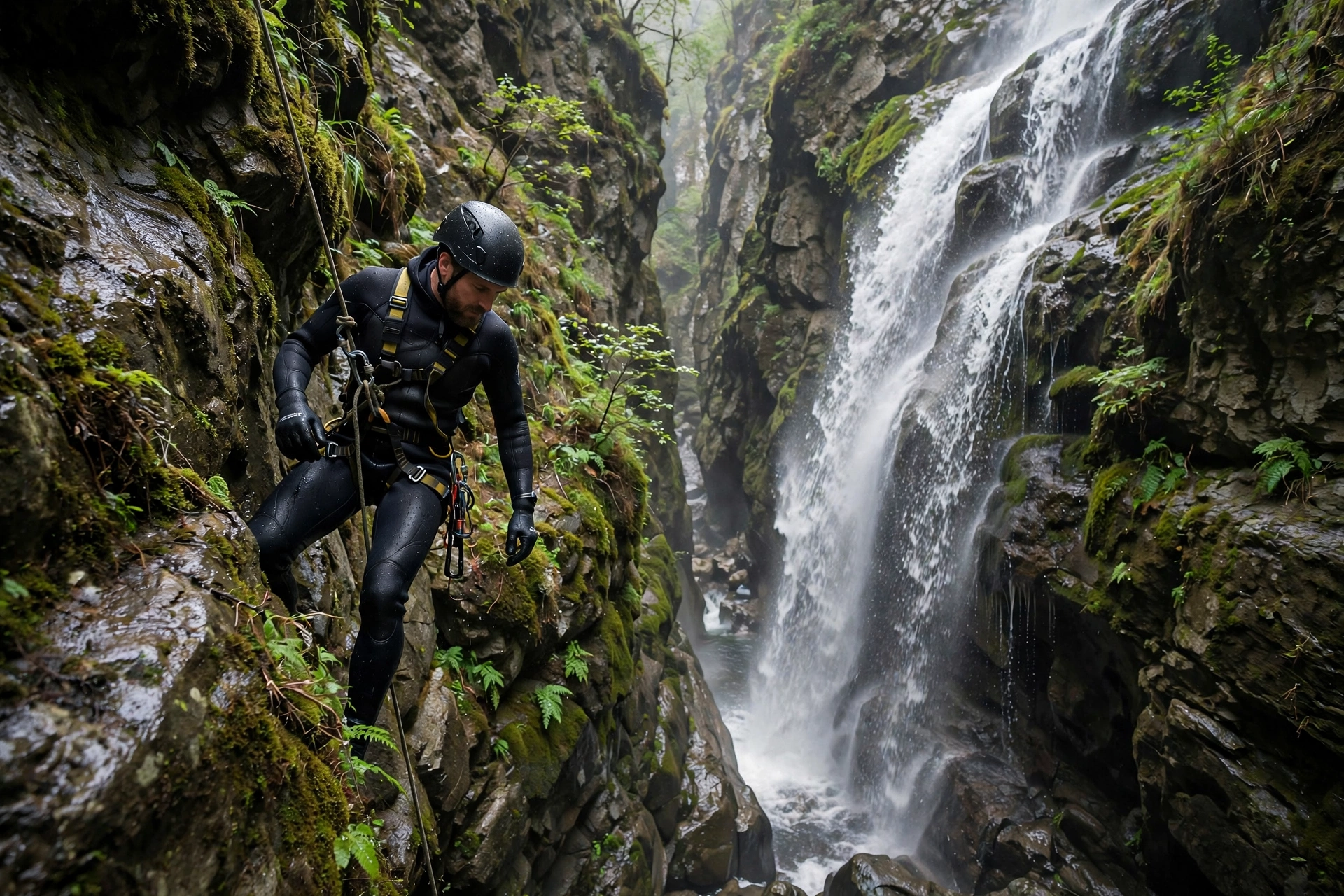
For rappels, look up — literally. On rope you spend long moments looking up at anchors, partners, and the pitch above, so the helmet should be light, balanced, and free of a front brim that blocks your upward view or catches the rope. Check that nothing on the helmet can snag a rope or a sling: smooth shells and low-profile fittings are what you want near rigging.
Small features add up over a full descent: a buckle you can work with numb, gloved fingers; a bright colour partners can spot in shadow; a headlamp mount for dark canyons; and straps that do not chafe a wet neck. Together they separate the helmet you forget you are wearing from the one you fight all day.
Frequently Asked Questions
Q: Can I use my climbing helmet for canyoning?
A: It is not ideal. Climbing helmets are tested mainly for rockfall from above and are not built for repeated immersion, swims, and water impact. A watersports-rated helmet with proper drainage suits canyoning far better.
Q: Should a canyoning helmet have a brim or peak?
A: Generally no. A brim can catch water under waterfalls, block your upward view on rappels, and snag on ropes and rock. A smooth, low-profile shell is the safer shape for canyons.
Q: How do I know a canyoning helmet still fits after it gets wet?
A: Test it soaked before your first big trip: wet the helmet and your head, then repeat the shake and push tests. A good fit stays snug and level wet, with no new rocking or lifting.

Olivia
Writer at Helmet Today, covering helmet reviews, fit and riding safety.