To clean a climbing helmet safely, wash it by hand with lukewarm water and a small amount of mild soap, rinse well, and let it air dry away from heat and direct sun. Do not use solvents, bleach, or harsh chemicals on the shell, foam, pads, or straps.
Climbing helmets collect chalk dust, sweat, sunscreen, and grit from belays and approaches. Gentle cleaning keeps the helmet comfortable and gives you a close look at the shell, foam, webbing, and buckles before small damage becomes a bigger problem.
What do you need before cleaning a climbing helmet?
Gather only simple supplies: a sink or basin, lukewarm water, mild soap or a gentle detergent, a soft cloth or sponge, and a clean towel. Skip pressure washers, stiff brushes, scouring pads, and workshop cleaners. Climbing helmets combine plastic shells, foam, fabric pads, and webbing straps, and each part can be harmed by aggressive cleaning.
Before washing, check the maker’s care instructions if you have them. Some helmets have removable pads and cradle liners, while others should only be wiped clean. If instructions conflict with general advice, follow the helmet maker.
Work in good light and take your time. Cleaning is also an inspection routine, so look at the helmet as you go rather than rushing through it. Remove loose chalk and dirt with a dry cloth first, especially around vents, strap adjusters, and headlamp clips.
How do you wash the shell, pads, and straps without damaging them?
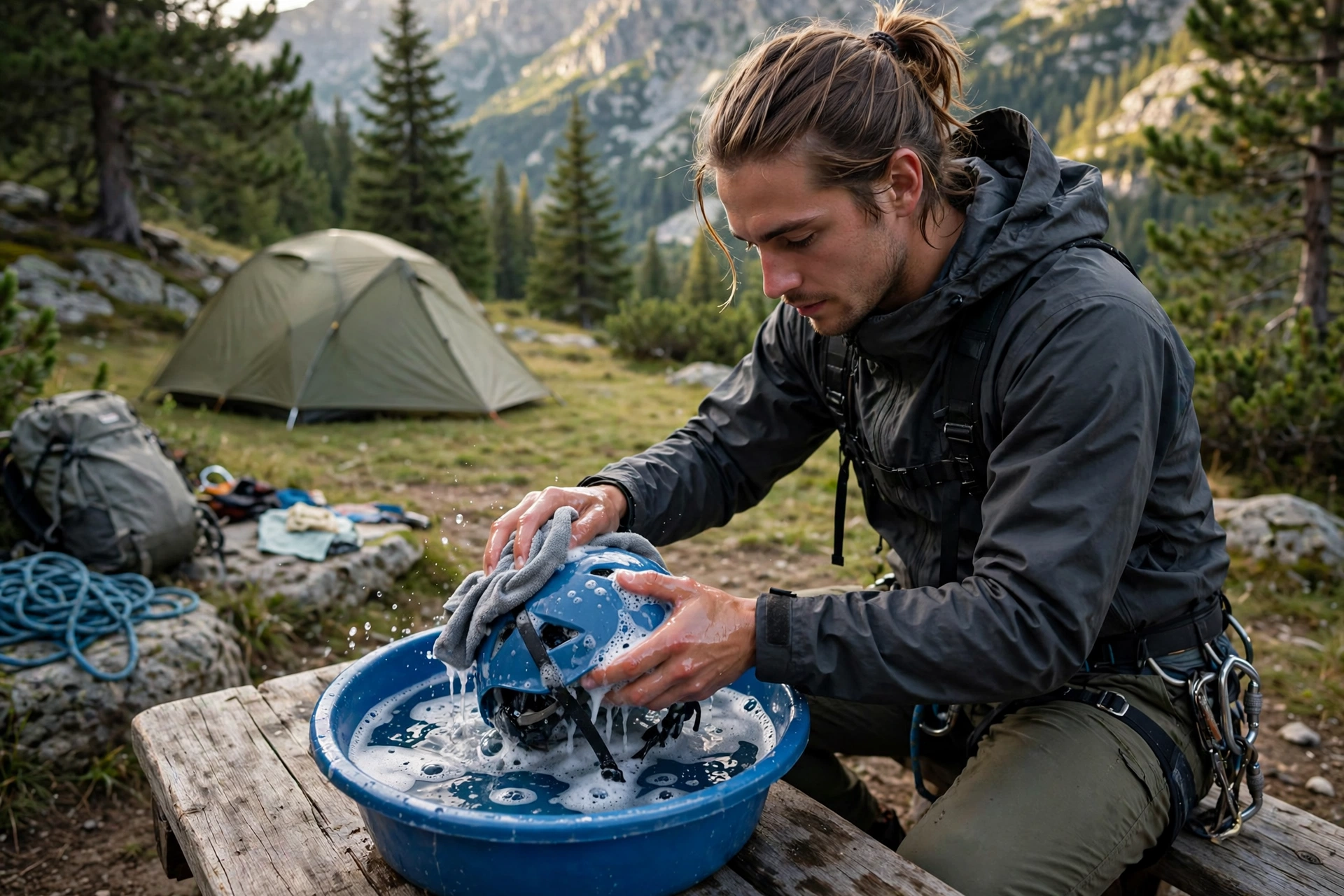
Fill the basin with lukewarm water and a little mild soap. Dip the cloth or sponge in the water and wipe the outside of the shell, then clean the inside surfaces you can reach. Use light pressure. For stubborn dust in vents or textured areas, use a soft cloth worked into the corners rather than a hard brush.
If the comfort pads are removable, take them out and wash them separately in the same mild soapy water. Squeeze them gently, rinse until no soap remains, and press them in a towel to remove water. If the pads are fixed, wipe and rinse them carefully without soaking the whole helmet for a long time.
Straps and webbing hold sweat against the chin and sides of the face, so clean them thoroughly. Rub the webbing gently with the soapy cloth, including the parts that pass through adjusters. Rinse by wiping with a cloth dampened in clean water until the straps no longer feel slippery. This careful approach also suits helmets discussed alongside related styles such as a climbing vs via ferrata helmet comparison, because both rely on foam, shell, and webbing that harsh chemicals can weaken.
Which cleaners and methods should you never use?
Never clean a climbing helmet with solvents, paint thinner, acetone, gasoline, bleach, strong degreasers, oven cleaner, or adhesive removers. These chemicals can attack plastic shells and foam, weaken webbing, and leave residues against your skin. Damage may not be visible right away.
Also avoid boiling water, steam cleaning, dishwashers, washing machines, tumble dryers, and high-pressure sprays. Heat can distort shells and foam, and forceful water can drive grit into adjusters and damage delicate parts. Do not use hair spray, insect repellent, or sunscreen as cleaning shortcuts, and try to keep those products off the helmet during use as well.
Be careful with “gear-safe” sprays and disinfectants. If the product is not clearly approved by the helmet maker for helmets, do not use it. Mild soap and water are boring, but they are the reliable choice. When a helmet smells bad, washing the pads and straps properly and drying them fully works better than masking the smell with strong chemicals.
How should you dry and store a climbing helmet after cleaning?
Rinse away all soap, shake off loose water, and pat the helmet and pads with a clean towel. Let everything air dry at room temperature in a shaded, ventilated place. Keep the helmet away from radiators, camp stoves, car dashboards, direct sunlight, and other heat sources while it dries.
Do not put the helmet away until the pads and straps are completely dry. Storing a damp helmet in a closed bag or bin can cause odor and mildew and makes the webbing unpleasant to wear. Leave the straps unbuckled and spread out so air can reach them.
For storage, keep the cleaned helmet in a cool, dry place out of prolonged UV light. A breathable bag can protect it from dust and scratches, but do not crush it under ropes, hardware, or heavy packs. Good storage starts with a dry helmet and ends with a quick check before the next climb.
What damage should you look for while cleaning?
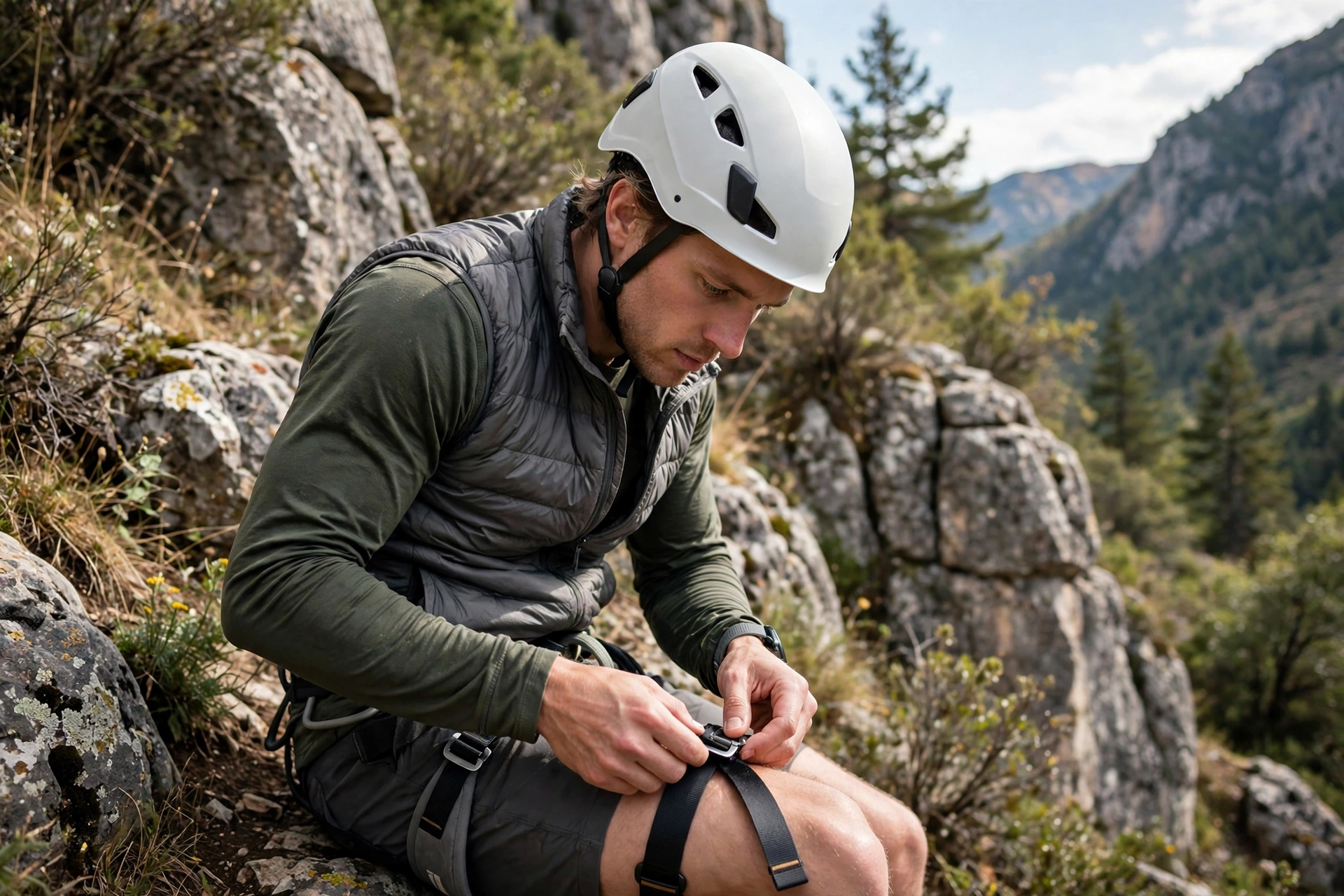
Cleaning puts your hands and eyes on every part of the helmet, so use the moment to inspect it. Look for cracks in the shell, dents, white stress marks, loose edges, and places where the shell has separated from the foam. Check foam for cracks, crumbling, dents, or compressed areas, especially after any rockfall hit or drop.
Examine the webbing for cuts, fraying, faded weak spots, and damaged stitching. Test buckles and adjusters to confirm they grip and release correctly. Check the headlamp clips and rear fit system, if fitted, and make sure nothing is cracked or missing.
If the helmet has taken a significant impact from rockfall, a fall, or a hard drop onto rock or concrete, do not assume cleaning makes it ready again. Retire and replace a helmet with structural damage, crushed foam, torn webbing, or a history you do not trust. A clean helmet is good; a clean and undamaged helmet is the goal.
After inspection, refit removable pads, thread straps correctly, and try the helmet on. It should sit level and feel stable with the chin strap fastened. Store it only when it is dry, complete, and ready for the next day out.
Frequently Asked Questions
Can I use antibacterial spray on a climbing helmet?
Only use a spray if the helmet maker specifically approves it. Mild soap and water are safer for the shell, foam, pads, and webbing.
How often should you clean a climbing helmet?
Wipe away chalk and dirt after dusty days, and wash pads and straps whenever sweat, odor, or sunscreen builds up. Inspect the helmet during every deeper clean.
Can a climbing helmet be dried in the sun?
Brief outdoor time is usually unavoidable while climbing, but do not dry or store it in strong direct sun. Shade and room-temperature air protect the materials better.

Olivia
Writer at Helmet Today, covering helmet reviews, fit and riding safety.