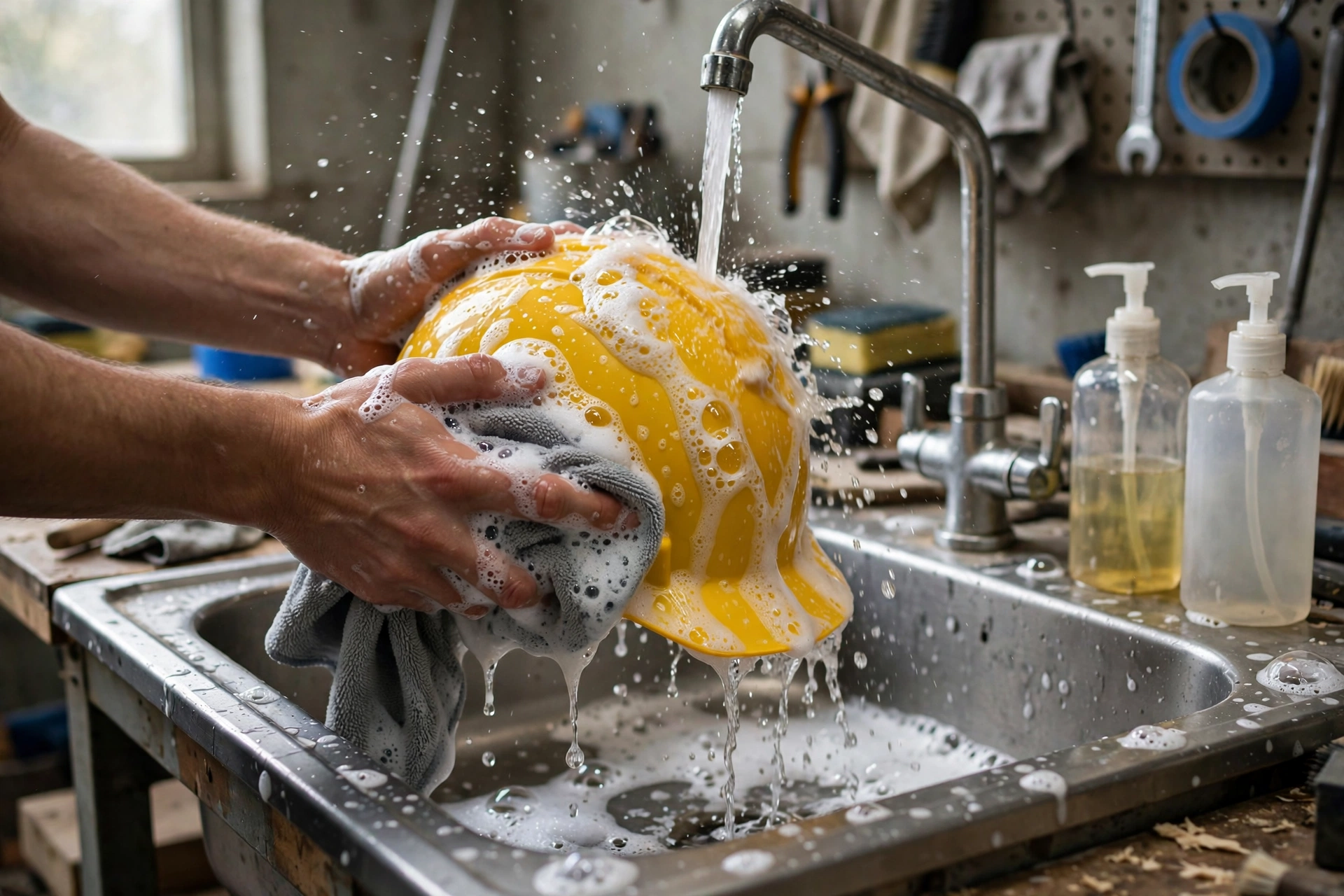
Clean a hard hat with warm water, a little mild soap, and a soft cloth or sponge — scrub the shell gently, wash the suspension and sweatband separately, rinse everything in clean water, and let it air-dry out of direct sun. Never use solvents, abrasive cleaners, or strong chemicals, because they can weaken the shell invisibly and turn protective equipment into a plastic hat.
It takes ten minutes and most hats never get it. This guide covers the shell, the suspension, what to avoid, and how cleaning doubles as inspection.
What Can You Safely Use to Clean a Hard Hat?
The safe list is short: warm water, mild soap or a gentle washing-up liquid, a soft cloth or sponge, and an old soft toothbrush for the grooves and vent slots. That combination removes site grime, concrete dust, sweat, and grease from a hard hat shell without attacking the plastic.
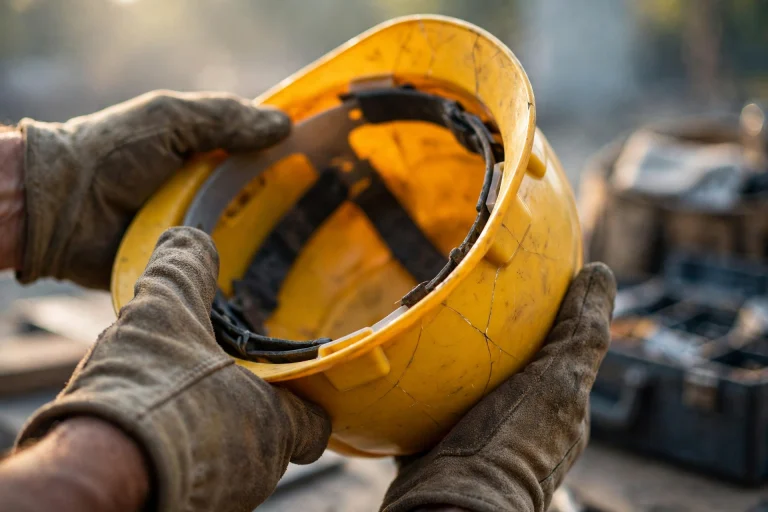
The shell materials used in hard hats are tough against impacts but surprisingly sensitive to chemistry. Many common workshop liquids — solvents, thinners, petrol, strong degreasers, some adhesive removers — can soften or craze the plastic at a level you cannot see. The hat looks clean and is quietly weaker.
If the maker of your hat sells or names a cleaning product, that is the safest upgrade from soap and water. Anything else you are tempted to spray on it should be checked against the maker’s guidance first — or kept away entirely.
The same restraint applies to water temperature. Warm is enough to shift grime and dissolve sweat salts; hot water risks ageing straps and adhesives for no cleaning benefit. If the water is comfortable on your hands, it is right for the hat.
How Do You Clean the Shell, Step by Step?
- Take the suspension out. Most suspensions unclip from the shell in a few seconds, and cleaning both parts separately is faster and more thorough.
- Fill a bucket with warm water and a small amount of mild soap. Dip a soft cloth or sponge and wash the shell inside and out, working grime out of the brim edge, vents, and accessory slots with the toothbrush.
- For stuck-on material like dried concrete splash or paint specks, soak the spot with the wet cloth and ease it off gently. Do not scrape with metal tools and do not reach for a solvent to speed it up.
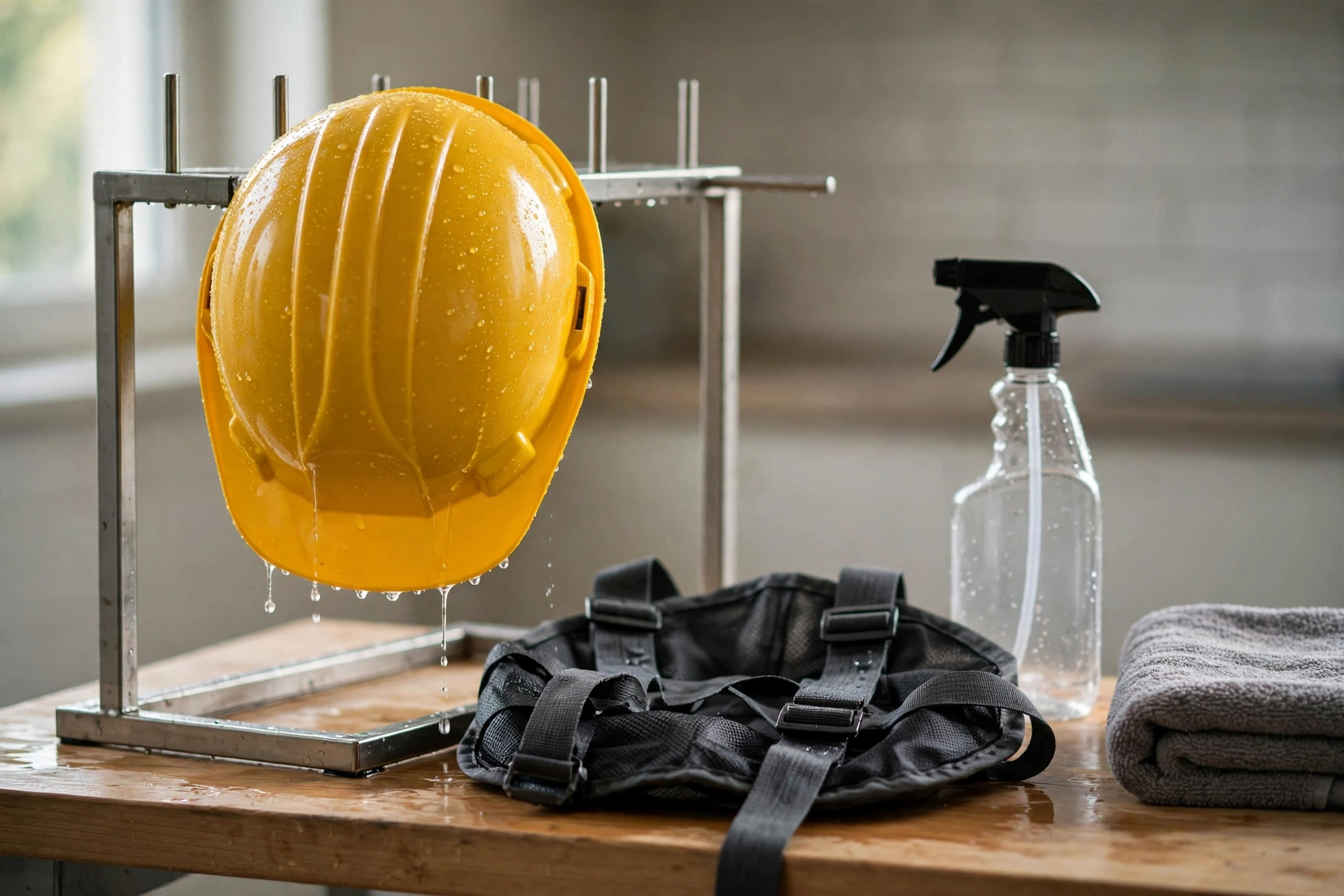
- Rinse the shell in clean water so no soap film is left, then dry it with a soft towel or let it air-dry in the shade. Refit the suspension once everything is dry.
That is the complete process. If a mark will not come off with soap, water, and patience, the cosmetic battle is not worth the shell’s strength — a stained hat that works beats a sparkling one that does not.
How Do You Clean the Suspension and Sweatband?
The suspension is where the sweat lives, and it is usually the part that actually smells. Fabric sweatbands and straps can be washed in warm soapy water, scrubbed gently, rinsed, and air-dried. Removable sweatbands on many hats unclip or peel off precisely so you can wash or replace them.
Plastic headbands and ratchet adjusters just need a wipe-down and a rinse; work the ratchet back and forth in the water to flush grit out of the mechanism. Let everything dry fully before refitting, since a damp suspension put away in a locker grows mildew by the weekend.
Wash day is replacement day, too: sweatbands are cheap consumables, and a hardened, permanently compressed, or cracked sweatband should simply be swapped. Your forehead will notice the difference immediately.
What Cleaners and Habits Damage a Hard Hat?
Solvents top the list: paint thinners, acetone, petrol, and strong industrial degreasers can all attack shell plastics. Adhesives are a quieter cousin — some sticker glues and tapes leave solvents sitting against the shell for months, one reason sites limit stickers. Abrasive pads and powders scratch and thin the surface, and pressure washers can force water and grit into accessory slots and suspension anchors.
Heat is the other habit to avoid. Drying a hat on a radiator, a vehicle dashboard, or in front of a site heater ages the plastic and the straps; so does storing it wet with chemicals or cement dust still on it, since alkaline concrete residue left for weeks is itself unfriendly to the shell.
Damage matters because the shell is an energy-management device: it is meant to deform, spread, and pass force into the suspension in a designed way, much as a sports helmet’s shell works with its foam liner and rotational-impact systems like MIPS. Chemically weakened plastic does not perform to that script.
How Often Should You Clean and Inspect a Hard Hat?
In general terms, clean the hat whenever it is visibly dirty or the sweatband needs it — for most site workers that means a wash every week or two, and a sweatband rinse more often in summer. Cement, paint, and chemical splashes should be washed off the same day rather than left to sit.
Pair every clean with an inspection, because your hands are already on the hat. Look over the shell for cracks, dents, chalking, and UV brittleness; flex the suspension straps and check for fraying or stiffness; confirm the adjuster holds. Cleaning and inspection are the same ten minutes spent twice as well.
And if the inspection finds real damage — a cracked shell, a split strap, a hat that has taken a serious impact — cleaning is not the answer. Retire it and replace it. A clean hat is a good habit; a sound hat is the actual protection.
Frequently Asked Questions
Q: Can I put my hard hat in a dishwasher or washing machine?
A: No. The heat, detergents, and tumbling are all wrong for shell plastics and suspension straps. Hand-washing in warm water with mild soap takes ten minutes and does the job without the damage.
Q: How do I get paint or concrete off a hard hat?
A: Soak the spot with a wet, soapy cloth and ease the residue off gently once it softens. Never use paint thinner or solvent removers — they can weaken the shell. Stubborn cosmetic marks that survive gentle washing are better left than chemically stripped.
Q: Can I use antibacterial sprays or disinfectants on the sweatband?
A: Stick to mild soap and water unless the maker approves a specific product. Strong disinfectants can degrade fabrics and plastics, and a washable, replaceable sweatband solves the hygiene problem more simply: wash it often, replace it when it is tired.

Olivia
Writer at Helmet Today, covering helmet reviews, fit and riding safety.