To clean a hockey helmet cage and shell, wash them with warm water and a little mild soap using a soft cloth, work carefully around the cage bars and mounts, rinse everything clean, and then clean the liner pads separately and let the whole helmet dry fully before it goes back in the bag. In general terms, gentle and regular beats strong and rare: harsh chemicals, soaking, and machine washing can damage the foam and coatings that the helmet depends on.
This guide walks through the whole job — cage, shell, liner, and straps — with what to use and what to avoid.
What Do You Need to Clean a Hockey Helmet Properly?
Very little, and that is the point. Warm water, a mild soap such as a gentle hand soap or a small amount of mild detergent, two soft cloths or a soft sponge, and an old soft toothbrush for the tight corners cover almost everything. A sink or a bucket is enough; you do not need to submerge the helmet.
Check the maker’s care instructions if you still have them, because a few models have specific warnings — particularly about solvents and about removing the liner. In general terms, if a product is sold as a gear spray or helmet cleaner from a hockey maker, it is made for the job; if it is a household cleaner with bleach, ammonia, or gritty abrasives, keep it away from your helmet.
- Use: warm water, mild soap, soft cloths, a soft brush for cage corners
- Maybe: a hockey gear deodorising spray after cleaning, used as directed
- Avoid: bleach, solvents, abrasive pads, pressure washers, and the washing machine
Give yourself fifteen unhurried minutes. Most helmet damage during cleaning comes from rushing — forcing pads out, scrubbing cage coatings with something rough, or putting the helmet away still damp.
How Do You Clean the Cage Step by Step?
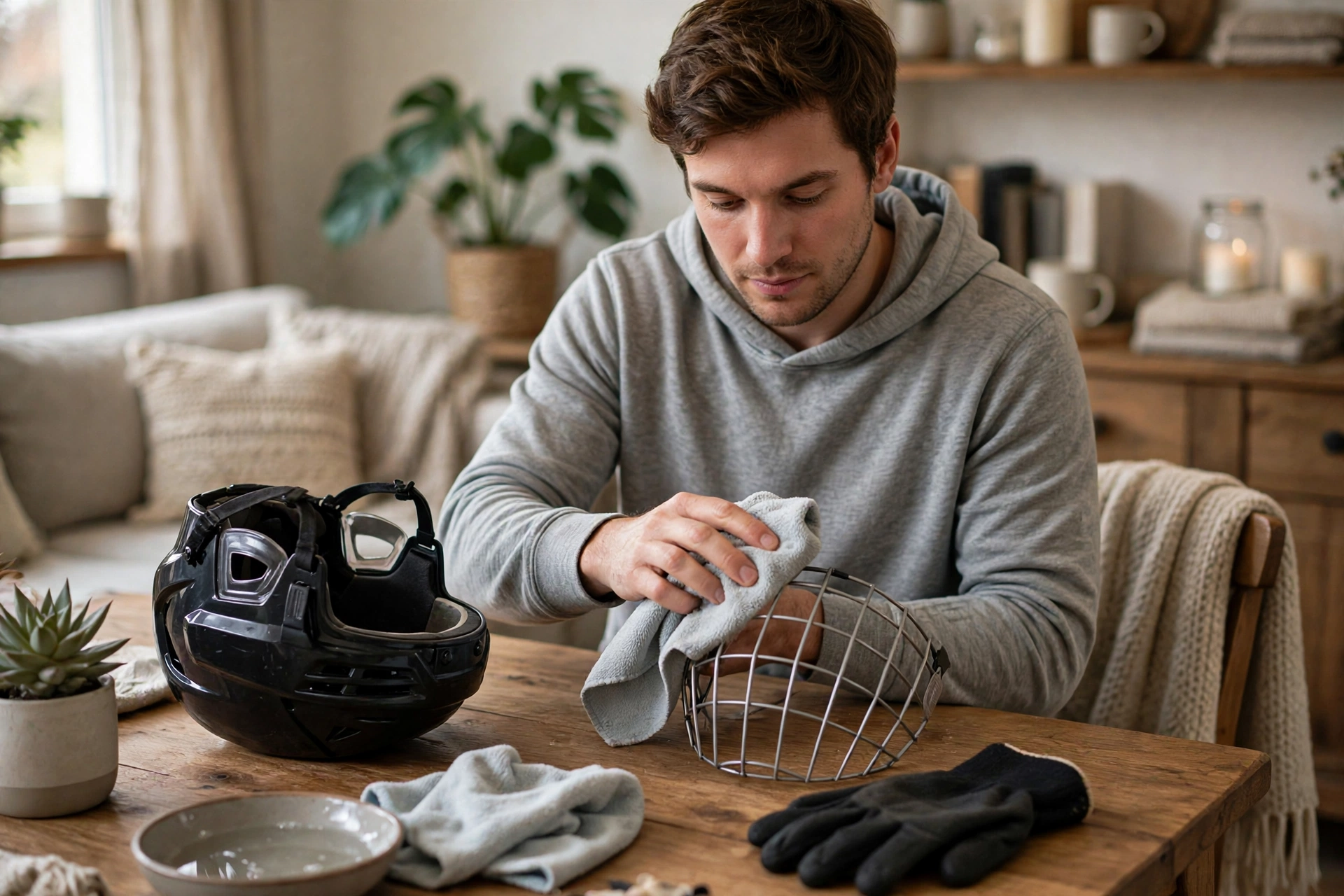
Start by taking the helmet somewhere you can get it wet. If your cage unclips or unscrews easily with the maker’s hardware, you can remove it for better access — note how it came off, and keep the screws and clips together in a cup so nothing is lost. If it does not come off readily, clean it in place; never force mounts.
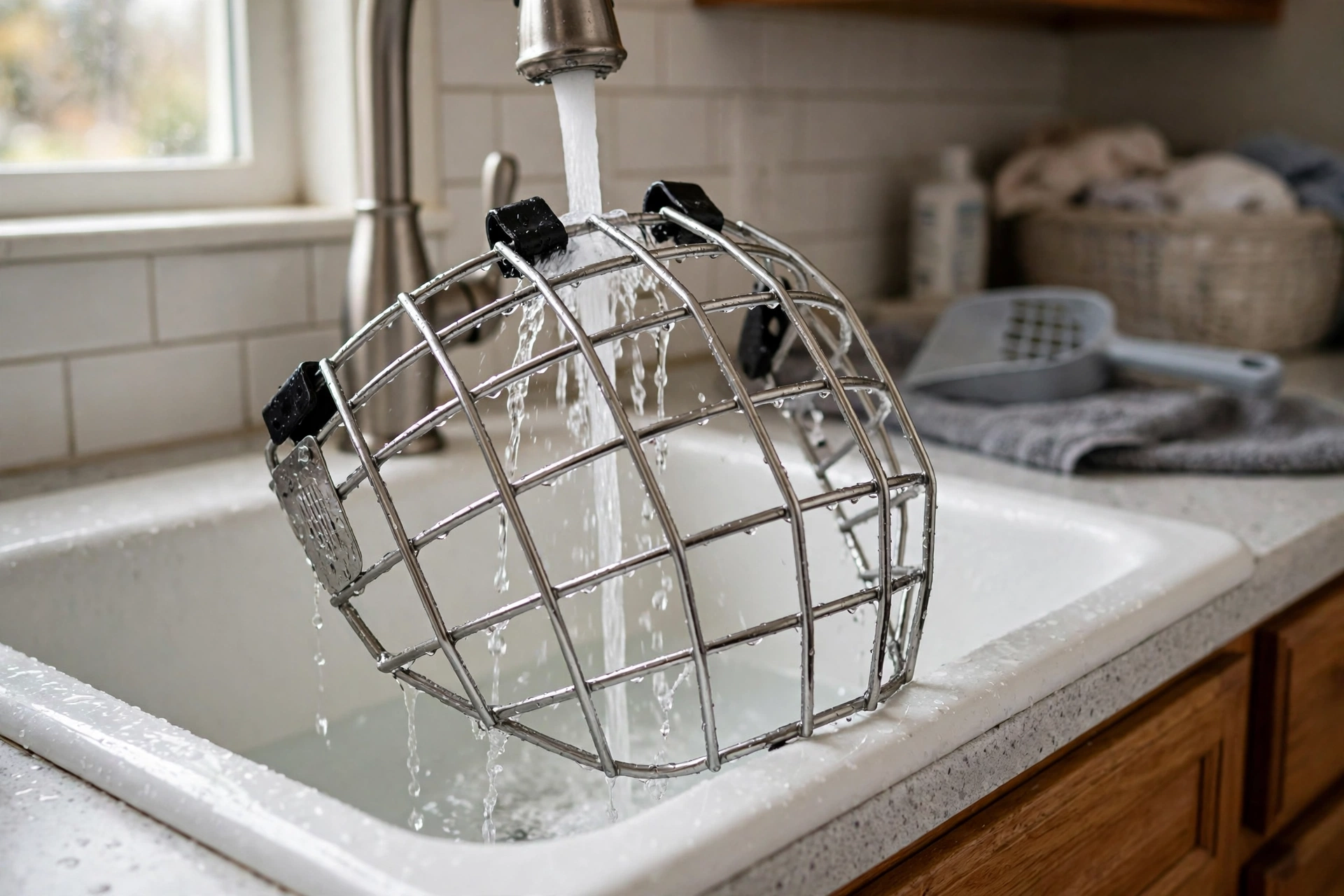
Wet the cage and wipe it down with soapy water and a soft cloth, following every bar. Sweat, spit, tape residue, and rink grime collect where bars cross and around the chin cup, so use the soft toothbrush gently in those joints. The chin cup itself deserves attention: it sits against your face all game and can be wiped thoroughly, or removed and washed separately if the design allows.
Rinse the cage with clean water and inspect it while it is wet and clean — this is your best chance to spot bent bars, cracked welds, or rust starting under chipped coating. A cage with structural damage is a replacement, not a cleaning project, because the cage is protective equipment, not decoration. Dry it with a clean cloth so water does not sit in the joints.
How Do You Clean the Shell and the Liner Pads?
The shell is the easy part: wipe it inside and out with a cloth dampened in warm, mildly soapy water. That removes sweat salt, hair product, and grime without soaking the adhesives that hold the liner in place. Wipe around the certification sticker rather than scrubbing it — that sticker matters for league play, and it should stay legible.
The liner is where the smell lives. Many modern helmets have removable comfort pads that unclip or peel away from hook-and-loop fasteners; those can be hand-washed in warm water with mild soap, rinsed until the water runs clear, and pressed in a towel. If the liner is fixed, wipe it down thoroughly in place and accept a slower clean rather than soaking the whole helmet, which can weaken glues and leave the deep foam wet for days.
Straps and ear covers wipe clean the same way. Work soapy water through the chin strap webbing, which absorbs more sweat than any other part, and check the buckle and snaps for grit while you are there — a buckle full of dried sweat and dust stops clicking shut properly.
What Mistakes Damage a Helmet While Cleaning It?
The biggest is chemistry. Solvents, strong degreasers, and bleach can attack the impact foam, soften adhesives, and craze or cloud a visor’s coating. That matters beyond looks: the foam liner is the part that crushes to absorb impact force, including the glancing, twisting loads that the systems described in this guide to what MIPS is for helmets are built to manage. Foam quietly degraded by chemicals cannot be seen from outside, so the rule is simple — nothing stronger than mild soap ever touches the liner.
Heat is the second mistake. Very hot water, a hair dryer on hot, a radiator, or a hot car to “dry it faster” can warp shells, soften glues, and age foam. Lukewarm water and patience with air drying (the subject of the next section in spirit) are the safe ceiling.
The third is force: pulling fixed liners out, scrubbing cage coatings with scouring pads until the metal shows, or using a pressure washer that drives water deep into the liner and under the shell. If something on the helmet does not move with gentle hand pressure, it was not designed to move — clean around it instead.
How Often Should You Clean a Hockey Helmet?
More often than most players do. A quick wipe of the liner and straps after every game stops sweat salt from building up, and a full clean — cage, shell, pads, straps — every few weeks of regular play keeps the smell and the grime from becoming permanent. In general terms, if the helmet smells when it is dry and across the room, it was due a clean some time ago.
Clean it immediately after any game where it picked up something extra: blood from a cut, vomit, or anything else that should not live in foam. Those are hygiene issues, not cosmetic ones, and pads that cannot be cleaned properly after that kind of contamination should be replaced.
Build the habit around drying. A helmet that is cleaned and then left damp in a closed bag will smell worse within days than one that was never washed, because mildew loves warm, wet foam. Clean, rinse, and then dry fully — the clean is only finished when the helmet is dry.
Frequently Asked Questions
Q: Can I put my hockey helmet in the washing machine or dishwasher?
A: No. Machine washing and dishwashers combine strong detergents, heat, and tumbling or high-pressure water — all three are on the avoid list for foam, adhesives, and coatings. Hand washing with mild soap takes fifteen minutes and is the method makers intend.
Q: How do I get the smell out of the liner pads?
A: Wash the removable pads by hand in warm water with mild soap, rinse thoroughly, press them in a towel, and dry them completely in moving air. If a deep smell survives a proper wash and full dry, the pads are usually at the end of their life and replacement pads are the real fix.
Q: Can I use antibacterial spray instead of washing?
A: Sprays made for hockey gear can help between washes and are fine as directed, but they sit on top of dirt rather than removing it. Sweat salt, grit, and skin oils still build up under the spray, so treat it as a supplement to washing, not a substitute.

Olivia
Writer at Helmet Today, covering helmet reviews, fit and riding safety.