The best way to stop a hockey helmet from fogging up is to prevent the moisture problem before the game starts: store the helmet dry and ventilated, let it cool to rink temperature early, and keep a simple anti-fog routine for the visor or shield. Fog is a habit problem as much as a gear problem, and small changes in how you handle your helmet between games make the biggest difference.
Why does fogging start before you even step on the ice?
By the time you notice fog mid-game, the conditions for it were set hours earlier. A helmet that spent the week sealed in a gear bag with damp gloves and a wet towel is holding moisture in its liner and on its shield. That trapped humidity is released as soon as you start sweating, and it condenses on the coldest surface nearby — the inside of your visor.
Temperature shock is the other setup. Warm gear meeting cold rink air guarantees condensation, the same way a bathroom mirror fogs after a hot shower. Players who fight fog every single game usually share the same pattern: gear stored wet, helmet kept warm indoors, then a first shift at full sprint. Fix that pattern and most fog problems shrink dramatically, before any spray or wipe gets involved.
Your breathing pattern plays a part too. Heavy mouth-breathing sends a constant stream of warm air upward toward the shield, especially under hard effort. You cannot change how hard you work on the ice, but you can change the environment that breath meets. A dry liner absorbs some of that moisture instead of passing it straight to the visor, which is one more reason the hours between games matter as much as anything you do during them.
How should you store your helmet to prevent fog?
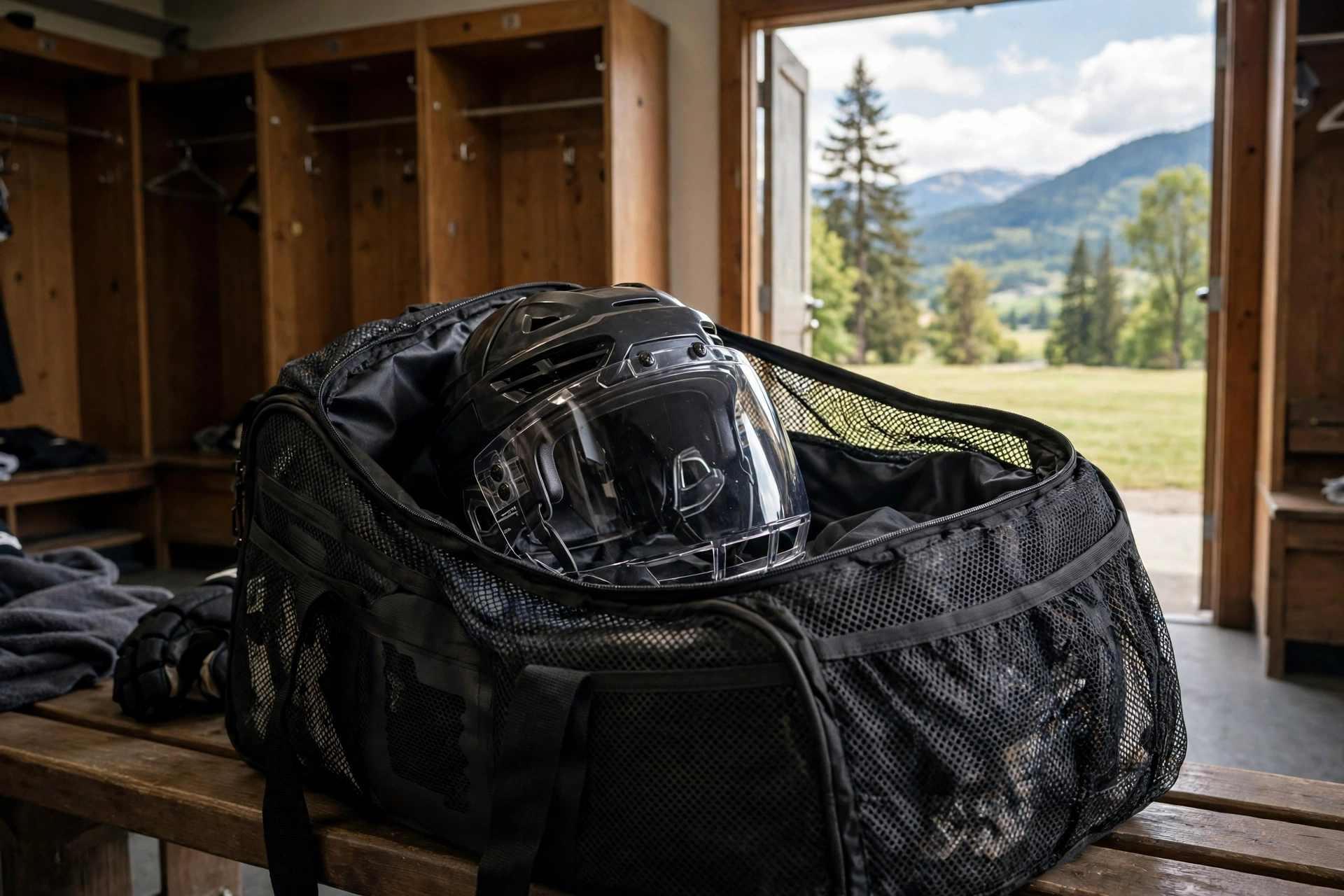
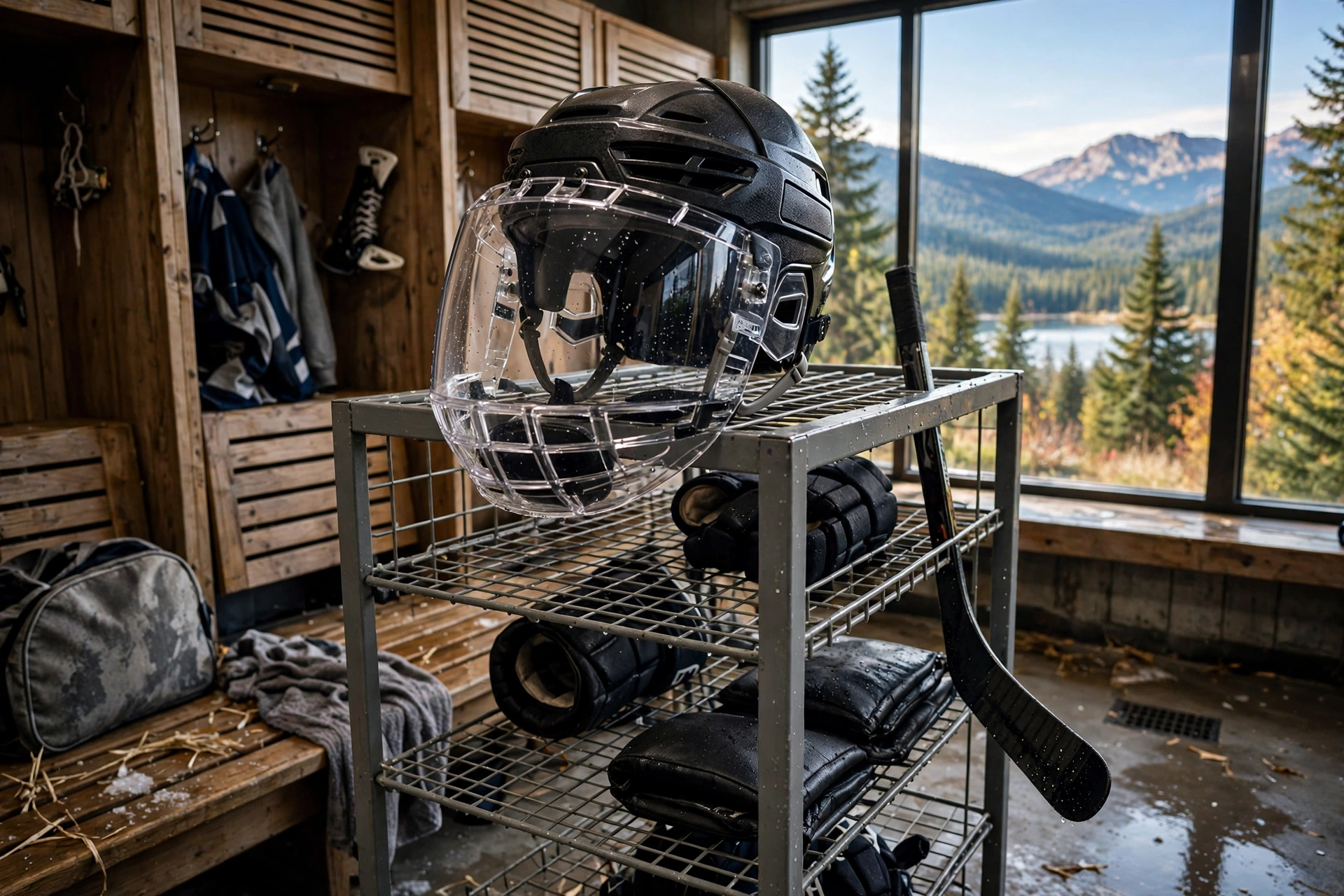
After every game, take the helmet out of the bag. Air it on a rack, a hook, or an equipment tree in a dry room, with the shield flipped up so air can reach the inside surface. A small fan or a ventilated gear dryer speeds things up, but plain room air and time work fine as long as the helmet is not zipped away while damp.
Good storage also protects the helmet’s working parts. Liners, comfort padding, and energy-managing systems — including rotational systems like the ones explained in our guide to what MIPS is in helmets — last longer when they dry fully between uses instead of staying damp in a closed bag. Keep the shield in a soft cover, or the helmet in its own bag compartment, so the anti-fog coating is not scratched while it sits between games.
How does letting your gear acclimate to rink temperature help?
Cold plastic fogs when warm air hits it, so the closer your shield already is to rink temperature before you play, the less condensation can form. Get your bag into the rink early — ideally while you are getting dressed — and open it up so the helmet cools with the room instead of staying warm inside a closed bag until warm-ups end.
Simple habit changes help here. Do not leave your gear in a heated car right up to game time, and avoid warming the helmet under a hand dryer or in a hot locker room before playing. In very cold rinks, some players set the helmet near the bench area during warm-ups so the shield settles at ice-level temperature before the first shift, rather than meeting the cold air and their warm breath at the same moment.
The same logic applies to the rest of your head. A soaking-wet base layer or a damp skull cap under the helmet adds moisture right where you least want it. Pack a dry cap for the game, and if you drive to the rink with your gear in a cold trunk all winter, that is actually working in your favor — the helmet arrives pre-cooled rather than needing to shed heat at the bench.
What pre-game routine keeps the shield clear all game?
Treat the shield the night before, not in a panic at the bench. Clean it gently with lukewarm water and a microfiber cloth, then apply an anti-fog spray or wipe and let it dry completely. A treatment applied early and left alone lasts far longer than one applied wet and immediately covered by a bag strap.
Build the routine around the session. In games, where shifts are intense and bench time is short, a fresh treatment plus a dry, acclimated helmet is the full system. In practices, where you are on the ice longer with fewer breaks, ventilation habits matter more: vents open, shield flipped up during water breaks, and a towel near the bench for a quick wipe between drills. Matching the routine to the session also stops you over-treating the coating, which wears it out faster.
Do full shields fog more than half shields?
Generally, yes. A full shield encloses more of your face, so it traps more warm breath and humid air in a smaller space, and it fogs faster when conditions are against you. A half visor lets air flow underneath and clears itself more easily while you skate. That breathing room is the trade-off for the extra protection a full shield gives your nose, cheeks, and teeth.
If you wear a full shield, the prevention habits in this article matter twice as much: dry storage, early acclimation, and a properly dried anti-fog treatment. Combo shields with a cage lower half are a middle ground — they breathe noticeably better than a full shield while still covering the whole face, and many fog-prone players happily settle there.
Frequently Asked Questions
Why does my visor fog in games but barely in practice?
Game shifts are shorter and harder, so you produce bursts of hot breath, then sit still on the bench where no air moves across the shield. That stop-and-go pattern is perfect for condensation. Practices flow more steadily, which keeps air moving and the visor clearer.
Should you keep your helmet somewhere cold to match rink temperature?
Cool and dry is good; freezing and damp is not. A dry garage or mudroom works fine, but avoid anywhere humid, and never store the helmet sealed inside a bag while it is still damp from the last game.
Can you overuse anti-fog spray?
Yes. Constant spraying and wiping accelerates wear on the factory coating underneath. If the helmet is stored dry and acclimated before games, a light treatment beforehand is enough for most players.

Olivia
Writer at Helmet Today, covering helmet reviews, fit and riding safety.