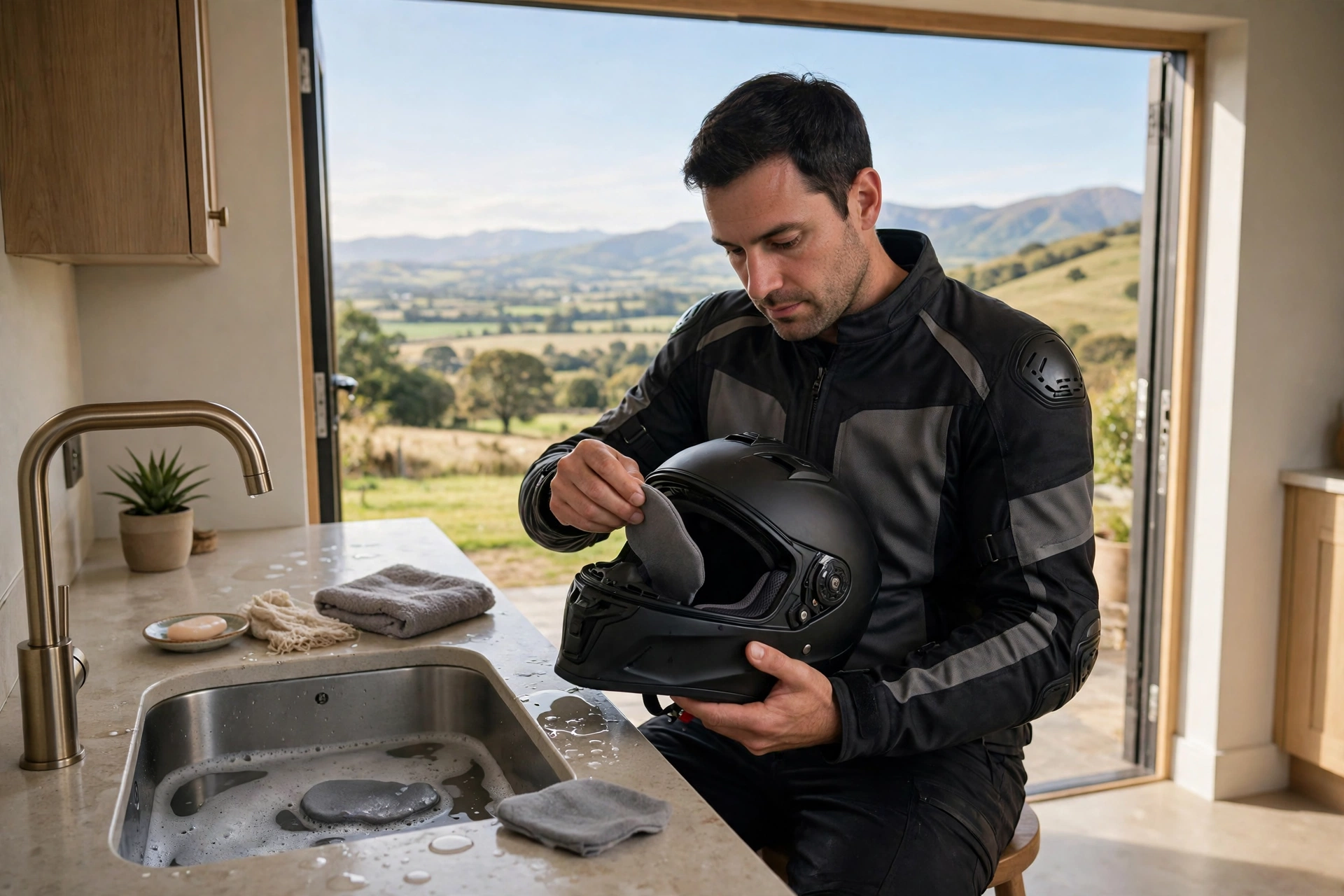
To wash motorcycle helmet pads, remove the cheek pads and crown liner, soak them in lukewarm water with a little mild detergent, gently squeeze the soapy water through them, rinse until the water runs clear, press out water in a towel, and air-dry completely before refitting them. Hand washing is the safe default. A machine wash is only an option if your helmet maker allows it — then use a gentle cycle, cold water, and a mesh laundry bag. Never use bleach, hot water, or a tumble dryer.
How do you remove the cheek pads and crown liner?
Almost all modern helmets are designed so the interior comes out for washing. Start with the cheek pads: they usually release with snaps, plastic tabs that slide out of channels, or a combination of both. Pull gently near each attachment point rather than yanking from the middle. Some models have an emergency release tab — leave that system as the maker intends and follow the manual if yours is unusual.
Next remove the crown liner, the fabric-covered padding over the top of your head. It is typically held by snaps at the front and back or by tucking into a plastic trim. Work slowly and note how each edge tucks in, or take a quick phone photo before you start. Remove the neck roll only if it is designed to come out; some are fixed. Unthread the chin strap covers if they slide off, since straps collect a lot of sweat. If any part resists, stop and check your helmet’s manual rather than forcing it — broken snaps and torn backing plates are the most common washing casualties.
How do you hand wash helmet pads properly?
Fill a basin or sink with lukewarm water and a small amount of mild detergent. Baby shampoo or a gentle laundry detergent made for delicates both work well. Avoid strong detergents, bleach, and heavily fragranced products, which can irritate skin and leave residue in foam.
Submerge the pads and liner and let them soak for ten to fifteen minutes. Then gently squeeze and massage them repeatedly so soapy water moves through the padding. You will usually see the water darken — that is accumulated sweat, skin oils, and road grime leaving the foam. For stubborn areas, work them softly between your fingers. Do not scrub with brushes and do not wring or twist the pads hard, because that tears stitching and distorts the foam and the plastic backing plates behind the fabric.
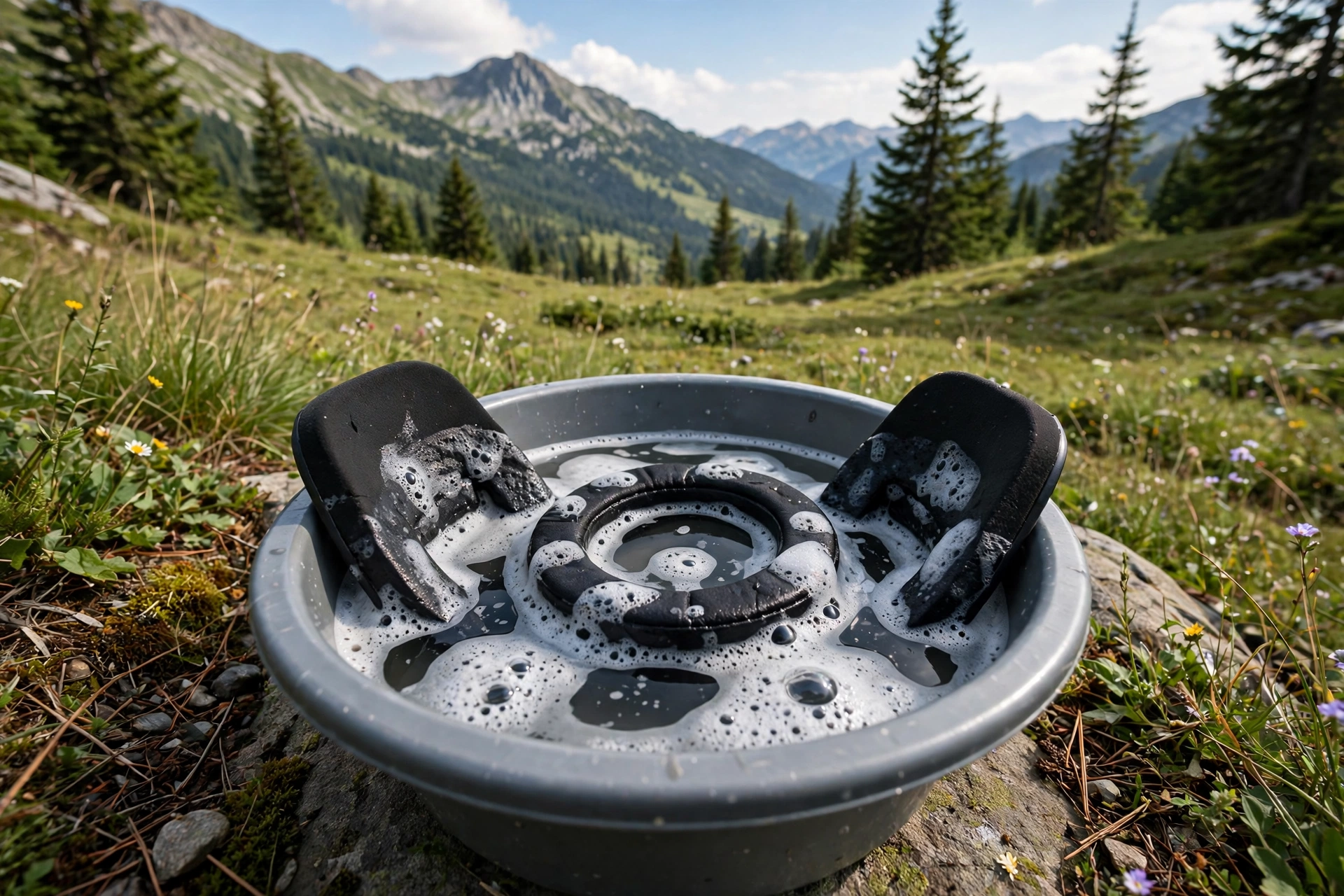
Rinse under clean lukewarm water, squeezing gently, until no suds remain and the water runs clear. Leftover detergent attracts dirt, holds moisture, and is a common cause of itchy foreheads on the next ride, so rinse longer than you think you need to. Finish by pressing each piece flat between the folds of a clean dry towel to push out as much water as possible.
Can you machine wash motorcycle helmet pads?
Sometimes — but only when the manufacturer explicitly says so. Some makers approve a gentle machine cycle for their liners; others insist on hand washing only. The manual for your exact model decides. If machine washing is allowed, place the pads and liner in a mesh laundry bag to protect snaps and backing plates, use cold water on the gentlest cycle, and use only a tiny amount of mild detergent.
If the manual is silent on machine washing, treat that as a no. Machines vary a lot in how aggressive their gentle cycles really are, and the risks — snapped fasteners, delaminated fabric, cracked backing plates, padding that never regains its shape — fall entirely on you. Hand washing honestly takes about fifteen minutes and removes all doubt, which is why it is the recommendation here. Whatever method you use, the EPS impact foam fixed inside the shell itself never gets washed or soaked; at most it gets a light wipe with a damp cloth.
How should you dry and refit the pads?
Air-dry only, always. Lay the pads and liner on a towel in a well-ventilated room away from direct sunlight, or hang them where air can circulate. A fan in the room speeds things up safely. Never use a tumble dryer, radiator, hair dryer on heat, or a hot car dashboard: heat warps the foam and backing plates and can make pads permanently loose. This patience also protects the helmet as a whole — the same habits that keep pads in shape are among the small things that decide how long a motorcycle helmet lasts before padding and fit degrade.
Drying typically takes several hours to overnight depending on humidity. Do not refit the interior until every piece is completely dry; a damp liner refitted into a closed helmet is an invitation to mildew and odor. When dry, refit in reverse order: crown liner first, tucking edges and setting snaps, then cheek pads, making sure every snap is fully seated and the chin strap threads correctly through both pads. Put the helmet on and check the fit — washed pads often feel slightly firmer at first, which is normal, but any new looseness or pressure point means something is not seated properly.
How often should you wash your helmet pads?
It depends on how and how much you ride. A daily commuter in a hot climate may need a wash every few weeks through summer; an occasional weekend rider in cool weather might wash two or three times a year. As rough triggers: wash when the liner smells even after airing out, when you can feel a gritty or greasy texture, when your forehead itches during rides, or after any stretch of heavy sweating.
Between washes, simple habits stretch the interval. Air the helmet out after every ride with the visor open rather than sealing it in a bag or top case while damp. Wear a clean balaclava or skull cap to absorb sweat before it reaches the liner, and wash that far more often than the pads. Never store the helmet with damp gloves stuffed inside. If pads eventually stay flat, loose, or cracked even after washing, washing is no longer the answer — replacement pad sets are available for most major models and restore both comfort and fit.
Frequently Asked Questions
Can I wash the whole helmet under the tap or soak it?
No. Only the removable pads and liner should get properly wet. The shell and its fixed EPS foam get a wipe with a damp cloth at most.
What detergent is safe for helmet pads?
A small amount of mild detergent, gentle delicates wash, or baby shampoo. Avoid bleach, strong stain removers, and heavy fragrances.
Why does my helmet still smell after washing?
Usually the pads were refitted before fully drying, or detergent residue remained. Re-rinse well, air-dry completely, and check the chin strap covers, which hold odor and are often forgotten.

Olivia
Writer at Helmet Today, covering helmet reviews, fit and riding safety.