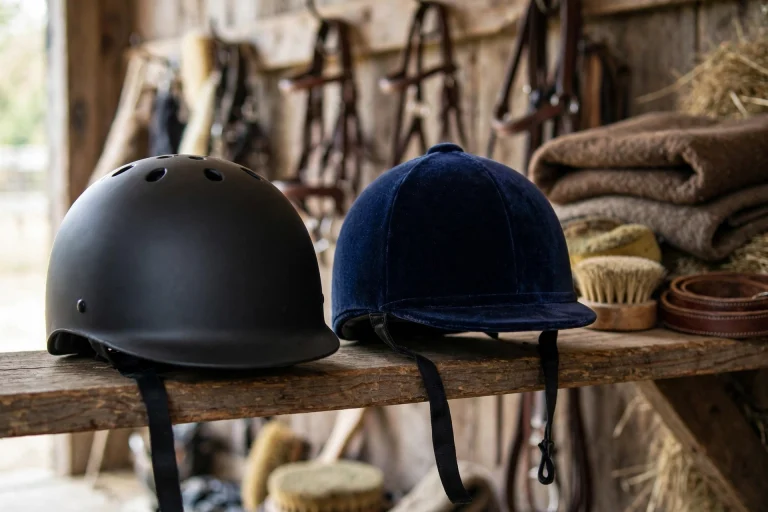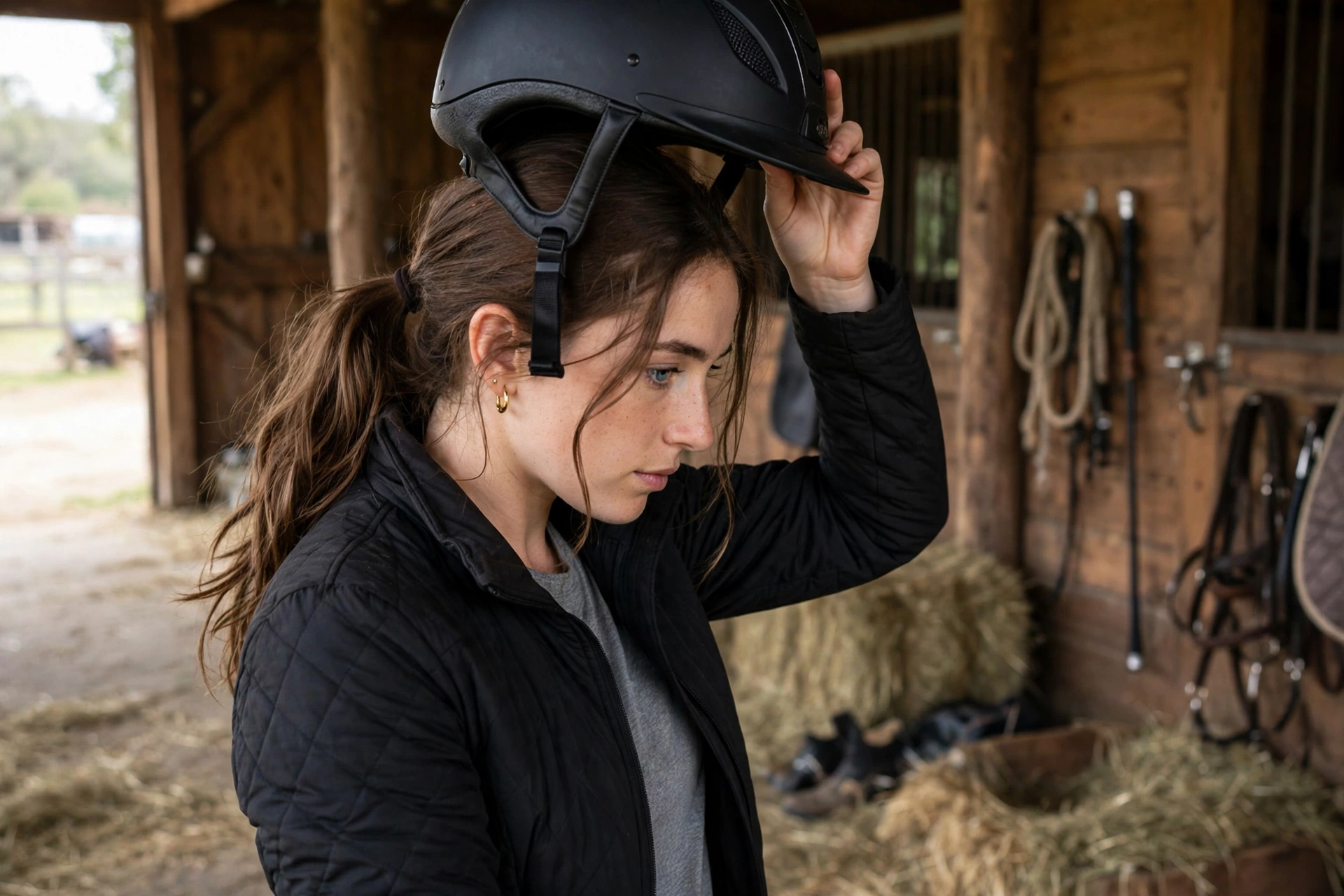
Wear your hair flat and low under a riding helmet: brush it smooth, gather it into a low ponytail at the nape of your neck or lay it flat against your head, and use a hairnet if your hair is long — anything bulky on top of or high on the head lifts the helmet and breaks the fit. The rule is simple: the helmet must sit on your head the same way it did when it was fitted, with nothing thick trapped between hair and liner.
This guide covers the hairstyles that work, the ones that quietly ruin a fit, and how to keep the traditional “hair up” show-ring look without compromising safety.
Why Does Hair Under a Helmet Matter So Much?
A riding helmet protects by sitting snug and level, in direct contact with the head through its liner, so that in a fall the foam is positioned to absorb the impact where it lands. Hair changes the geometry. A high ponytail, bun, or thick braid creates a lump that pushes the helmet up and back, opening a gap at the forehead and letting the helmet rock — and a rocking helmet can shift in the first instant of a fall, before it does its job.
The effect is easy to underestimate because the change is gradual: the harness still fastens, the helmet still feels “on.” But sit a helmet over a bun and push it gently — it pivots on the lump instead of gripping the head. That pivot is exactly what correct fitting tries to eliminate.
Hair also compresses during a ride. A style that feels snug in the tack shop can settle and loosen over an hour of schooling, which is why the test that matters is the fit at the end of a ride, not just the start. If your helmet creeps or needs re-tightening mid-ride, your hair arrangement is the first suspect.
What Is the Best Way to Wear Long Hair Under a Helmet?
The most reliable arrangement is a low ponytail: brush the hair smooth and flat against the head, gather it at the nape of the neck — below the bottom edge of the helmet — and secure it there. The length can hang down your back, be braided, or be folded into a low bun at the nape, all of which keep bulk out from under the shell entirely.
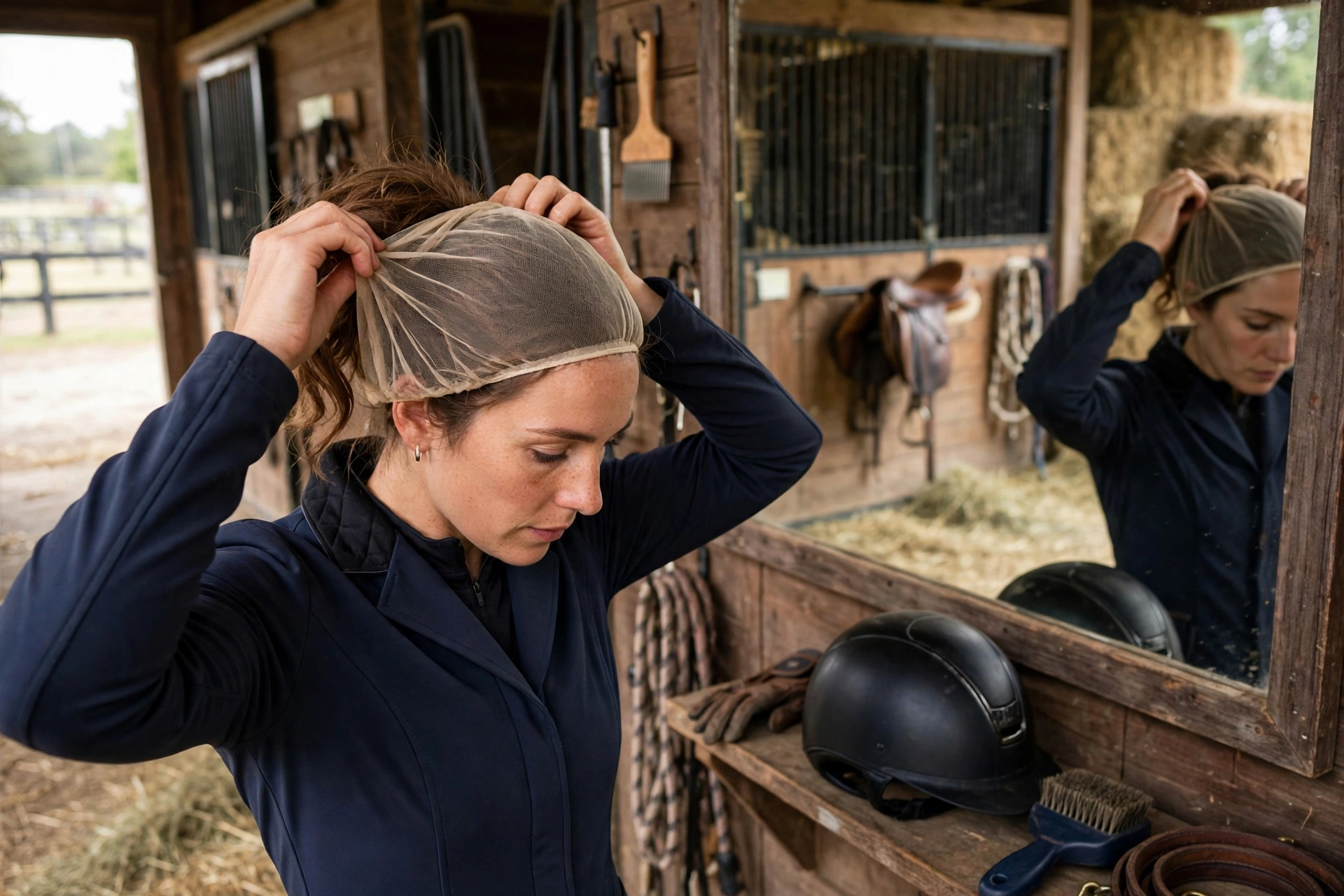
A hairnet is the classic tool for tidiness and it genuinely helps fit too: it holds flyaways and the top layer of hair flat and smooth, so the helmet goes on over a consistent, thin surface rather than loose, shifting hair. Riders with very thick hair often find a net plus a low ponytail gives the most repeatable fit day after day.
Whatever style you choose, fit-check with it in place. Put the helmet on over the finished hairstyle, fasten the harness, and do the shake test. If you fitted the helmet at the shop with your hair down, re-check the fit with your riding hairstyle before buying.
How Does the Show-Ring “Hair Up” Style Work Safely?
The traditional hunter look — hair worn up inside the helmet, neatly covering the ears under a net — can be done safely, but only when the helmet is fitted with the hair already up. The method spreads the hair evenly: hair is brushed flat, drawn up over the ears and spread across the top and back of the head in a thin, even layer under a hairnet, rather than bunched into a ponytail or bun inside the shell.
The distinction is everything. Spread thin and even, the hair adds a fairly uniform layer that the fitter can account for; bunched, it creates the pivot lump described above. Riders who show with hair up should own the discipline of fitting every helmet — including a replacement bought mid-season — with their hair in full show arrangement, and should expect the helmet to feel too loose if they later wear it with hair down.
If a helmet only fits safely one way, that is the only way it gets worn. Many riders keep the show arrangement for the ring and ride at home with a low ponytail in the same helmet only if the fit passes the shake test in both styles — if it does not, the honest solution is a helmet fitted for the everyday style.
Which Hairstyles Should You Avoid Under a Helmet?
Anything that adds height or a hard lump: high ponytails, top knots, buns on the crown, and thick braids worn over the top of the head. Large clips, claw grips, and hard hair accessories are also out — in a fall they concentrate pressure at a single point and can injure the scalp, as well as wrecking the fit in normal use.
Thick headbands, bandanas, and caps under the helmet cause the same problem in softer form: they lift the helmet and make it perch. A thin hairnet or a purpose-made thin liner is the limit of what should share the space. Braids are fine when they are worn low — a single braid starting at the nape hangs clear of the shell — but a crown braid or braided bun under the helmet is bulk in the wrong place.
Wet hair deserves a mention too. Freshly washed hair is slippery and compacts more than dry hair, so a helmet fitted on dry hair can sit differently after a morning shower.
Does Hair Style Affect Helmet Safety in a Fall?
Indirectly, yes — through fit, which is the channel through which almost everything affects helmet performance. The helmet’s foam and, where fitted, rotational liners — the kind described in this guide to what MIPS is for helmets — can only manage an impact if the helmet is sitting where it was designed to sit when the impact arrives. Hair that lifts, tilts, or loosens the helmet undermines every protective system inside it at once.
Loose flowing hair offers no protection either, so there is no safety case for it — contained, flat, and low is both tidier and safer.
The practical takeaway for every rider: treat your hairstyle as part of the helmet. Fit them together, check them together, and never borrow a helmet over a different hairstyle without re-checking the fit from scratch.
Frequently Asked Questions
Q: Can I wear a bun under my riding helmet?
A: Only a low bun at the nape of the neck, below the helmet’s bottom edge — that keeps the bulk outside the shell. A bun on top of or high on the back of the head lifts and tilts the helmet, creates a pivot point, and should never be worn under one.
Q: Do I need a hairnet for riding?
A: Not for safety alone if your hair is short or worn flat and low — but a hairnet helps any longer style sit thin, smooth, and consistent, which makes the fit more reliable, and shows often expect one for turnout. It is cheap, and it makes fitting easier.
Q: My helmet fits with my hair up but feels loose with it down. Is that a problem?
A: Yes — it means the helmet is only safe in the arrangement it was fitted in. Either always ride with your hair up in that helmet, or have a helmet fitted for your everyday style. A helmet that is loose in the style you actually ride in is the wrong helmet for that ride.

Olivia
Writer at Helmet Today, covering helmet reviews, fit and riding safety.