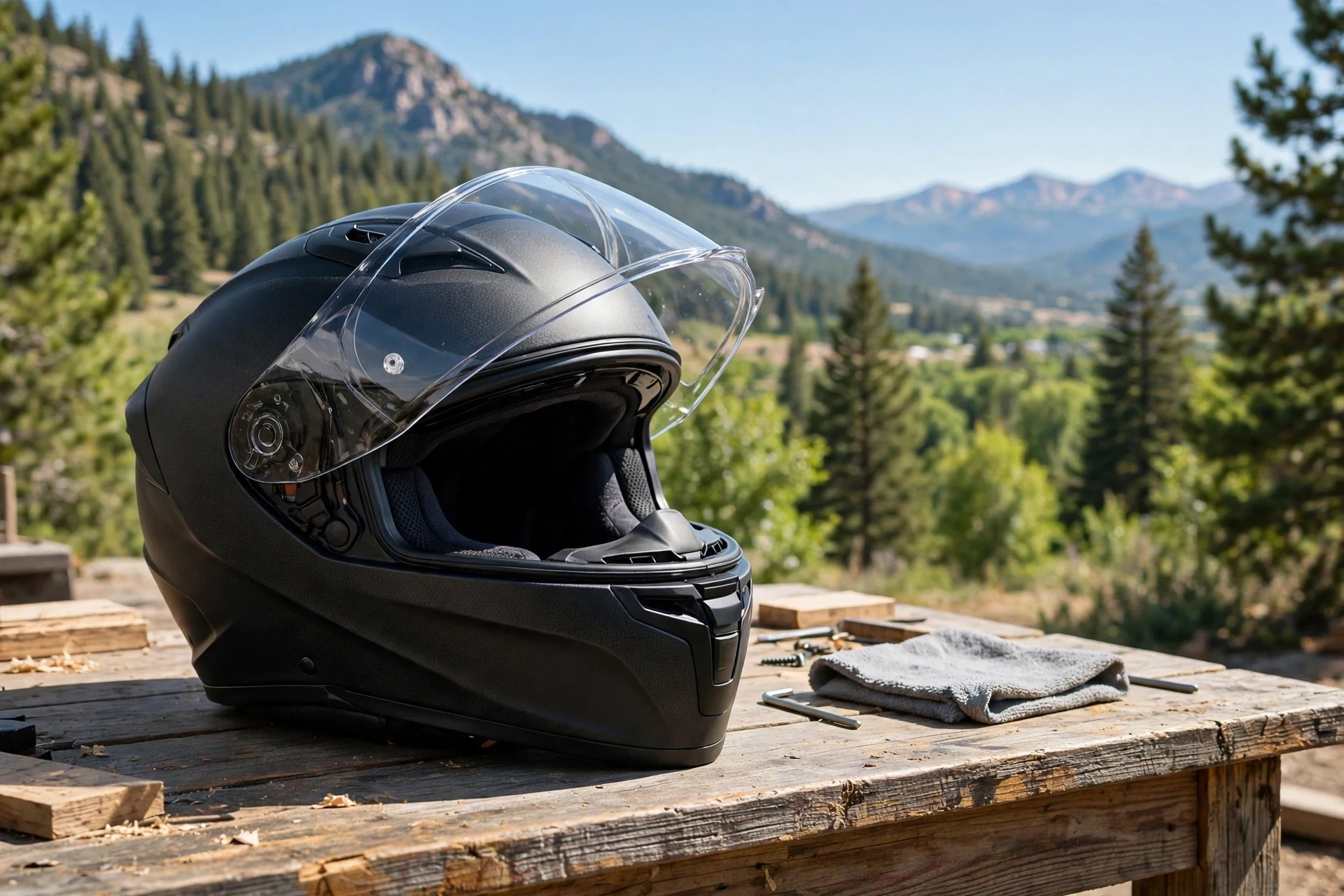
To inspect a helmet visor for damage, hold the helmet in good light, look across the visor from several angles, and check for scratches, cracks, chips, clouding, and any damage around the edges and mounting points. A visor that looks fine at a glance can hide fine scratches or small cracks that only show when light catches them, so work through the whole surface. If you find a crack, a deep scratch in your line of sight, or damage you cannot explain, replace the visor before you ride, because a damaged visor can distort your view and may not hold up in a crash.
What Should You Check First on a Helmet Visor?
Start with the outside of the visor, which takes the brunt of wind, grit, insects, and road debris. Hold the helmet at arm’s length under a bright light and tilt it slowly so the light moves across the visor. Scratches invisible head-on often appear as faint lines when light catches them at an angle. Check the whole visor, not just the centre, because damage near the edges can spread.
Then look at the inside, which can pick up scratches from cleaning cloths, fingernails, or objects stored in the helmet. Check the area in front of your eyes most carefully, since that is where even a small mark can be distracting. Run a clean fingertip lightly over any mark to judge whether it is a surface scuff or a groove you can feel. In general terms, a mark you can feel with a fingertip is more likely to affect your vision than one you can only see.
How Can You Spot Scratches and Scuffs on a Visor?
Fine scratches often show up as a faint haze when you look through the visor towards a light, and can make oncoming headlights flare at night. Hold the visor up to a lamp or window and look through it at a distant object. If the view looks cloudy or less sharp than through an undamaged area, the surface is probably scuffed. Some scratches only show up in low light, so check again at dusk if you can.
Pay attention to scratches crossing your normal line of sight, because these are most likely to distract you or blur what you see. A cluster of fine scratches in the centre can be worse than one longer scratch near the edge. Also check for a worn coating: some visors have a coating that can wear unevenly, leaving cloudy patches. If the coating is peeling or patchy, the visor no longer gives a clear, even view, and replacement is the sensible option.

What Do Cracks and Chips in a Visor Mean?
A crack in a visor is a serious finding, even if it is small. Cracks can start at the edge of the visor, around a mounting hole, or at the site of a stone strike, and they can spread under vibration and changes in temperature. Look closely at the edges, corners, and pivots where the visor attaches, because stress concentrates there. If you see a line running in from the edge, treat it as a crack and do not ride with that visor.
Chips are small pieces missing from the surface or edge, usually caused by a stone or hard debris hitting at speed. A chip near the edge may seem harmless, but it creates a weak point where a crack can start. A chip in your line of sight will distort your view and catch the light. In general terms, any crack or chip means the visor’s structure is compromised. It should be replaced rather than repaired, because glues and fillers cannot restore its strength or clarity.
How Do You Check the Visor Seal and Mechanism?
The visor is only useful if it stays where you put it, so check the mechanism as well as the clear part. Open and close the visor slowly: it should click firmly into position and stay put, without drooping or sliding down while you ride. If it will not stay open, or snaps shut on its own, the pivot or detent mechanism is worn, and that is a fault to fix before your next ride.
Next, close the visor fully and check the seal around its edge for gaps where wind or rain could get in, and for draughts while riding slowly. Check the rubber seal for cracks, flattening, or missing sections, since a worn seal lets in wind, water, and noise. The screws at the pivots should be snug, not loose or corroded; tighten a loose screw only as the helmet maker instructs. If the pivot is cracked or the mechanism is broken, replace the affected parts or the visor.
How Should You Clean a Visor Before Inspecting It?
Clean the visor before you inspect it, because dirt and dead insects can hide scratches and cracks, and a dirty visor can look damaged when it is only dirty. Rinse it first with lukewarm water to wash away grit, then wash it gently with mild soap and water, using only your hands or a soft cloth. Never use paper towels, abrasive pads, or harsh cleaners, which can scratch the surface and create the damage you are trying to find.
Dry it by patting gently with a clean cloth, or let it air dry, rather than rubbing it hard. Once it is clean and dry, inspect it again, because marks hidden under dirt may now be visible. In general terms, do this clean-then-inspect routine every few weeks, and always after a ride in rain, dust, or heavy insect traffic. If the visor still looks hazy after a careful clean, the haze is likely wear in the surface or coating, and the visor is reaching the end of its useful life.
When Should You Replace a Helmet Visor?
Replace a visor if you find a crack, a chip, or a deep scratch in your line of sight, or if scuffing makes your view cloudy or distorted. Replace it too if the coating is peeling or patchy, if it no longer seals, or if the mechanism will not hold it in position. These are not cosmetic faults: a visor that distorts your view slows your reactions, and one that will not stay shut can fly open at speed.
If you are in doubt about a mark, the safe choice is to replace the visor. Visors are a wear item, and a new one is a small price for a clear view of the road. If the helmet has been in a crash or a hard impact, check the visor with the whole helmet, and remember that a helmet that has absorbed a serious impact should be replaced, even if the damage is hard to see. To understand more about how modern helmets protect your head, it helps to read about what MIPS is for helmets. In general terms, if damage is found or protection is in doubt, replace the helmet or the visor rather than taking a chance on your next ride.
Can a scratched visor be repaired?
No, in general terms a scratched visor cannot be repaired properly. Polishing or filling can make it look better, but can also distort your view, so a visor with a scratch in your line of sight should be replaced.
How often should I inspect my helmet visor?
Give it a quick look before every ride and a careful check every few weeks, or after any ride in heavy rain, dust, or debris. A regular check catches small cracks and scratches before they become a problem.
Can I ride with a cracked visor?
No, you should not ride with a cracked visor. A crack can spread suddenly, distort your view, and weaken the visor, so replace it before your next ride.

Olivia
Writer at Helmet Today, covering helmet reviews, fit and riding safety.