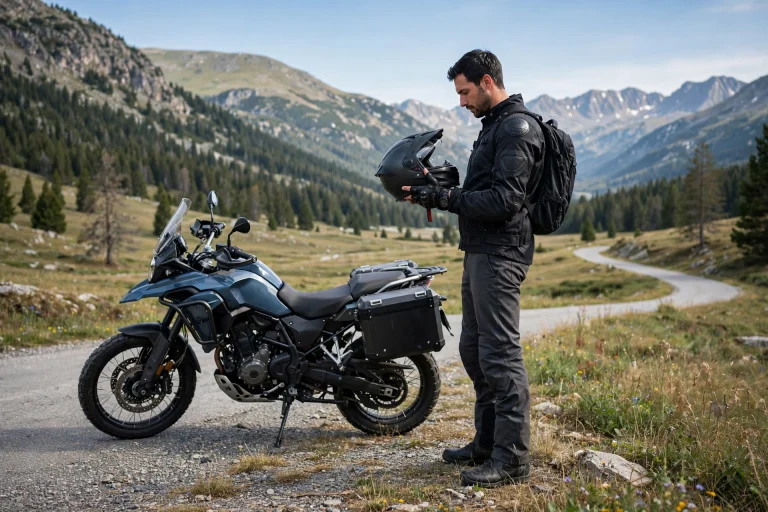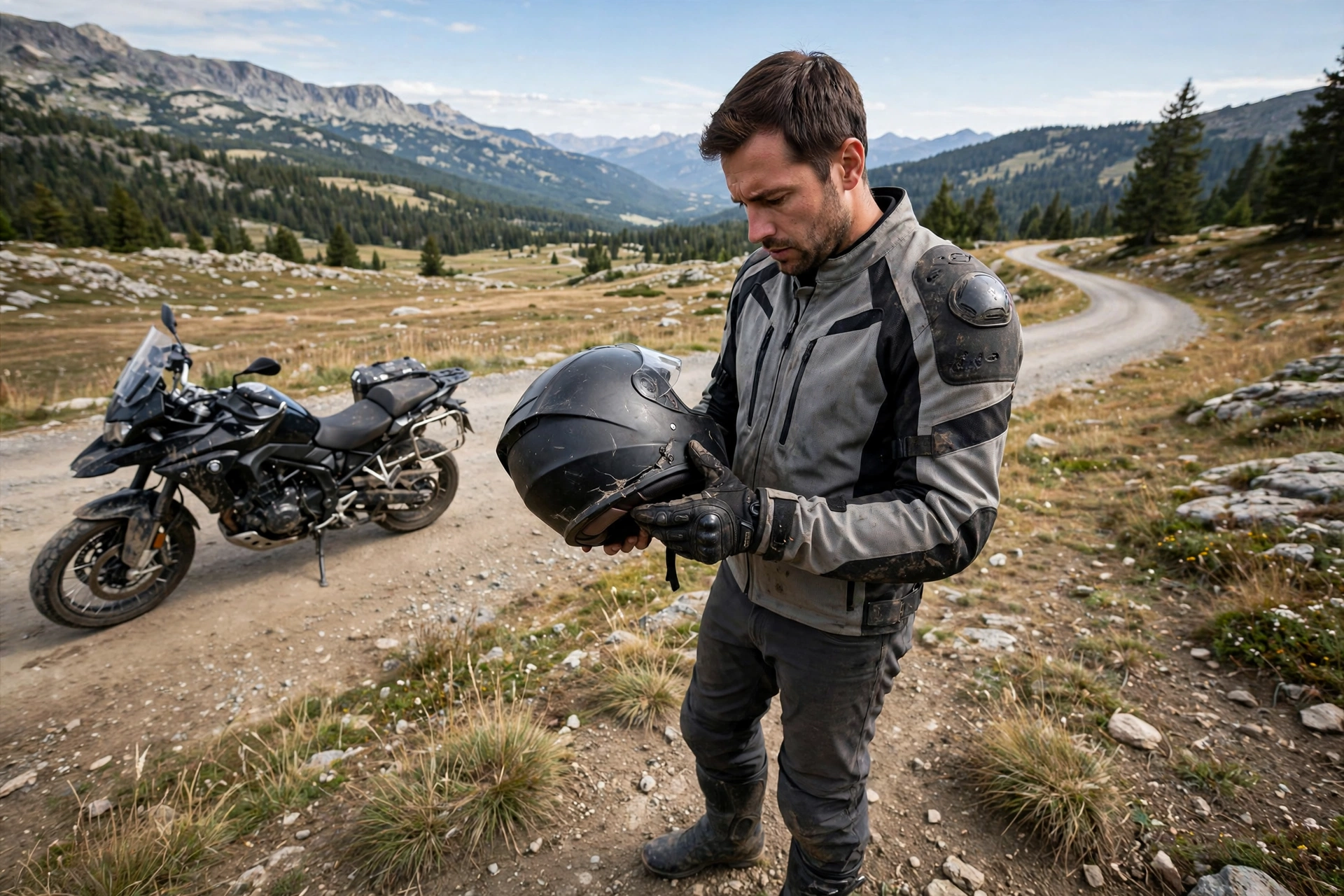
To inspect a helmet after a drop, check the shell, liner, straps, buckle, and fit carefully for cracks, dents, or damage, and replace the helmet if you suspect a hard impact. A helmet can look fine on the outside while the liner inside has compressed or cracked, so a careful check matters more than a quick glance. Drops happen to every rider sooner or later, from a helmet slipping off a seat to a fall on the road or trail. In general terms, a helmet that has taken a hard knock should be treated with caution, because its job is to absorb one serious impact, and it may not protect as well the next time.
Why Should You Inspect a Helmet After a Drop?
A helmet should be inspected after a drop because its protection comes from parts you cannot always see. The outer shell spreads the force of an impact, and the liner inside absorbs it by compressing or cracking. Once the liner has absorbed a hard blow, it may not be able to absorb another one as well, and that damage is often hidden under the shell, where a quick look will miss it.
Inspecting the helmet also catches damage to the straps, buckle, and visor, which can affect how well the helmet stays on and how clearly the rider can see. A strap weakened by a drop, or a visor that no longer sits properly, can both become problems on the next ride. In general terms, a few minutes of checking after a drop is a small price for knowing whether the helmet is still safe to trust.
What Should You Check First?
The first thing to check after a drop is where the helmet hit and how hard the impact was. A helmet that fell from a seat onto grass is a very different case from one that hit concrete at speed, or one that was worn in a crash. Think about the height of the fall, the surface it landed on, and whether the helmet bounced or slid, since all of these affect how much force the helmet absorbed.
Next, give the helmet a quick overall look for obvious damage: cracks in the shell, dents, deep scratches, or a visor that is cracked or loose. If anything looks badly damaged, the helmet should not be used again. If you want to understand one of the safety technologies used in modern helmets, reading about what MIPS is for helmets is a good place to start, since that layer can also be damaged in an impact and is worth checking where it is fitted.
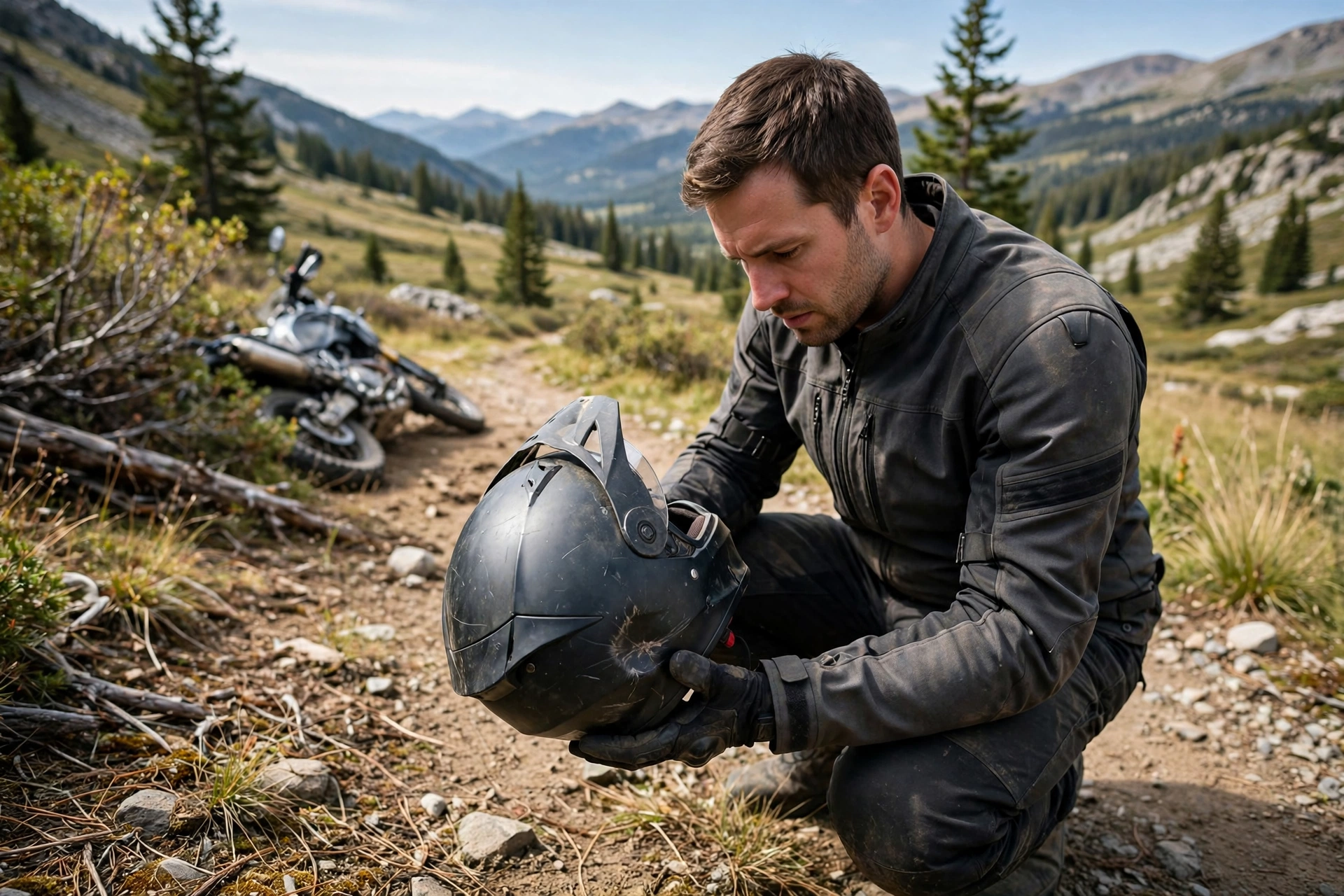
How Do You Check the Shell and Liner?
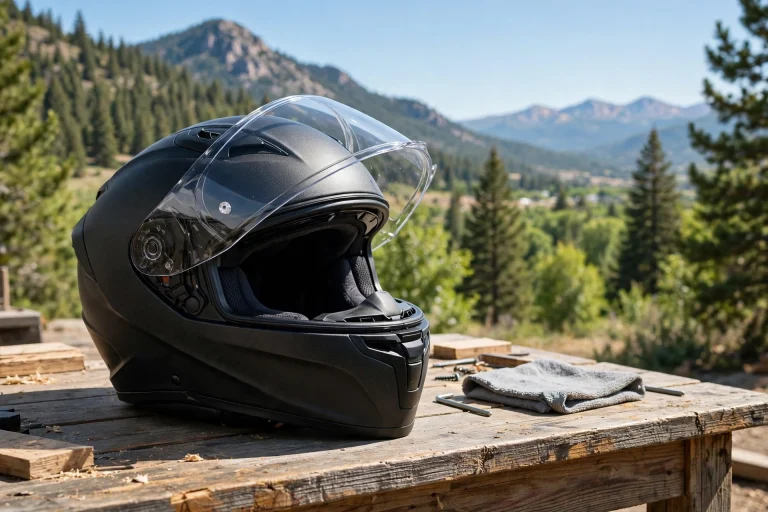
To check the shell, run your hands slowly over the whole surface, feeling for cracks, dents, soft spots, or areas where the shell has deformed. Look closely at the point of impact and around the vents, since cracks often start near edges and openings. A shell that has a visible crack, a dent that does not spring back, or a soft or spongy area should be treated as damaged, and the helmet should be replaced.
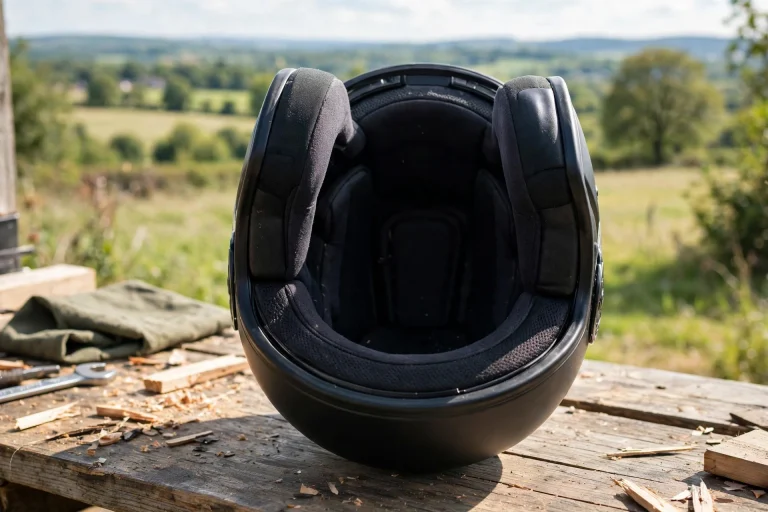
To check the liner, look inside the helmet and press the padding gently, feeling for areas that are compressed, cracked, or looser than the rest. The liner is usually a firm foam, and a hard impact can crack it or leave a dent that is easy to feel once you know to look for it. Remove any washable comfort padding first if that helps you see the liner clearly, and check the whole interior, not just the spot where the helmet hit.
How Do You Check the Straps and Buckle?
To check the straps, pull each one firmly and look along its full length for fraying, cuts, or stretched sections. The stitching where the straps join the helmet is a common weak point, so look closely at those seams for torn or loose threads. A strap that is frayed or has damaged stitching may not hold the helmet in place in a crash, and it should be repaired or the helmet replaced.
To check the buckle, fasten and unfasten it several times, making sure it clicks shut firmly and does not slip open under a tug. The buckle should work smoothly and hold fast, with no cracks or bent parts. It is also worth checking the strap adjusters and any clips, since these can crack or loosen in a drop. In general terms, the retention system is what keeps the helmet on the head, so it deserves as much attention as the shell.
What If the Helmet Looks Fine After a Drop?
If the helmet looks fine after a drop, the next question is how hard the impact was. A gentle knock, such as a helmet tipping off a low seat onto a soft surface, is unlikely to have damaged the liner, and the helmet is probably fine to keep using. A hard drop onto concrete, or any drop while the helmet was being worn in a crash, is a different matter, and caution is the sensible approach.
When in doubt, it is worth having the helmet checked by the manufacturer or a knowledgeable dealer, since they can advise whether the model can be inspected or should be replaced. Some manufacturers offer an inspection service for crashed helmets. In general terms, if you are unsure whether a helmet is still safe, replacing it is the safer choice, because a helmet is only useful if you can trust it completely.
When Should a Dropped Helmet Be Replaced?
A dropped helmet should be replaced when it shows any visible damage to the shell or liner, when the straps or buckle are damaged, or when it took a hard impact while being worn. These are clear signs that the helmet has absorbed force it was not designed to absorb twice, and continuing to use it would mean trusting protection that may no longer be there. A helmet that has protected the head in a crash has done its job, and it should be retired.
It should also be replaced when the drop was hard enough to leave you in doubt, even if no damage is visible. The liner can be damaged without any outward sign, and the cost of a new helmet is small compared with the risk of riding in one that may not protect properly. In general terms, a helmet that has been dropped hard should be replaced rather than kept in use on hope, and the old one should not be passed on to another rider.
Can I keep using a helmet after a small drop?
Yes, in general terms a gentle knock onto a soft surface is unlikely to have damaged the helmet, and it is probably fine to keep using it. Check it carefully for cracks or damage first, and replace it if the drop was hard or you are in any doubt.
Does a dropped helmet always need replacing?
No, not every drop damages a helmet. A light knock is usually harmless, but a hard impact, especially one while the helmet was worn, can damage the liner invisibly, and in that case replacement is the sensible choice.
How can I tell if the liner is damaged?
Press the liner gently and feel for cracks, dents, or areas that are compressed or looser than the rest. Visible cracks or a dent that does not spring back are signs the liner has absorbed an impact and the helmet should be replaced.

Olivia
Writer at Helmet Today, covering helmet reviews, fit and riding safety.